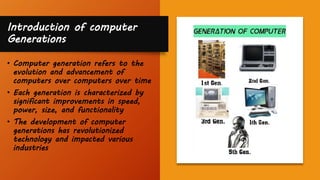
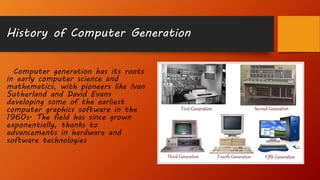
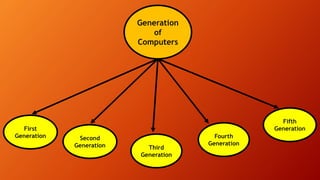
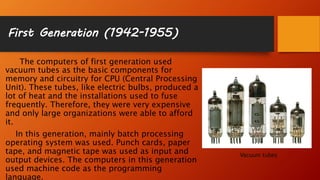
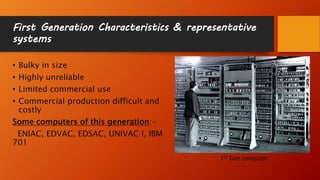
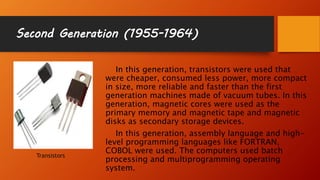
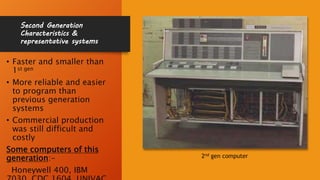
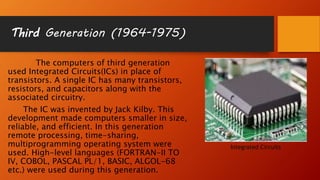
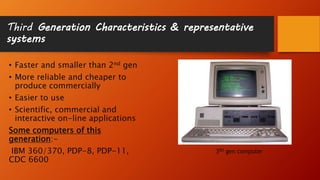
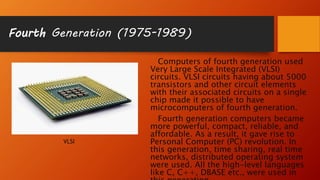
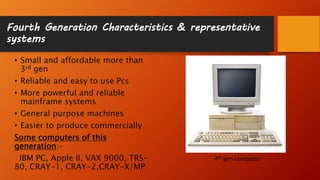
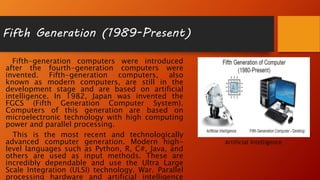
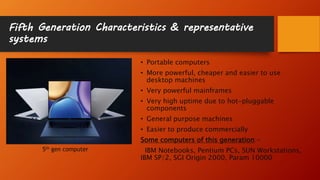
This document discusses the evolution of computer generations from first to sixth generation. It provides details on the key characteristics and technologies of each generation. The first generation used vacuum tubes and was very large, unreliable, and costly. The second generation used transistors, making computers smaller and more reliable. The third generation used integrated circuits, making computers even faster, smaller, and cheaper. The fourth generation used VLSI circuits and saw the rise of personal computers. The fifth generation uses artificial intelligence and parallel processing. Each new generation has led to more powerful, affordable and accessible computers that have transformed technology and society. Future trends include quantum computing, the internet of things, and continued artificial intelligence advancement.