GANDHI ON EDUCATION Prof.Dr.Aung Tun Thet
INTRODUCTION
EDUCATION 
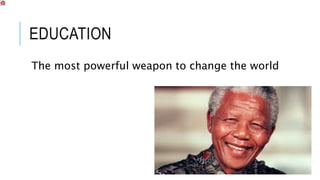
The most powerful weapon to change the world
EDUCATION 
Learning in which knowledge, skills, and habits 
transferred from one generation to the next 
Teaching, training, or research
RIGHT TO EDUCATION 
Article 13 of the United Nations' 1966 International 
Covenant on Economic, Social and Cultural Rights 
recognizes the right of everyone to an education 
Duty Bearers 
Right Holders
LEARNING MODALITIES 
Visual: learning based on observation and 
seeing what is being learned 
Auditory: learning based on listening to 
instructions/information 
Kinesthetic: learning based on movement, e.g. 
hands-on work and engaging in activities 
Musical, interpersonal, verbal, logical, and 
intrapersonal
MULTIPLE INTELLIGENCES 
Physical (PQ) 
Mental (IQ) 
Emotional (EQ) 
Spiritual (SQ) 
Cultural (CQ)
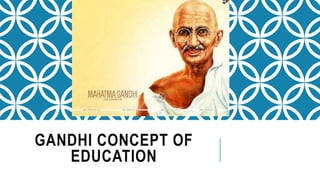
GANDHI CONCEPT OF 
EDUCATION
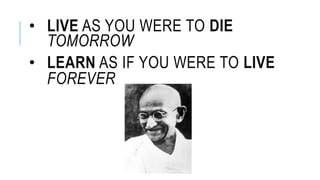
• LIVE AS YOU WERE TO DIE 
TOMORROW 
• LEARN AS IF YOU WERE TO LIVE 
FOREVER
EDUCATION 
All-round best in body, mind and spirit 
Literacy in itself no education 
Easily accessible to all 
Spending every minute of one’s life usefully
EDUCATION 
Persistent questioning 
Healthy inquisitiveness 
Make democracy function
EDUCATION 
Integrated approach to all round personality 
development 
Distinction between: 
Learning and education 
Knowledge and wisdom 
Literacy and lessons of life
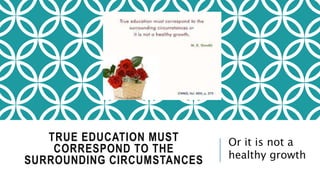
TRUE EDUCATION MUST 
CORRESPOND TO THE 
SURROUNDING CIRCUMSTANCES 
Or it is not a 
healthy growth
EDUCATION 
Closely aligned with morality 
Stepping stone to knowledge and wisdom 
Help seeker on spiritual path
EDUCATION 
Teacher learning constantly from students 
Deal with moral and spiritual - “Whole person” 
Teach us to discriminate between good and bad
EDUCATION 
For end user – the child 
Empower student to confront the world 
Develop facts and skills which student has full control 
of and evaluate, and make use of 
Student driven 
Create generation of sane, capable young adults
EDUCATION 
Not narrow means of making careers and achieving 
social status 
Seeking larger role for self and society 
Produce learned minds and enlightened souls 
Discipline and self restraint
EDUCATION 
Essentially generative 
Passed on from educated person to uneducated one
EDUCATION 
Harmonious development of all aspects of human personality 
Physical development 
Intellectual development 
Spiritual development
EDUCATION 
Naturalistic is setting 
Idealistic in aim 
Pragmatic in methods
AIM OF EDUCATION 
I have done a computer course and earning well 
I have a degree in architecture 
Self supporting 
Earn a living 
Cut unemployment
AIM OF EDUCATION 
Preservation of culture 
Character building – more important than literacy 
All round development – Three Hs – Head, Hands, Heart 
Cultivate higher values in life – moral, social, spiritual – self restraint, 
self realization, self insight, self analysis
CURRICULUM 
Craft-centred 
Development of soul 
Starting point of all subjects
CRAFT-CENTERED CURRICULUM 
Cooperative activity 
Individual activity 
Co-relation of all subjects 
Life-oriented 
Dignity of labour 
Schools self sustaining
DISCIPLINE 
Self discipline - Not imposed 
Social discipline
TEACHER 
Example by attitudes and values 
Distinguish good and bad, truth and false 
Free and fearless learning environment
NAI TALIM 
Basic 
Education for 
all
NAI TALIM 
• Curriculum aimed at preparing good society, not just 
literate and/or educated one 
•Freedom: From ignorance, illiteracy, superstition, etc. 
• Silent social revolution
NAI TALIM 
• Useful and purposeful physical labour 
• Holistic development of body, mind and soul 
• Inclusive and coordinated education
NAI TALIM 
•Handicrafts, art and drawing most fundamental 
teaching tools 
•Engaging young minds in learning technique time 
proven, informal, unstressed, and full of ageless 
wisdom 
•Teaching through art and craft even before teaching 
alphabets - “One imparts ten times as much in this 
manner as by reading or writing” 
•Create free and enlightened individuals = good 
society
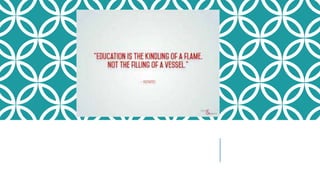
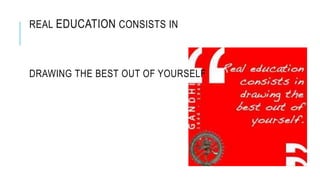
REAL EDUCATION CONSISTS IN 
DRAWING THE BEST OUT OF YOURSELF
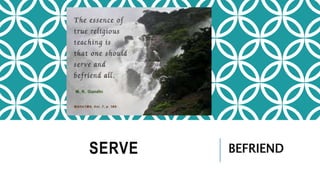
SERVE BEFRIEND
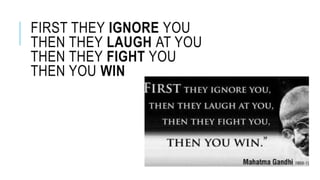
FIRST THEY IGNORE YOU 
THEN THEY LAUGH AT YOU 
THEN THEY FIGHT YOU 
THEN YOU WIN
Keep your THOUGHTS positive, because they 
become 
Your WORDS 
Keep your WORDS positive, because they 
become 
Your BEHAVIOUR 
Keep your BEHAVIOUR positive, because they 
become 
Your HABITS 
Keep your HABITS positive, because they 
become 
Your VALUES 
Keep your VALUES positive, because they
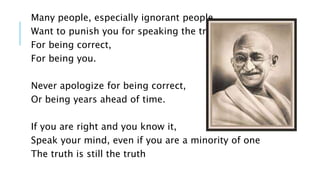
Many people, especially ignorant people, 
Want to punish you for speaking the truth, 
For being correct, 
For being you. 
Never apologize for being correct, 
Or being years ahead of time. 
If you are right and you know it, 
Speak your mind, even if you are a minority of one 
The truth is still the truth
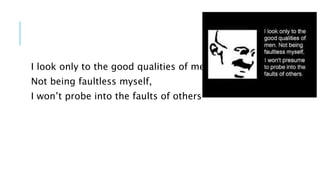
I look only to the good qualities of men. 
Not being faultless myself, 
I won’t probe into the faults of others
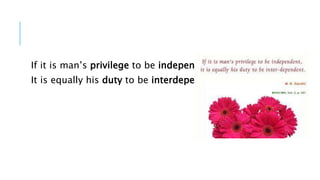
If it is man’s privilege to be independent 
It is equally his duty to be interdependent
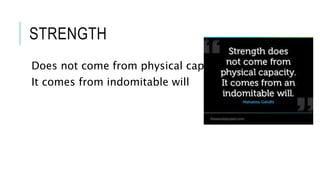
STRENGTH 
Does not come from physical capacity 
It comes from indomitable will
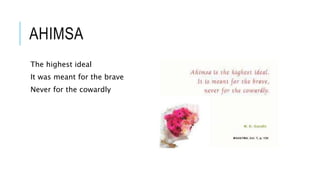
AHIMSA 
The highest ideal 
It was meant for the brave 
Never for the cowardly
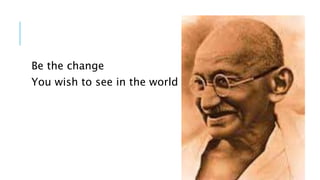
Be the change 
You wish to see in the world

Gandhi on education

  • 1.
    GANDHI ON EDUCATIONProf.Dr.Aung Tun Thet
  • 2.
  • 3.
    EDUCATION The mostpowerful weapon to change the world
  • 5.
    EDUCATION Learning inwhich knowledge, skills, and habits transferred from one generation to the next Teaching, training, or research
  • 6.
    RIGHT TO EDUCATION Article 13 of the United Nations' 1966 International Covenant on Economic, Social and Cultural Rights recognizes the right of everyone to an education Duty Bearers Right Holders
  • 7.
    LEARNING MODALITIES Visual:learning based on observation and seeing what is being learned Auditory: learning based on listening to instructions/information Kinesthetic: learning based on movement, e.g. hands-on work and engaging in activities Musical, interpersonal, verbal, logical, and intrapersonal
  • 8.
    MULTIPLE INTELLIGENCES Physical(PQ) Mental (IQ) Emotional (EQ) Spiritual (SQ) Cultural (CQ)
  • 9.
  • 10.
    • LIVE ASYOU WERE TO DIE TOMORROW • LEARN AS IF YOU WERE TO LIVE FOREVER
  • 11.
    EDUCATION All-round bestin body, mind and spirit Literacy in itself no education Easily accessible to all Spending every minute of one’s life usefully
  • 12.
    EDUCATION Persistent questioning Healthy inquisitiveness Make democracy function
  • 13.
    EDUCATION Integrated approachto all round personality development Distinction between: Learning and education Knowledge and wisdom Literacy and lessons of life
  • 14.
    TRUE EDUCATION MUST CORRESPOND TO THE SURROUNDING CIRCUMSTANCES Or it is not a healthy growth
  • 15.
    EDUCATION Closely alignedwith morality Stepping stone to knowledge and wisdom Help seeker on spiritual path
  • 16.
    EDUCATION Teacher learningconstantly from students Deal with moral and spiritual - “Whole person” Teach us to discriminate between good and bad
  • 17.
    EDUCATION For enduser – the child Empower student to confront the world Develop facts and skills which student has full control of and evaluate, and make use of Student driven Create generation of sane, capable young adults
  • 19.
    EDUCATION Not narrowmeans of making careers and achieving social status Seeking larger role for self and society Produce learned minds and enlightened souls Discipline and self restraint
  • 20.
    EDUCATION Essentially generative Passed on from educated person to uneducated one
  • 21.
    EDUCATION Harmonious developmentof all aspects of human personality Physical development Intellectual development Spiritual development
  • 22.
    EDUCATION Naturalistic issetting Idealistic in aim Pragmatic in methods
  • 23.
    AIM OF EDUCATION I have done a computer course and earning well I have a degree in architecture Self supporting Earn a living Cut unemployment
  • 24.
    AIM OF EDUCATION Preservation of culture Character building – more important than literacy All round development – Three Hs – Head, Hands, Heart Cultivate higher values in life – moral, social, spiritual – self restraint, self realization, self insight, self analysis
  • 25.
    CURRICULUM Craft-centred Developmentof soul Starting point of all subjects
  • 26.
    CRAFT-CENTERED CURRICULUM Cooperativeactivity Individual activity Co-relation of all subjects Life-oriented Dignity of labour Schools self sustaining
  • 27.
    DISCIPLINE Self discipline- Not imposed Social discipline
  • 28.
    TEACHER Example byattitudes and values Distinguish good and bad, truth and false Free and fearless learning environment
  • 29.
    NAI TALIM Basic Education for all
  • 30.
    NAI TALIM •Curriculum aimed at preparing good society, not just literate and/or educated one •Freedom: From ignorance, illiteracy, superstition, etc. • Silent social revolution
  • 31.
    NAI TALIM •Useful and purposeful physical labour • Holistic development of body, mind and soul • Inclusive and coordinated education
  • 32.
    NAI TALIM •Handicrafts,art and drawing most fundamental teaching tools •Engaging young minds in learning technique time proven, informal, unstressed, and full of ageless wisdom •Teaching through art and craft even before teaching alphabets - “One imparts ten times as much in this manner as by reading or writing” •Create free and enlightened individuals = good society
  • 33.
    REAL EDUCATION CONSISTSIN DRAWING THE BEST OUT OF YOURSELF
  • 34.
  • 35.
    FIRST THEY IGNOREYOU THEN THEY LAUGH AT YOU THEN THEY FIGHT YOU THEN YOU WIN
  • 36.
    Keep your THOUGHTSpositive, because they become Your WORDS Keep your WORDS positive, because they become Your BEHAVIOUR Keep your BEHAVIOUR positive, because they become Your HABITS Keep your HABITS positive, because they become Your VALUES Keep your VALUES positive, because they
  • 38.
    Many people, especiallyignorant people, Want to punish you for speaking the truth, For being correct, For being you. Never apologize for being correct, Or being years ahead of time. If you are right and you know it, Speak your mind, even if you are a minority of one The truth is still the truth
  • 39.
    I look onlyto the good qualities of men. Not being faultless myself, I won’t probe into the faults of others
  • 40.
    If it isman’s privilege to be independent It is equally his duty to be interdependent
  • 42.
    STRENGTH Does notcome from physical capacity It comes from indomitable will
  • 44.
    AHIMSA The highestideal It was meant for the brave Never for the cowardly
  • 46.
    Be the change You wish to see in the world