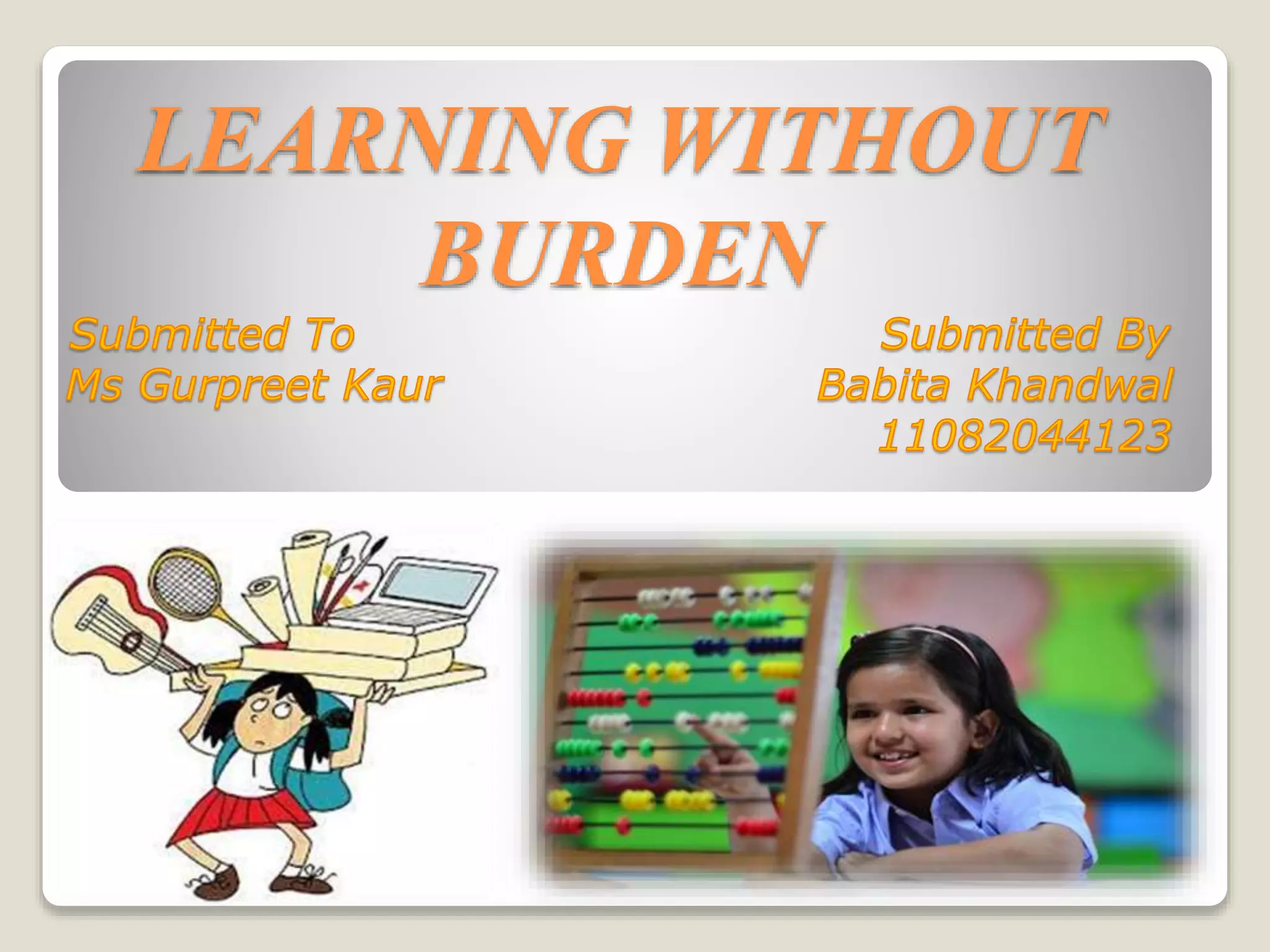

LEARNING WITHOUT
BURDEN
 The Human Resources development minister in
1992, constituted and eight members committee
under the chairmanship of professor Yashpal
called national advisory committee properly
called after the name of its chairman.
 The committee chiefly studied the prevalent
curricula and textbook as constructed by NCERT
and CBSE.
 July 15, 1993 the commission render to report
titled LEARNING WITHOUT BURDEN to the govt.
FIVE PARTS OF REPORT
First Part: Introduction-it explains the
objectives of constitute of the committee and
discuss its method of working.
Second Part: Problem of Curricula load. It
discuss the prevalent school education and
its problem.
Third Part: Roots of the Problem.
 Fourth Part: Recommendation – Solution of
the Problem.
Fifth Part: Appendix.
EVALUATION OF YASHPAL
COMMITTEE
This report is lack of clarity and logical
sequence.
 No member of committee had any
experience of teaching at school level, it
was the reason that it could understand
neither the nature of problem not its
causes nor it could suggest any
worthwhile solution.
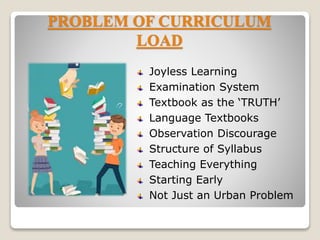
PROBLEM OF CURRICULUM
LOAD
Joyless Learning
Examination System
Textbook as the ‘TRUTH’
Language Textbooks
Observation Discourage
Structure of Syllabus
Teaching Everything
Starting Early
Not Just an Urban Problem
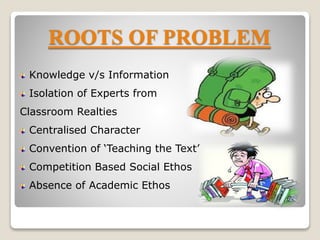
ROOTS OF PROBLEM
Knowledge v/s Information
Isolation of Experts from
Classroom Realties
Centralised Character
Convention of ‘Teaching the Text’
Competition Based Social Ethos
Absence of Academic Ethos
RECOMMENDATION OF
COMMITTEE
Greater involvement of teachers in
framing curriculum and preparing of
textbook.
Test or interview for admission in pre-
school should not be perform.
Homework should not be there and
project work at primary stage.
Extensive use of audio video material and
enforcing teacher pupil ratio 1:40.
LEARNING WITHOUT BURDEN

LEARNING WITHOUT BURDEN

  • 1.
  • 2.
     The HumanResources development minister in 1992, constituted and eight members committee under the chairmanship of professor Yashpal called national advisory committee properly called after the name of its chairman.  The committee chiefly studied the prevalent curricula and textbook as constructed by NCERT and CBSE.  July 15, 1993 the commission render to report titled LEARNING WITHOUT BURDEN to the govt.
  • 3.
    FIVE PARTS OFREPORT First Part: Introduction-it explains the objectives of constitute of the committee and discuss its method of working. Second Part: Problem of Curricula load. It discuss the prevalent school education and its problem. Third Part: Roots of the Problem.  Fourth Part: Recommendation – Solution of the Problem. Fifth Part: Appendix.
  • 4.
    EVALUATION OF YASHPAL COMMITTEE Thisreport is lack of clarity and logical sequence.  No member of committee had any experience of teaching at school level, it was the reason that it could understand neither the nature of problem not its causes nor it could suggest any worthwhile solution.
  • 5.
    PROBLEM OF CURRICULUM LOAD JoylessLearning Examination System Textbook as the ‘TRUTH’ Language Textbooks Observation Discourage Structure of Syllabus Teaching Everything Starting Early Not Just an Urban Problem
  • 6.
    ROOTS OF PROBLEM Knowledgev/s Information Isolation of Experts from Classroom Realties Centralised Character Convention of ‘Teaching the Text’ Competition Based Social Ethos Absence of Academic Ethos
  • 7.
    RECOMMENDATION OF COMMITTEE Greater involvementof teachers in framing curriculum and preparing of textbook. Test or interview for admission in pre- school should not be perform. Homework should not be there and project work at primary stage. Extensive use of audio video material and enforcing teacher pupil ratio 1:40.