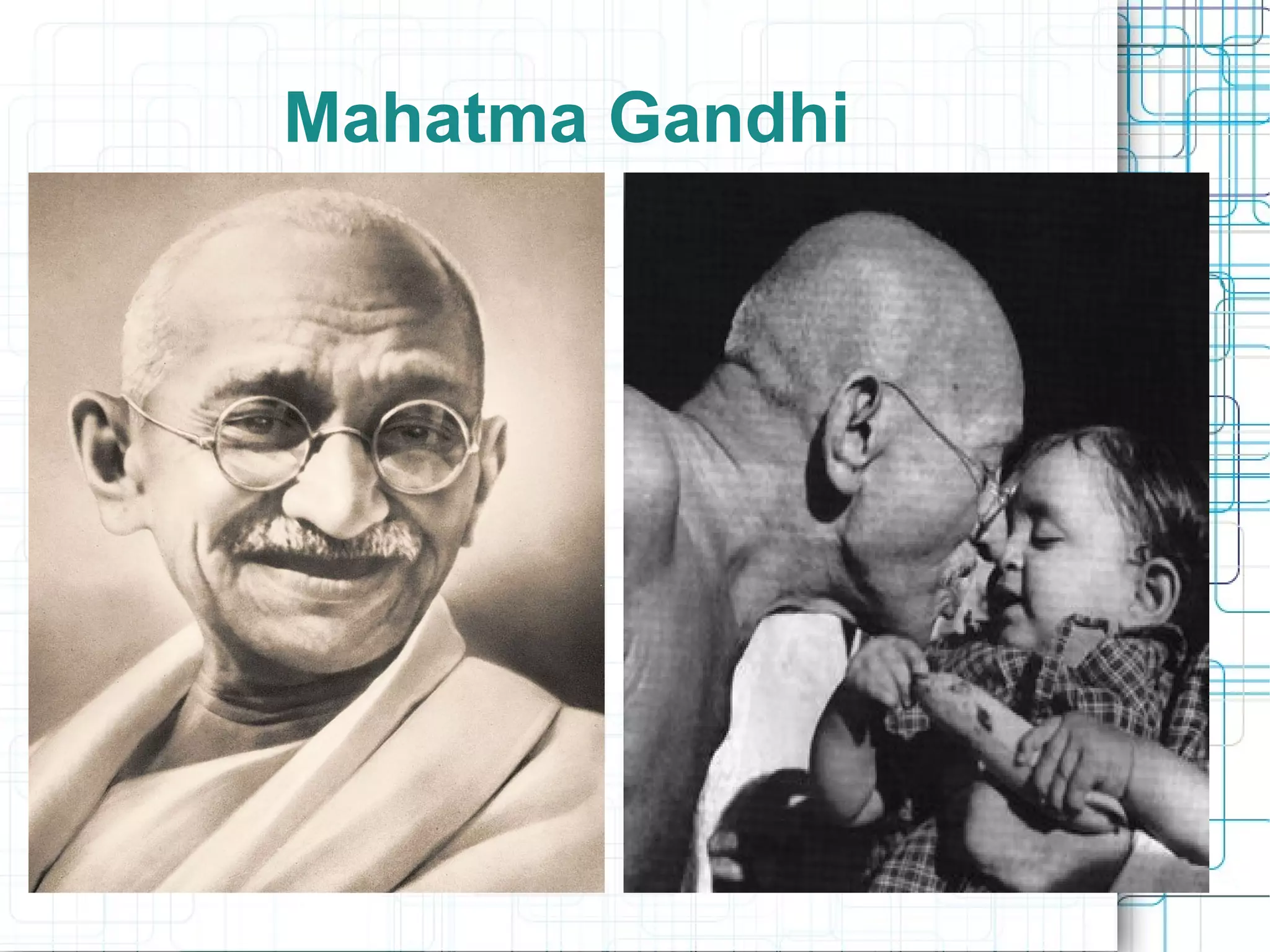
Mahatma Gandhi
Structure Vocabulary
Quick Facts
Satyagraha
Biography:
•Early life and Background
•Time in London
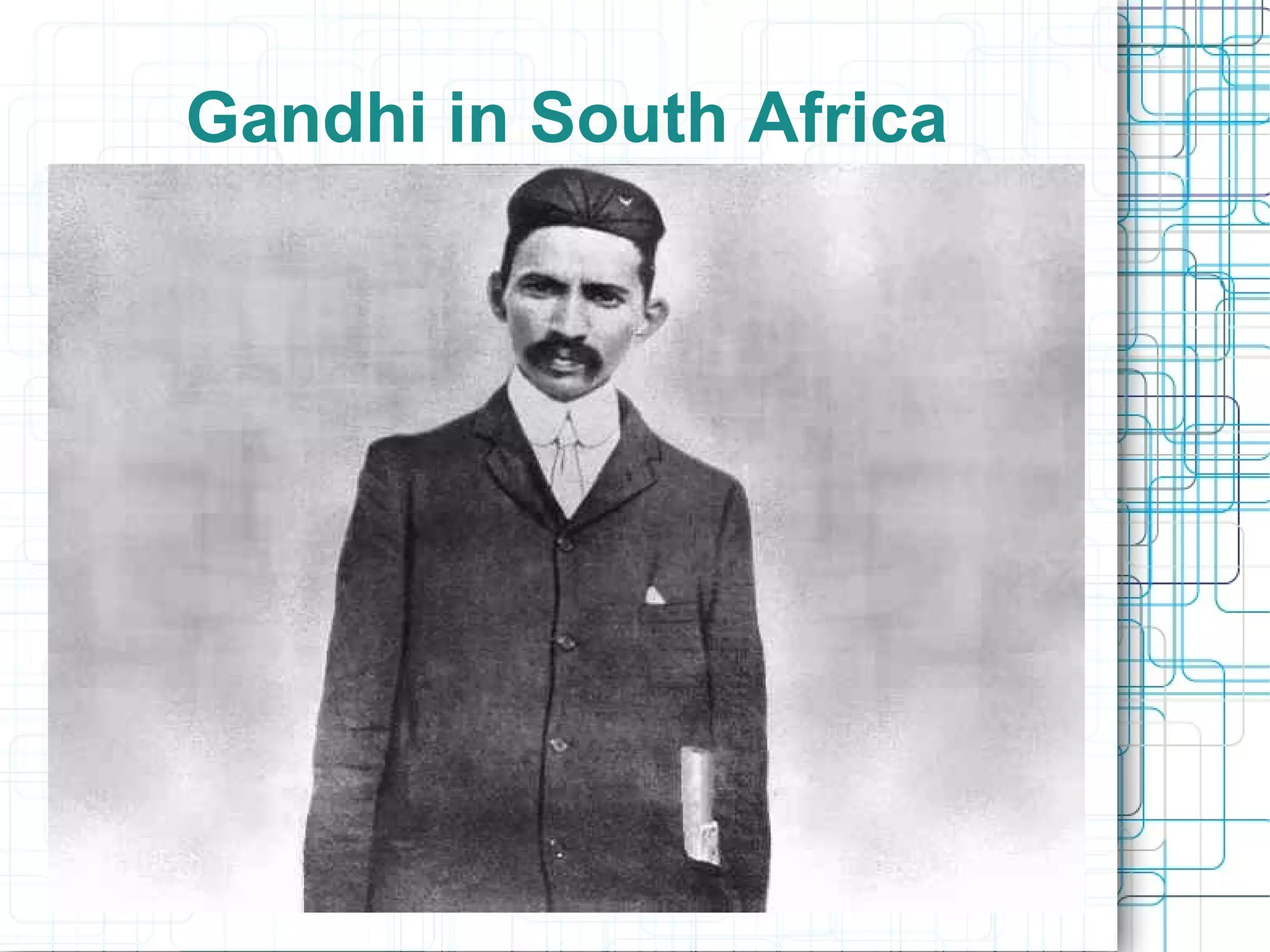
•Gandhi in South Africa
•Role in World War I
Structure Indian Independence:
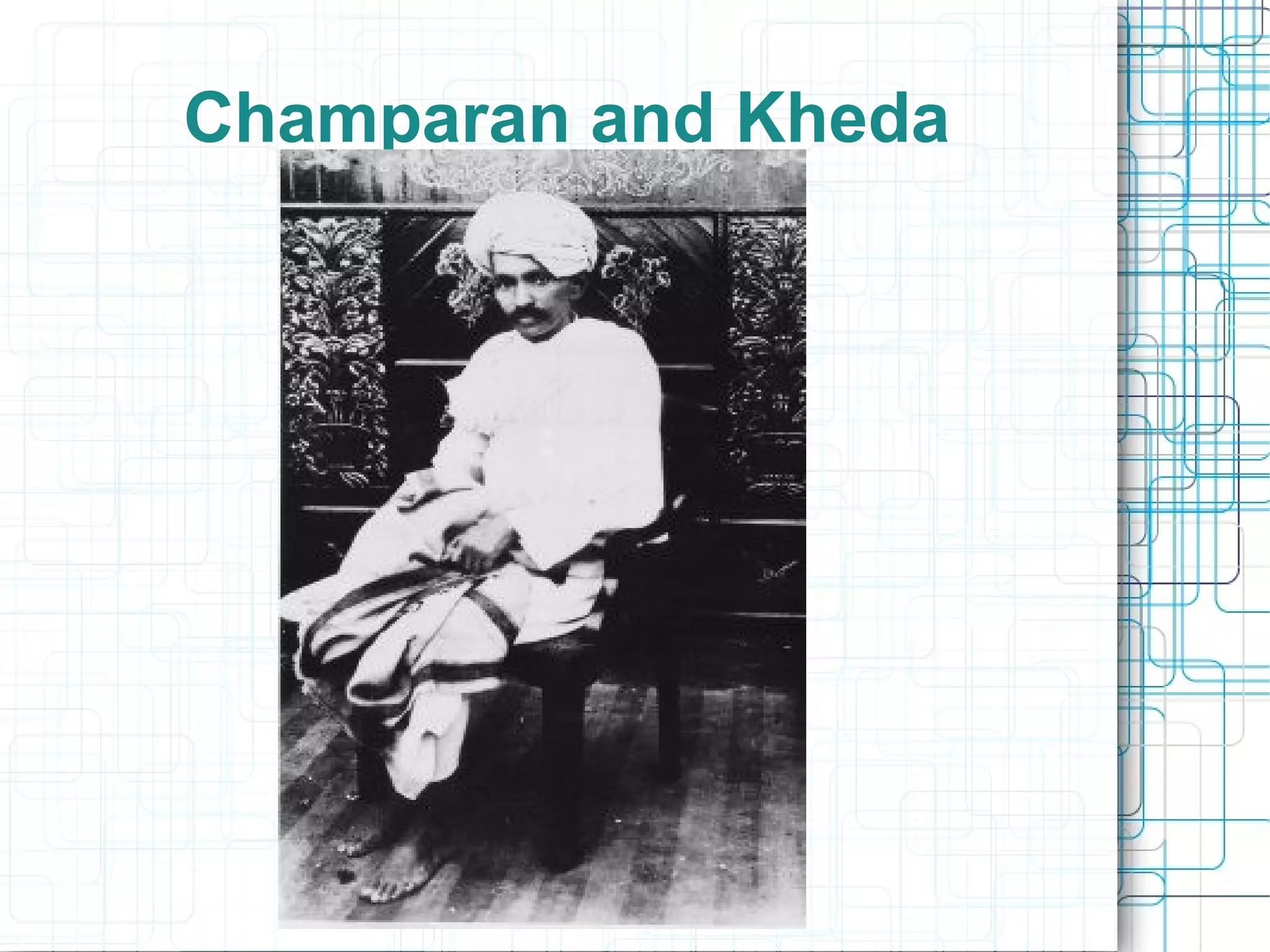
• Champaran and Kheda
• Non-cooperation
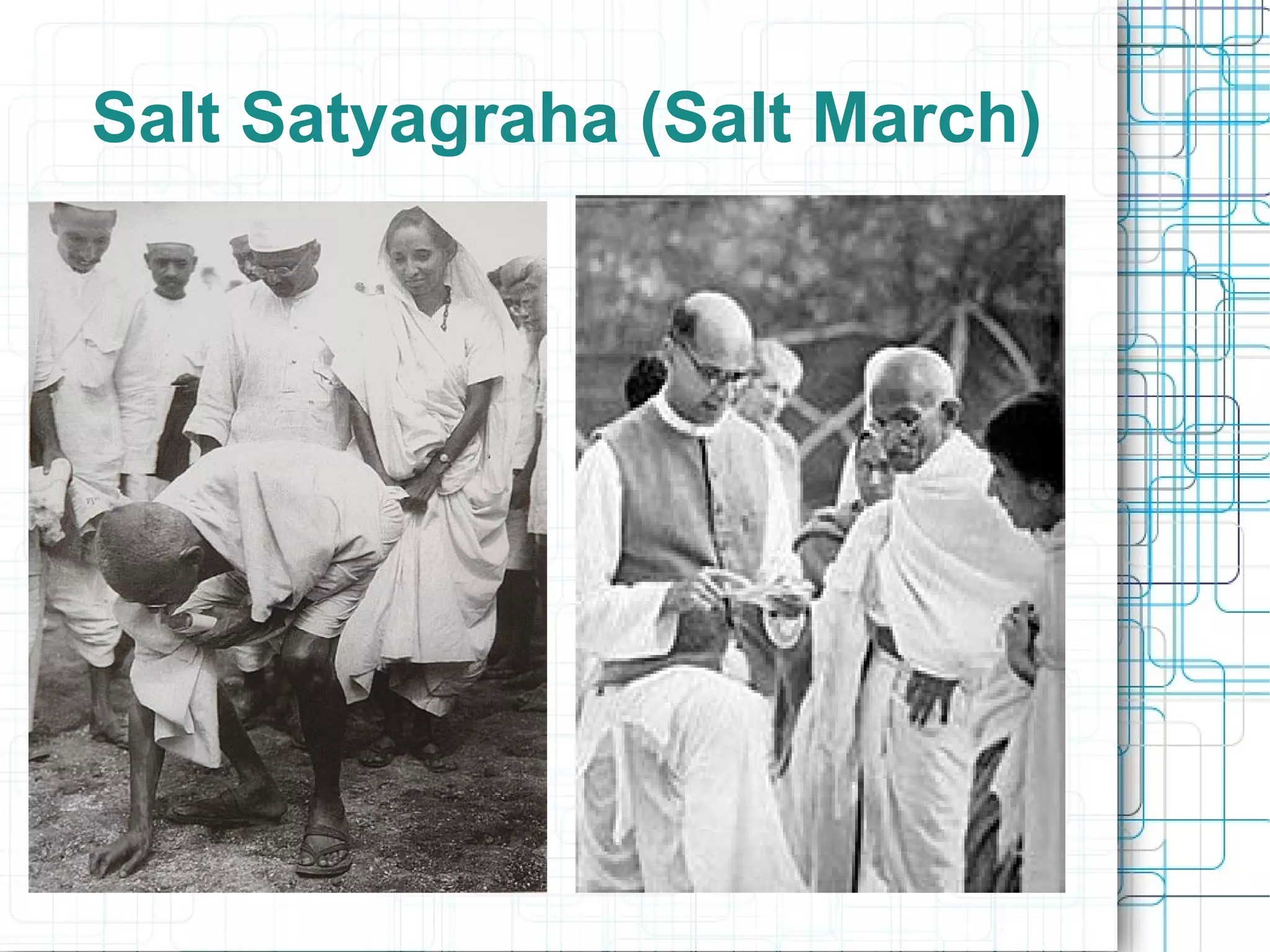
• Salt Satyagraha (Salt March)
• Partition of India
Assasination
Sources
Vocabulary English Faith
Barrister
Landlady
To run foul of
Circumstanses
Poll - tax German Glaube / Vertrauen
Anwalt (Zivilrecht)
Wirtin
Jmd. anfahren
Umstände
Die Kopfsteuer
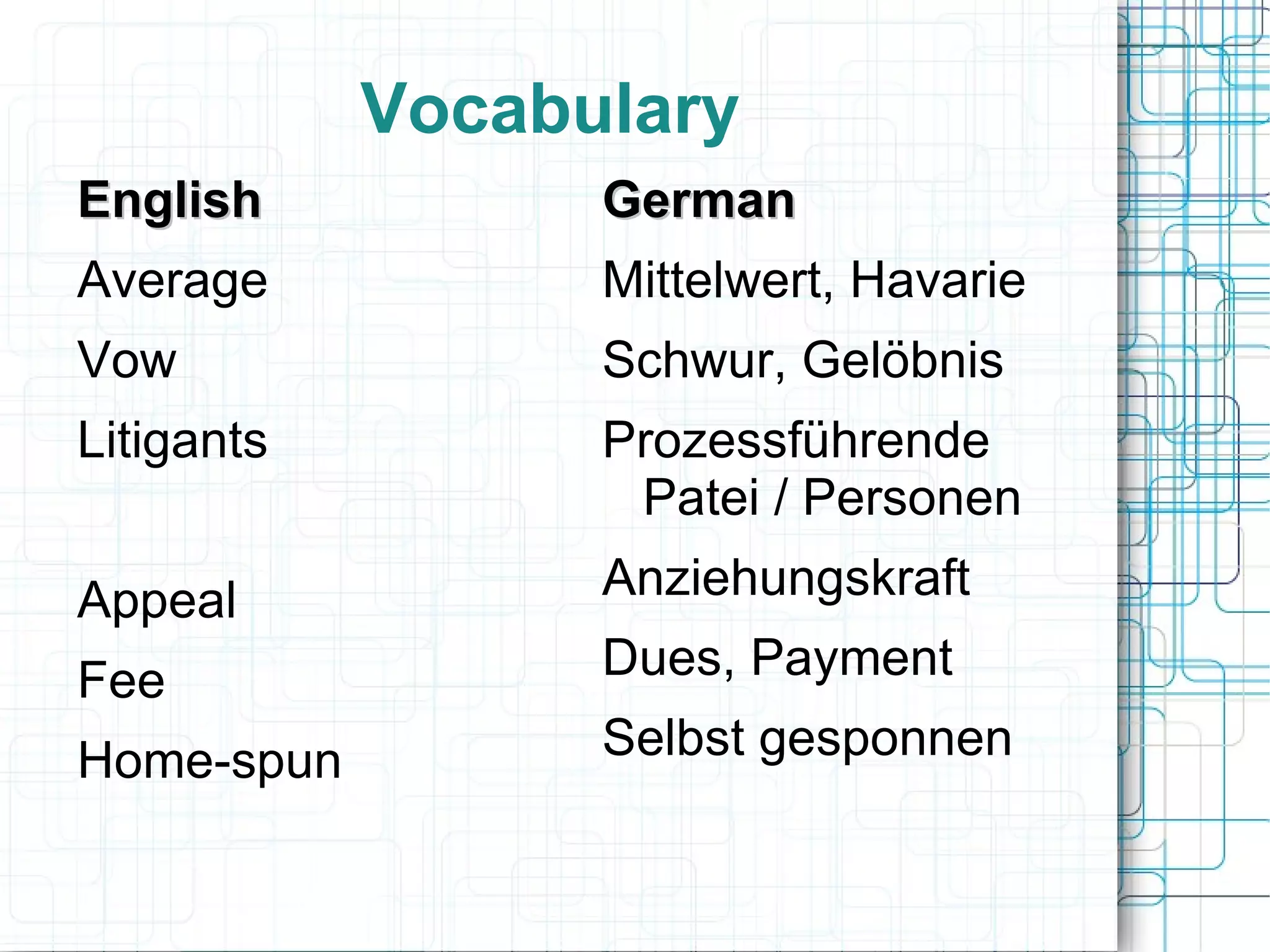
Vocabulary English Average
Vow
Litigants
Appeal
Fee
Home-spun German Mittelwert, Havarie
Schwur, Gelöbnis
Prozessführende Patei / Personen
Anziehungskraft
Dues, Payment
Selbst gesponnen
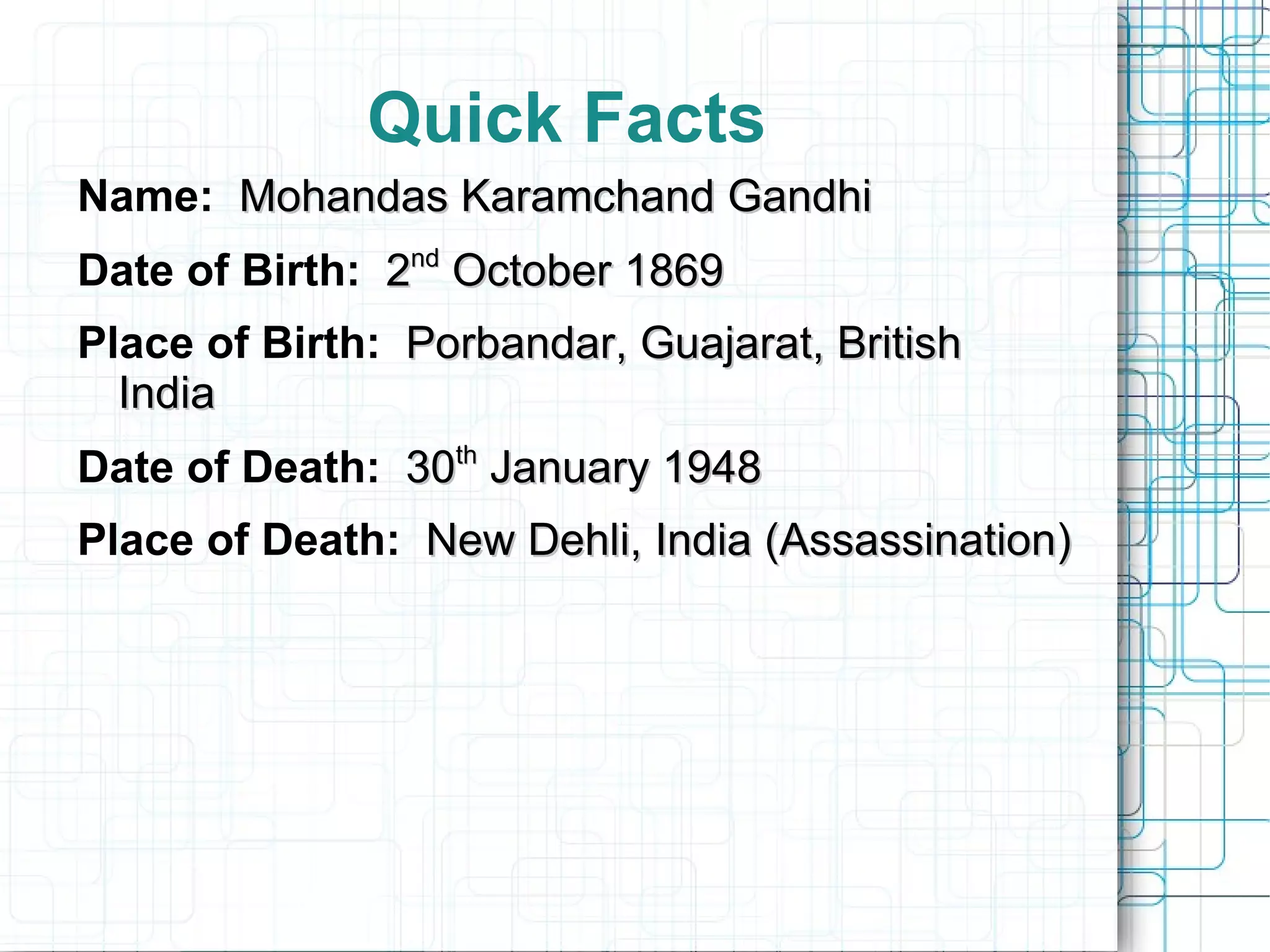
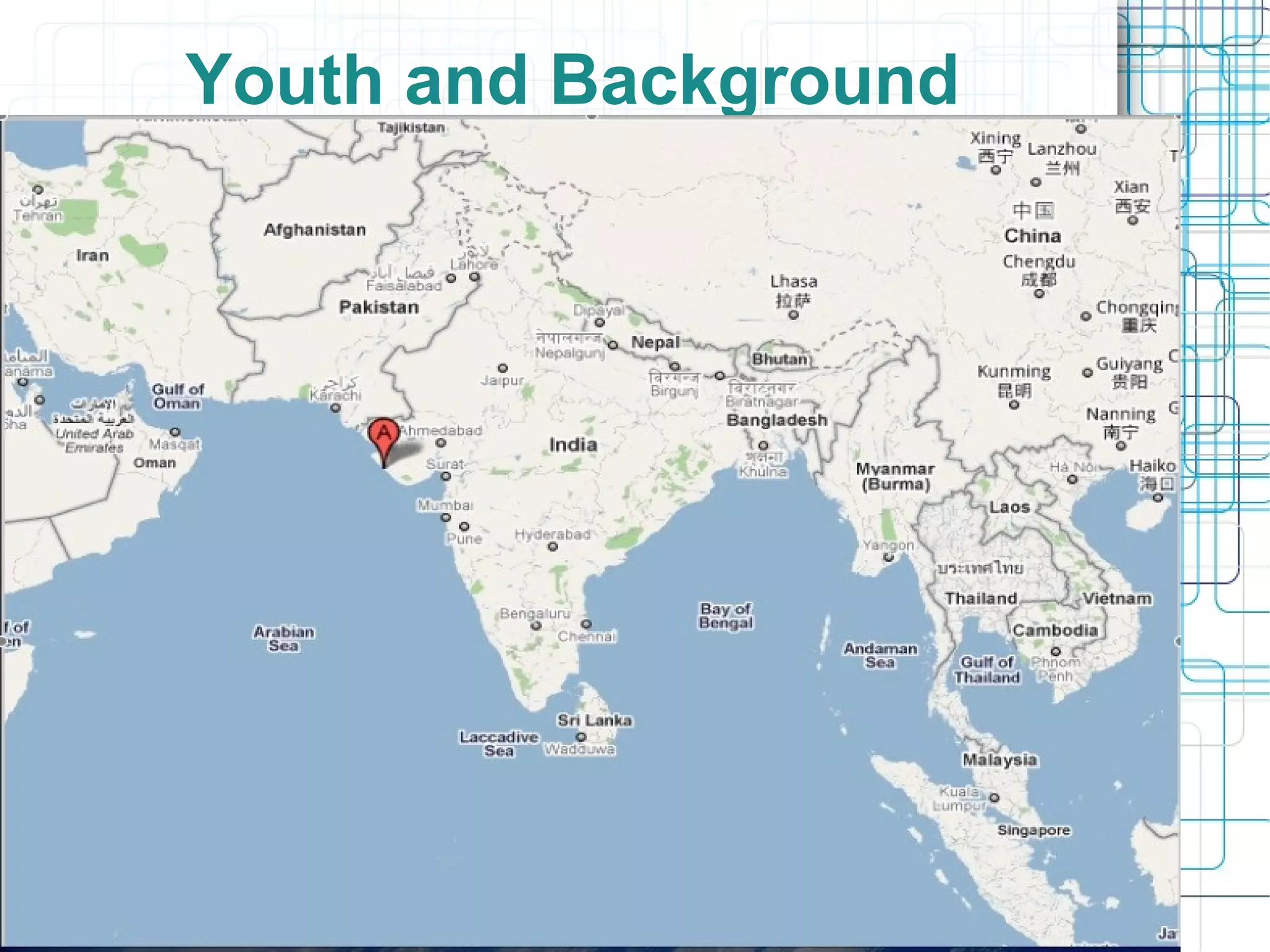
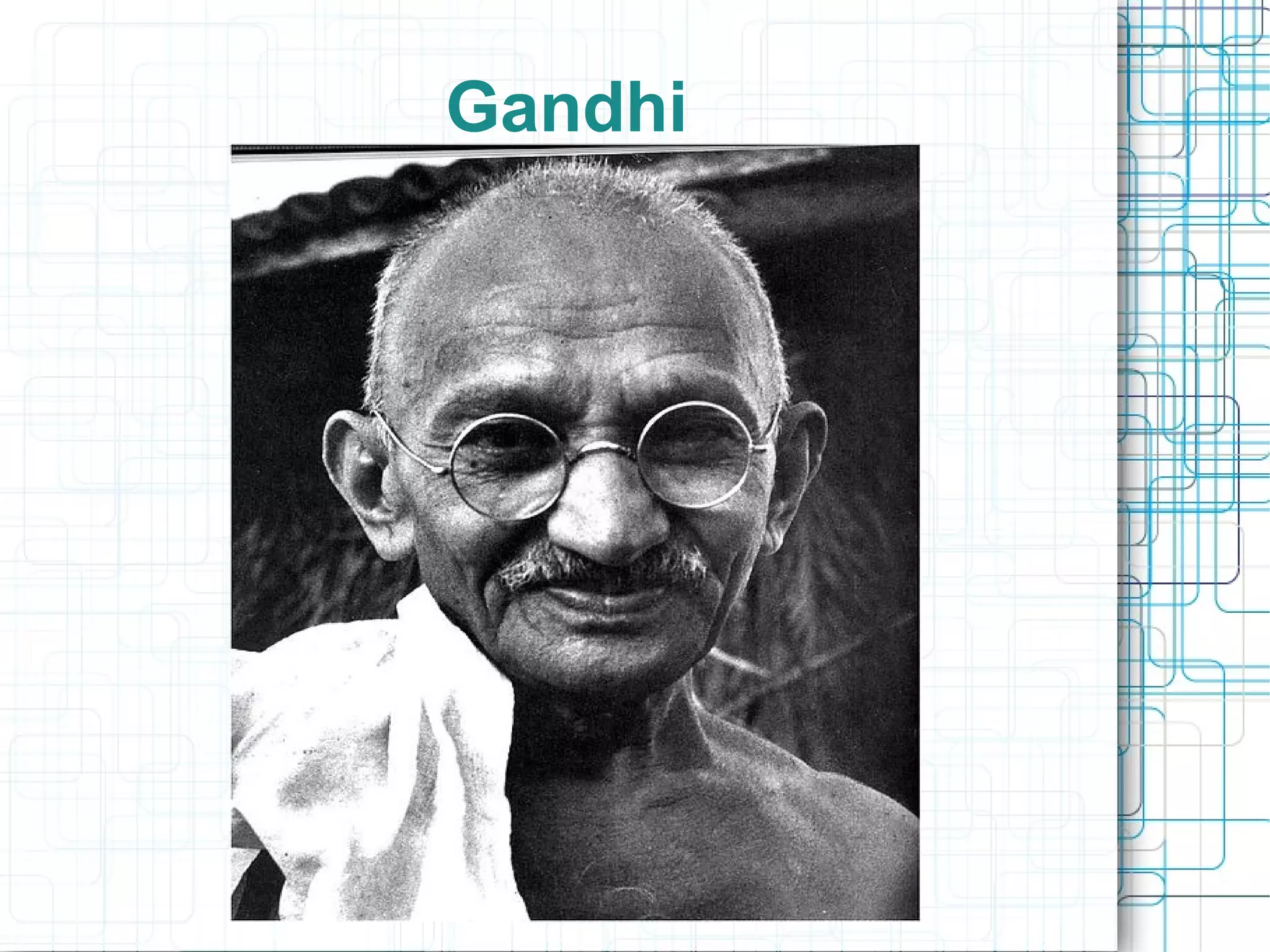
Quick Facts Name:  Mohandas Karamchand Gandhi Date of Birth:  2 nd  October 1869 Place of Birth:  Porbandar, Guajarat, British  India Date of Death:  30 th  January 1948 Place of Death:  New Dehli, India (Assassination)
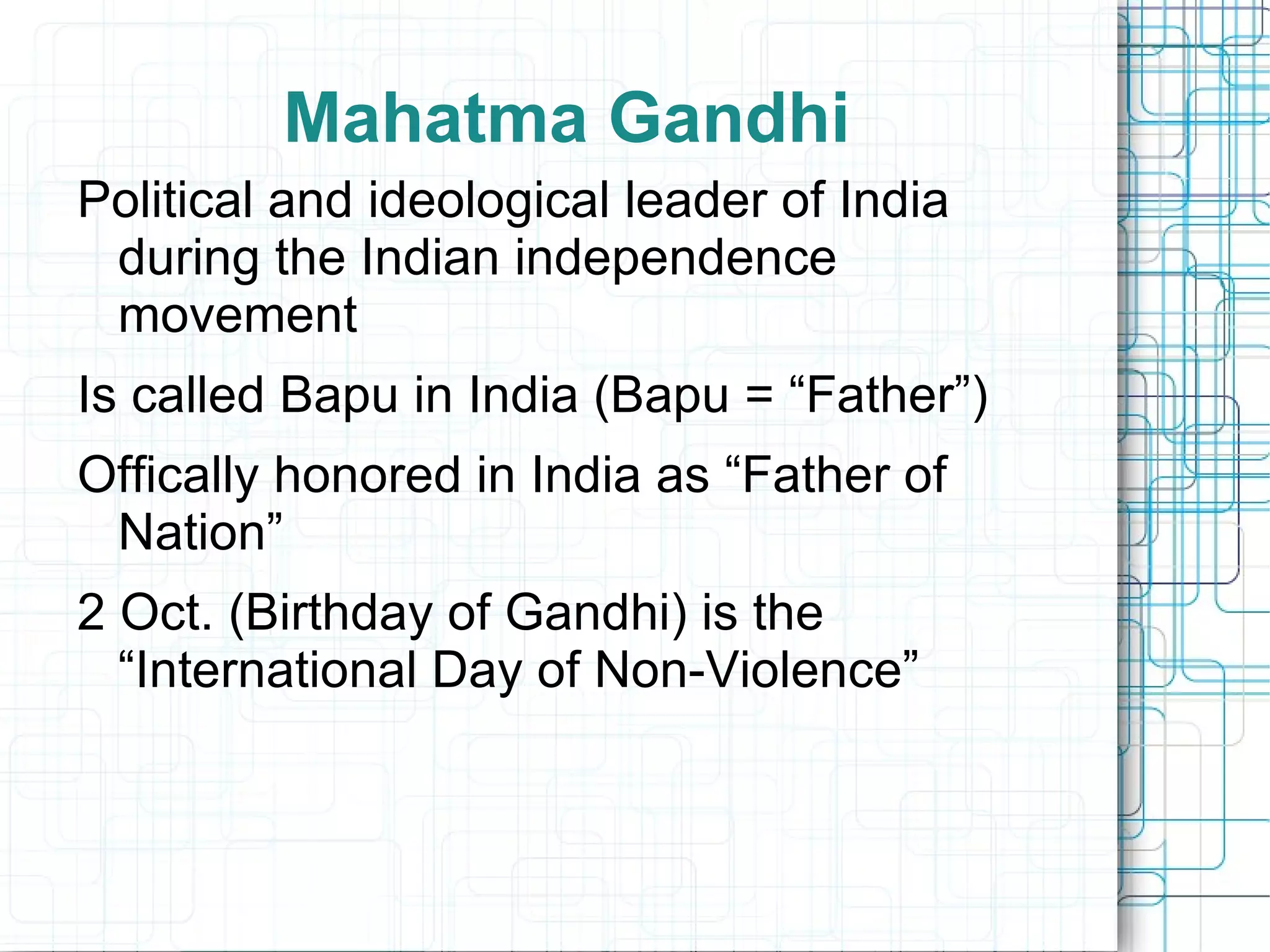
Mahatma Gandhi Political and ideological leader of India during the Indian independence movement
Is called Bapu in India (Bapu = “Father”)
Offically honored in India as “Father of Nation”
2 Oct. (Birthday of Gandhi) is the “International Day of Non-Violence”
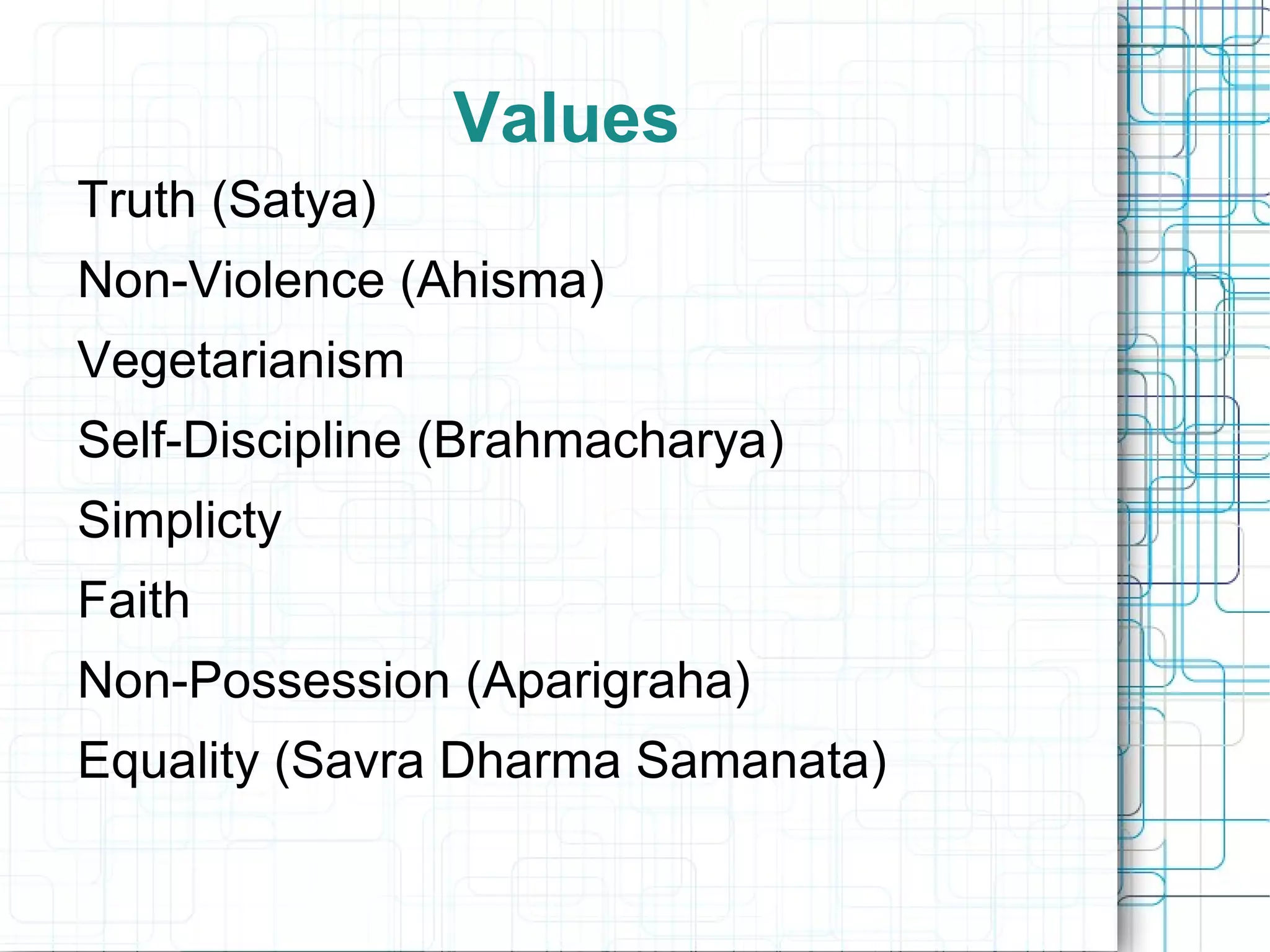
Values Truth (Satya)
Non-Violence (Ahisma)
Vegetarianism
Self-Discipline (Brahmacharya)
Simplicty
Faith
Non-Possession (Aparigraha)
Equality (Savra Dharma Samanata)
Satyagraha Satyagraha (Sanskrit: सत्याग्रह satyāgraha), loosely translated as "Soul Force,"[1] "truth force," or is a particular philosophy and practice within the broader overall category generally known as nonviolent resistance or civil resistance
Youth and Background
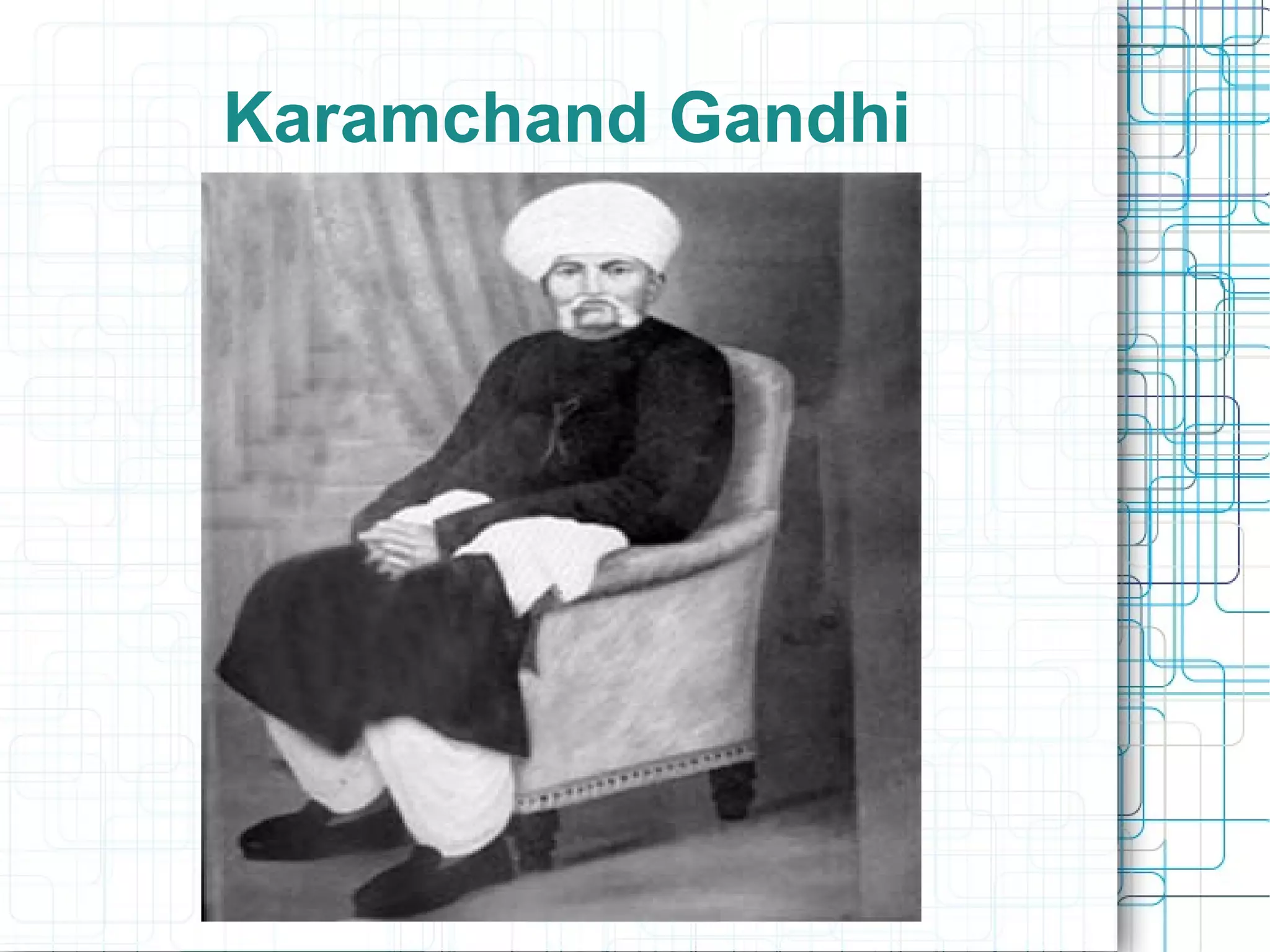
Karamchand Gandhi
His Father Name: Karamchand Gandhi
Lived 1822 – 1885 (63 years)
Hindu
High official serving the state
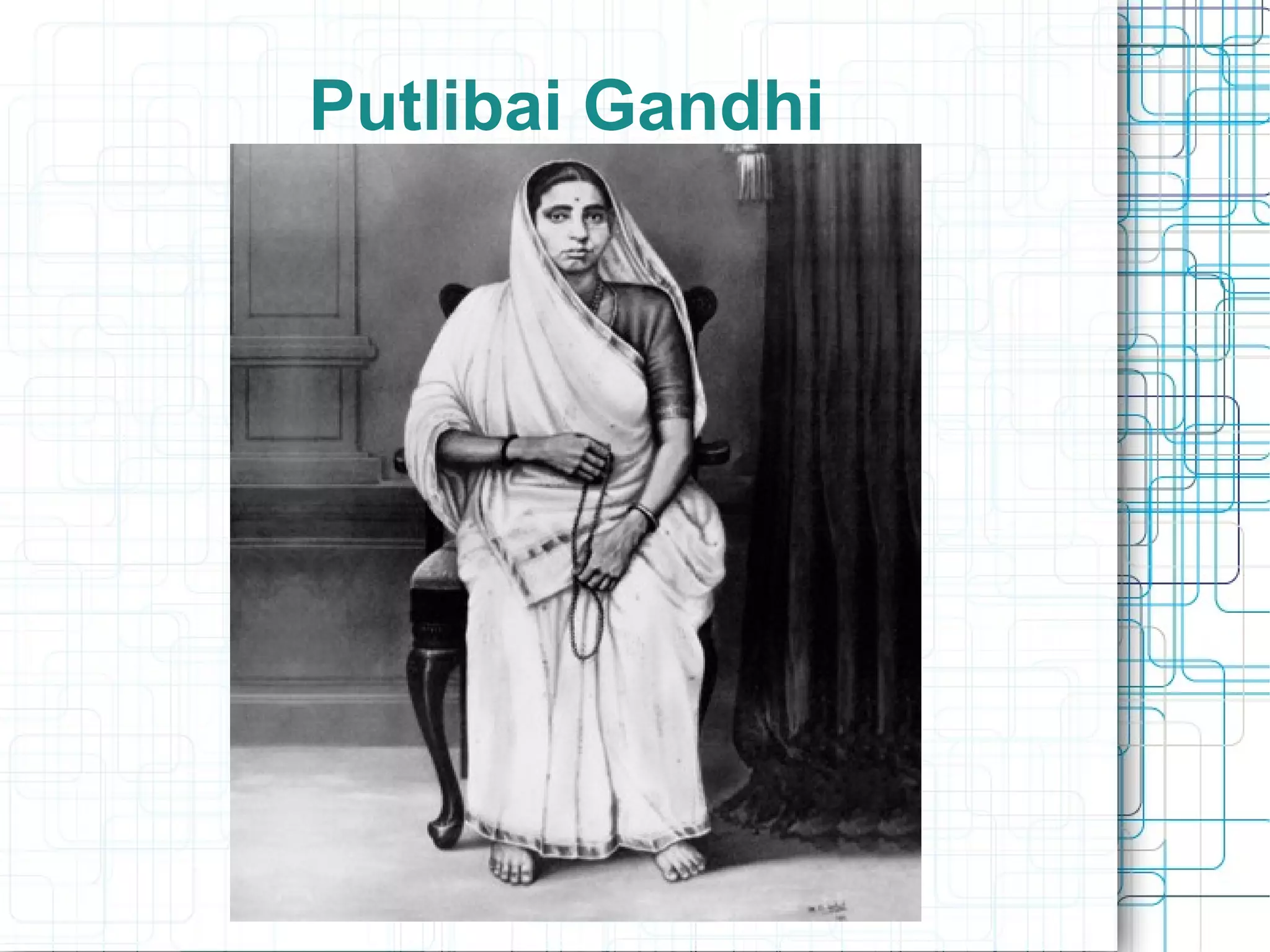
Putlibai Gandhi
His Mother Name: Putlibai Gandhi
Lived 1839 – 1891 (52 years)
Brought up very devout and under Jain (Hindu) traditions
Highly influcenced Mohondas to have compassions for:
sentient beings, vegetarianism, fasting for self-purification, and mutual tolerance among individuals of different creeds
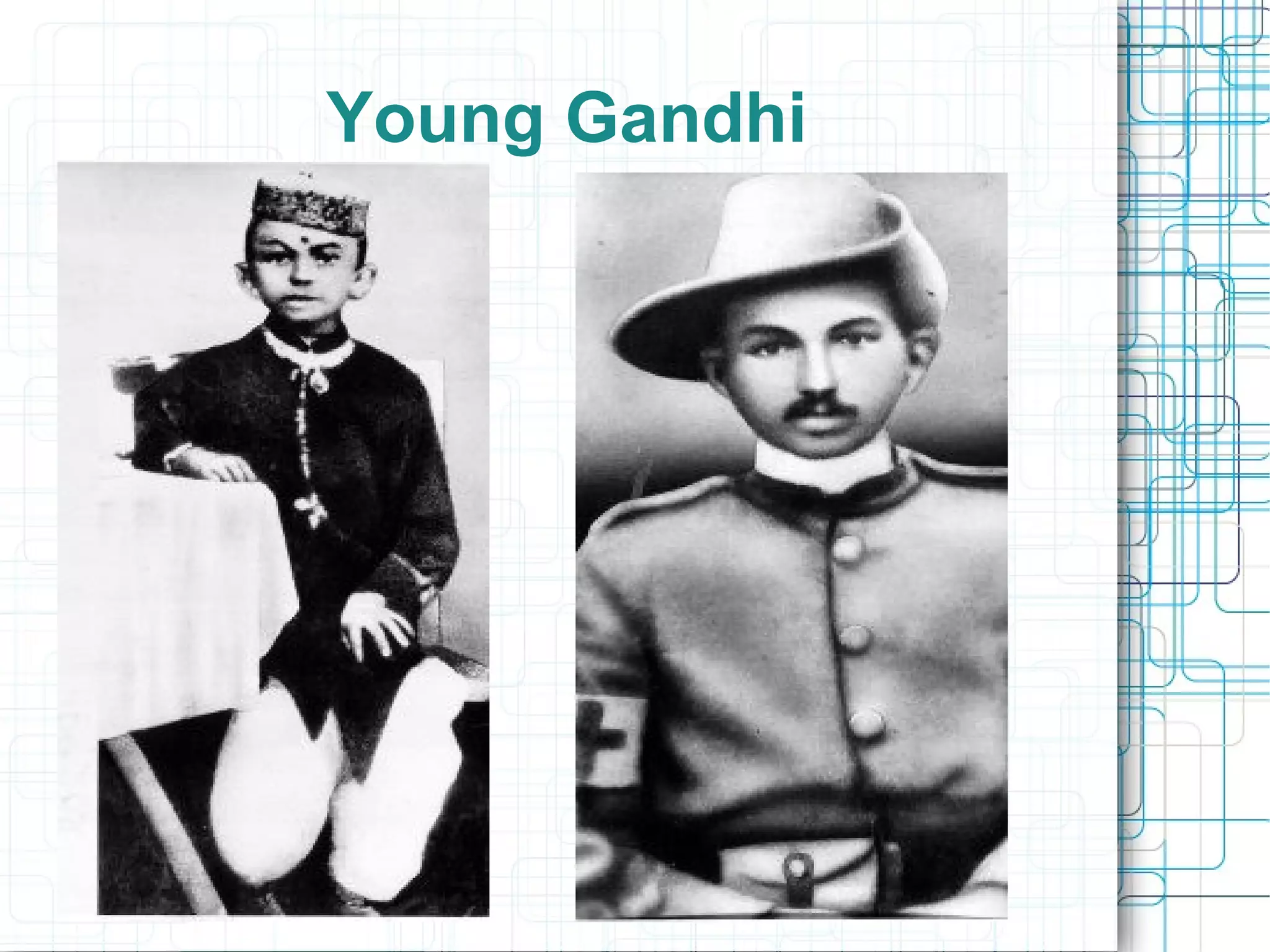
Youth and Background Also did some Indian classic stories influence Gandhi.
Youth and Background Mohondas father(1822–1885), named Karamchand Gandhi, was a Hindu and a high official.
Putlibai G. , his mother, was also a Hindu. She grew up very devout and under Jain traditions. This influenced the young boy and woke his compassion for:  sentient beings, vegetarianism, fasting for self-purification, and mutual tolerance among individuals of different creeds.

Mahatma Gandhi

Editor's Notes

  • #2 Sources: http://3.bp.blogspot.com/_9UxHwUfG2qQ/TGiyUAVcAOI/AAAAAAAAA0k/QUcHJbggIXI/s1600/mahatmagandhi.jpg http://www.kurzbiografie.info/wp-content/uploads/2010/09/mahatmagandhi.jpg
  • #7 Sources: http://www.slideshare.net/parthav_funny/mahatma-gandhi-presentation-961337 http://en.wikipedia.org/wiki/Mohandas_Karamchand_Gandhi
  • #11 maps.google.com
  • #12 http://www.mkgandhi.org/gphotgallery/1869-1914/images/d.jpg
  • #14 http://de.academic.ru/pictures/dewiki/80/Putlibai_Gandhi.jpg http://www.mkgandhi.org/gphotgallery/1869-1914/images/d.jpg https://geniusmothers.com/genius-mothers-of/governors-politicians/Putlibai-Gandhi/
  • #15 https://geniusmothers.com/genius-mothers-of/governors-politicians/Putlibai-Gandhi/
  • #16 http://en.wikipedia.org/wiki/Mahatma_gandhi
  • #17 http://en.wikipedia.org/wiki/Mahatma_gandhi
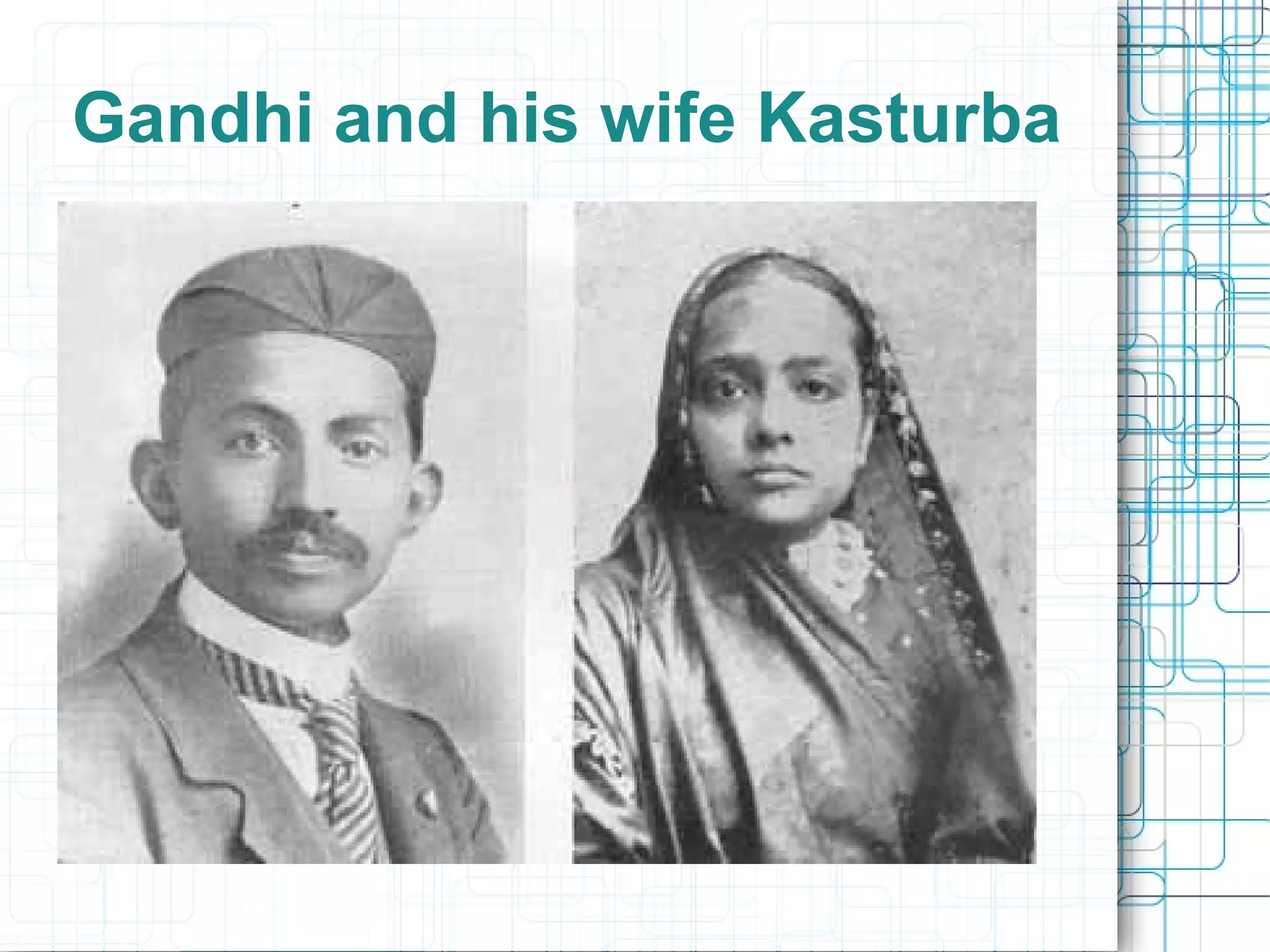
  • #18 http://en.wikipedia.org/wiki/File:Gandhi_and_Kasturbhai_1902.jpg