Suresh Babu G
Lecturer in General Education
MGUCTE Nedumkandam
 It is the method of instruction that give
importance to individuals
 The assumption behind this method is that
human beings learn many things on their own
 Every individuals are unique and hence learns
according to his abilities
 It is a uniform teaching learning programme ,
provided by the teacher , hardly serves the
leaning requirement of different leaners.
 It is a technique of self study
 Here material is presented to the pupil step
by step through graded unites of learning
task called frames
Origin
Programmed learning emerged in the beginning of 20th
century from the efforts of American psychologist
E.L.Thondike(1874-1949)
Definition
 Edgar Dale : Programmed learning is a systematic ,
step by step , self-instructional programme to ensure
the learning of stated behaviour.
 Skinner : Programmed learning is the first application
of the laboratory techniques utilized in the study of
learning process the practical problem of education
 The contents is broken into small easy steps
and each steps is presented in several
sentence each called frame
 The frame are arranged sequentially
 Learner is provided immediate reinforcement
Principles
 Principles of small steps
 Principle of active responding
 Principle of reinforcement
 Principle of self pacing
 Principle of student evaluation
 An ordered sequence of stimulus items
 To each of which a student responds in some
specific way
 The response being reinforced by immediate
knowledge of results
 Students move by small steps
 Students make few errors by practicing
mostly correct responses
 Students know by a process of successively
closer approximation , towards what is
supposed to learn from the programme
TYPES OR TECHNIQUES OF PROGRAMMED
INSTRUCTIONS
 Linear or extrinsic Programming
 Branched or intrinsic Programming
 Mathetics Programming
 Rules system of Programming
 CAI(Computer Assisted Programme)
 LCI (Leaner Controlled Programme Instruction)
 B.F.Skinner is the orginator
 Also called skinnerian style of programme
Features of Linear Programming
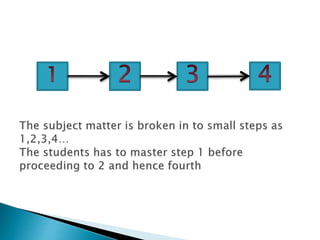
 It is a straight line programme
 In it material is presemted into a series of small steps
(frames)
 Every leaner follows the same path
 The content is broken in to small unit ranging from
just one word to as many as 40 or 50 in length
 The sequence of steps remains unchanged
 The learner is given small amount of
information
 The leaner is expected to compose his
own answer to each question
 The response of leaner get immediate
reinforcement
 It provide for self pacing
 Sudden knowledge of results act as a great
motivator and release anxiety and tension
 Smallness of frames brings the sub-goals
within the reach of the leaner
 Repetition strengthens the responses and
ensures lernering
 Learning process becomes dull
 It limited only to some subjects and topics
 It effects the imagination of the learner
 It encourages guessing
 Does not develop discriminate power of the
students .
BRANCHED OR INTRINSIC PROGRAMMING
 Branched or intrinsic programming was developed
by an American psychologist
Norman .A.Crowder in 1954
 It is also called Crowderian programming
 It is called intrinsic because the leaner within
himself makes the decisions , to adopt the
instructions to his or her needs
CHARACTERISTICS
 A frame may contain two or three related ideas or
sequences
 Frame is bigger in size as compared with linear
type
 The leaner moves forward if his responses are
correct
 Frame explain the matter afresh when response is
not correct
 Principle of exposition
 Principle of diagnosis
 Principle of remediation
 Backward branching
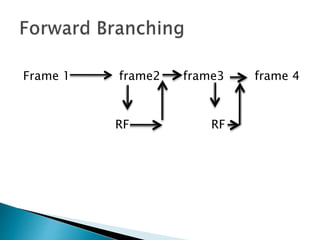
 Forward branching
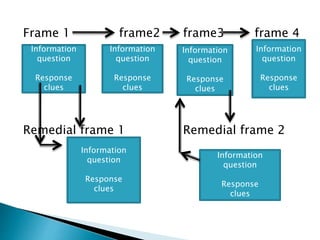
 Here the leaner of frame 1 of the mainstream
goes to the frame 2 of main stream only if he
makes a correct choice.
 If he makes a wrong choice he is lead to a
remedial frame where in he is given some
more help in understanding the concept and
in solving the solution by a better logic
 He will be ten direct to the original frame
no 1 so that he can read it again and answer
correctly in the light of the remedial materials
he has received
Frame 1 frame2 frame3 frame 4
Remedial frame 1 Remedial frame 2
Information
question
Response
clues
Information
question
Response
clues
Information
question
Response
clues
Information
question
Response
clues
Information
question
Response
clues
Information
question
Response
clues
Frame 1 frame2 frame3 frame 4
RF RF
 In forward branching whether the learner
makes a wrong choice he will always be going
to the next frame thus physically progressing
from page to page

Individualized instruction

  • 1.
    Suresh Babu G Lecturerin General Education MGUCTE Nedumkandam
  • 2.
     It isthe method of instruction that give importance to individuals  The assumption behind this method is that human beings learn many things on their own  Every individuals are unique and hence learns according to his abilities  It is a uniform teaching learning programme , provided by the teacher , hardly serves the leaning requirement of different leaners.
  • 3.
     It isa technique of self study  Here material is presented to the pupil step by step through graded unites of learning task called frames
  • 4.
    Origin Programmed learning emergedin the beginning of 20th century from the efforts of American psychologist E.L.Thondike(1874-1949)
  • 5.
    Definition  Edgar Dale: Programmed learning is a systematic , step by step , self-instructional programme to ensure the learning of stated behaviour.  Skinner : Programmed learning is the first application of the laboratory techniques utilized in the study of learning process the practical problem of education
  • 6.
     The contentsis broken into small easy steps and each steps is presented in several sentence each called frame  The frame are arranged sequentially  Learner is provided immediate reinforcement
  • 7.
    Principles  Principles ofsmall steps  Principle of active responding  Principle of reinforcement  Principle of self pacing  Principle of student evaluation
  • 8.
     An orderedsequence of stimulus items  To each of which a student responds in some specific way  The response being reinforced by immediate knowledge of results  Students move by small steps  Students make few errors by practicing mostly correct responses  Students know by a process of successively closer approximation , towards what is supposed to learn from the programme
  • 9.
    TYPES OR TECHNIQUESOF PROGRAMMED INSTRUCTIONS  Linear or extrinsic Programming  Branched or intrinsic Programming  Mathetics Programming  Rules system of Programming  CAI(Computer Assisted Programme)  LCI (Leaner Controlled Programme Instruction)
  • 10.
     B.F.Skinner isthe orginator  Also called skinnerian style of programme
  • 11.
    Features of LinearProgramming  It is a straight line programme  In it material is presemted into a series of small steps (frames)  Every leaner follows the same path  The content is broken in to small unit ranging from just one word to as many as 40 or 50 in length  The sequence of steps remains unchanged
  • 12.
     The learneris given small amount of information  The leaner is expected to compose his own answer to each question  The response of leaner get immediate reinforcement  It provide for self pacing
  • 14.
     Sudden knowledgeof results act as a great motivator and release anxiety and tension  Smallness of frames brings the sub-goals within the reach of the leaner  Repetition strengthens the responses and ensures lernering
  • 15.
     Learning processbecomes dull  It limited only to some subjects and topics  It effects the imagination of the learner  It encourages guessing  Does not develop discriminate power of the students .
  • 16.
    BRANCHED OR INTRINSICPROGRAMMING  Branched or intrinsic programming was developed by an American psychologist Norman .A.Crowder in 1954  It is also called Crowderian programming  It is called intrinsic because the leaner within himself makes the decisions , to adopt the instructions to his or her needs
  • 17.
    CHARACTERISTICS  A framemay contain two or three related ideas or sequences  Frame is bigger in size as compared with linear type  The leaner moves forward if his responses are correct  Frame explain the matter afresh when response is not correct
  • 18.
     Principle ofexposition  Principle of diagnosis  Principle of remediation
  • 19.
     Backward branching Forward branching
  • 20.
     Here theleaner of frame 1 of the mainstream goes to the frame 2 of main stream only if he makes a correct choice.  If he makes a wrong choice he is lead to a remedial frame where in he is given some more help in understanding the concept and in solving the solution by a better logic  He will be ten direct to the original frame no 1 so that he can read it again and answer correctly in the light of the remedial materials he has received
  • 21.
    Frame 1 frame2frame3 frame 4 Remedial frame 1 Remedial frame 2 Information question Response clues Information question Response clues Information question Response clues Information question Response clues Information question Response clues Information question Response clues
  • 22.
    Frame 1 frame2frame3 frame 4 RF RF
  • 23.
     In forwardbranching whether the learner makes a wrong choice he will always be going to the next frame thus physically progressing from page to page