Presented by:
1. Memoona Zamurad (102)
2. Maryam Ikram (108)
3. Mavra Hafeez (114)
4. Mommal Rasool (120)
5. Noreen Riaz (126)
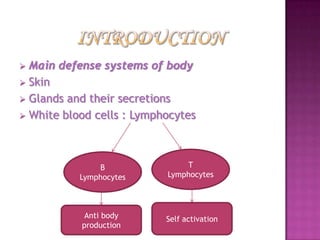
 Main defense systems of body
 Skin
 Glands and their secretions
 White blood cells : Lymphocytes
B
Lymphocytes
T
Lymphocytes
Anti body
production
Self activation
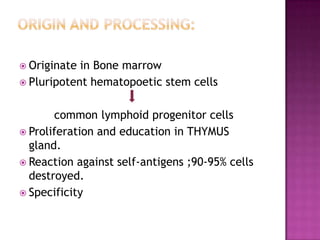
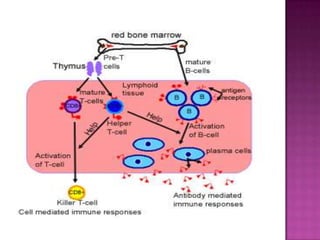
 Originate in Bone marrow
 Pluripotent hematopoetic stem cells
common lymphoid progenitor cells
 Proliferation and education in THYMUS
gland.
 Reaction against self-antigens ;90-95% cells
destroyed.
 Specificity
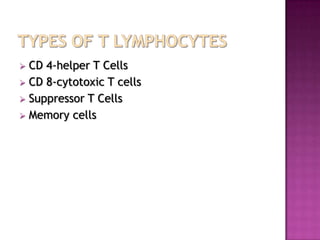
 CD 4-helper T Cells
 CD 8-cytotoxic T cells
 Suppressor T Cells
 Memory cells
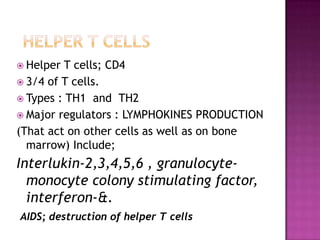
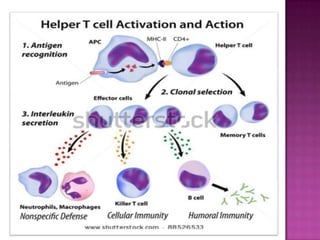
 Helper T cells; CD4
 3/4 of T cells.
 Types : TH1 and TH2
 Major regulators : LYMPHOKINES PRODUCTION
(That act on other cells as well as on bone
marrow) Include;
Interlukin-2,3,4,5,6 , granulocyte-
monocyte colony stimulating factor,
interferon-&.
AIDS; destruction of helper T cells
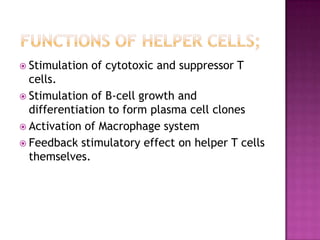
 Stimulation of cytotoxic and suppressor T
cells.
 Stimulation of B-cell growth and
differentiation to form plasma cell clones
 Activation of Macrophage system
 Feedback stimulatory effect on helper T cells
themselves.
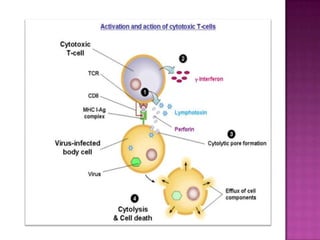
 Killer cells ; CD8
 Direct attack on micro-organisms
 PERFORINS : hole-forming proteins
 Release of cytotoxic substances into the
attacked cells
 Cell swell and thus destroy.
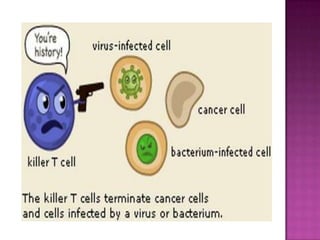
 Lethal to TISSUE CELLS invaded by VIRUSES.
 Important role in destroying CANCER CELLS,
HEART TRANSPLANT CELLS, or other cells
foreign to body.
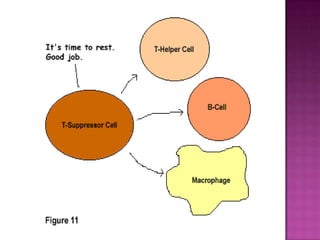
 Less known cells
 Suppress function of cytotoxic and helper T
cells.
 Prevent damage to body itself
 REGULATORY CELLS along with helper cells
 IMMUNE TOLERANCE:
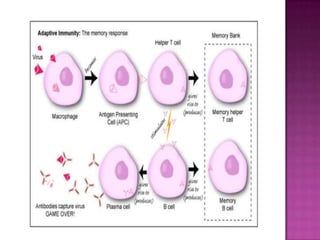
 These are activated by antigens but do not
enter in circulation
 Remain in lymphoid organs
 Migrate to various lymphoid tissues
throughout the body
 If attacked by same antigen again,
immediate response.
 More POWERFUL response
Autoimmune disorders
Immune deficiency diseases
Allergic reaction
Tissue rejection
 IMMUNE TOLERANCE; unresponsiveness of
immune system to any substance capable to
elicit immune response.
 Developed in THYMUS ( self-antigen reaction)
 BUT IF IT FAILS…….
 AUTO-IMMUNITY: 2 types
Organ specific Organ non-specific
BYSANDER EFFECT; inflammation sensitizes
neighboring T cells which would not respond
normally
 “Defective immune system” pathogens
attack easily
 OPPURTUNISTS; organisms taking advantage
of defective defense mechanism.
 2 TYPES:
 CONGENITAL immunodeficiency diseases
(inherited defect in immune system)
 ACQUIRED immunodeficiency diseases
( infection by some pathogen)
 DIGEORGE’S SYNDOME; absence of thymus
gland genetically
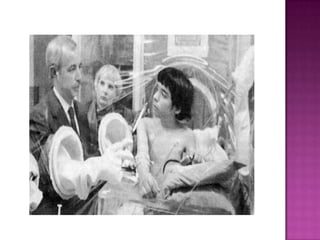
 SCID-Bubble boy disease; lack of ADA
enzyme due to defect at chromosome 22,
lymphoid tissue absent
 AIDS
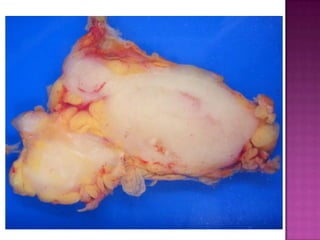
 LYMPHOMA
 Lymphoma: “solid tumor of
lymphoid cells”
 may develop in bone marrow , spleen,
lymph nodes, blood or any other organ.
 Fast and abnormal division of lymphocytes .
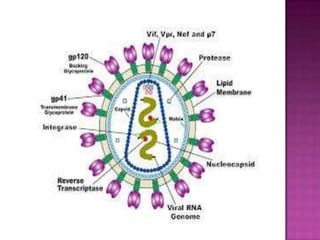
 Cause; HIV
 Cd4 COUNT ; Less than 200 cells/mm3
while normal is 500-1500cells/mm3.
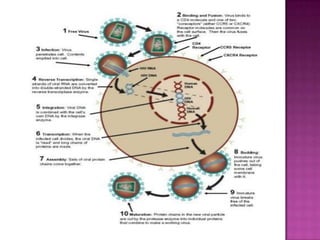
 MODE OF ACTION:
 Glycoprotein from HIV binds to specific
receptor on cd4 cells.
 release of HIV RNA into host cell
 action of REVERSE TRANSCRIPTASE
 viral RNA viral DNA
 new HIV form, host cell burst and virus
enter in bloodstream, infecting more cells,
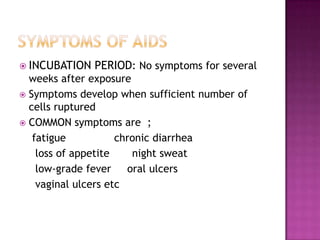
 INCUBATION PERIOD: No symptoms for several
weeks after exposure
 Symptoms develop when sufficient number of
cells ruptured
 COMMON symptoms are ;
fatigue chronic diarrhea
loss of appetite night sweat
low-grade fever oral ulcers
vaginal ulcers etc
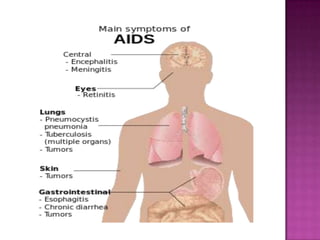
Which mostly kill the AIDS patient are
 Pneumocystis pneumonia
 Kaposi sarcoma ( malignant skin cancer)
 Respiratory tract infections
 Lymphomas
Mode OF TRANSMISSION:
Exposure to secretions from infected person i.e
through blood transfusion,from mother to fetus
and by vaginal sexual intercourse
PREVENTION;
Awareness among people
Blood screening
 15OO-4000cells/ul of blood.
 20;40% of total WBCs
 LYMPHOCYTOSIS: “Increased lymphocytes”
1) ABSOLUTE L.C increased i.e. total
lymphocytes greater than 4000.
2 )RELATIVE L.C increased i.e. increased
proportion of lymphocytes than 40% but
Absolute count IS NORMAL
 LYMPHOCYTOPENIA: “ Decreased
lymphocytes than 1000cells/ul.”
 Is caused by activated T cells.
 An inflammatory reaction
 Secondary response appearing after 48-72
hours of exposure.
 Poison ivy rash: serious tissue damage of skin
on repeated exposures.
 Lungs edema
 Aesthematic attacks
 T cells cause tissue rejection of any foreign
tissue or organ transplanted.
PREVENTION
=> by killing T cells by Azathioprine.
=> inhibit cytotoxic T cells proliferation by
Glucocorticoids ( Cushing syndrome ).
=> immunosuppressive drugs such as
Cyclosporine.

Functions of T Lymphocytes

  • 2.
    Presented by: 1. MemoonaZamurad (102) 2. Maryam Ikram (108) 3. Mavra Hafeez (114) 4. Mommal Rasool (120) 5. Noreen Riaz (126)
  • 3.
     Main defensesystems of body  Skin  Glands and their secretions  White blood cells : Lymphocytes B Lymphocytes T Lymphocytes Anti body production Self activation
  • 4.
     Originate inBone marrow  Pluripotent hematopoetic stem cells common lymphoid progenitor cells  Proliferation and education in THYMUS gland.  Reaction against self-antigens ;90-95% cells destroyed.  Specificity
  • 6.
     CD 4-helperT Cells  CD 8-cytotoxic T cells  Suppressor T Cells  Memory cells
  • 7.
     Helper Tcells; CD4  3/4 of T cells.  Types : TH1 and TH2  Major regulators : LYMPHOKINES PRODUCTION (That act on other cells as well as on bone marrow) Include; Interlukin-2,3,4,5,6 , granulocyte- monocyte colony stimulating factor, interferon-&. AIDS; destruction of helper T cells
  • 8.
     Stimulation ofcytotoxic and suppressor T cells.  Stimulation of B-cell growth and differentiation to form plasma cell clones  Activation of Macrophage system  Feedback stimulatory effect on helper T cells themselves.
  • 10.
     Killer cells; CD8  Direct attack on micro-organisms  PERFORINS : hole-forming proteins  Release of cytotoxic substances into the attacked cells  Cell swell and thus destroy.  Lethal to TISSUE CELLS invaded by VIRUSES.  Important role in destroying CANCER CELLS, HEART TRANSPLANT CELLS, or other cells foreign to body.
  • 13.
     Less knowncells  Suppress function of cytotoxic and helper T cells.  Prevent damage to body itself  REGULATORY CELLS along with helper cells  IMMUNE TOLERANCE:
  • 15.
     These areactivated by antigens but do not enter in circulation  Remain in lymphoid organs  Migrate to various lymphoid tissues throughout the body  If attacked by same antigen again, immediate response.  More POWERFUL response
  • 17.
    Autoimmune disorders Immune deficiencydiseases Allergic reaction Tissue rejection
  • 18.
     IMMUNE TOLERANCE;unresponsiveness of immune system to any substance capable to elicit immune response.  Developed in THYMUS ( self-antigen reaction)  BUT IF IT FAILS…….  AUTO-IMMUNITY: 2 types Organ specific Organ non-specific BYSANDER EFFECT; inflammation sensitizes neighboring T cells which would not respond normally
  • 19.
     “Defective immunesystem” pathogens attack easily  OPPURTUNISTS; organisms taking advantage of defective defense mechanism.  2 TYPES:  CONGENITAL immunodeficiency diseases (inherited defect in immune system)  ACQUIRED immunodeficiency diseases ( infection by some pathogen)
  • 20.
     DIGEORGE’S SYNDOME;absence of thymus gland genetically  SCID-Bubble boy disease; lack of ADA enzyme due to defect at chromosome 22, lymphoid tissue absent
  • 22.
     AIDS  LYMPHOMA Lymphoma: “solid tumor of lymphoid cells”  may develop in bone marrow , spleen, lymph nodes, blood or any other organ.  Fast and abnormal division of lymphocytes .
  • 24.
     Cause; HIV Cd4 COUNT ; Less than 200 cells/mm3 while normal is 500-1500cells/mm3.  MODE OF ACTION:  Glycoprotein from HIV binds to specific receptor on cd4 cells.  release of HIV RNA into host cell  action of REVERSE TRANSCRIPTASE  viral RNA viral DNA  new HIV form, host cell burst and virus enter in bloodstream, infecting more cells,
  • 27.
     INCUBATION PERIOD:No symptoms for several weeks after exposure  Symptoms develop when sufficient number of cells ruptured  COMMON symptoms are ; fatigue chronic diarrhea loss of appetite night sweat low-grade fever oral ulcers vaginal ulcers etc
  • 29.
    Which mostly killthe AIDS patient are  Pneumocystis pneumonia  Kaposi sarcoma ( malignant skin cancer)  Respiratory tract infections  Lymphomas Mode OF TRANSMISSION: Exposure to secretions from infected person i.e through blood transfusion,from mother to fetus and by vaginal sexual intercourse PREVENTION; Awareness among people Blood screening
  • 30.
     15OO-4000cells/ul ofblood.  20;40% of total WBCs  LYMPHOCYTOSIS: “Increased lymphocytes” 1) ABSOLUTE L.C increased i.e. total lymphocytes greater than 4000. 2 )RELATIVE L.C increased i.e. increased proportion of lymphocytes than 40% but Absolute count IS NORMAL  LYMPHOCYTOPENIA: “ Decreased lymphocytes than 1000cells/ul.”
  • 31.
     Is causedby activated T cells.  An inflammatory reaction  Secondary response appearing after 48-72 hours of exposure.  Poison ivy rash: serious tissue damage of skin on repeated exposures.  Lungs edema  Aesthematic attacks
  • 32.
     T cellscause tissue rejection of any foreign tissue or organ transplanted. PREVENTION => by killing T cells by Azathioprine. => inhibit cytotoxic T cells proliferation by Glucocorticoids ( Cushing syndrome ). => immunosuppressive drugs such as Cyclosporine.