z
Introduction to
IMMUNOLOGY
Dr. M.A.Lateef Siddiqui,
MD Scholar, Dept. of Medicine, GNTC,
Hyderabad.
z
IMMUNITY & IMMUNE SYSTEM
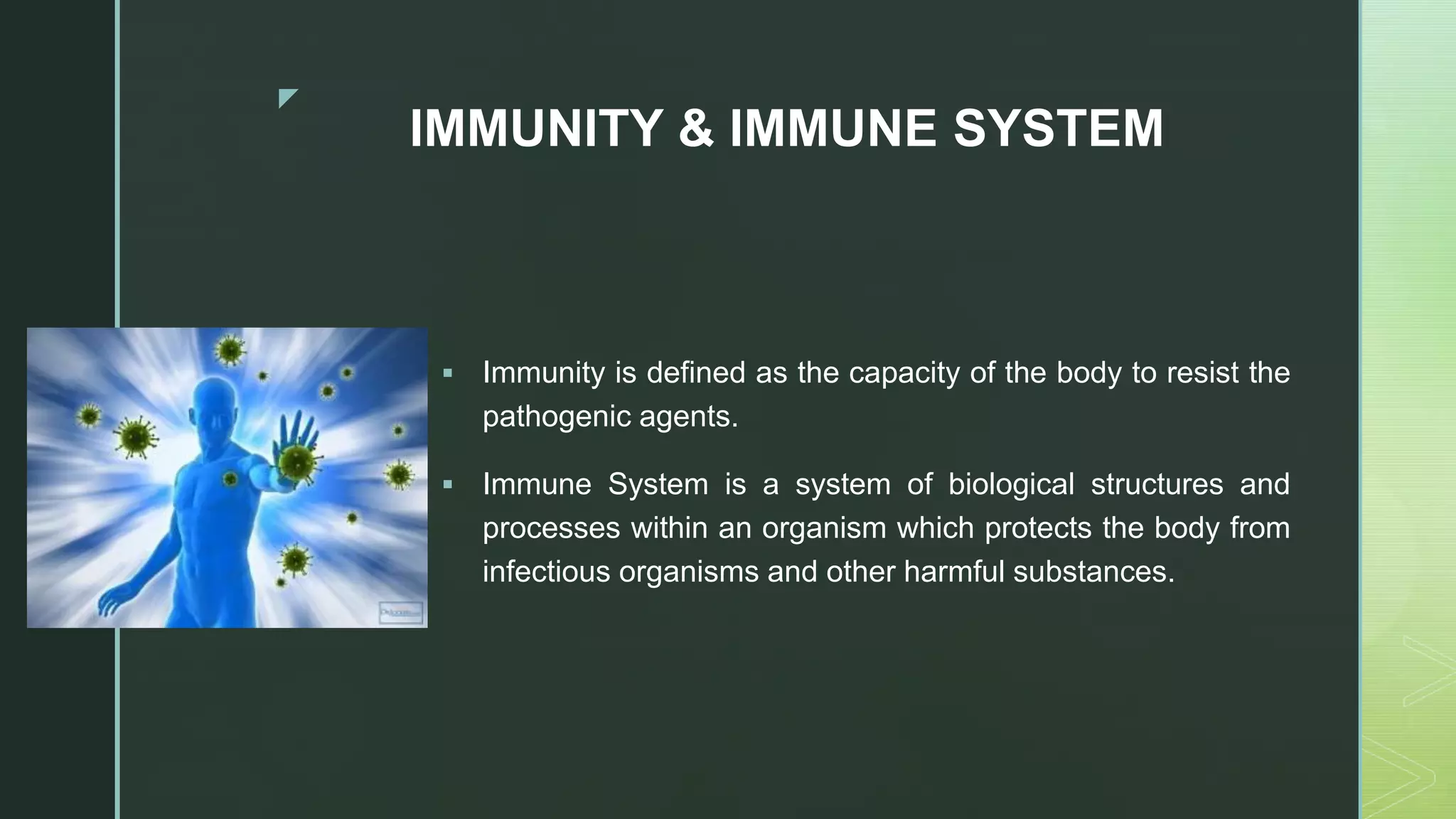
 Immunity is defined as the capacity of the body to resist the
pathogenic agents.
 Immune System is a system of biological structures and
processes within an organism which protects the body from
infectious organisms and other harmful substances.
z
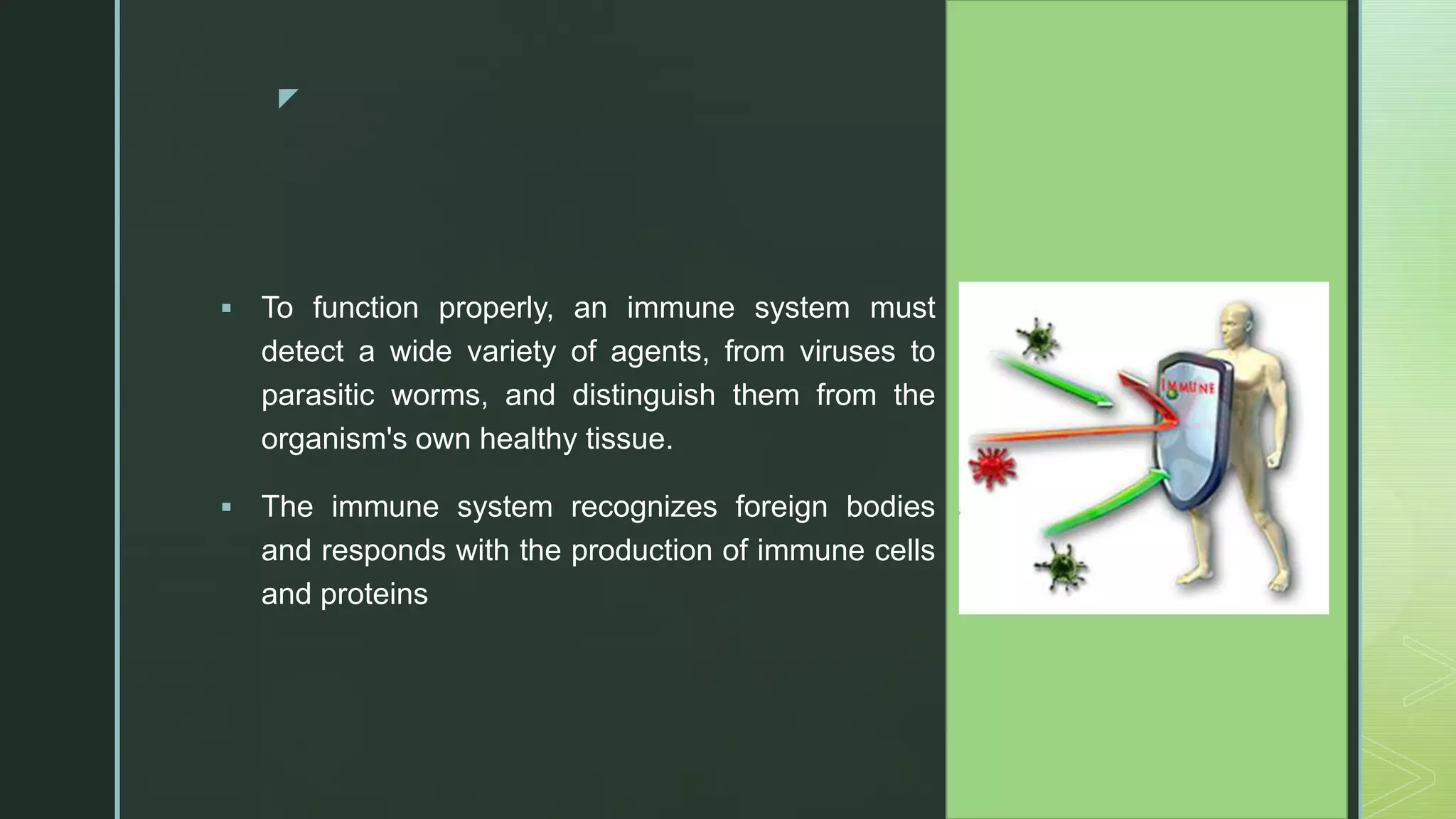
 To function properly, an immune system must
detect a wide variety of agents, from viruses to
parasitic worms, and distinguish them from the
organism's own healthy tissue.
 The immune system recognizes foreign bodies
and responds with the production of immune cells
and proteins
z
ROLE OF THE IMMUNE SYSTEM
 Defense against microbes
 Defense against the growth of tumor cells – kills the growth of
tumor cells
 Homeostasis – destruction of abnormal or dead cells (e.g. dead
red or white blood cells, antigen-antibody complex)
z
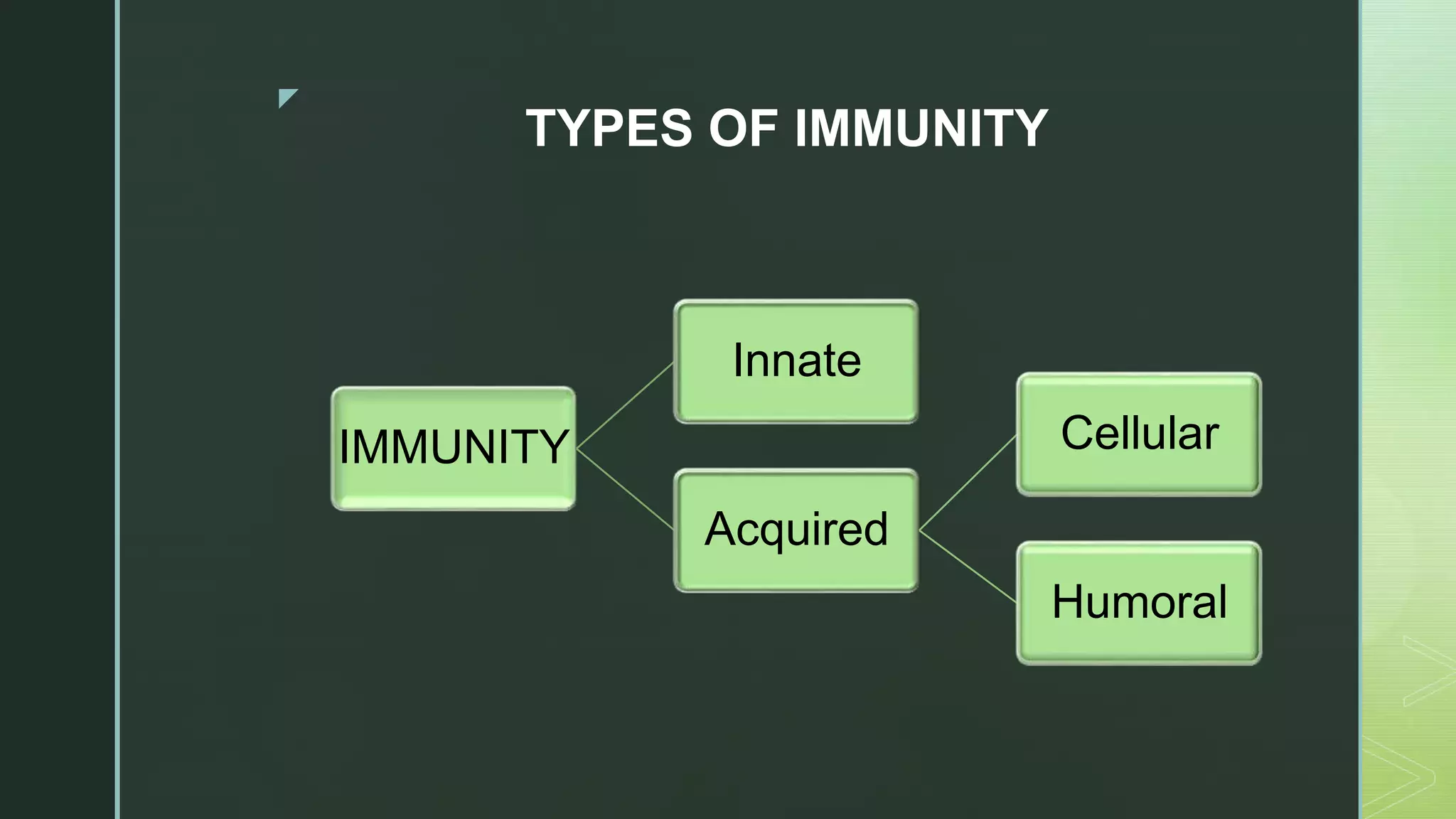
TYPES OF IMMUNITY
IMMUNITY
Innate
Acquired
Cellular
Humoral
z
TYPES OF IMMUNITY
Innate (non-adaptive / non-specific)
 Inborn capacity of the body
 First line of immune response
 Relies on mechanisms that exist before infection
 Examples include GIT, Respiratory System, Urinogenital System,
Skin etc…
z
TYPES OF IMMUNITY
Acquired (adaptive / specific)
 Second line of response (if innate fails)
 Most powerful
 Relies on mechanisms that body adapts after infection
 Develops against specific foreign body like bacteria, viruses, toxins,
vaccines, transplanted tissues etc…
 Handled by T- and B- lymphocytes
z
LYMPHOID TISSUE ORGANIZATION
 It consists of three (3) major divisions
1. The stem cell producing organs:-Yolk sac, fetal liver& bone marrow
2. Central or primary lymphoid organs:-Thymus, and Bursa / bone
marrow
3. Peripheral or secondary lymphoid organs:-
Lymph nodes , spleen , Gut – associated lymphoid tissue.
 Note:- The lymphosis with in the Thymus and Bone Marrow is pre
programmed and not depend upon external factor like antigen.
z
` Blood
Capillaries
Tissue space Secondary Lymphoid tissue Lymph glands
Lymph T Cells B cells
T dependent area B dependant area
Efferent Lymphatic duct Majority settle down
in secondary lymphoid tissue
Thoracic Duct
z
ANTIGEN
 Any substance which when introduced into the body stimulates
the production of an antibody, which reacts specifically with it.
 Antigen Presenting Cells are the special type of cells in the
body which induce the release of antigenic materials from the
invading organisms and present these to Helper T cells.
 Mainly are of two types:
1. Macrophages
2. Dendritic Cells.
z
HLA & MHC
 Invading foreign materials are either engulfed by macrophages
or trapped by dendritic cells.
 Digested into small peptides.
 Antigenic peptides moves towards the surface of APC and get
loaded on a genetic matter known as Human Leucocyte Antigen
(HLA).
 HLA is present in a molecule of Major Histocompability Complex
(MHC).
z
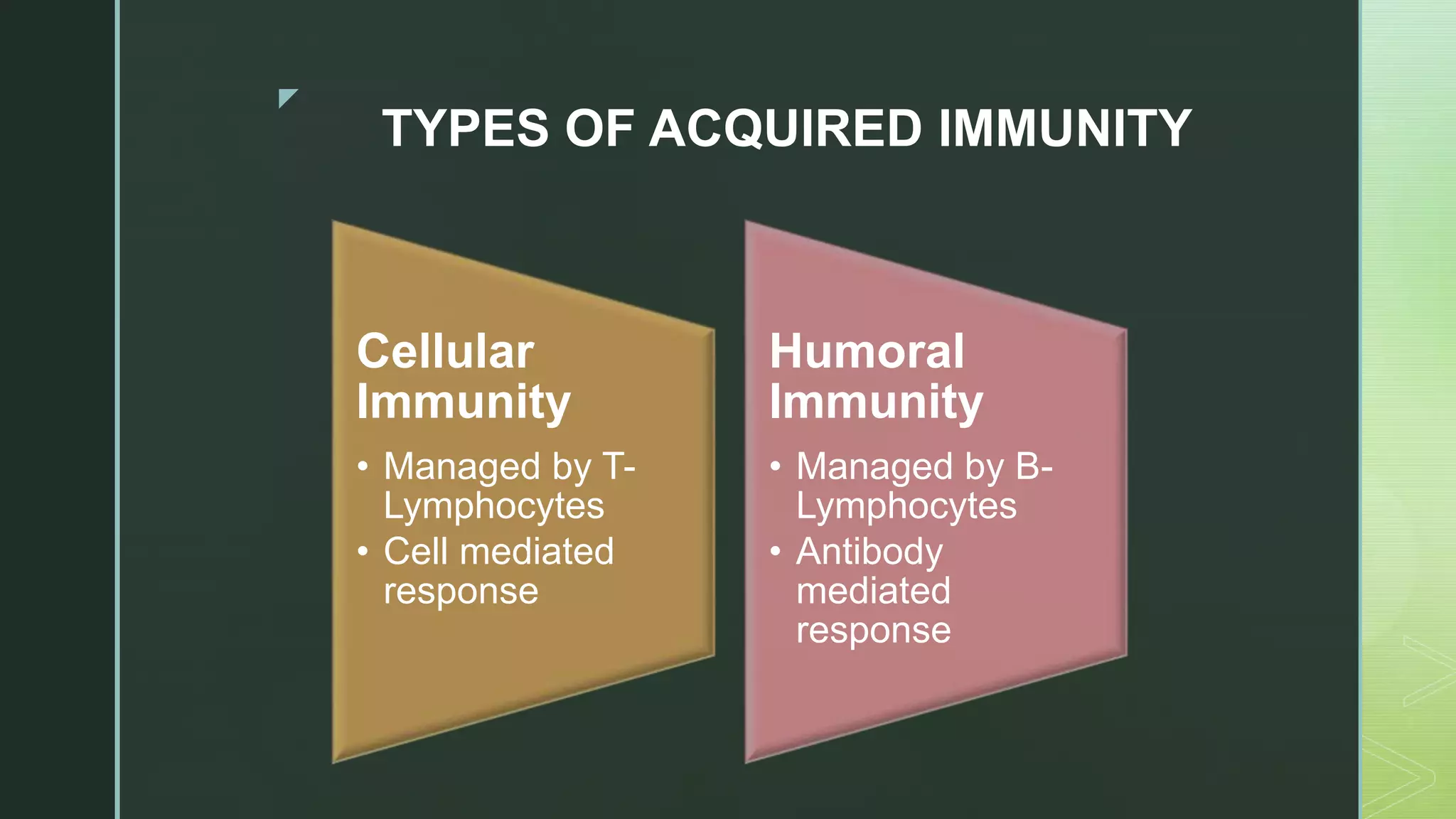
TYPES OF ACQUIRED IMMUNITY
Cellular
Immunity
• Managed by T-
Lymphocytes
• Cell mediated
response
Humoral
Immunity
• Managed by B-
Lymphocytes
• Antibody
mediated
response
z
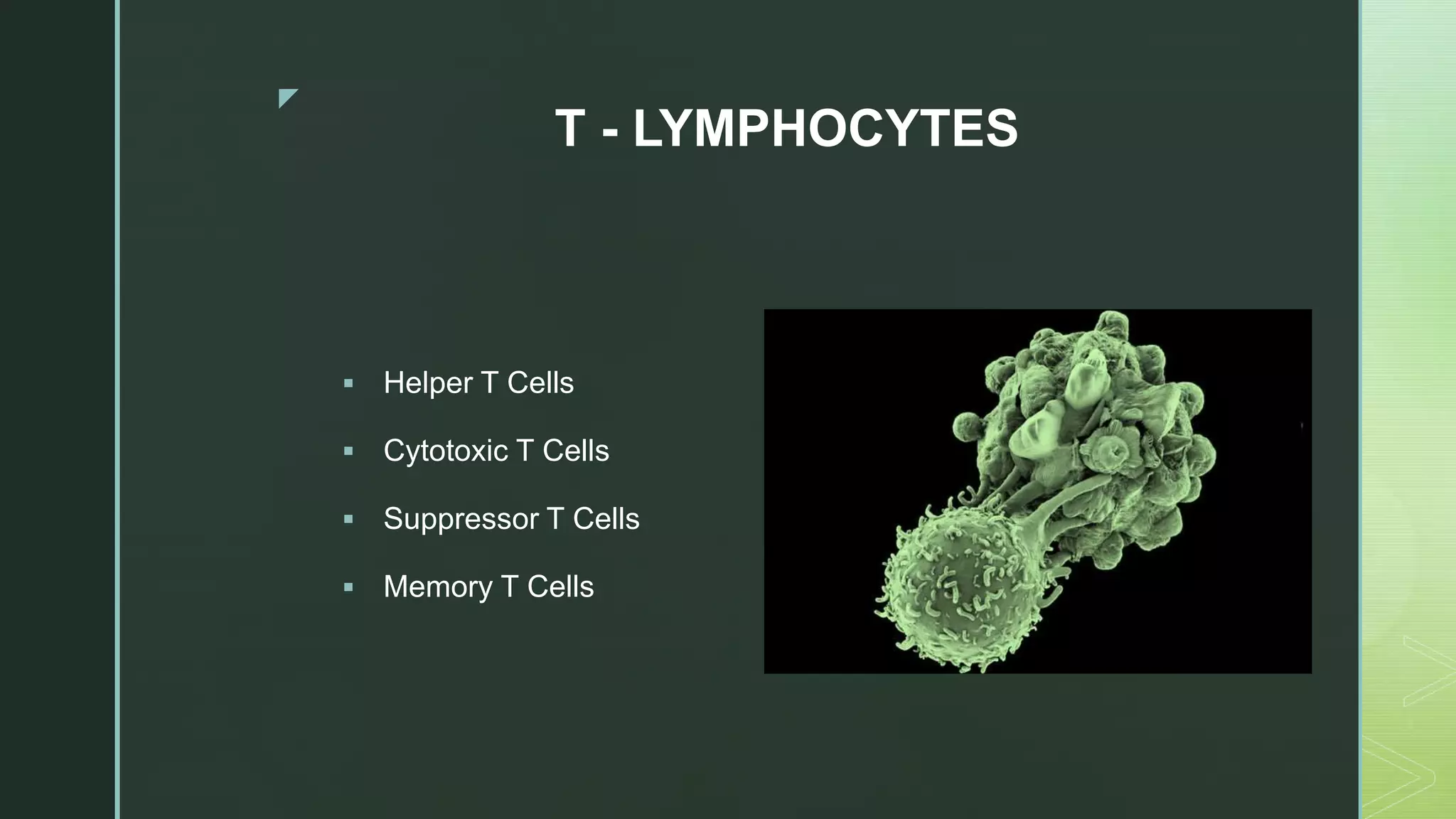
T - LYMPHOCYTES
 Helper T Cells
 Cytotoxic T Cells
 Suppressor T Cells
 Memory T Cells
z
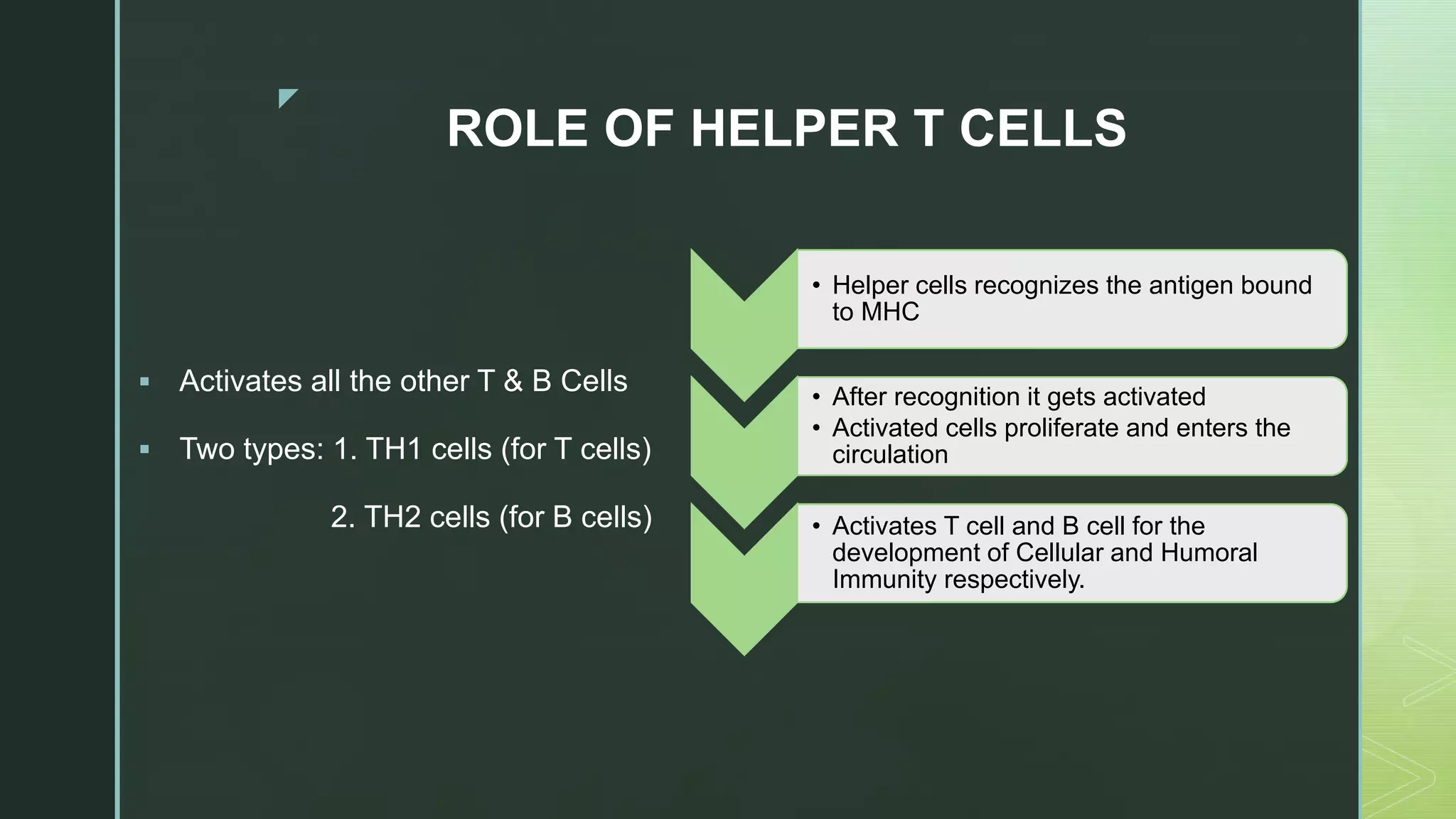
ROLE OF HELPER T CELLS
 Activates all the other T & B Cells
 Two types: 1. TH1 cells (for T cells)
2. TH2 cells (for B cells)
• Helper cells recognizes the antigen bound
to MHC
• After recognition it gets activated
• Activated cells proliferate and enters the
circulation
• Activates T cell and B cell for the
development of Cellular and Humoral
Immunity respectively.
z
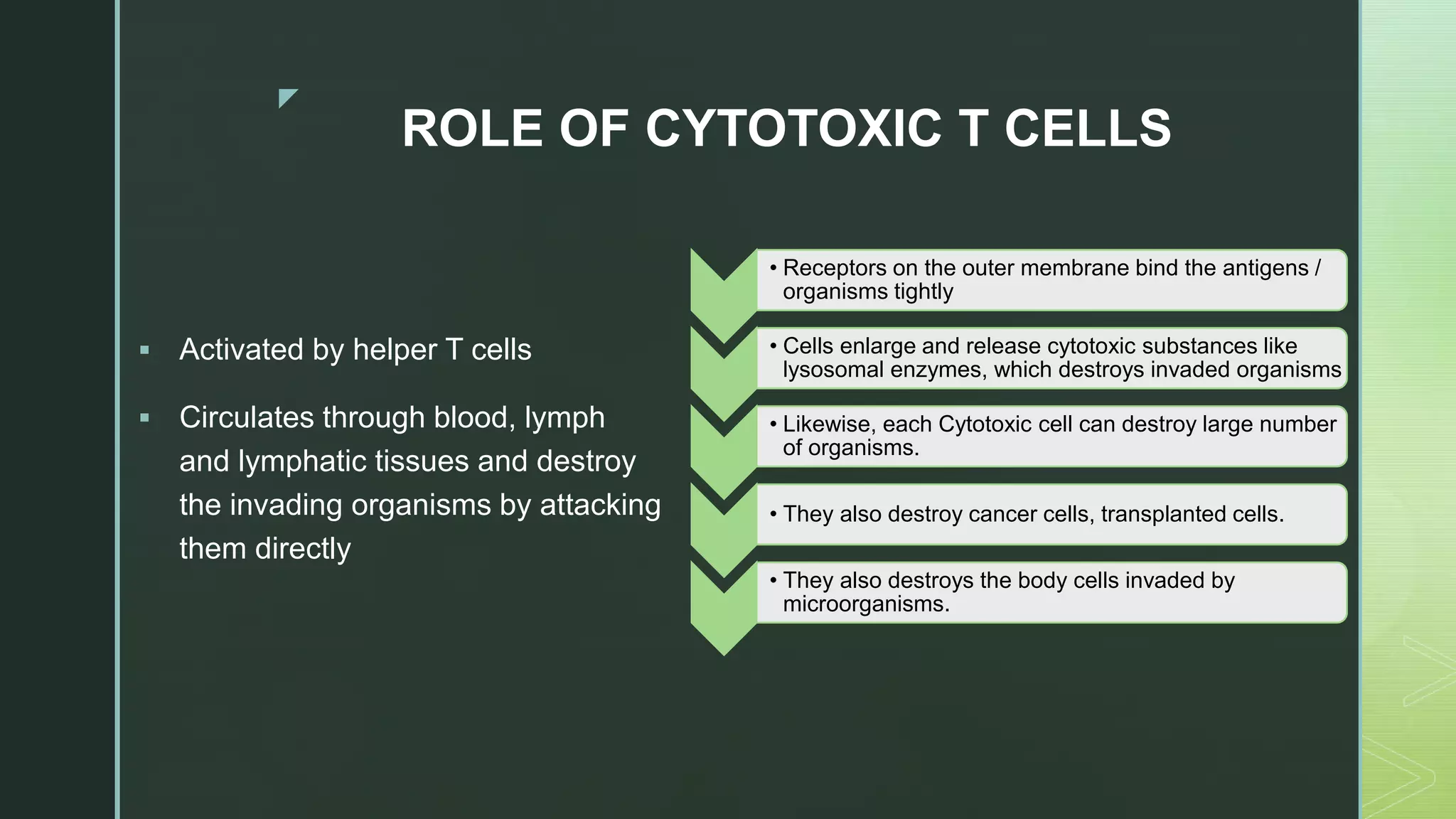
ROLE OF CYTOTOXIC T CELLS
 Activated by helper T cells
 Circulates through blood, lymph
and lymphatic tissues and destroy
the invading organisms by attacking
them directly
• Receptors on the outer membrane bind the antigens /
organisms tightly
• Cells enlarge and release cytotoxic substances like
lysosomal enzymes, which destroys invaded organisms
• Likewise, each Cytotoxic cell can destroy large number
of organisms.
• They also destroy cancer cells, transplanted cells.
• They also destroys the body cells invaded by
microorganisms.
z
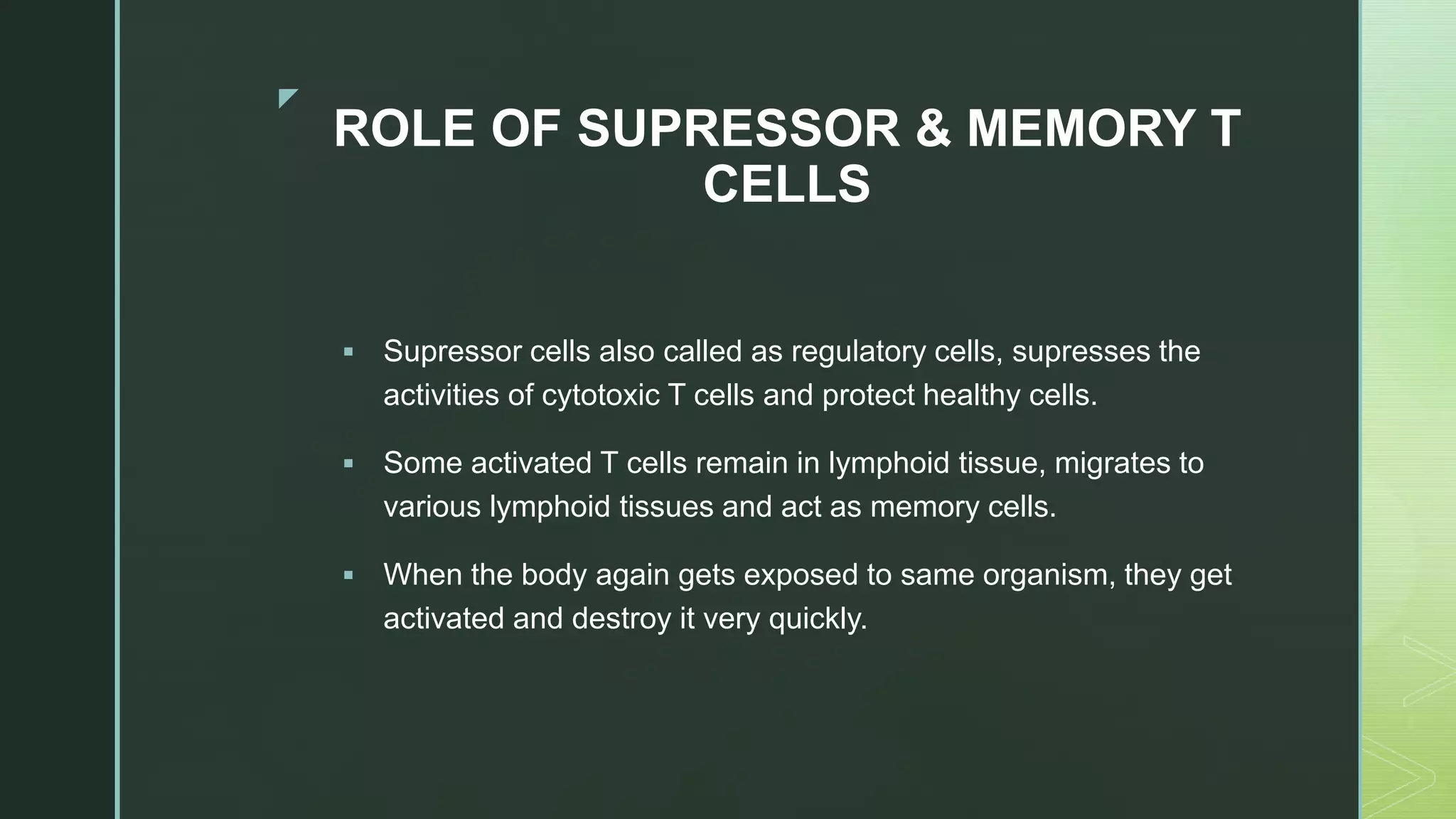
ROLE OF SUPRESSOR & MEMORY T
CELLS
 Supressor cells also called as regulatory cells, supresses the
activities of cytotoxic T cells and protect healthy cells.
 Some activated T cells remain in lymphoid tissue, migrates to
various lymphoid tissues and act as memory cells.
 When the body again gets exposed to same organism, they get
activated and destroy it very quickly.
z
B - LYMPHOCYTES
 Plasma Cells
 Memory Cells
z
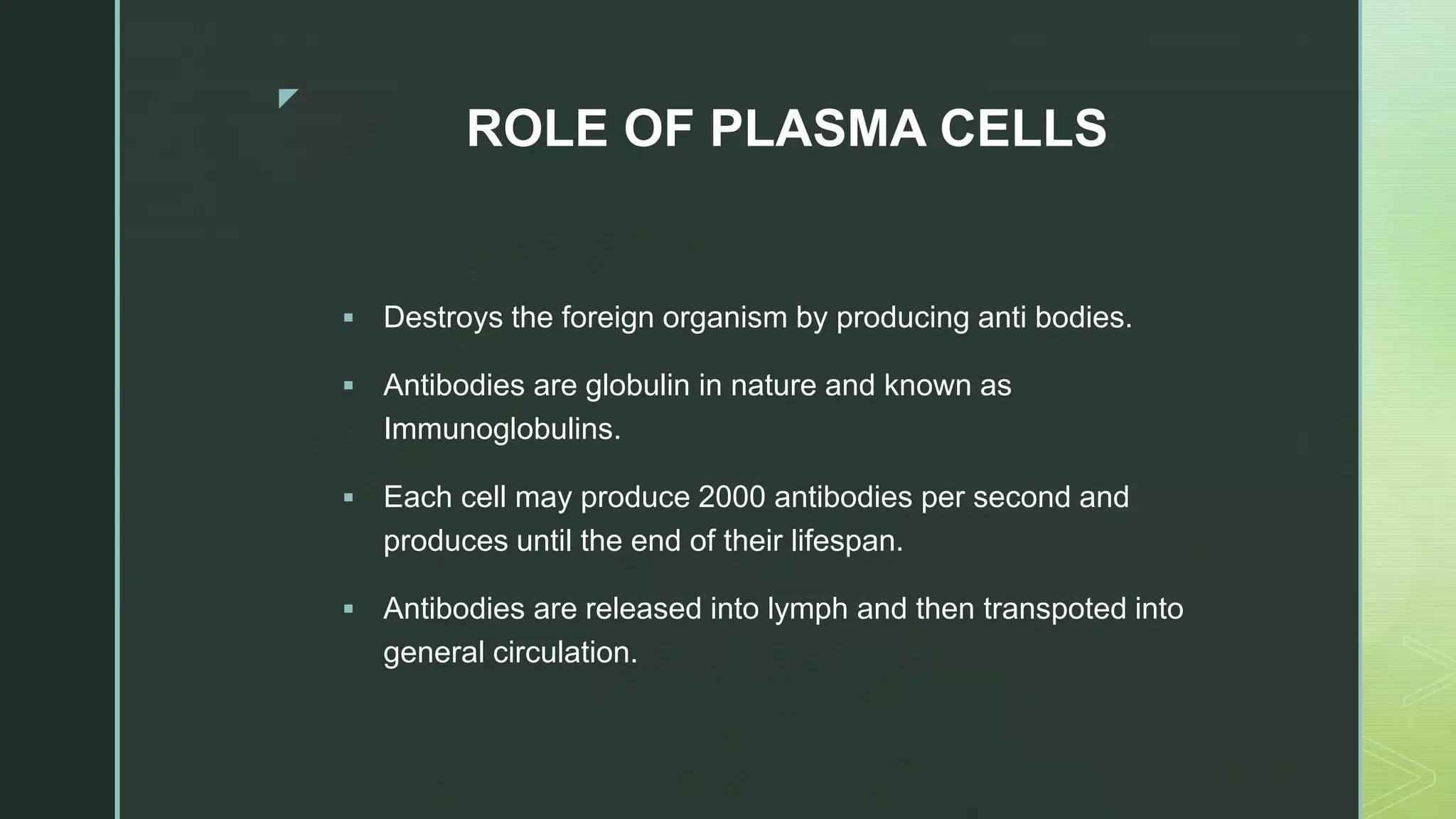
ROLE OF PLASMA CELLS
 Destroys the foreign organism by producing anti bodies.
 Antibodies are globulin in nature and known as
Immunoglobulins.
 Each cell may produce 2000 antibodies per second and
produces until the end of their lifespan.
 Antibodies are released into lymph and then transpoted into
general circulation.
z
ROLE OF MEMORY B CELLS
 After formation occupy various lymphoid tissues of the body.
 Gets activated when exposed to same organism
 Produces antibodies faster, which are more potent then first
exposure.
 Phenomenon behind the principle of vaccination.
z
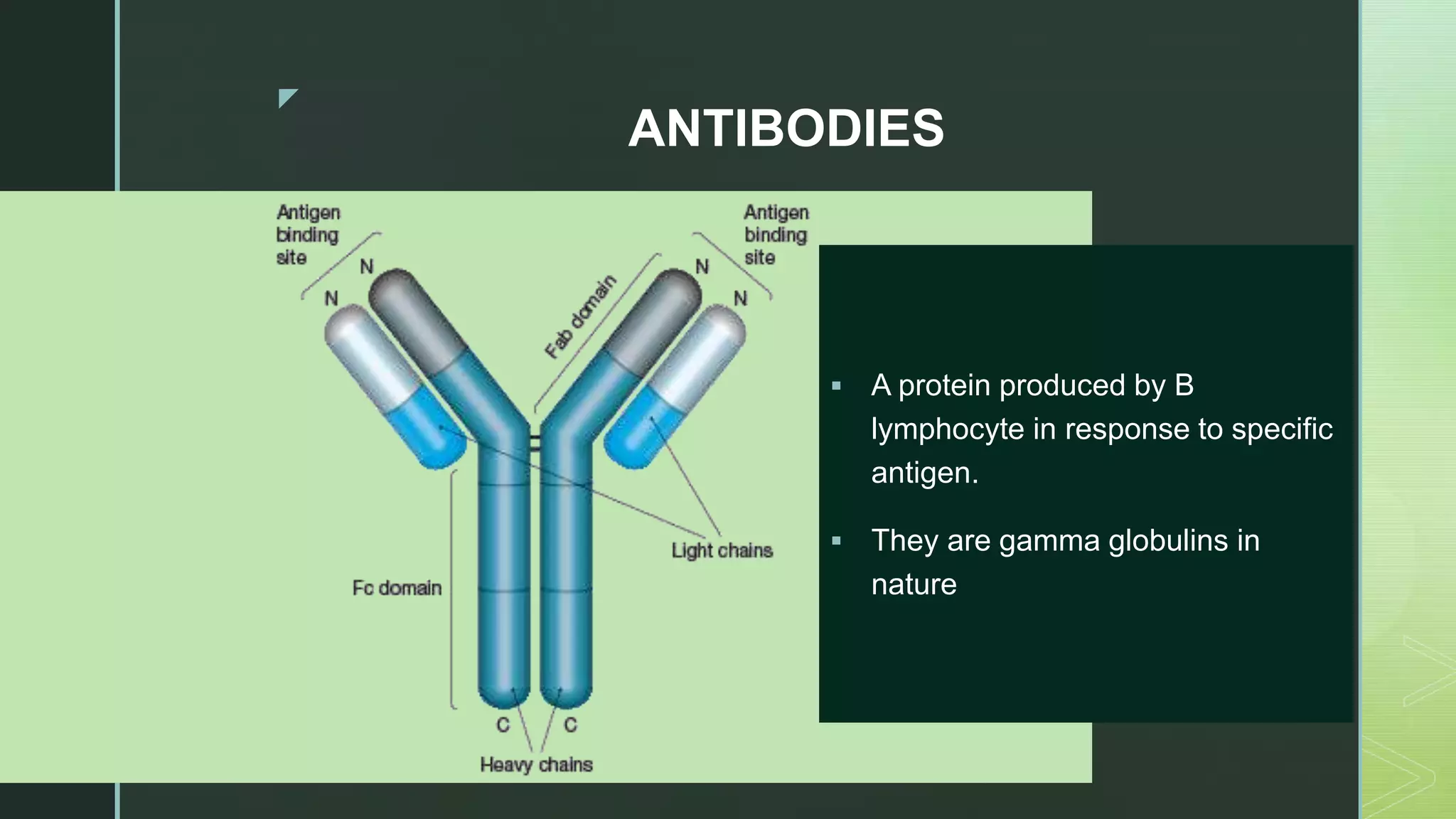
ANTIBODIES
 A protein produced by B
lymphocyte in response to specific
antigen.
 They are gamma globulins in
nature
z
ANTIBODIES
They are of five types
z
ANTIBODIES
They are of five types
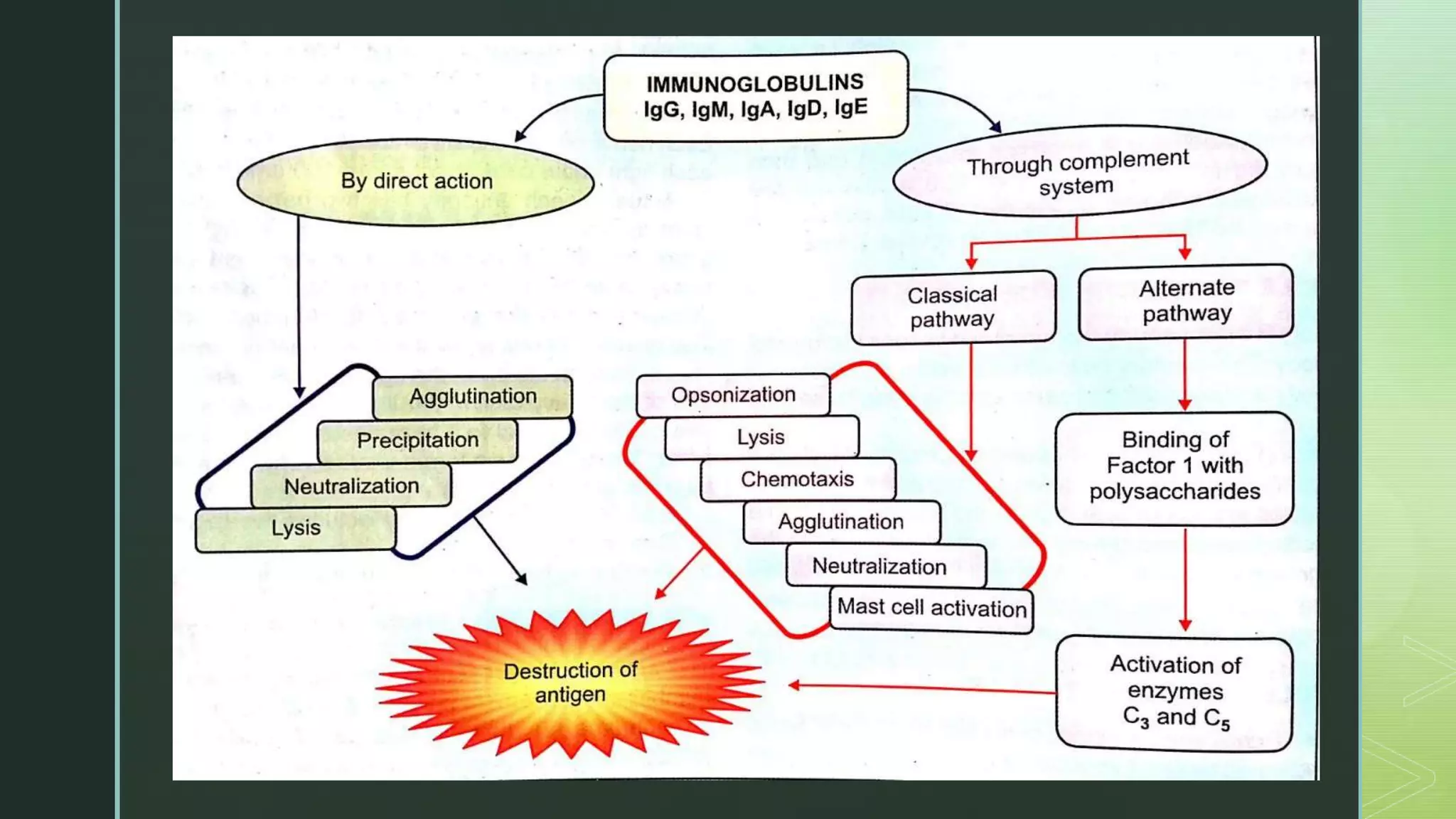
 IgA – localized defense mechanism in external secretions like
tear
 IgD – recognition of the antigen by B lymphocytes
 IgE – involved in allergic reactions
 IgG – provides immune response in the tissues
 IgM – efficient immune mechanism with in the blood circulation
z
COMPLEMENT SYSTEM
 System of plasma enzymes, that enhances or accelerates
various activities of antibodies during the fight against invading
organisms
 They are 11 in number C1 to C9 and three subunits in C1.
z
z
NATURAL KILLER CELLS
 Large granular cells, considered as non T, non B lymphocyte
 Kills the foreign organism without prior sensitization
 Not phagocytic but contains hydrolytic enzymes.
 Destroys viruses, malignant cells
z
CYTOKINES
 Hormones like small proteins acts as intracellular messengers
 Secreted by WBCs, NK cells and some body cells
 Activates and regulates immune system
 Eg: Interleukins, Interferons Tumor Necrosis Factor, Defensins,
Platelet activating factors etc…
z
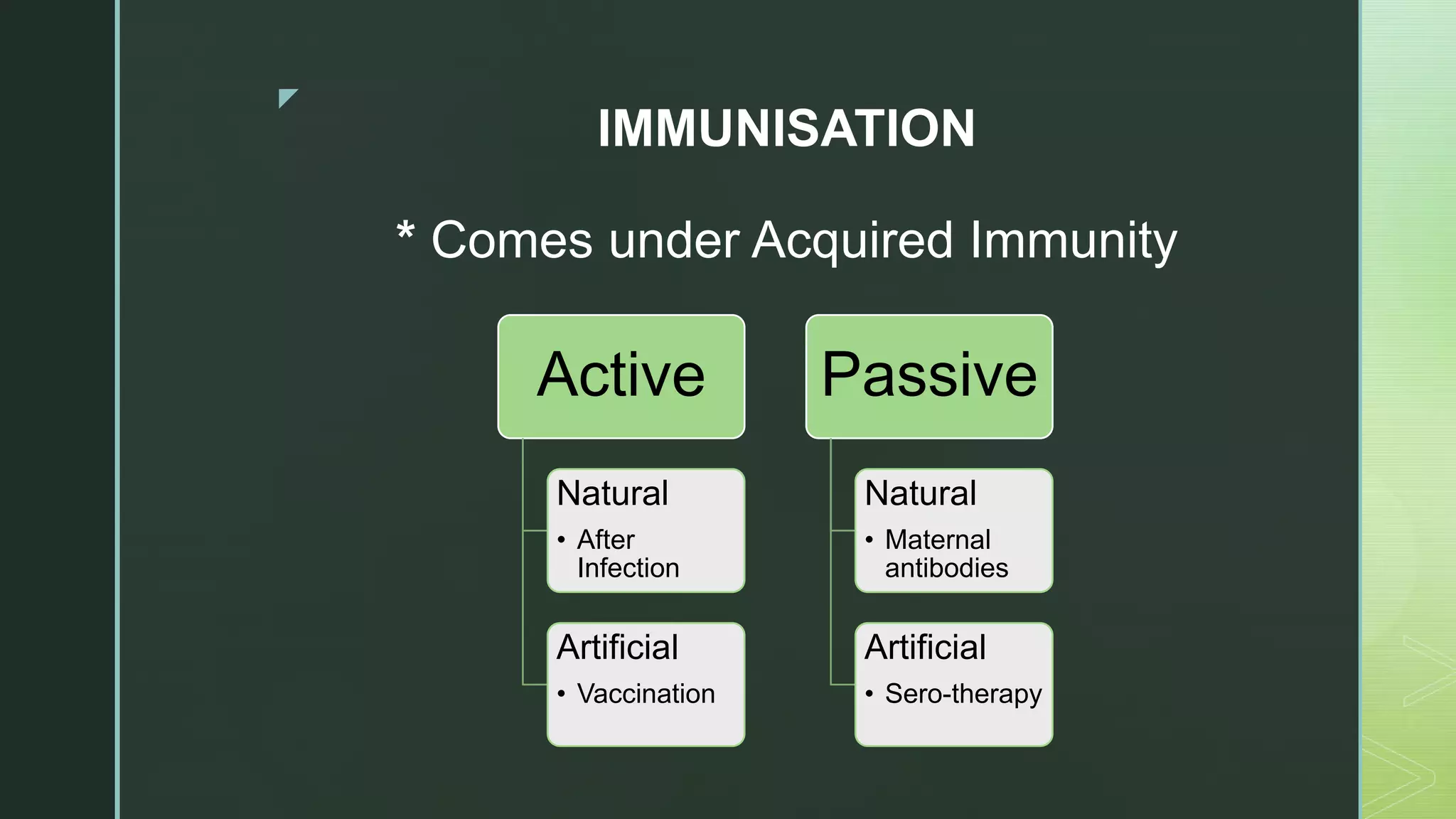
IMMUNISATION
* Comes under Acquired Immunity
Active
Natural
• After
Infection
Artificial
• Vaccination
Passive
Natural
• Maternal
antibodies
Artificial
• Sero-therapy
z
INVENTION OF VACCINE
 Edward Jenner noticed that milkmaids that had contracted
cowpox did not get smallpox.
 Tested on an 8 year old boy, injected cowpox(organism) into him
and exposed him to smallpox.
 Vaccine was invented (Latin vacca means ”cow”)
z
IMMUNE DEFICIENCY DISEASES
 Congenital Immune Deficiency Diseases
 Acquired Immune Deficiency Diseases
z
AUTOIMMUNE DISEASES
 Immune system mistakenly attacks body’s own cells
 HLA are a group of genes on chromosome 6, which encodes
proteins to transport antigens to the cell surface.
 They are distributed in tissues throughout the body.
 When antibodies are activated against particular HLA, they lead
to autoimmune diseases.
 Eg: Myasthenia gravis, Hashimoto’s thyroiditis, Graves Disease,
Rheumatoid Arthritis, Insulin Dependent Diabetes Mellitus
z

Immunity

  • 1.
    z Introduction to IMMUNOLOGY Dr. M.A.LateefSiddiqui, MD Scholar, Dept. of Medicine, GNTC, Hyderabad.
  • 2.
    z IMMUNITY & IMMUNESYSTEM  Immunity is defined as the capacity of the body to resist the pathogenic agents.  Immune System is a system of biological structures and processes within an organism which protects the body from infectious organisms and other harmful substances.
  • 3.
    z  To functionproperly, an immune system must detect a wide variety of agents, from viruses to parasitic worms, and distinguish them from the organism's own healthy tissue.  The immune system recognizes foreign bodies and responds with the production of immune cells and proteins
  • 4.
    z ROLE OF THEIMMUNE SYSTEM  Defense against microbes  Defense against the growth of tumor cells – kills the growth of tumor cells  Homeostasis – destruction of abnormal or dead cells (e.g. dead red or white blood cells, antigen-antibody complex)
  • 5.
  • 6.
    z TYPES OF IMMUNITY Innate(non-adaptive / non-specific)  Inborn capacity of the body  First line of immune response  Relies on mechanisms that exist before infection  Examples include GIT, Respiratory System, Urinogenital System, Skin etc…
  • 7.
    z TYPES OF IMMUNITY Acquired(adaptive / specific)  Second line of response (if innate fails)  Most powerful  Relies on mechanisms that body adapts after infection  Develops against specific foreign body like bacteria, viruses, toxins, vaccines, transplanted tissues etc…  Handled by T- and B- lymphocytes
  • 8.
    z LYMPHOID TISSUE ORGANIZATION It consists of three (3) major divisions 1. The stem cell producing organs:-Yolk sac, fetal liver& bone marrow 2. Central or primary lymphoid organs:-Thymus, and Bursa / bone marrow 3. Peripheral or secondary lymphoid organs:- Lymph nodes , spleen , Gut – associated lymphoid tissue.  Note:- The lymphosis with in the Thymus and Bone Marrow is pre programmed and not depend upon external factor like antigen.
  • 9.
    z ` Blood Capillaries Tissue spaceSecondary Lymphoid tissue Lymph glands Lymph T Cells B cells T dependent area B dependant area Efferent Lymphatic duct Majority settle down in secondary lymphoid tissue Thoracic Duct
  • 10.
    z ANTIGEN  Any substancewhich when introduced into the body stimulates the production of an antibody, which reacts specifically with it.  Antigen Presenting Cells are the special type of cells in the body which induce the release of antigenic materials from the invading organisms and present these to Helper T cells.  Mainly are of two types: 1. Macrophages 2. Dendritic Cells.
  • 11.
    z HLA & MHC Invading foreign materials are either engulfed by macrophages or trapped by dendritic cells.  Digested into small peptides.  Antigenic peptides moves towards the surface of APC and get loaded on a genetic matter known as Human Leucocyte Antigen (HLA).  HLA is present in a molecule of Major Histocompability Complex (MHC).
  • 12.
    z TYPES OF ACQUIREDIMMUNITY Cellular Immunity • Managed by T- Lymphocytes • Cell mediated response Humoral Immunity • Managed by B- Lymphocytes • Antibody mediated response
  • 13.
    z T - LYMPHOCYTES Helper T Cells  Cytotoxic T Cells  Suppressor T Cells  Memory T Cells
  • 14.
    z ROLE OF HELPERT CELLS  Activates all the other T & B Cells  Two types: 1. TH1 cells (for T cells) 2. TH2 cells (for B cells) • Helper cells recognizes the antigen bound to MHC • After recognition it gets activated • Activated cells proliferate and enters the circulation • Activates T cell and B cell for the development of Cellular and Humoral Immunity respectively.
  • 15.
    z ROLE OF CYTOTOXICT CELLS  Activated by helper T cells  Circulates through blood, lymph and lymphatic tissues and destroy the invading organisms by attacking them directly • Receptors on the outer membrane bind the antigens / organisms tightly • Cells enlarge and release cytotoxic substances like lysosomal enzymes, which destroys invaded organisms • Likewise, each Cytotoxic cell can destroy large number of organisms. • They also destroy cancer cells, transplanted cells. • They also destroys the body cells invaded by microorganisms.
  • 16.
    z ROLE OF SUPRESSOR& MEMORY T CELLS  Supressor cells also called as regulatory cells, supresses the activities of cytotoxic T cells and protect healthy cells.  Some activated T cells remain in lymphoid tissue, migrates to various lymphoid tissues and act as memory cells.  When the body again gets exposed to same organism, they get activated and destroy it very quickly.
  • 17.
    z B - LYMPHOCYTES Plasma Cells  Memory Cells
  • 18.
    z ROLE OF PLASMACELLS  Destroys the foreign organism by producing anti bodies.  Antibodies are globulin in nature and known as Immunoglobulins.  Each cell may produce 2000 antibodies per second and produces until the end of their lifespan.  Antibodies are released into lymph and then transpoted into general circulation.
  • 19.
    z ROLE OF MEMORYB CELLS  After formation occupy various lymphoid tissues of the body.  Gets activated when exposed to same organism  Produces antibodies faster, which are more potent then first exposure.  Phenomenon behind the principle of vaccination.
  • 20.
    z ANTIBODIES  A proteinproduced by B lymphocyte in response to specific antigen.  They are gamma globulins in nature
  • 21.
  • 22.
    z ANTIBODIES They are offive types  IgA – localized defense mechanism in external secretions like tear  IgD – recognition of the antigen by B lymphocytes  IgE – involved in allergic reactions  IgG – provides immune response in the tissues  IgM – efficient immune mechanism with in the blood circulation
  • 23.
    z COMPLEMENT SYSTEM  Systemof plasma enzymes, that enhances or accelerates various activities of antibodies during the fight against invading organisms  They are 11 in number C1 to C9 and three subunits in C1.
  • 24.
  • 25.
    z NATURAL KILLER CELLS Large granular cells, considered as non T, non B lymphocyte  Kills the foreign organism without prior sensitization  Not phagocytic but contains hydrolytic enzymes.  Destroys viruses, malignant cells
  • 26.
    z CYTOKINES  Hormones likesmall proteins acts as intracellular messengers  Secreted by WBCs, NK cells and some body cells  Activates and regulates immune system  Eg: Interleukins, Interferons Tumor Necrosis Factor, Defensins, Platelet activating factors etc…
  • 27.
    z IMMUNISATION * Comes underAcquired Immunity Active Natural • After Infection Artificial • Vaccination Passive Natural • Maternal antibodies Artificial • Sero-therapy
  • 28.
    z INVENTION OF VACCINE Edward Jenner noticed that milkmaids that had contracted cowpox did not get smallpox.  Tested on an 8 year old boy, injected cowpox(organism) into him and exposed him to smallpox.  Vaccine was invented (Latin vacca means ”cow”)
  • 29.
    z IMMUNE DEFICIENCY DISEASES Congenital Immune Deficiency Diseases  Acquired Immune Deficiency Diseases
  • 30.
    z AUTOIMMUNE DISEASES  Immunesystem mistakenly attacks body’s own cells  HLA are a group of genes on chromosome 6, which encodes proteins to transport antigens to the cell surface.  They are distributed in tissues throughout the body.  When antibodies are activated against particular HLA, they lead to autoimmune diseases.  Eg: Myasthenia gravis, Hashimoto’s thyroiditis, Graves Disease, Rheumatoid Arthritis, Insulin Dependent Diabetes Mellitus
  • 31.