THYROID FNA 
DR ZAHID MAHMOOD 
FCPS(HISTOPATHOLOGY) 
KING EDWARD MEDICAL UNIVERSITY 
LAHORE
Thyroid FNA Procedure 
• US guidance 
• 25 gauge needle 
• 3-4 passes 
FNA Thyroid
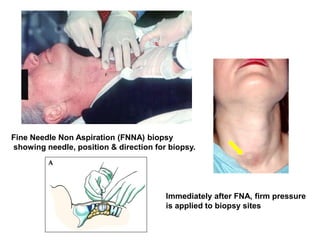
Fine Needle Non Aspiration (FNNA) biopsy 
showing needle, position & direction for biopsy. 
Immediately after FNA, firm pressure 
is applied to biopsy sites
Technique and Equipment (Contd…) 
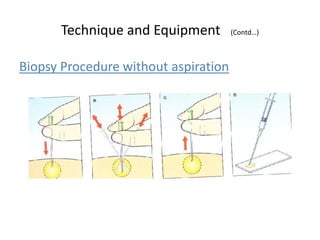
Biopsy Procedure without aspiration
Difference between core and FNA biopsy
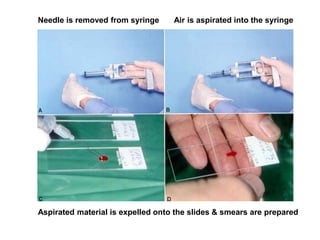
Needle is removed from syringe Air is aspirated into the syringe 
Aspirated material is expelled onto the slides & smears are prepared
Technique and Equipment (Contd…) 
Material in the hub of needle
Thyroid FNA 
Preparations 
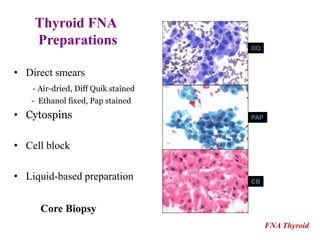
• Direct smears 
- Air-dried, Diff Quik stained 
- Ethanol fixed, Pap stained 
• Cytospins 
• Cell block 
• Liquid-based preparation 
FNA Thyroid 
DQ 
PAP 
CB 
Core Biopsy
Thyroid FNA 
The Cell Pattern Approach 
• CELLS 
– Arrangement 
– Nuclear features 
– Cytoplasmic features 
• COLLOID 
• BACKGROUND FEATURES
Clues to Diagnosis! 
• More colloid 
….more likely benign 
• More cells 
…. more likely neoplastic
The Bethesda System for Reporting Thyroid 
Cytopathology: 6 Diagnostic Categories 
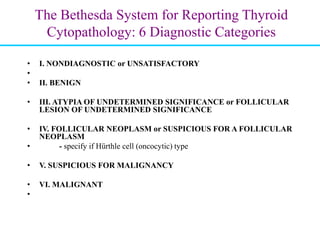
• I. NONDIAGNOSTIC or UNSATISFACTORY 
• 
• II. BENIGN 
• III. ATYPIA OF UNDETERMINED SIGNIFICANCE or FOLLICULAR 
LESION OF UNDETERMINED SIGNIFICANCE 
• IV. FOLLICULAR NEOPLASM or SUSPICIOUS FOR A FOLLICULAR 
NEOPLASM 
• - specify if Hürthle cell (oncocytic) type 
• V. SUSPICIOUS FOR MALIGNANCY 
• VI. MALIGNANT 
•
TBRTC: 
Relationship to Clinical Algorithms 
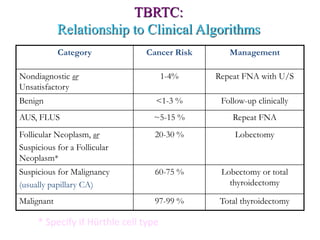
Category Cancer Risk Management 
Nondiagnostic or 
Unsatisfactory 
1-4% Repeat FNA with U/S 
Benign <1-3 % Follow-up clinically 
AUS, FLUS ~5-15 % Repeat FNA 
Follicular Neoplasm, or 
Suspicious for a Follicular 
Neoplasm* 
20-30 % Lobectomy 
Suspicious for Malignancy 
(usually papillary CA) 
60-75 % Lobectomy or total 
thyroidectomy 
Malignant 97-99 % Total thyroidectomy 
* Specify if Hürthle cell type
Thyroid FNA: made Easy 
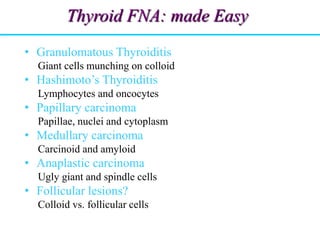
• Granulomatous Thyroiditis 
Giant cells munching on colloid 
• Hashimoto’s Thyroiditis 
Lymphocytes and oncocytes 
• Papillary carcinoma 
Papillae, nuclei and cytoplasm 
• Medullary carcinoma 
Carcinoid and amyloid 
• Anaplastic carcinoma 
Ugly giant and spindle cells 
• Follicular lesions? 
Colloid vs. follicular cells
Follicular Neoplasm 
CYTOMORPHOLOGY 
• Marked cellularity 
• Discohesion, single cells 
• Predominantly microfollicles 
and/or trabeculae 
• Uniformly enlarged cells 
• Crowding 
• Scant colloid 
• Marked nuclear atypia, mitosis 
and necrosis is uncommon
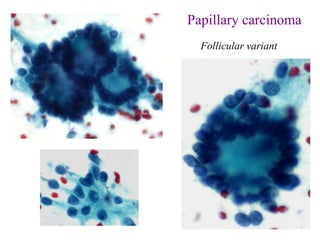
Papillary carcinoma 
Follicular variant
VI: Malignant 
Papillary thyroid carcinoma 
• Papillae- not very 
common 
• Sheets: flat or 
syncytial 
• Sheets/ clusters 
with well defined 
borders 
• Clusters: 3-D
VI: Malignant 
Medullary thyroid carcinoma 
Plasmacytoid cells Spindle cells
VI: Malignant 
Anaplastic carcinoma
FNA Breast lesions (reporting Categories) 
C-1 Inadequate 
C-2 Benign 
C-3 Atypia (probably benign) 
C-4 Suspicious for malignancy 
C-5 Malignant

Thyroid Fna,bethesda system

  • 1.
    THYROID FNA DRZAHID MAHMOOD FCPS(HISTOPATHOLOGY) KING EDWARD MEDICAL UNIVERSITY LAHORE
  • 2.
    Thyroid FNA Procedure • US guidance • 25 gauge needle • 3-4 passes FNA Thyroid
  • 3.
    Fine Needle NonAspiration (FNNA) biopsy showing needle, position & direction for biopsy. Immediately after FNA, firm pressure is applied to biopsy sites
  • 4.
    Technique and Equipment(Contd…) Biopsy Procedure without aspiration
  • 5.
  • 6.
    Needle is removedfrom syringe Air is aspirated into the syringe Aspirated material is expelled onto the slides & smears are prepared
  • 7.
    Technique and Equipment(Contd…) Material in the hub of needle
  • 8.
    Thyroid FNA Preparations • Direct smears - Air-dried, Diff Quik stained - Ethanol fixed, Pap stained • Cytospins • Cell block • Liquid-based preparation FNA Thyroid DQ PAP CB Core Biopsy
  • 9.
    Thyroid FNA TheCell Pattern Approach • CELLS – Arrangement – Nuclear features – Cytoplasmic features • COLLOID • BACKGROUND FEATURES
  • 10.
    Clues to Diagnosis! • More colloid ….more likely benign • More cells …. more likely neoplastic
  • 11.
    The Bethesda Systemfor Reporting Thyroid Cytopathology: 6 Diagnostic Categories • I. NONDIAGNOSTIC or UNSATISFACTORY • • II. BENIGN • III. ATYPIA OF UNDETERMINED SIGNIFICANCE or FOLLICULAR LESION OF UNDETERMINED SIGNIFICANCE • IV. FOLLICULAR NEOPLASM or SUSPICIOUS FOR A FOLLICULAR NEOPLASM • - specify if Hürthle cell (oncocytic) type • V. SUSPICIOUS FOR MALIGNANCY • VI. MALIGNANT •
  • 12.
    TBRTC: Relationship toClinical Algorithms Category Cancer Risk Management Nondiagnostic or Unsatisfactory 1-4% Repeat FNA with U/S Benign <1-3 % Follow-up clinically AUS, FLUS ~5-15 % Repeat FNA Follicular Neoplasm, or Suspicious for a Follicular Neoplasm* 20-30 % Lobectomy Suspicious for Malignancy (usually papillary CA) 60-75 % Lobectomy or total thyroidectomy Malignant 97-99 % Total thyroidectomy * Specify if Hürthle cell type
  • 13.
    Thyroid FNA: madeEasy • Granulomatous Thyroiditis Giant cells munching on colloid • Hashimoto’s Thyroiditis Lymphocytes and oncocytes • Papillary carcinoma Papillae, nuclei and cytoplasm • Medullary carcinoma Carcinoid and amyloid • Anaplastic carcinoma Ugly giant and spindle cells • Follicular lesions? Colloid vs. follicular cells
  • 15.
    Follicular Neoplasm CYTOMORPHOLOGY • Marked cellularity • Discohesion, single cells • Predominantly microfollicles and/or trabeculae • Uniformly enlarged cells • Crowding • Scant colloid • Marked nuclear atypia, mitosis and necrosis is uncommon
  • 16.
  • 17.
    VI: Malignant Papillarythyroid carcinoma • Papillae- not very common • Sheets: flat or syncytial • Sheets/ clusters with well defined borders • Clusters: 3-D
  • 18.
    VI: Malignant Medullarythyroid carcinoma Plasmacytoid cells Spindle cells
  • 19.
  • 20.
    FNA Breast lesions(reporting Categories) C-1 Inadequate C-2 Benign C-3 Atypia (probably benign) C-4 Suspicious for malignancy C-5 Malignant