Downloaded 237 times

The document discusses Hirokawa and Gouran's functional perspective on group decision making. It identifies four key functions for effective decision making: 1) analyzing the problem, 2) setting goals, 3) identifying alternatives, and 4) evaluating alternatives. It also describes a Function-Oriented Interactive Coding System that classifies utterances based on which function they address and whether they facilitate or disrupt the group's work. However, the functional perspective is criticized for overemphasizing rationality and underestimating relationship and historical factors.
Introduction to group decision making and the functional perspective by Hirokawa and Gouran.
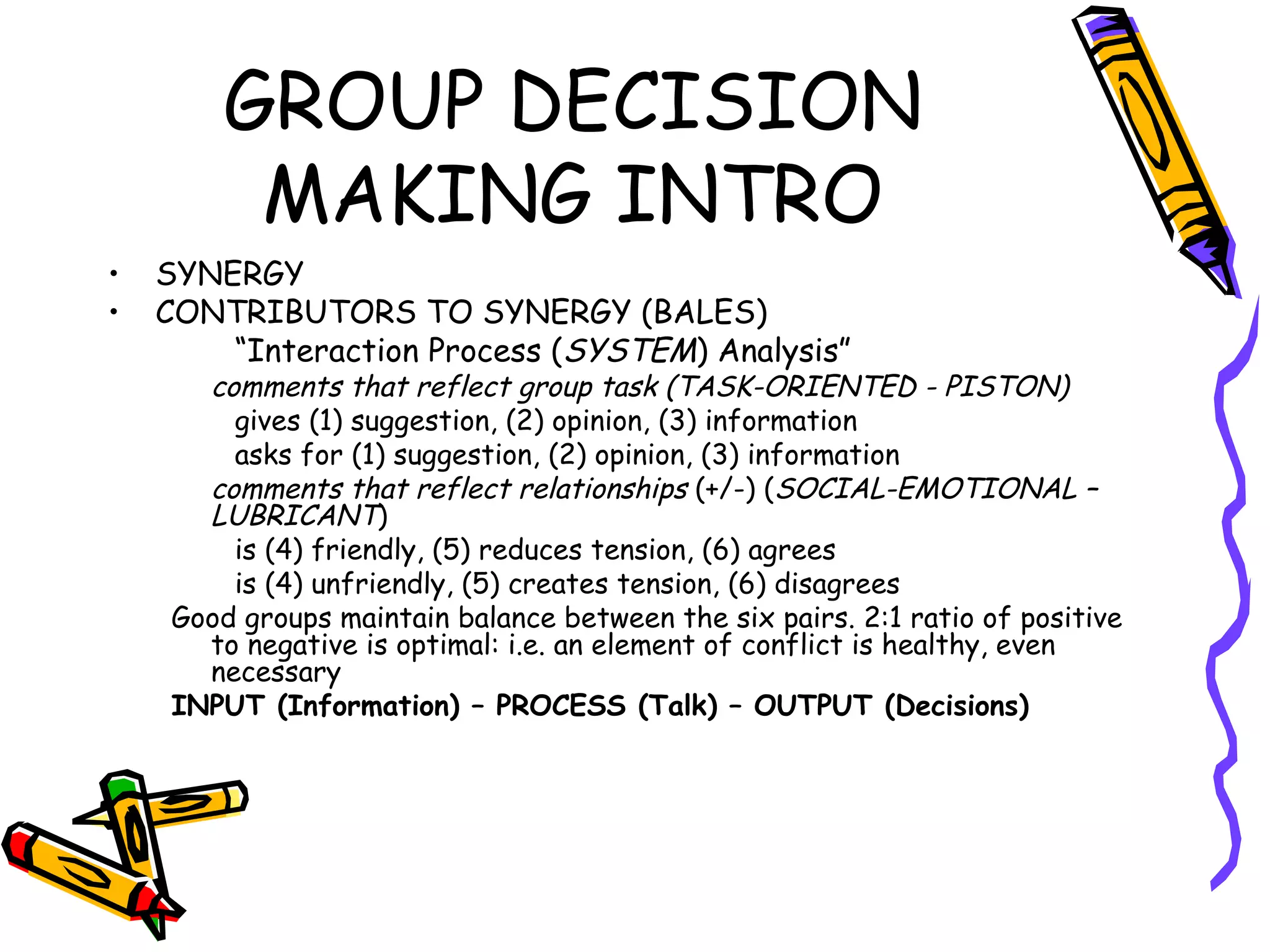
Discusses synergy contributors, task-oriented vs. social-emotional interactions, and the balance of positive to negative comments.
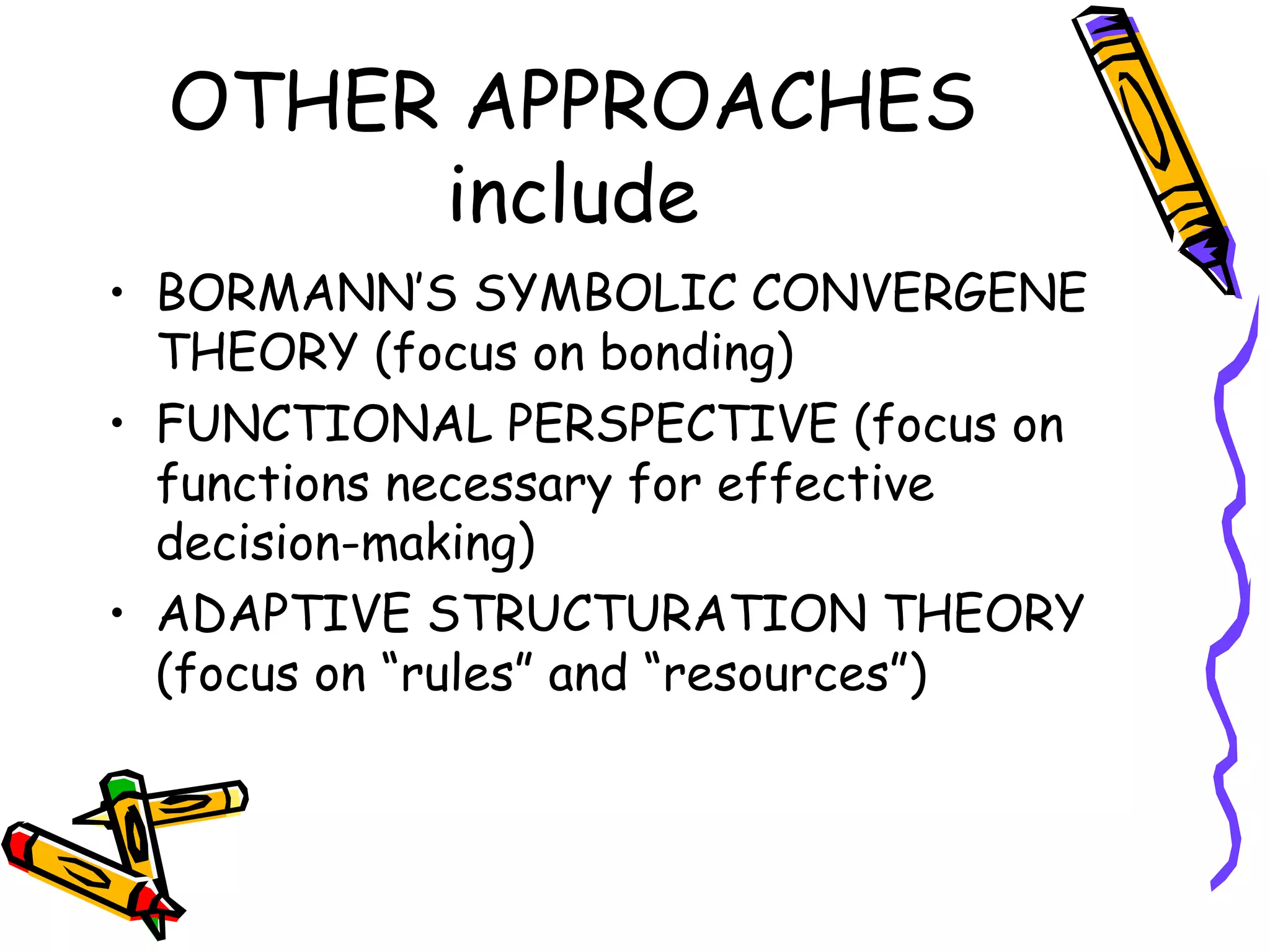
Overview of other decision-making approaches: Symbolic Convergence Theory, Functional Perspective, and Adaptive Structuration Theory.
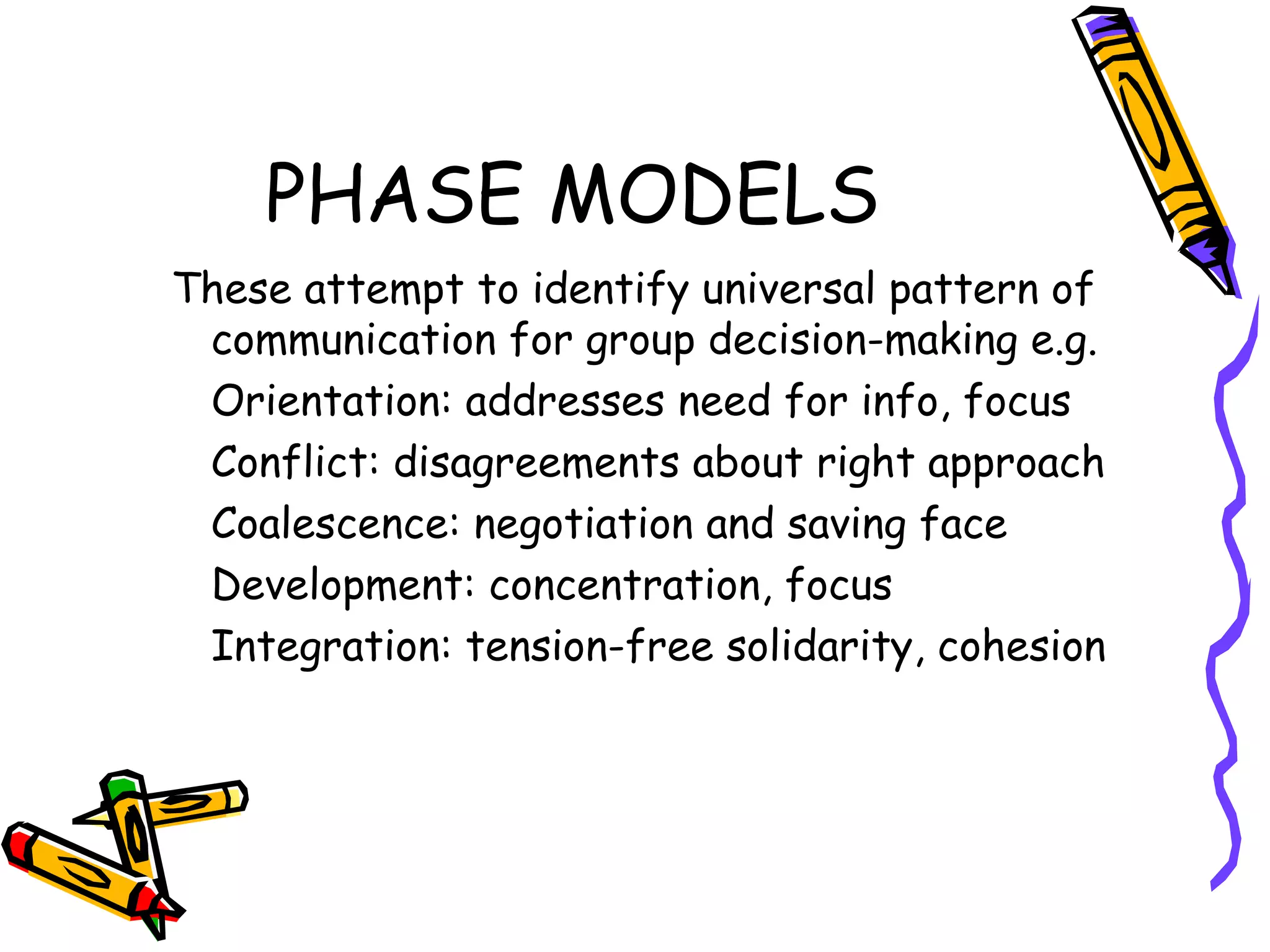
Identifies universal communication patterns in group decision-making phases: Orientation, Conflict, Coalescence, Development, and Integration.
Four essential functions: analyzing the problem, goal setting, identifying alternatives, and evaluating features of alternatives.
Emphasizes identification and evaluation of various alternatives; notes positive and negative biases in tasks.
No specific order in functions; effectiveness based on context, highlighting common patterns in group tasks.
Impact of communication styles: promotive, disruptive, and counteractive interactions on achieving decision-making functions.
Classifies functional utterances, measures performance variance, emphasizing quality over quantity in interactions.
Critiques limitations of FOICS: rationality bias, neglect of social-emotional aspects, and past history effects.
Steps for improving group decision making: recognize symptoms, diagnose causes, establish criteria, and implement solutions.


