Downloaded 820 times


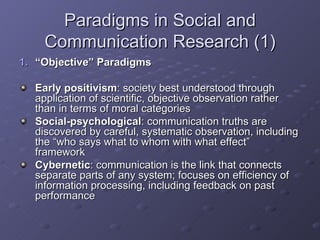
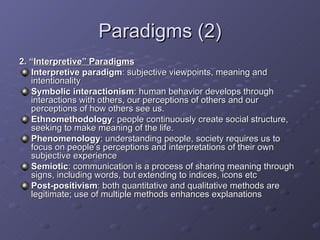
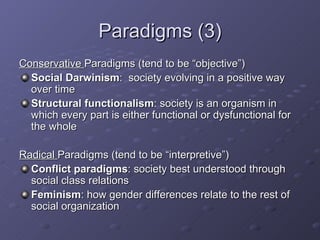
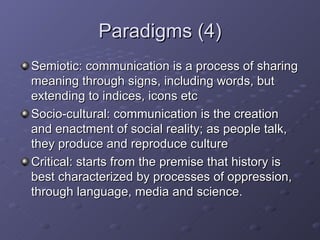



1. Paradigms are fundamental models or frames of reference that shape how we organize observations and reasoning. They lie behind theories and influence ways of looking at things. Examples include Marxism and structural functionalism. 2. Theories are systematic sets of statements that aim to explain aspects of social life through identifying relationships between facts, concepts, and variables, and developing testable explanations for patterns. 3. Methodologies establish whether theories accurately represent reality in a way respected by most, and vary from highly quantitative to highly qualitative approaches and often combine methods.


