John Douglas Elliott
1
What is it??
Symbolic convergence deals with the general
human tendency to interpret and give meanings
to signs and symbols (Infante, Rancer, Avtgis
2010). When humans communicate their minds
try to unite with the other person they are
communicating with. This is especially common
in small groups or focus groups.
1
What is it??
Symbolic convergence
theory can explain meaning,
motives, and values
between two people with a
common experience.
Even with no words on
the sign most people
would know that this
symbol means to stop.
2
Who uses it??
Many Communication scholars utilize
symbolic convergence theory to help
explain human behavior. Scholars
fascinated with the idea of symbolic
convergence use the theory in case
studies to determine the effect of human
behavior. Symbolic convergence is
factored into daily decisions and the
person may not even be aware!
2
Who uses it??
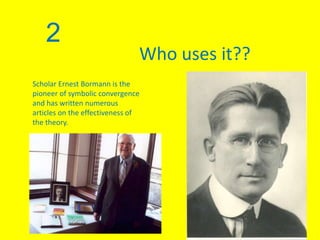
Scholar Ernest Bormann is the
pioneer of symbolic convergence
and has written numerous
articles on the effectiveness of
the theory.
3
Soooooo what??
Symbolic convergence theory is a very useful
theory that helps explain the general
tendencies of humans. Scholars have
decided that symbolic convergence can have
a direct influence on humans without them
knowing or realizing why.
3
Sooooooo what??
Businesses rely on marketing which is made stronger
by symbolic convergence. Symbolic convergence can
help pinpoint what clients like a bout a company
which allows the company to cater to their clients
(Shields & Cragan 1992).
Symbolic convergence is often utilized by the media.
Political campaigns will use symbolic convergence,
broadcasted by the media. Candidates will adapts
their message to different groups of people based
off that group’s belief.
4
Criticisms
Symbolic convergence theory has been
criticized for being too much fantasy. The
fantasy can alter the human’s rational
thoughts. SCT has also been criticized for
being neither a modern nor a postmodern
theory (Gunn 2003).
4
Criticisms
SCT can occur without people being
aware. This could severely limit the
influence of SCT because of the
notion that SCT just happens. Most
decisions made under SCT appear to
be subconscious decisions.
5
Examples
An example of symbolic convergence in politics
is the views of Republicans and Democrats.
Republicans tend to view Democrats as too
liberal, fiscally irresponsible, and creators of
economic chaos. Democrats think Republicans
are too conservative, want to protect big
business, and are unsympathetic to the poor
(Infante, Rancer, Avtgis 2010). Groups that
share common interests are most likely to be
influenced by symbolic convergence.
Future Application
Now that you have been introduced to symbolic
convergence theory, you will be able to apply the
theory to future situations. It doesn't take a
Communication scholar to recognize the symbolic
convergence theory in everyday life!!
References
Sovacool, B. K., & Brossman, B. (2010). Symbolic convergence and hydrogen economy. Energy
Policy, 38(4), 1999-2012. Retrieved from http://www.sciencedirect.com
Bormann, E. G. (1985). Symbolic convergence theory: A communication formulation. Journal of
Communication, 35(4). doi: 10.1111/j.1460-2466.1985.tb02977.x
Bormann, E. G. (2003). Defending symbolic convergence theory from an imaginary gunn. The
Quarterly Journal of Speech, 89(4), 366-372. doi: 10.1080/0033563032000160990
Bormann E. G. (1982). The symbolic convergence theory of communication: Applications and
implications. Journal of Applied Communications Research, 50(1), 50-62. Retrieved
from http://ehis.ebscohost.com
Cragan, J. F., & Shields, D. C. (1992). The use of symbolic convergence theory in corporate
strategic planning: A case study. Journal of Applied Communications Research, 20(2),
199-218. Retrieved from http://ehis.ebscohost.com
References
Vazquez, G. M. (1993). A homo narrans paradigm for public relations: Combining bormann's
symbolic convergence theory and grunig's situational theory of publics. Journal of Public
Relations Research, 5(3), 201-216. Retrieved from http://ehis.ebscohost.com
Olufowote, J. O. (2006). Rousing and redirecting a sleeping giant symbolic convergence theory
and complexities in the communicative constitution of collective action. Management
Communication Quarterly, 19, 451-492. doi: 10.1177/0893318905280326
Shields, D. C. (2000). Symbolic convergence and special communication theories: Sensing and
examining dis/enchantment with the theoretical robustness of critical autoethnography.
Communication Monographs, 67(4), 392-421. Retrieved from
http://www.tandfonline.com
Stone, J. F. (2002). Using symbolic convergence theory to discern and segment motives for
enrolling in professional master's degree programs. Communication Quarterly 50(2),
227-243. doi: 10.1080/01463370209385658
Williams, J. F. (1996). The combination of symbolic convergence theory and situational theory
of publics to investigate messages and publics involved in a public relations campaign.
UMI Dissertations Publishing. Retrieved from http://search.proquest.com
References
Csapo-Sweet, R. M. (2000). Explicating the saga component of symbolic convergence theory:
The case of serbia's radio B92 in cyberspace. Critical studies in media communication,
17(3), 316-333. Retrieved from http://www.tandfonline.com
Zagacki, K., & Grano D. (2005). Radio sports talk and the fantasies of sport. Critical studies in
media communication, 22(1), 45-63. Retrieved from http://www.tandfonline.com
Frey, L. R., (2004). The symbolic-interpretive perspective on group dynamics. Small group
research 35(3), 277-306. doi: 10.1177/1046496404263771
Gunn, J., (2003). Refiguring fantasy: Imagination and its decline in u.s. rhetorical studies.
Quarterly journal of speech, 89(1), 41-59. doi:10.1080/00335630308168
Infante, D., Rancer, A., & Avtgis, T. (2010). Contemporary communication theory. Dubuque,
IA: Kendall Hunt.

Symbolic convergence theory

  • 1.
  • 2.
    1 What is it?? Symbolicconvergence deals with the general human tendency to interpret and give meanings to signs and symbols (Infante, Rancer, Avtgis 2010). When humans communicate their minds try to unite with the other person they are communicating with. This is especially common in small groups or focus groups.
  • 3.
    1 What is it?? Symbolicconvergence theory can explain meaning, motives, and values between two people with a common experience.
  • 4.
    Even with nowords on the sign most people would know that this symbol means to stop.
  • 5.
    2 Who uses it?? ManyCommunication scholars utilize symbolic convergence theory to help explain human behavior. Scholars fascinated with the idea of symbolic convergence use the theory in case studies to determine the effect of human behavior. Symbolic convergence is factored into daily decisions and the person may not even be aware!
  • 6.
    2 Who uses it?? ScholarErnest Bormann is the pioneer of symbolic convergence and has written numerous articles on the effectiveness of the theory.
  • 7.
    3 Soooooo what?? Symbolic convergencetheory is a very useful theory that helps explain the general tendencies of humans. Scholars have decided that symbolic convergence can have a direct influence on humans without them knowing or realizing why.
  • 8.
    3 Sooooooo what?? Businesses relyon marketing which is made stronger by symbolic convergence. Symbolic convergence can help pinpoint what clients like a bout a company which allows the company to cater to their clients (Shields & Cragan 1992). Symbolic convergence is often utilized by the media. Political campaigns will use symbolic convergence, broadcasted by the media. Candidates will adapts their message to different groups of people based off that group’s belief.
  • 9.
    4 Criticisms Symbolic convergence theoryhas been criticized for being too much fantasy. The fantasy can alter the human’s rational thoughts. SCT has also been criticized for being neither a modern nor a postmodern theory (Gunn 2003).
  • 10.
    4 Criticisms SCT can occurwithout people being aware. This could severely limit the influence of SCT because of the notion that SCT just happens. Most decisions made under SCT appear to be subconscious decisions.
  • 11.
    5 Examples An example ofsymbolic convergence in politics is the views of Republicans and Democrats. Republicans tend to view Democrats as too liberal, fiscally irresponsible, and creators of economic chaos. Democrats think Republicans are too conservative, want to protect big business, and are unsympathetic to the poor (Infante, Rancer, Avtgis 2010). Groups that share common interests are most likely to be influenced by symbolic convergence.
  • 12.
    Future Application Now thatyou have been introduced to symbolic convergence theory, you will be able to apply the theory to future situations. It doesn't take a Communication scholar to recognize the symbolic convergence theory in everyday life!!
  • 13.
    References Sovacool, B. K.,& Brossman, B. (2010). Symbolic convergence and hydrogen economy. Energy Policy, 38(4), 1999-2012. Retrieved from http://www.sciencedirect.com Bormann, E. G. (1985). Symbolic convergence theory: A communication formulation. Journal of Communication, 35(4). doi: 10.1111/j.1460-2466.1985.tb02977.x Bormann, E. G. (2003). Defending symbolic convergence theory from an imaginary gunn. The Quarterly Journal of Speech, 89(4), 366-372. doi: 10.1080/0033563032000160990 Bormann E. G. (1982). The symbolic convergence theory of communication: Applications and implications. Journal of Applied Communications Research, 50(1), 50-62. Retrieved from http://ehis.ebscohost.com Cragan, J. F., & Shields, D. C. (1992). The use of symbolic convergence theory in corporate strategic planning: A case study. Journal of Applied Communications Research, 20(2), 199-218. Retrieved from http://ehis.ebscohost.com
  • 14.
    References Vazquez, G. M.(1993). A homo narrans paradigm for public relations: Combining bormann's symbolic convergence theory and grunig's situational theory of publics. Journal of Public Relations Research, 5(3), 201-216. Retrieved from http://ehis.ebscohost.com Olufowote, J. O. (2006). Rousing and redirecting a sleeping giant symbolic convergence theory and complexities in the communicative constitution of collective action. Management Communication Quarterly, 19, 451-492. doi: 10.1177/0893318905280326 Shields, D. C. (2000). Symbolic convergence and special communication theories: Sensing and examining dis/enchantment with the theoretical robustness of critical autoethnography. Communication Monographs, 67(4), 392-421. Retrieved from http://www.tandfonline.com Stone, J. F. (2002). Using symbolic convergence theory to discern and segment motives for enrolling in professional master's degree programs. Communication Quarterly 50(2), 227-243. doi: 10.1080/01463370209385658 Williams, J. F. (1996). The combination of symbolic convergence theory and situational theory of publics to investigate messages and publics involved in a public relations campaign. UMI Dissertations Publishing. Retrieved from http://search.proquest.com
  • 15.
    References Csapo-Sweet, R. M.(2000). Explicating the saga component of symbolic convergence theory: The case of serbia's radio B92 in cyberspace. Critical studies in media communication, 17(3), 316-333. Retrieved from http://www.tandfonline.com Zagacki, K., & Grano D. (2005). Radio sports talk and the fantasies of sport. Critical studies in media communication, 22(1), 45-63. Retrieved from http://www.tandfonline.com Frey, L. R., (2004). The symbolic-interpretive perspective on group dynamics. Small group research 35(3), 277-306. doi: 10.1177/1046496404263771 Gunn, J., (2003). Refiguring fantasy: Imagination and its decline in u.s. rhetorical studies. Quarterly journal of speech, 89(1), 41-59. doi:10.1080/00335630308168 Infante, D., Rancer, A., & Avtgis, T. (2010). Contemporary communication theory. Dubuque, IA: Kendall Hunt.