INTERPERSONAL DECEPTION THEORY IDT
3 COMMON DECEPTION PRACTICES Falsification (create fiction) Concealment (hide secret) Equivocation (dodges the issue)
Theory Most people say they can spot deception; IDT says they cannot Deception and deception detection is INTERACTIVE ( co-constructed ) rather than INDIVIDUAL  Interactants constantly adjust their behavior to the other Deception lies in motive not action and has at least three aims: instrumental goal; relationship; save face
KEY CONCEPTS Cognitive overload: deceiver may exhibit (non-verbal) non-strategic display Leakage: unconscious nonverbal cues signaling an internal state
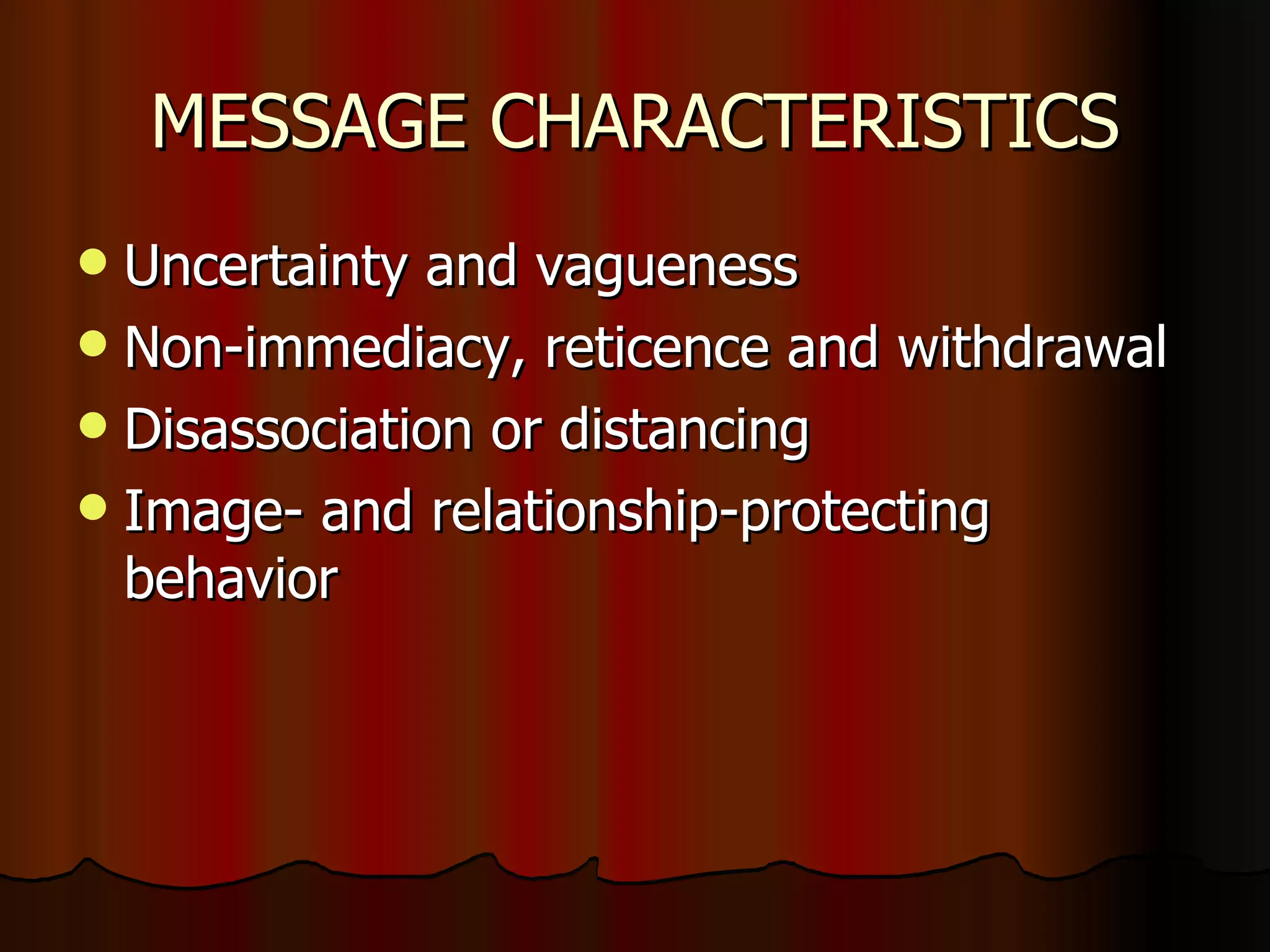
MESSAGE CHARACTERISTICS Uncertainty and vagueness Non-immediacy, reticence and withdrawal Disassociation or distancing Image- and relationship-protecting behavior
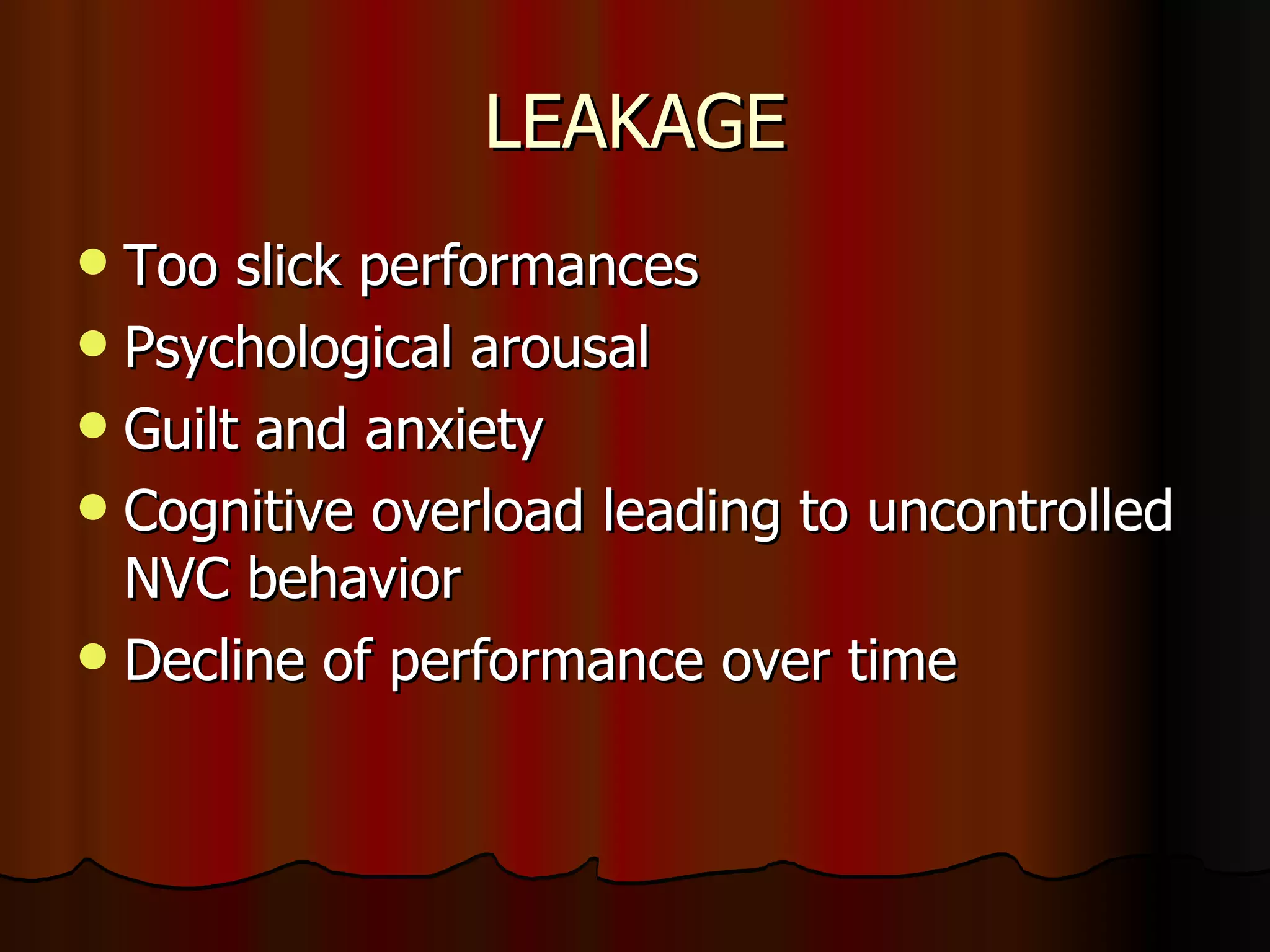
LEAKAGE Too slick performances Psychological arousal Guilt and anxiety Cognitive overload leading to uncontrolled NVC behavior Decline of performance over time
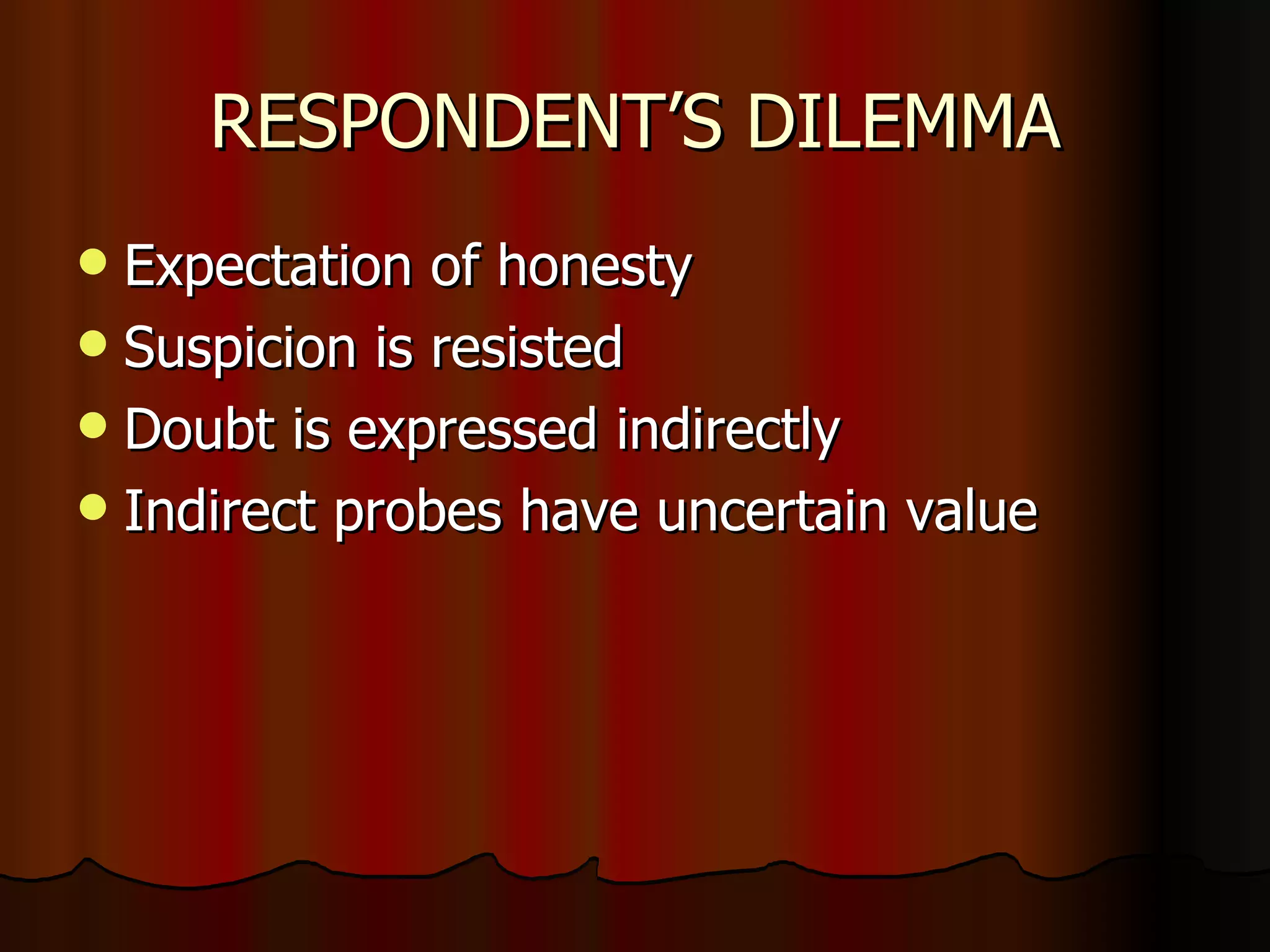
RESPONDENT’S DILEMMA Expectation of honesty Suspicion is resisted Doubt is expressed indirectly Indirect probes have uncertain value
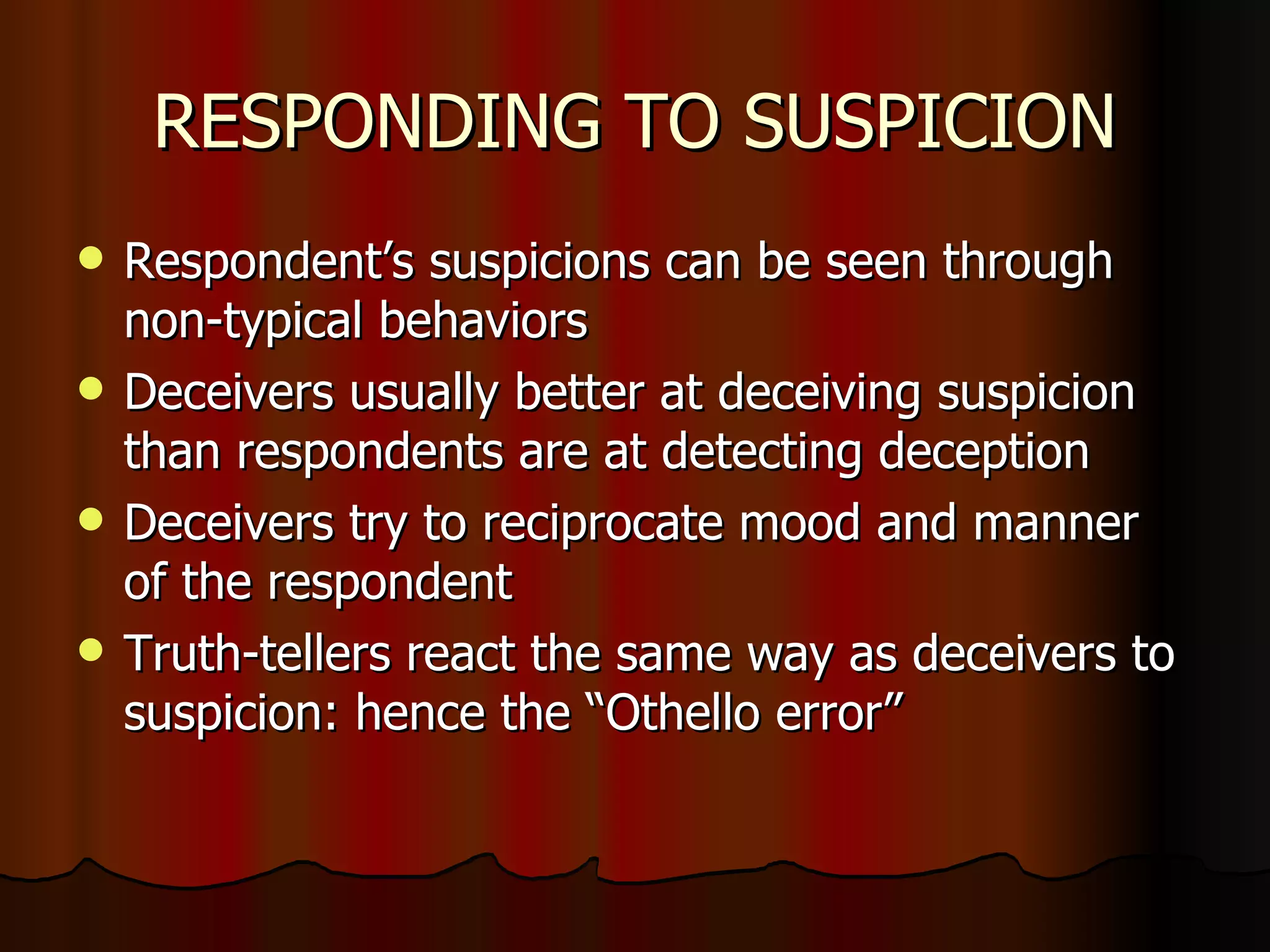
RESPONDING TO SUSPICION Respondent’s suspicions can be seen through non-typical behaviors Deceivers usually better at deceiving suspicion than respondents are at detecting deception Deceivers try to reciprocate mood and manner of the respondent Truth-tellers react the same way as deceivers to suspicion: hence the “Othello error”
CRITIQUE Potential contradictions between propositions (1) that NVC cues not reliable indicators of deception (2) that deceivers exhibit more leakage than truth tellers (3) that truth tellers exhibit similar behavior as deceivers when under suspicion (4) that deceiver’s success depends on level of receiver’s suspicion
ISSUES Does guilt level rise with familiarity? Does familiarity produce more trust or more suspicion? Do people in close relationships overestimate the other’s knowledge and/or suspicion of them?

Interpersonal Deception Theory

  • 1.
  • 2.
    3 COMMON DECEPTIONPRACTICES Falsification (create fiction) Concealment (hide secret) Equivocation (dodges the issue)
  • 3.
    Theory Most peoplesay they can spot deception; IDT says they cannot Deception and deception detection is INTERACTIVE ( co-constructed ) rather than INDIVIDUAL Interactants constantly adjust their behavior to the other Deception lies in motive not action and has at least three aims: instrumental goal; relationship; save face
  • 4.
    KEY CONCEPTS Cognitiveoverload: deceiver may exhibit (non-verbal) non-strategic display Leakage: unconscious nonverbal cues signaling an internal state
  • 5.
    MESSAGE CHARACTERISTICS Uncertaintyand vagueness Non-immediacy, reticence and withdrawal Disassociation or distancing Image- and relationship-protecting behavior
  • 6.
    LEAKAGE Too slickperformances Psychological arousal Guilt and anxiety Cognitive overload leading to uncontrolled NVC behavior Decline of performance over time
  • 7.
    RESPONDENT’S DILEMMA Expectationof honesty Suspicion is resisted Doubt is expressed indirectly Indirect probes have uncertain value
  • 8.
    RESPONDING TO SUSPICIONRespondent’s suspicions can be seen through non-typical behaviors Deceivers usually better at deceiving suspicion than respondents are at detecting deception Deceivers try to reciprocate mood and manner of the respondent Truth-tellers react the same way as deceivers to suspicion: hence the “Othello error”
  • 9.
    CRITIQUE Potential contradictionsbetween propositions (1) that NVC cues not reliable indicators of deception (2) that deceivers exhibit more leakage than truth tellers (3) that truth tellers exhibit similar behavior as deceivers when under suspicion (4) that deceiver’s success depends on level of receiver’s suspicion
  • 10.
    ISSUES Does guiltlevel rise with familiarity? Does familiarity produce more trust or more suspicion? Do people in close relationships overestimate the other’s knowledge and/or suspicion of them?