Fowl pox
Presented By:
Dr Muhammad Awais Tatari
Fowl pox
Sore head
Avian diphtheria
Bird pox
Introduction
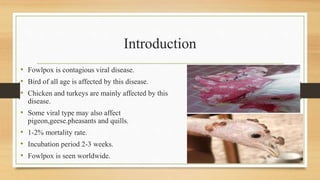
• Fowlpox is contagious viral disease.
• Bird of all age is affected by this disease.
• Chicken and turkeys are mainly affected by this
disease.
• Some viral type may also affect
pigeon,geese.pheasants and quills.
• 1-2% mortality rate.
• Incubation period 2-3 weeks.
• Fowlpox is seen worldwide.
Etiology
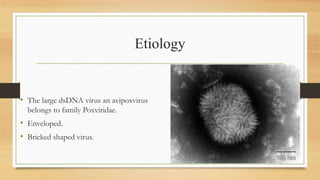
• The large dsDNA virus an avipoxvirus
belongs to family Poxviridae.
• Enveloped.
• Bricked shaped virus.
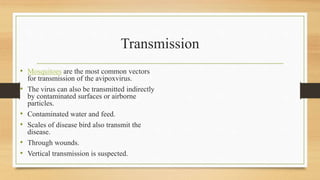
Transmission
• Mosquitoes are the most common vectors
for transmission of the avipoxvirus.
• The virus can also be transmitted indirectly
by contaminated surfaces or airborne
particles.
• Contaminated water and feed.
• Scales of disease bird also transmit the
disease.
• Through wounds.
• Vertical transmission is suspected.
Clinical sign
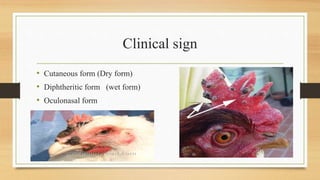
• Cutaneous form (Dry form)
• Diphtheritic form (wet form)
• Oculonasal form
Cutaneous form (Dry form)
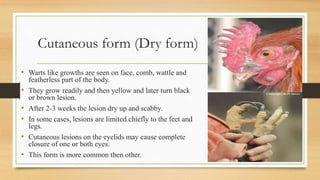
• Warts like growths are seen on face, comb, wattle and
featherless part of the body.
• They grow readily and then yellow and later turn black
or brown lesion.
• After 2-3 weeks the lesion dry up and scabby.
• In some cases, lesions are limited chiefly to the feet and
legs.
• Cutaneous lesions on the eyelids may cause complete
closure of one or both eyes.
• This form is more common then other.
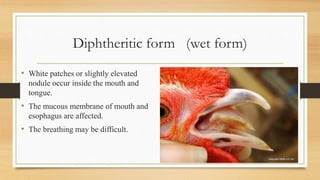
Diphtheritic form (wet form)
• White patches or slightly elevated
nodule occur inside the mouth and
tongue.
• The mucous membrane of mouth and
esophagus are affected.
• The breathing may be difficult.
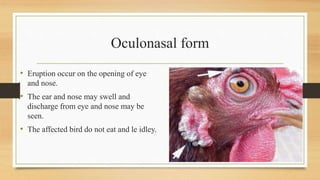
Oculonasal form
• Eruption occur on the opening of eye
and nose.
• The ear and nose may swell and
discharge from eye and nose may be
seen.
• The affected bird do not eat and le idley.
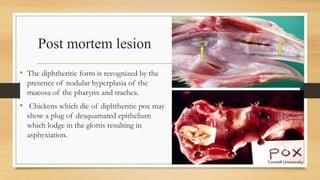
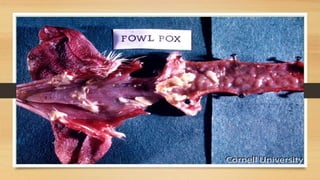
Post mortem lesion
• The diphtheritic form is recognized by the
presence of nodular hyperplasia of the
mucosa of the pharynx and trachea.
• Chickens which die of diphtheritic pox may
show a plug of desquamated epithelium
which lodge in the glottis resulting in
asphyxiation.
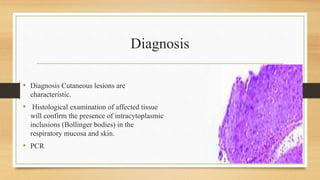
Diagnosis
• Diagnosis Cutaneous lesions are
characteristic.
• Histological examination of affected tissue
will confirm the presence of intracytoplasmic
inclusions (Bollinger bodies) in the
respiratory mucosa and skin.
• PCR
Differential diagnose
• Necrotic dermatitis.
• Leg mites.
• Thrush and canker.
Prevention & Controls
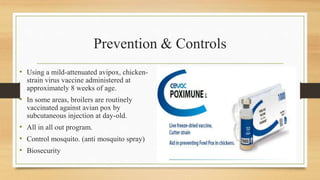
• Using a mild-attenuated avipox, chicken-
strain virus vaccine administered at
approximately 8 weeks of age.
• In some areas, broilers are routinely
vaccinated against avian pox by
subcutaneous injection at day-old.
• All in all out program.
• Control mosquito. (anti mosquito spray)
• Biosecurity
Treatment
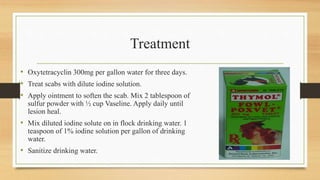
• Oxytetracyclin 300mg per gallon water for three days.
• Treat scabs with dilute iodine solution.
• Apply ointment to soften the scab. Mix 2 tablespoon of
sulfur powder with ½ cup Vaseline. Apply daily until
lesion heal.
• Mix diluted iodine solute on in flock drinking water. 1
teaspoon of 1% iodine solution per gallon of drinking
water.
• Sanitize drinking water.

Fowl pox and treatment

  • 1.
    Fowl pox Presented By: DrMuhammad Awais Tatari
  • 2.
    Fowl pox Sore head Aviandiphtheria Bird pox
  • 3.
    Introduction • Fowlpox iscontagious viral disease. • Bird of all age is affected by this disease. • Chicken and turkeys are mainly affected by this disease. • Some viral type may also affect pigeon,geese.pheasants and quills. • 1-2% mortality rate. • Incubation period 2-3 weeks. • Fowlpox is seen worldwide.
  • 4.
    Etiology • The largedsDNA virus an avipoxvirus belongs to family Poxviridae. • Enveloped. • Bricked shaped virus.
  • 5.
    Transmission • Mosquitoes arethe most common vectors for transmission of the avipoxvirus. • The virus can also be transmitted indirectly by contaminated surfaces or airborne particles. • Contaminated water and feed. • Scales of disease bird also transmit the disease. • Through wounds. • Vertical transmission is suspected.
  • 6.
    Clinical sign • Cutaneousform (Dry form) • Diphtheritic form (wet form) • Oculonasal form
  • 7.
    Cutaneous form (Dryform) • Warts like growths are seen on face, comb, wattle and featherless part of the body. • They grow readily and then yellow and later turn black or brown lesion. • After 2-3 weeks the lesion dry up and scabby. • In some cases, lesions are limited chiefly to the feet and legs. • Cutaneous lesions on the eyelids may cause complete closure of one or both eyes. • This form is more common then other.
  • 8.
    Diphtheritic form (wetform) • White patches or slightly elevated nodule occur inside the mouth and tongue. • The mucous membrane of mouth and esophagus are affected. • The breathing may be difficult.
  • 9.
    Oculonasal form • Eruptionoccur on the opening of eye and nose. • The ear and nose may swell and discharge from eye and nose may be seen. • The affected bird do not eat and le idley.
  • 10.
    Post mortem lesion •The diphtheritic form is recognized by the presence of nodular hyperplasia of the mucosa of the pharynx and trachea. • Chickens which die of diphtheritic pox may show a plug of desquamated epithelium which lodge in the glottis resulting in asphyxiation.
  • 12.
    Diagnosis • Diagnosis Cutaneouslesions are characteristic. • Histological examination of affected tissue will confirm the presence of intracytoplasmic inclusions (Bollinger bodies) in the respiratory mucosa and skin. • PCR
  • 13.
    Differential diagnose • Necroticdermatitis. • Leg mites. • Thrush and canker.
  • 14.
    Prevention & Controls •Using a mild-attenuated avipox, chicken- strain virus vaccine administered at approximately 8 weeks of age. • In some areas, broilers are routinely vaccinated against avian pox by subcutaneous injection at day-old. • All in all out program. • Control mosquito. (anti mosquito spray) • Biosecurity
  • 15.
    Treatment • Oxytetracyclin 300mgper gallon water for three days. • Treat scabs with dilute iodine solution. • Apply ointment to soften the scab. Mix 2 tablespoon of sulfur powder with ½ cup Vaseline. Apply daily until lesion heal. • Mix diluted iodine solute on in flock drinking water. 1 teaspoon of 1% iodine solution per gallon of drinking water. • Sanitize drinking water.