POULTRY
SCIENCE:
Poultry Health
Unit 9
Poultry Science:
Poultry Health
Unit 9: Segment 1
Introduction
Poultry Diseases
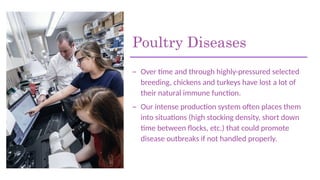
– Over time and through highly-pressured selected
breeding, chickens and turkeys have lost a lot of
their natural immune function.
– Our intense production system often places them
into situations (high stocking density, short down
time between flocks, etc.) that could promote
disease outbreaks if not handled properly.
Poultry
Diseases
– Disease outbreaks are one
of the most costly and
preventable situations in
poultry production!
– This makes proper
biosecurity measures all the
more vital – the welfare and
economic impact could be
devastating.
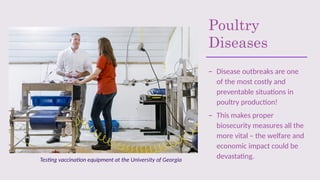
Testing vaccination equipment at the University of Georgia
Poultry Diseases
– There are two main body systems that are the focus of
many disease presentations:
1. Respiratory Tract
2. Enteric Tract
– These two systems make up the majority of tissue found
inside the body cavity of birds.
Respiratory Diseases
in Poultry
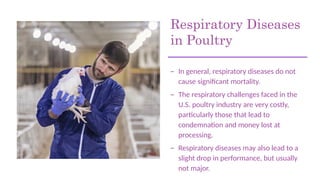
– In general, respiratory diseases do not
cause significant mortality.
– The respiratory challenges faced in the
U.S. poultry industry are very costly,
particularly those that lead to
condemnation and money lost at
processing.
– Respiratory diseases may also lead to a
slight drop in performance, but usually
not major.
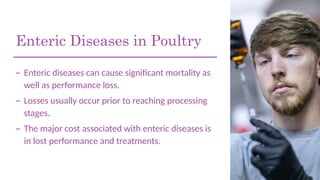
Enteric Diseases in Poultry
– Enteric diseases can cause significant mortality as
well as performance loss.
– Losses usually occur prior to reaching processing
stages.
– The major cost associated with enteric diseases is
in lost performance and treatments.
Enteric Diseases in Poultry
– There are many other systems that can be affected by pathogens
leading to a disease state.
– Musculoskeletal, nervous, metabolism (nutritional), immune, tumors, etc.
– Some are easier to recognize (i.e. Marek’s = tumors) than others
(musculoskeletal diseases).
– Some may not be able to be narrowed down at all, like nutritional
deficiencies.
Terminology
Necropsy – an autopsy performed on an animal
Clinical Sign – something indicating the
presence or existence of something
else
Always external
May or may not involve physical injury
Lesion – an injured or diseased spot or
area on/in the body
Anything internal is a lesion
Some external injuries may be lesions as well
Fun Fowl Fact:
“Symptom” is not a correct term in animal health, as it is a
description you get from a patient…and animals can’t talk!
Poultry Science:
Poultry Health
Unit 9: Segment 2
Poultry Illnesses
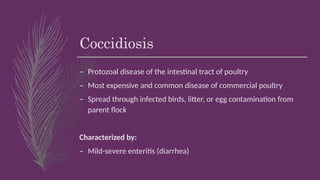
Coccidiosis
– Protozoal disease of the intestinal tract of poultry
– Most expensive and common disease of commercial poultry
– Spread through infected birds, litter, or egg contamination from
parent flock
Characterized by:
– Mild-severe enteritis (diarrhea)
Notice white specks in this portion of digestive tract.
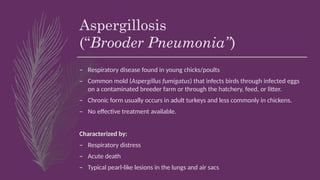
Aspergillosis
(“Brooder Pneumonia”)
– Respiratory disease found in young chicks/poults
– Common mold (Aspergillus fumigatus) that infects birds through infected eggs
on a contaminated breeder farm or through the hatchery, feed, or litter.
– Chronic form usually occurs in adult turkeys and less commonly in chickens.
– No effective treatment available.
Characterized by:
– Respiratory distress
– Acute death
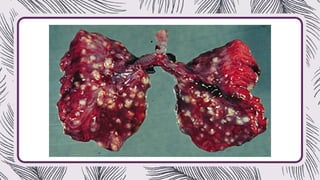
– Typical pearl-like lesions in the lungs and air sacs
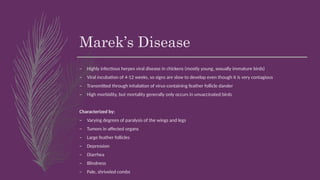
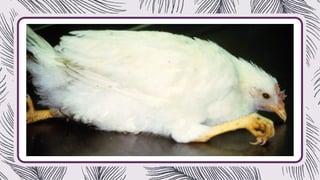
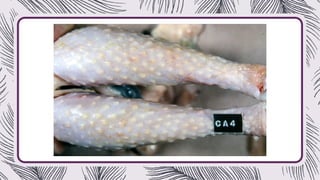
Marek’s Disease
– Highly infectious herpes viral disease in chickens (mostly young, sexually immature birds)
– Viral incubation of 4-12 weeks, so signs are slow to develop even though it is very contagious
– Transmitted through inhalation of virus-containing feather follicle dander
– High morbidity, but mortality generally only occurs in unvaccinated birds
Characterized by:
– Varying degrees of paralysis of the wings and legs
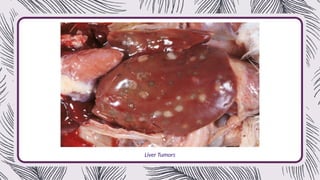
– Tumors in affected organs
– Large feather follicles
– Depression
– Diarrhea
– Blindness
– Pale, shriveled combs
Liver Tumors
Avian Influenza
(“AI” or “Bird Flu”)
– Highly Pathogenic (HPAI) and Mildly or Low Pathogenic strains
– Wild birds, most commonly waterfowl, can introduce virus to domesticated flocks through nasal
secretions and manure of infected birds, as well as rodents and insects!
– Can remain viable for long periods of time in moderate temperatures and can live indefinitely in frozen
material.
– When the highly pathogenic form is detected, national and international regulations require strict
quarantine and rapid destruction of all infected flocks within a certain mile radius.
Characterized by:
– Coughing
– Sneezing
– Swelling of the face and/or wattles
– Bluish-purple discoloration of the face
– Diarrhea
– Red or white spots on the legs and comb
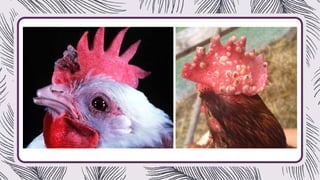
Fowl Pox
(“Chicken Pox”)
– No, this is not the same kind you may have had. 
– Virus that can affect most types of poultry, as well as parrots and other pet birds.
– Several species of mosquitoes can transmit Fowl Pox and play a significant role in spreading
the virus from one frock to another
– Can also be spread through direct bird-to-bird contact through their eyes, skin wounds, or
when they breathe since Fowl Pox is airborne.
– No effective treatment.
Characterized by:
– Coughing
– Sneezing
– Gasping
– Discharge from the eyes
– Retarded growth
– Warts or scabs
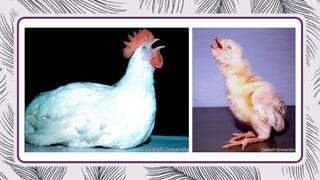
Infectious Bronchitis (“IB”)
– Virus that affects chickens that is highly contagious and can spread quickly through a flock
– Transmitted through the air and on feed bags, infected dead birds, and rodents as well as
through the egg to developing embryos (although if affected they do not typically hatch)
– No specific treatment besides administering antibiotics
Characterized by:
– Gasping
– Discharge from the eyes and/or nose
– Reduced egg production
– Production of thin-shelled eggs
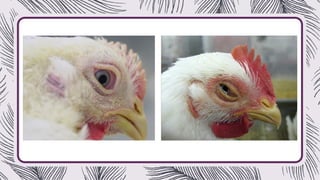
Laryngotracheitis (“LT” or “Laryngo”)
– Chickens 14 weeks and older are more susceptible to this virus than young birds, with most
outbreaks occurring in mature hens
– Can spread from flock to flock by contaminated clothing, shoes, and tires or from bird-to-bird
through the air on respiratory secretions
Characterized by:
– Coughing
– Sneezing
– Shaking head
– Gasping
– Discharge from the eyes and/or nose
– Swelling of the face and/or wattles
– Retarded growth
– Diarrhea
– Conjunctivitis
– Prostration
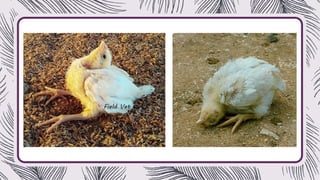
Newcastle Disease
– This virus can be transmitted through the air within short distances.
– Sick birds can transfer the virus directly to flock mates through body secretions and fecal matter, or
through a person’s shoes, tires, dirty equipment, feed sacks, crates, etc.
– Wild birds can also be infected, and transfer the virus through infected eggs (embryos typically die before
hatching)
– Mortality ranges from 10-80% depending on the strain
Characterized by:
– Coughing
– Sneezing
– Shaking head
– Gasping
– Discharge from eyes and/or nose
– Swelling of the face and/or wattles
– Bluish-purple discoloration of the face
– Retarded growth
– Diarrhea (maybe green and watery)
– Twisting of the head and neck
Poultry Science:
Poultry Health
Unit 9: Segment 3
Vaccinations & Antibiotics
Vaccinations
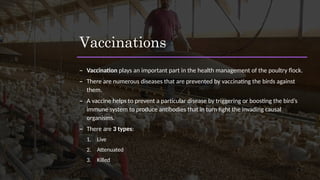
– Vaccination plays an important part in the health management of the poultry flock.
– There are numerous diseases that are prevented by vaccinating the birds against
them.
– A vaccine helps to prevent a particular disease by triggering or boosting the bird’s
immune system to produce antibodies that in turn fight the invading causal
organisms.
– There are 3 types:
1. Live
2. Attenuated
3. Killed
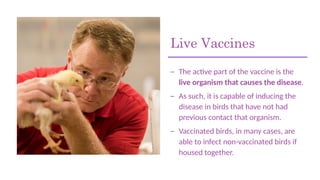
Live Vaccines
– The active part of the vaccine is the
live organism that causes the disease.
– As such, it is capable of inducing the
disease in birds that have not had
previous contact that organism.
– Vaccinated birds, in many cases, are
able to infect non-vaccinated birds if
housed together.
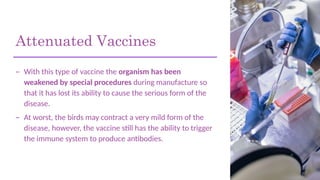
Attenuated Vaccines
– With this type of vaccine the organism has been
weakened by special procedures during manufacture so
that it has lost its ability to cause the serious form of the
disease.
– At worst, the birds may contract a very mild form of the
disease, however, the vaccine still has the ability to trigger
the immune system to produce antibodies.
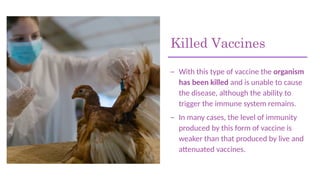
Killed Vaccines
– With this type of vaccine the organism
has been killed and is unable to cause
the disease, although the ability to
trigger the immune system remains.
– In many cases, the level of immunity
produced by this form of vaccine is
weaker than that produced by live and
attenuated vaccines.
Poultry Science:
Poultry Health
Unit 9: Segment 4
Biosecurity in Commercial & Backyard Poultry Flocks
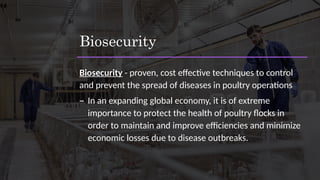
Biosecurity
Biosecurity - proven, cost effective techniques to control
and prevent the spread of diseases in poultry operations
– In an expanding global economy, it is of extreme
importance to protect the health of poultry flocks in
order to maintain and improve efficiencies and minimize
economic losses due to disease outbreaks.
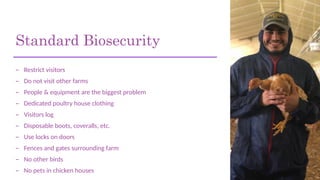
Standard Biosecurity
– Restrict visitors
– Do not visit other farms
– People & equipment are the biggest problem
– Dedicated poultry house clothing
– Visitors log
– Disposable boots, coveralls, etc.
– Use locks on doors
– Fences and gates surrounding farm
– No other birds
– No pets in chicken houses
Poultry Science
Curriculum References
– Jessica Fife, UGA Dept. of Poultry Science
Outreach Coordinator, UGA Dept. of
Agricultural Leadership, Education, &
Communication MAEE Candidate
– Barry Croom, UGA Dept. of Agricultural
Leadership, Education, & Communication
Professor
– Ashley Yopp, UGA Dept. of Agricultural
Leadership, Education, & Communication
Assistant Professor
– Georgia Agriculture Education
– Andrew Benson, UGA Dept. of Poultry
Science Assistant Professor
– Brian Jordan, UGA Dept. of Poultry Science
Assistant Professor, UGA College of
Veterinary Medicine Assistant Professor
– University of Arkansas Bumpers College of
Poultry Science – Poultry Science Dual
Curriculum Course
– Julia Gaskin, UGA Dept. of Crop and Soil
Sciences Sr. Public Service Associate
– Glendon Harris, UGA Dept. of Crop and Soil
Sciences Professor & Extension Agronomist
– Brian Kiepper, UGA Dept. of Poultry Science
Associate Professor
– Claudia Dunkley, UGA Dept. of Poultry
Science Public Service Associate
– Casey Ritz, UGA Dept. of Poultry Science
Professor
– USPOULTRY & USPOULTRY Poultry Science
Curriculum
– Tom Tabler, Mississippi State University
Department of Poultry Science Extension
Professor
– Jacquie Jacob, University of Kentucky
– Jeanna Wilson, UGA Dept. of Poultry
Science Professor
– Kelly Sweeney, UGA Dept. of Poultry
Science Ph.D Candidate
– Merck Veterinary Manual
– University of Maryland Extension
– Poultry Hub
– Brian Fairchild, University of Georgia
Department of Poultry Science Professor
– Centers for Disease Control
– National FFA Organization

Unit 9 - Presentation.pptx Poultry Diseases

  • 1.
  • 2.
    Poultry Science: Poultry Health Unit9: Segment 1 Introduction
  • 3.
    Poultry Diseases – Overtime and through highly-pressured selected breeding, chickens and turkeys have lost a lot of their natural immune function. – Our intense production system often places them into situations (high stocking density, short down time between flocks, etc.) that could promote disease outbreaks if not handled properly.

  • 4.
    Poultry Diseases – Disease outbreaksare one of the most costly and preventable situations in poultry production! – This makes proper biosecurity measures all the more vital – the welfare and economic impact could be devastating. Testing vaccination equipment at the University of Georgia
  • 5.
    Poultry Diseases – Thereare two main body systems that are the focus of many disease presentations: 1. Respiratory Tract 2. Enteric Tract – These two systems make up the majority of tissue found inside the body cavity of birds.
  • 6.
    Respiratory Diseases in Poultry –In general, respiratory diseases do not cause significant mortality. – The respiratory challenges faced in the U.S. poultry industry are very costly, particularly those that lead to condemnation and money lost at processing. – Respiratory diseases may also lead to a slight drop in performance, but usually not major.
  • 7.
    Enteric Diseases inPoultry – Enteric diseases can cause significant mortality as well as performance loss. – Losses usually occur prior to reaching processing stages. – The major cost associated with enteric diseases is in lost performance and treatments.
  • 8.
    Enteric Diseases inPoultry – There are many other systems that can be affected by pathogens leading to a disease state. – Musculoskeletal, nervous, metabolism (nutritional), immune, tumors, etc. – Some are easier to recognize (i.e. Marek’s = tumors) than others (musculoskeletal diseases). – Some may not be able to be narrowed down at all, like nutritional deficiencies.
  • 9.
    Terminology Necropsy – anautopsy performed on an animal Clinical Sign – something indicating the presence or existence of something else Always external May or may not involve physical injury Lesion – an injured or diseased spot or area on/in the body Anything internal is a lesion Some external injuries may be lesions as well
  • 10.
    Fun Fowl Fact: “Symptom”is not a correct term in animal health, as it is a description you get from a patient…and animals can’t talk!
  • 11.
    Poultry Science: Poultry Health Unit9: Segment 2 Poultry Illnesses
  • 12.
    Coccidiosis – Protozoal diseaseof the intestinal tract of poultry – Most expensive and common disease of commercial poultry – Spread through infected birds, litter, or egg contamination from parent flock Characterized by: – Mild-severe enteritis (diarrhea)
  • 13.
    Notice white specksin this portion of digestive tract.
  • 14.
    Aspergillosis (“Brooder Pneumonia”) – Respiratorydisease found in young chicks/poults – Common mold (Aspergillus fumigatus) that infects birds through infected eggs on a contaminated breeder farm or through the hatchery, feed, or litter. – Chronic form usually occurs in adult turkeys and less commonly in chickens. – No effective treatment available. Characterized by: – Respiratory distress – Acute death – Typical pearl-like lesions in the lungs and air sacs
  • 16.
    Marek’s Disease – Highlyinfectious herpes viral disease in chickens (mostly young, sexually immature birds) – Viral incubation of 4-12 weeks, so signs are slow to develop even though it is very contagious – Transmitted through inhalation of virus-containing feather follicle dander – High morbidity, but mortality generally only occurs in unvaccinated birds Characterized by: – Varying degrees of paralysis of the wings and legs – Tumors in affected organs – Large feather follicles – Depression – Diarrhea – Blindness – Pale, shriveled combs
  • 19.
  • 20.
    Avian Influenza (“AI” or“Bird Flu”) – Highly Pathogenic (HPAI) and Mildly or Low Pathogenic strains – Wild birds, most commonly waterfowl, can introduce virus to domesticated flocks through nasal secretions and manure of infected birds, as well as rodents and insects! – Can remain viable for long periods of time in moderate temperatures and can live indefinitely in frozen material. – When the highly pathogenic form is detected, national and international regulations require strict quarantine and rapid destruction of all infected flocks within a certain mile radius. Characterized by: – Coughing – Sneezing – Swelling of the face and/or wattles – Bluish-purple discoloration of the face – Diarrhea – Red or white spots on the legs and comb
  • 23.
    Fowl Pox (“Chicken Pox”) –No, this is not the same kind you may have had.  – Virus that can affect most types of poultry, as well as parrots and other pet birds. – Several species of mosquitoes can transmit Fowl Pox and play a significant role in spreading the virus from one frock to another – Can also be spread through direct bird-to-bird contact through their eyes, skin wounds, or when they breathe since Fowl Pox is airborne. – No effective treatment. Characterized by: – Coughing – Sneezing – Gasping – Discharge from the eyes – Retarded growth – Warts or scabs
  • 25.
    Infectious Bronchitis (“IB”) –Virus that affects chickens that is highly contagious and can spread quickly through a flock – Transmitted through the air and on feed bags, infected dead birds, and rodents as well as through the egg to developing embryos (although if affected they do not typically hatch) – No specific treatment besides administering antibiotics Characterized by: – Gasping – Discharge from the eyes and/or nose – Reduced egg production – Production of thin-shelled eggs
  • 27.
    Laryngotracheitis (“LT” or“Laryngo”) – Chickens 14 weeks and older are more susceptible to this virus than young birds, with most outbreaks occurring in mature hens – Can spread from flock to flock by contaminated clothing, shoes, and tires or from bird-to-bird through the air on respiratory secretions Characterized by: – Coughing – Sneezing – Shaking head – Gasping – Discharge from the eyes and/or nose – Swelling of the face and/or wattles – Retarded growth – Diarrhea – Conjunctivitis – Prostration
  • 29.
    Newcastle Disease – Thisvirus can be transmitted through the air within short distances. – Sick birds can transfer the virus directly to flock mates through body secretions and fecal matter, or through a person’s shoes, tires, dirty equipment, feed sacks, crates, etc. – Wild birds can also be infected, and transfer the virus through infected eggs (embryos typically die before hatching) – Mortality ranges from 10-80% depending on the strain Characterized by: – Coughing – Sneezing – Shaking head – Gasping – Discharge from eyes and/or nose – Swelling of the face and/or wattles – Bluish-purple discoloration of the face – Retarded growth – Diarrhea (maybe green and watery) – Twisting of the head and neck
  • 31.
    Poultry Science: Poultry Health Unit9: Segment 3 Vaccinations & Antibiotics
  • 32.
    Vaccinations – Vaccination playsan important part in the health management of the poultry flock. – There are numerous diseases that are prevented by vaccinating the birds against them. – A vaccine helps to prevent a particular disease by triggering or boosting the bird’s immune system to produce antibodies that in turn fight the invading causal organisms. – There are 3 types: 1. Live 2. Attenuated 3. Killed
  • 33.
    Live Vaccines – Theactive part of the vaccine is the live organism that causes the disease. – As such, it is capable of inducing the disease in birds that have not had previous contact that organism. – Vaccinated birds, in many cases, are able to infect non-vaccinated birds if housed together.
  • 34.
    Attenuated Vaccines – Withthis type of vaccine the organism has been weakened by special procedures during manufacture so that it has lost its ability to cause the serious form of the disease. – At worst, the birds may contract a very mild form of the disease, however, the vaccine still has the ability to trigger the immune system to produce antibodies.
  • 35.
    Killed Vaccines – Withthis type of vaccine the organism has been killed and is unable to cause the disease, although the ability to trigger the immune system remains. – In many cases, the level of immunity produced by this form of vaccine is weaker than that produced by live and attenuated vaccines.
  • 37.
    Poultry Science: Poultry Health Unit9: Segment 4 Biosecurity in Commercial & Backyard Poultry Flocks
  • 38.
    Biosecurity Biosecurity - proven,cost effective techniques to control and prevent the spread of diseases in poultry operations – In an expanding global economy, it is of extreme importance to protect the health of poultry flocks in order to maintain and improve efficiencies and minimize economic losses due to disease outbreaks.
  • 40.
    Standard Biosecurity – Restrictvisitors – Do not visit other farms – People & equipment are the biggest problem – Dedicated poultry house clothing – Visitors log – Disposable boots, coveralls, etc. – Use locks on doors – Fences and gates surrounding farm – No other birds – No pets in chicken houses
  • 41.
    Poultry Science Curriculum References –Jessica Fife, UGA Dept. of Poultry Science Outreach Coordinator, UGA Dept. of Agricultural Leadership, Education, & Communication MAEE Candidate – Barry Croom, UGA Dept. of Agricultural Leadership, Education, & Communication Professor – Ashley Yopp, UGA Dept. of Agricultural Leadership, Education, & Communication Assistant Professor – Georgia Agriculture Education – Andrew Benson, UGA Dept. of Poultry Science Assistant Professor – Brian Jordan, UGA Dept. of Poultry Science Assistant Professor, UGA College of Veterinary Medicine Assistant Professor – University of Arkansas Bumpers College of Poultry Science – Poultry Science Dual Curriculum Course – Julia Gaskin, UGA Dept. of Crop and Soil Sciences Sr. Public Service Associate – Glendon Harris, UGA Dept. of Crop and Soil Sciences Professor & Extension Agronomist – Brian Kiepper, UGA Dept. of Poultry Science Associate Professor – Claudia Dunkley, UGA Dept. of Poultry Science Public Service Associate – Casey Ritz, UGA Dept. of Poultry Science Professor – USPOULTRY & USPOULTRY Poultry Science Curriculum – Tom Tabler, Mississippi State University Department of Poultry Science Extension Professor – Jacquie Jacob, University of Kentucky – Jeanna Wilson, UGA Dept. of Poultry Science Professor – Kelly Sweeney, UGA Dept. of Poultry Science Ph.D Candidate – Merck Veterinary Manual – University of Maryland Extension – Poultry Hub – Brian Fairchild, University of Georgia Department of Poultry Science Professor – Centers for Disease Control – National FFA Organization