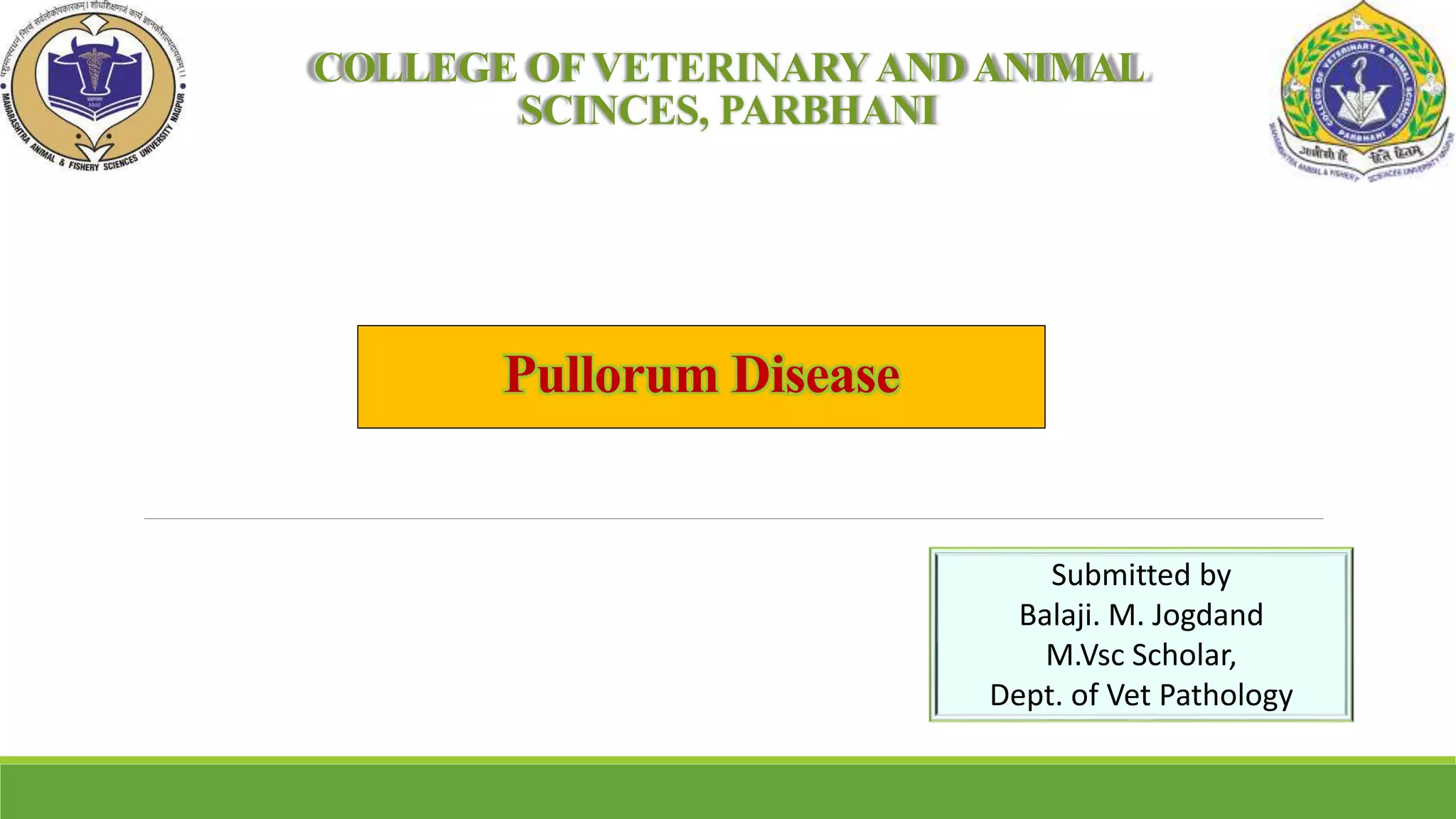
Pullorum Disease
COLLEGE OF VETERINARYAND ANIMAL
SCINCES, PARBHANI
Submitted by
Balaji. M. Jogdand
M.Vsc Scholar,
Dept. of Vet Pathology
Introduction:
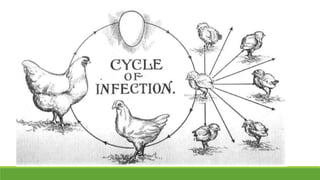
Pullorum disease is a highly contagious, egg-transmitted disease.
It is mainly a blood infection of chickens. The disease is characterized by white
diarrhea in young chicks.
Young chicks and turkey poults (Less than 4 weeks) commonly affected- very high
mortality (up to 100%) ; adults - asymptomatic carriers.
Etiology
A non motile, gram negative, rod shaped bacterium Salmonella pullorum
Route of infection/Spread/Transmission
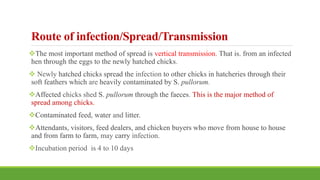
The most important method of spread is vertical transmission. That is. from an infected
hen through the eggs to the newly hatched chicks.
 Newly hatched chicks spread the infection to other chicks in hatcheries through their
soft feathers which are heavily contaminated by S. pullorum.
Affected chicks shed S. pullorum through the faeces. This is the major method of
spread among chicks.
Contaminated feed, water and litter.
Attendants, visitors, feed dealers, and chicken buyers who move from house to house
and from farm to farm, may carry infection.
Incubation period is 4 to 10 days
Pathogenesis
The organisms enters in blood, multiply and leads to bacteremia.(fatal in young chicks)
The bacteremia subside with organism becoming localized in various organs in which
necrotic foci are setup .
Exacerbation and flare up of disease occurs when the animal are exposed to
debilitating influencers such a change in weather, prolonged transport, and sudden
change in feed.
Sign & Symptoms
Disease occurs mainly in chicks under 3 weeks of age.
First indication is excessive numbers of dead-in-shell chicks & death soon after
hatching.
Depression with a tendency to huddle with respiratory distress
White viscous (thick and sticky) droppings which adhere to the feathers around the
vent.
The mortality varies considerably, and in extreme cases can be 100%.
A subacute form with lameness and swollen hock joints may be seen in growing birds,
Reduced egg production may be the only sign of the disease in adult birds.
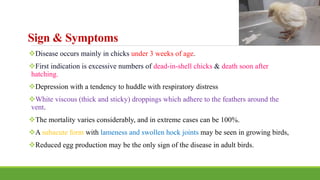
Pullorum disease in a chicken.
Note liver is enlarged, congested, and shows
small necrotic foci (minute white spots). Such
necrotic foci are highly suggestive
of pullorum disease.
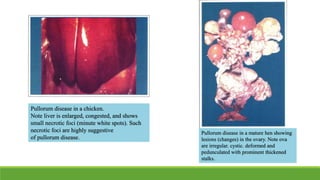
Pullorum disease in a mature hen showing
lesions (changes) in the ovary. Note ova
are irregular. cystic. deformed and
pedunculated with prominent thickened
stalks.
Lesions
Chicks:
If death soon after hatching;
 Peritonitis with an inflamed, unabsorbed yolk sac
 Lungs: congested
 Liver: Dark, swollen, haemorrhages on the surfaces
 If die in the acute phase-no specific lesions, or those of septicaemia
 If death after showing signs for 1 or 2 days
Typhilitis: enlarged and distended with casts of hard, dry necrotic material.
Discrete small, white, necrotic foci in the liver, lungs, myocardium, and gizzard wall.
In general, the lesions in chicks are neither characteristic nor consistent.
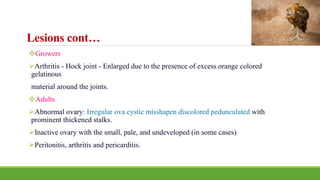
Growers
Arthritis - Hock joint - Enlarged due to the presence of excess orange colored
gelatinous
material around the joints.
Adults
Abnormal ovary: Irregular ova cystic misshapen discolored pedunculated with
prominent thickened stalks.
Inactive ovary with the small, pale, and undeveloped (in some cases)
Peritonitis, arthritis and pericarditis.
Lesions cont…
Diagnosis
Tentative diagnosis - History, signs and lesions
Confirmatory diagnosis - Isolation of the causative agents by cultural examination.
 Detection of antibodies by agglutination tests (rapid slide agglutination test
on whole blood using a stained antigen, and a tube agglutination test carried out on
serum)
Pullorum Disease.

Pullorum Disease.

  • 1.
    Pullorum Disease COLLEGE OFVETERINARYAND ANIMAL SCINCES, PARBHANI Submitted by Balaji. M. Jogdand M.Vsc Scholar, Dept. of Vet Pathology
  • 2.
    Introduction: Pullorum disease isa highly contagious, egg-transmitted disease. It is mainly a blood infection of chickens. The disease is characterized by white diarrhea in young chicks. Young chicks and turkey poults (Less than 4 weeks) commonly affected- very high mortality (up to 100%) ; adults - asymptomatic carriers.
  • 3.
    Etiology A non motile,gram negative, rod shaped bacterium Salmonella pullorum
  • 4.
    Route of infection/Spread/Transmission Themost important method of spread is vertical transmission. That is. from an infected hen through the eggs to the newly hatched chicks.  Newly hatched chicks spread the infection to other chicks in hatcheries through their soft feathers which are heavily contaminated by S. pullorum. Affected chicks shed S. pullorum through the faeces. This is the major method of spread among chicks. Contaminated feed, water and litter. Attendants, visitors, feed dealers, and chicken buyers who move from house to house and from farm to farm, may carry infection. Incubation period is 4 to 10 days
  • 7.
    Pathogenesis The organisms entersin blood, multiply and leads to bacteremia.(fatal in young chicks) The bacteremia subside with organism becoming localized in various organs in which necrotic foci are setup . Exacerbation and flare up of disease occurs when the animal are exposed to debilitating influencers such a change in weather, prolonged transport, and sudden change in feed.
  • 8.
    Sign & Symptoms Diseaseoccurs mainly in chicks under 3 weeks of age. First indication is excessive numbers of dead-in-shell chicks & death soon after hatching. Depression with a tendency to huddle with respiratory distress White viscous (thick and sticky) droppings which adhere to the feathers around the vent. The mortality varies considerably, and in extreme cases can be 100%. A subacute form with lameness and swollen hock joints may be seen in growing birds, Reduced egg production may be the only sign of the disease in adult birds.
  • 9.
    Pullorum disease ina chicken. Note liver is enlarged, congested, and shows small necrotic foci (minute white spots). Such necrotic foci are highly suggestive of pullorum disease. Pullorum disease in a mature hen showing lesions (changes) in the ovary. Note ova are irregular. cystic. deformed and pedunculated with prominent thickened stalks.
  • 10.
    Lesions Chicks: If death soonafter hatching;  Peritonitis with an inflamed, unabsorbed yolk sac  Lungs: congested  Liver: Dark, swollen, haemorrhages on the surfaces  If die in the acute phase-no specific lesions, or those of septicaemia  If death after showing signs for 1 or 2 days Typhilitis: enlarged and distended with casts of hard, dry necrotic material. Discrete small, white, necrotic foci in the liver, lungs, myocardium, and gizzard wall. In general, the lesions in chicks are neither characteristic nor consistent.
  • 11.
    Growers Arthritis - Hockjoint - Enlarged due to the presence of excess orange colored gelatinous material around the joints. Adults Abnormal ovary: Irregular ova cystic misshapen discolored pedunculated with prominent thickened stalks. Inactive ovary with the small, pale, and undeveloped (in some cases) Peritonitis, arthritis and pericarditis. Lesions cont…
  • 12.
    Diagnosis Tentative diagnosis -History, signs and lesions Confirmatory diagnosis - Isolation of the causative agents by cultural examination.  Detection of antibodies by agglutination tests (rapid slide agglutination test on whole blood using a stained antigen, and a tube agglutination test carried out on serum)