oCOMMONLY KNOWN AS GUMBOROCOMMONLY KNOWN AS GUMBORO
oPREPARED & PRESENTED BY:PREPARED & PRESENTED BY:
oRED GROUPRED GROUP
o2K14-AV-08, 09, 11, 12, 16, 172K14-AV-08, 09, 11, 12, 16, 17
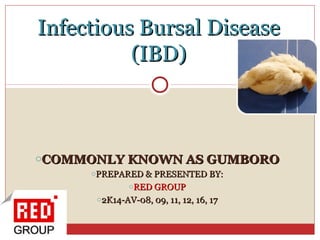
Infectious Bursal DiseaseInfectious Bursal Disease
(IBD)(IBD)
Introduction
Infectious bursal disease (IBD, Gumboro) is an
acute, highly contagious viral infection in chickens
manifested by inflammation and subsequent
atrophy of the bursa of Fabricius, and various
degrees of nephritis and immunosuppression.
The disease was first discovered in Gumboro,
Delaware (USA) in 1962.
Etiology
IBDV is a double stranded RNA virus .
Belongs to the genus Avibirnavirus of family
Birnaviridae .
There are two distinct serotypes of the virus, but only
serotype 1 viruses cause disease in poultry
Mode of transmission
Via Ingestion ( horizontally through contaminated
feed and water )
Mechanical transmission via people , animals ,vehicles
and equipments when transferred from diseased flock
to healthy one.
May be via the conjunctiva or respiratory tract, with
an incubation period of 2-3 days.
There is no vertical transmission
The infected birds shed virus for 14 days in their
faeces. Feed, water, and poultry house litter become
contaminated.
Pathogenesis
The most likely route of infection is oral ingestion of
contaminated faeces or other contaminated organic
material.
Virus was present within 4-5 hours in the macrophages and
lymphatic cells of the duodenum, jejunum and caecum.
Duodenum, jejunum and caecum are the first sites of viral
replication.
IBDV reaching the main bloodstream is circulated to other
organs including the bursa of Fabricius.
Pathogenesis
Immature B-lymphocytes in the follicles of the bursa are
the target cells for viral replication.
By 13 hours post-infection most follicles in the bursa are
virus positive.
By 16 hours post infection a second massive viraemia
occurs.
There is infection and secondary viral replication in other
lymphatic organs.
Clinical disease and death occurs within 64-72 hrs post-
infection
Clinical findings
 Infectious bursal disease follows one of two courses,
depending on the age at which chickens infected,
breed and virulence of field virus
 1-clinical form
 2-subclinical form
Clinical form
Clinical IBD occurs usually between 3-8 weeks of age
depending on maternal antibody levels.
A ected birds are depressed, pale, huddlingff
producing watery white diarrhea, soiled vent
feathers, vent picking, and inflammation of the
cloaca.
Continue…
Disease may appear suddenly and morbidity
typically reaches 100%
Mortality varies. Usually new cases of IBD have a
mortality rate of about 5 to10% but can be as high as
60% depending on the pathogenicity of the strain
involved.
 Highly pathogenic strains are called “very virulent”
IBD (vvIBD) resulting in high mortality.
Subclinical form
Subclinical IBD occurs with infections before 3
weeks of age.
Early IBD infection result in permanent
immunosuppression without mortality.
Immunosuppression is economically important due
to increased susceptibility to secondary infections
especially in the respiratory tract.
In broilers this form of the disease results in bad
performance with lower weight gains and higher feed
conversion ratios.
Post Mortem Lesions
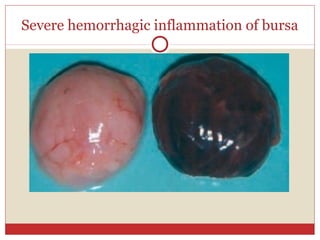
Oedematous bursa (may be slightly enlarged, normal
size or reduced in size depending on the stage), may
have haemorrhages, rapidly proceeds to atrophy.
Five days after infection, the BF diminishes in size
rapidly.
Haemorrhages in skeletal muscle (especially on
thighs and pectoral) and junction of the
proventriculus and gizzard because the IBD virus
interferes with the normal blood clotting
mechanism.
Continue…
Swollen kidneys with urates. Such lesions probably
result form severe dehydration, not direct viral
damage.
Dehydration.
Chickens that have recovered from IBDV infections
have small, atrophied, cloacal bursas due to the
destruction and lack of regeneration of the bursal
follicles.
Severe hemorrhagic inflammation of bursa
Hemorrhage on thigh pectoral muscles
Affected kidneys with uretes
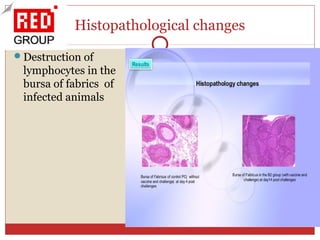
Histopathological changes
Destruction of
lymphocytes in the
bursa of fabrics of
infected animals
Diagnosis
1-flock history
2-symptoms
3-postmortem examination
4-histopathology
5- virus isolation and identification
6- Serology and fluorescent antibody techniques
7- PCR was designed for the detection of IBDV
genome
8- Serological tests such as agar gel precipitation and
ELISA, for detecting antibodies
Prevention and control
good management and suitable vaccination
programme at 1–21 days of age.
An effective IBD prevention and control program
must involve an effective breeder vaccination
program, an effective biosecurity program, and an
effective broiler vaccination program
All infected litter and carcases of infected birds must
be suitably disposed of away from the site or any
other poultry operation.
Ibd in poultry

Ibd in poultry

  • 1.
    oCOMMONLY KNOWN ASGUMBOROCOMMONLY KNOWN AS GUMBORO oPREPARED & PRESENTED BY:PREPARED & PRESENTED BY: oRED GROUPRED GROUP o2K14-AV-08, 09, 11, 12, 16, 172K14-AV-08, 09, 11, 12, 16, 17 Infectious Bursal DiseaseInfectious Bursal Disease (IBD)(IBD)
  • 2.
    Introduction Infectious bursal disease(IBD, Gumboro) is an acute, highly contagious viral infection in chickens manifested by inflammation and subsequent atrophy of the bursa of Fabricius, and various degrees of nephritis and immunosuppression. The disease was first discovered in Gumboro, Delaware (USA) in 1962.
  • 3.
    Etiology IBDV is adouble stranded RNA virus . Belongs to the genus Avibirnavirus of family Birnaviridae . There are two distinct serotypes of the virus, but only serotype 1 viruses cause disease in poultry
  • 4.
    Mode of transmission ViaIngestion ( horizontally through contaminated feed and water ) Mechanical transmission via people , animals ,vehicles and equipments when transferred from diseased flock to healthy one. May be via the conjunctiva or respiratory tract, with an incubation period of 2-3 days. There is no vertical transmission The infected birds shed virus for 14 days in their faeces. Feed, water, and poultry house litter become contaminated.
  • 5.
    Pathogenesis The most likelyroute of infection is oral ingestion of contaminated faeces or other contaminated organic material. Virus was present within 4-5 hours in the macrophages and lymphatic cells of the duodenum, jejunum and caecum. Duodenum, jejunum and caecum are the first sites of viral replication. IBDV reaching the main bloodstream is circulated to other organs including the bursa of Fabricius.
  • 6.
    Pathogenesis Immature B-lymphocytes inthe follicles of the bursa are the target cells for viral replication. By 13 hours post-infection most follicles in the bursa are virus positive. By 16 hours post infection a second massive viraemia occurs. There is infection and secondary viral replication in other lymphatic organs. Clinical disease and death occurs within 64-72 hrs post- infection
  • 7.
    Clinical findings  Infectiousbursal disease follows one of two courses, depending on the age at which chickens infected, breed and virulence of field virus  1-clinical form  2-subclinical form
  • 8.
    Clinical form Clinical IBDoccurs usually between 3-8 weeks of age depending on maternal antibody levels. A ected birds are depressed, pale, huddlingff producing watery white diarrhea, soiled vent feathers, vent picking, and inflammation of the cloaca.
  • 9.
    Continue… Disease may appearsuddenly and morbidity typically reaches 100% Mortality varies. Usually new cases of IBD have a mortality rate of about 5 to10% but can be as high as 60% depending on the pathogenicity of the strain involved.  Highly pathogenic strains are called “very virulent” IBD (vvIBD) resulting in high mortality.
  • 10.
    Subclinical form Subclinical IBDoccurs with infections before 3 weeks of age. Early IBD infection result in permanent immunosuppression without mortality. Immunosuppression is economically important due to increased susceptibility to secondary infections especially in the respiratory tract. In broilers this form of the disease results in bad performance with lower weight gains and higher feed conversion ratios.
  • 11.
    Post Mortem Lesions Oedematousbursa (may be slightly enlarged, normal size or reduced in size depending on the stage), may have haemorrhages, rapidly proceeds to atrophy. Five days after infection, the BF diminishes in size rapidly. Haemorrhages in skeletal muscle (especially on thighs and pectoral) and junction of the proventriculus and gizzard because the IBD virus interferes with the normal blood clotting mechanism.
  • 12.
    Continue… Swollen kidneys withurates. Such lesions probably result form severe dehydration, not direct viral damage. Dehydration. Chickens that have recovered from IBDV infections have small, atrophied, cloacal bursas due to the destruction and lack of regeneration of the bursal follicles.
  • 13.
  • 16.
    Hemorrhage on thighpectoral muscles
  • 17.
  • 18.
    Histopathological changes Destruction of lymphocytesin the bursa of fabrics of infected animals
  • 19.
    Diagnosis 1-flock history 2-symptoms 3-postmortem examination 4-histopathology 5-virus isolation and identification 6- Serology and fluorescent antibody techniques 7- PCR was designed for the detection of IBDV genome 8- Serological tests such as agar gel precipitation and ELISA, for detecting antibodies
  • 20.
    Prevention and control goodmanagement and suitable vaccination programme at 1–21 days of age. An effective IBD prevention and control program must involve an effective breeder vaccination program, an effective biosecurity program, and an effective broiler vaccination program All infected litter and carcases of infected birds must be suitably disposed of away from the site or any other poultry operation.