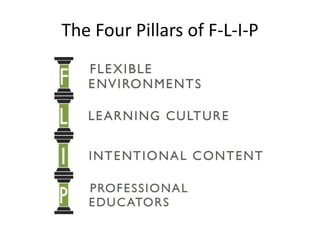
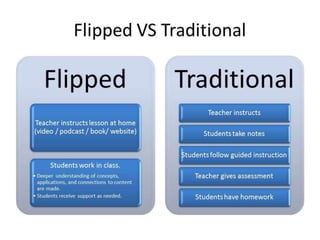
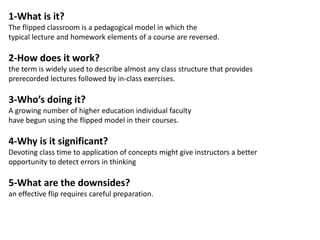
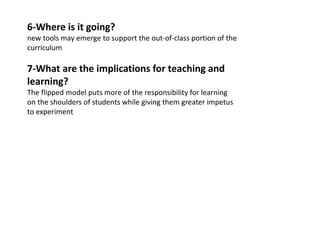
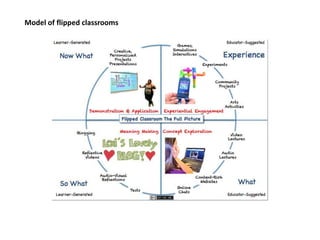
The flipped classroom model reverses traditional teaching by having students gain initial content exposure outside of class, often via online lectures, and using class time for hands-on activities. It aims to increase engagement and empower students. Key aspects include short online videos, in-class application of knowledge, and communication between teachers and students. While requiring preparation, proponents argue it can improve grades and better support varied pacing.