Suresh Babu G
Flipped Classroom
Suresh Babu G
Assistent Professor
Suresh Babu G
Flipped classroom
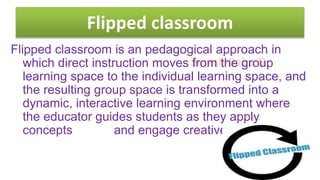
Flipped classroom is an pedagogical approach in
which direct instruction moves from the group
learning space to the individual learning space, and
the resulting group space is transformed into a
dynamic, interactive learning environment where
the educator guides students as they apply
concepts and engage creatively in .
Suresh Babu G
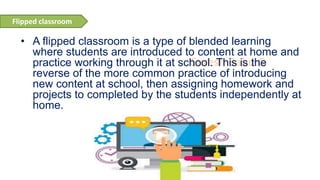
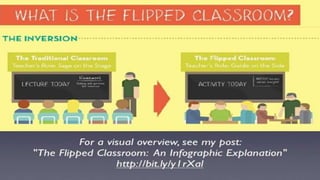
• A flipped classroom is a type of blended learning
where students are introduced to content at home and
practice working through it at school. This is the
reverse of the more common practice of introducing
new content at school, then assigning homework and
projects to completed by the students independently at
home.
Flipped classroom
Suresh Babu G
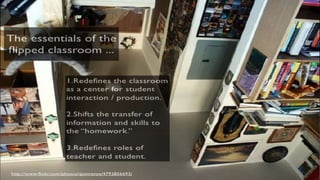
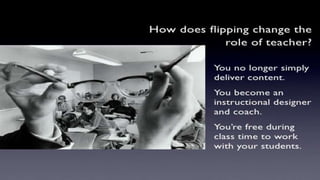
• Flipped lessons replace teacher lectures with
instructional material—often a video—that
students watch and interact with at home. They
apply what they learned in class the next day
through a variety of activities or assignments
that could once have been homework, with
the teacher working as a coach or guide.
Flipped classroom
Suresh Babu G
Who discovered Flipped Classroom
Jonathan Bergmann - It was pioneered by two
high school teachers in Colorado named Jonathan
Bergmann and Aaron Sams. They discovered a software
tool that allowed them to narrate and record PowerPoint
presentations.
Suresh Babu G
What Students Might do at Home in a Flipped Classroom
• Watch an online lecture
• Review online course material
• Read physical or digital texts
• Participate in an online discussion
• Perform research
Suresh Babu G
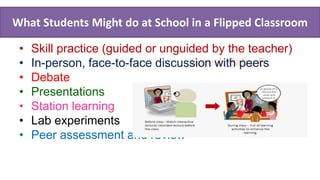
What Students Might do at School in a Flipped Classroom
• Skill practice (guided or unguided by the teacher)
• In-person, face-to-face discussion with peers
• Debate
• Presentations
• Station learning
• Lab experiments
• Peer assessment and review
Suresh Babu G
Suresh Babu G
Suresh Babu G
Suresh Babu G
Traditional Classroom vs Flipped Classroom
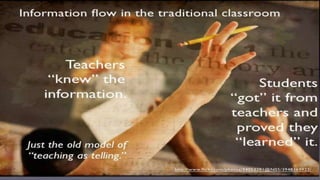
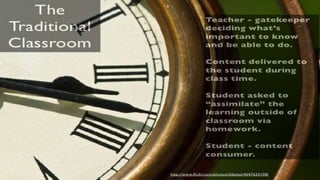
• Whereas with the traditional classroom,
students don't have direct access to the
knowledge. The teacher stands between
the students and the knowledge.
• With the flipped classroom students have
to prepare their contact moments.
• Students who attend a traditional
education mostly have to do homework
after contact moments.
Suresh Babu G
Suresh Babu G
Suresh Babu G
Suresh Babu G
Suresh Babu G
Suresh Babu G
Suresh Babu G
Types Of Flipped Learning Classrooms
1. Blended Learning Models
• Rotation Model
Suresh Babu G
• Flex Model - The Flex model comprises the making of
every class a mixture of online instruction and classroom
interaction.
• Enriched Virtual Model - In this model, there is a clear
division of work for school and home.
2. Flipped Classroom Models
• Standard Inverted Classroom - It's the classic flipped
classroom. The learners are asked to go through the
lecture videos and other study material that are
prerequisites for the next class.
Types Of Flipped Learning Classrooms
Suresh Babu G
• Micro Flipped Classroom - In this type of
classroom, short video lectures are distributed as
study material along with short assignments.
• Discussion-Oriented Flipped Classroom -
Homework is assigned in the form of video
lectures and external video resources.
Discussions happen in the classroom time where
topics are explored further.
Types Of Flipped Learning Classrooms
Suresh Babu G
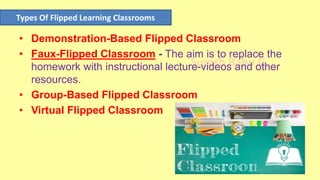
• Demonstration-Based Flipped Classroom
• Faux-Flipped Classroom - The aim is to replace the
homework with instructional lecture-videos and other
resources.
• Group-Based Flipped Classroom
• Virtual Flipped Classroom
Types Of Flipped Learning Classrooms
Suresh Babu G
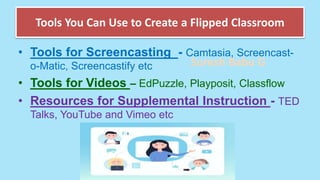
Tools You Can Use to Create a Flipped Classroom
• Tools for Screencasting - Camtasia, Screencast-
o-Matic, Screencastify etc
• Tools for Videos – EdPuzzle, Playposit, Classflow
• Resources for Supplemental Instruction - TED
Talks, YouTube and Vimeo etc
Suresh Babu G
Suresh Babu G
Suresh Babu G
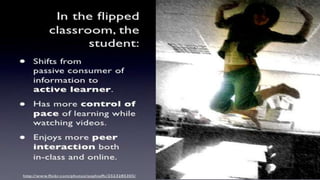
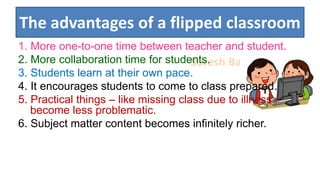
The advantages of a flipped classroom
1. More one-to-one time between teacher and student.
2. More collaboration time for students.
3. Students learn at their own pace.
4. It encourages students to come to class prepared.
5. Practical things – like missing class due to illness –
become less problematic.
6. Subject matter content becomes infinitely richer.
Suresh Babu G
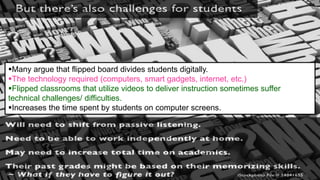
Many argue that flipped board divides students digitally.
The technology required (computers, smart gadgets, internet, etc.)
Flipped classrooms that utilize videos to deliver instruction sometimes suffer
technical challenges/ difficulties.
Increases the time spent by students on computer screens.
Suresh Babu G

Flipped Class Room

  • 1.
    Suresh Babu G FlippedClassroom Suresh Babu G Assistent Professor
  • 2.
    Suresh Babu G Flippedclassroom Flipped classroom is an pedagogical approach in which direct instruction moves from the group learning space to the individual learning space, and the resulting group space is transformed into a dynamic, interactive learning environment where the educator guides students as they apply concepts and engage creatively in .
  • 3.
    Suresh Babu G •A flipped classroom is a type of blended learning where students are introduced to content at home and practice working through it at school. This is the reverse of the more common practice of introducing new content at school, then assigning homework and projects to completed by the students independently at home. Flipped classroom
  • 4.
    Suresh Babu G •Flipped lessons replace teacher lectures with instructional material—often a video—that students watch and interact with at home. They apply what they learned in class the next day through a variety of activities or assignments that could once have been homework, with the teacher working as a coach or guide. Flipped classroom
  • 5.
    Suresh Babu G Whodiscovered Flipped Classroom Jonathan Bergmann - It was pioneered by two high school teachers in Colorado named Jonathan Bergmann and Aaron Sams. They discovered a software tool that allowed them to narrate and record PowerPoint presentations.
  • 6.
    Suresh Babu G WhatStudents Might do at Home in a Flipped Classroom • Watch an online lecture • Review online course material • Read physical or digital texts • Participate in an online discussion • Perform research
  • 7.
    Suresh Babu G WhatStudents Might do at School in a Flipped Classroom • Skill practice (guided or unguided by the teacher) • In-person, face-to-face discussion with peers • Debate • Presentations • Station learning • Lab experiments • Peer assessment and review
  • 8.
  • 9.
  • 10.
  • 11.
    Suresh Babu G TraditionalClassroom vs Flipped Classroom • Whereas with the traditional classroom, students don't have direct access to the knowledge. The teacher stands between the students and the knowledge. • With the flipped classroom students have to prepare their contact moments. • Students who attend a traditional education mostly have to do homework after contact moments.
  • 12.
  • 13.
  • 14.
  • 15.
  • 16.
  • 17.
  • 18.
    Suresh Babu G TypesOf Flipped Learning Classrooms 1. Blended Learning Models • Rotation Model
  • 19.
    Suresh Babu G •Flex Model - The Flex model comprises the making of every class a mixture of online instruction and classroom interaction. • Enriched Virtual Model - In this model, there is a clear division of work for school and home. 2. Flipped Classroom Models • Standard Inverted Classroom - It's the classic flipped classroom. The learners are asked to go through the lecture videos and other study material that are prerequisites for the next class. Types Of Flipped Learning Classrooms
  • 20.
    Suresh Babu G •Micro Flipped Classroom - In this type of classroom, short video lectures are distributed as study material along with short assignments. • Discussion-Oriented Flipped Classroom - Homework is assigned in the form of video lectures and external video resources. Discussions happen in the classroom time where topics are explored further. Types Of Flipped Learning Classrooms
  • 21.
    Suresh Babu G •Demonstration-Based Flipped Classroom • Faux-Flipped Classroom - The aim is to replace the homework with instructional lecture-videos and other resources. • Group-Based Flipped Classroom • Virtual Flipped Classroom Types Of Flipped Learning Classrooms
  • 22.
    Suresh Babu G ToolsYou Can Use to Create a Flipped Classroom • Tools for Screencasting - Camtasia, Screencast- o-Matic, Screencastify etc • Tools for Videos – EdPuzzle, Playposit, Classflow • Resources for Supplemental Instruction - TED Talks, YouTube and Vimeo etc
  • 23.
  • 24.
  • 25.
    Suresh Babu G Theadvantages of a flipped classroom 1. More one-to-one time between teacher and student. 2. More collaboration time for students. 3. Students learn at their own pace. 4. It encourages students to come to class prepared. 5. Practical things – like missing class due to illness – become less problematic. 6. Subject matter content becomes infinitely richer.
  • 26.
    Suresh Babu G Manyargue that flipped board divides students digitally. The technology required (computers, smart gadgets, internet, etc.) Flipped classrooms that utilize videos to deliver instruction sometimes suffer technical challenges/ difficulties. Increases the time spent by students on computer screens.
  • 27.