A “FLIPPED CLASSROOM”
• The flipped classroom is a pedagogical model
in which the typical lecture and homework
elements of a course are reversed. Short video
lectures are viewed by students at home
before the class session, while in-class time is
devoted to exercises, projects, or discussions.
• It is called the flipped class because the whole
classroom/homework paradigm is "flipped".
What used to be classwork (the "lecture") is
done at home via teacher-created videos and
what used to be homework (assigned
problems) is now done in class.
COMMON MISCONCEPTIONS ABOUT
THE “FLIPPED CLASSSROOM”
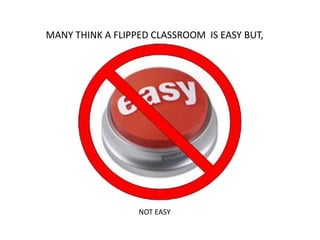
MANY THINK A FLIPPED CLASSROOM IS EASY BUT,
NOT EASY
TEACHERS HAVE A HOLIDAY
No teachers do not get a holiday and set in the back of the room doing
nothing!
TEACHERS ARE REPLACED BY
COMPUTERS
No the teachers are still active in the classroom!
ONE SIZE FITS ALL
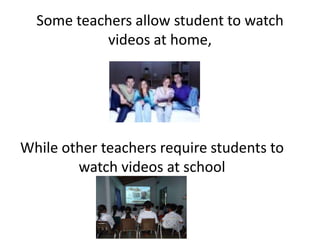
Some teachers allow student to watch
videos at home,
While other teachers require students to
watch videos at school
A FLIPPED CLASSROOM CANNOT
SOVLE ALL PROBLEMS IT IS JUST A
TOOL
Transforms eduction
• growing number of higher education individual
faculty have begun using the flipped model
• in their courses
• Short tutorial video lectures let students move at
their own pace, rewind to review portions, and
skip through sections they already understand,
meaning students come to class able to use the
software and prepared to do creative projects
with their peers
• The flipped model puts more of the responsibility
for learning on the shoulders of students while
giving them greater impetus to experiment
• It gives students more control over their
education.
• It allows students to choose when and where
they receive instruction.
• It lets teachers talk to every student in every
class.
• It turns learning into a two-way conversation
between teachers and students.
Best practice associated with flipped
classroom
• The flipped classroom model encompasses
any use of using Internet technology to
leverage the learning in your classroom, so
you can spend more time interacting with
students instead of lecturing. This is most
commonly being done using teacher created
videos (aka vodcasting) that students view
outside of class time.
• Devoting class time to application of concepts
might give instructors a better opportunity to
detect errors in thinking,
• Step 1 - Clear Expectations Step 2 - Create A
Blended Learning Format The flipped
classroom is not an "all or nothing" format. Its
just a reverse sequencing of what we are used
to in the traditional classroom.3 Individual
Learning Now,

Flipped classroom

  • 1.
  • 2.
    • The flippedclassroom is a pedagogical model in which the typical lecture and homework elements of a course are reversed. Short video lectures are viewed by students at home before the class session, while in-class time is devoted to exercises, projects, or discussions.
  • 3.
    • It iscalled the flipped class because the whole classroom/homework paradigm is "flipped". What used to be classwork (the "lecture") is done at home via teacher-created videos and what used to be homework (assigned problems) is now done in class.
  • 4.
    COMMON MISCONCEPTIONS ABOUT THE“FLIPPED CLASSSROOM”
  • 5.
    MANY THINK AFLIPPED CLASSROOM IS EASY BUT, NOT EASY
  • 6.
    TEACHERS HAVE AHOLIDAY No teachers do not get a holiday and set in the back of the room doing nothing!
  • 7.
    TEACHERS ARE REPLACEDBY COMPUTERS No the teachers are still active in the classroom!
  • 8.
  • 9.
    Some teachers allowstudent to watch videos at home, While other teachers require students to watch videos at school
  • 10.
    A FLIPPED CLASSROOMCANNOT SOVLE ALL PROBLEMS IT IS JUST A TOOL
  • 11.
    Transforms eduction • growingnumber of higher education individual faculty have begun using the flipped model • in their courses • Short tutorial video lectures let students move at their own pace, rewind to review portions, and skip through sections they already understand, meaning students come to class able to use the software and prepared to do creative projects with their peers
  • 12.
    • The flippedmodel puts more of the responsibility for learning on the shoulders of students while giving them greater impetus to experiment • It gives students more control over their education. • It allows students to choose when and where they receive instruction. • It lets teachers talk to every student in every class. • It turns learning into a two-way conversation between teachers and students.
  • 14.
    Best practice associatedwith flipped classroom • The flipped classroom model encompasses any use of using Internet technology to leverage the learning in your classroom, so you can spend more time interacting with students instead of lecturing. This is most commonly being done using teacher created videos (aka vodcasting) that students view outside of class time.
  • 15.
    • Devoting classtime to application of concepts might give instructors a better opportunity to detect errors in thinking, • Step 1 - Clear Expectations Step 2 - Create A Blended Learning Format The flipped classroom is not an "all or nothing" format. Its just a reverse sequencing of what we are used to in the traditional classroom.3 Individual Learning Now,