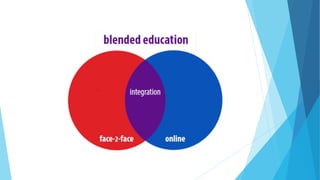
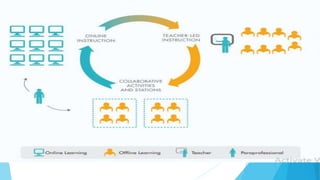
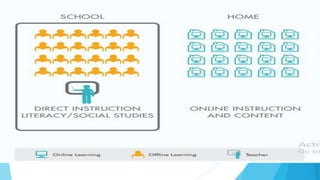
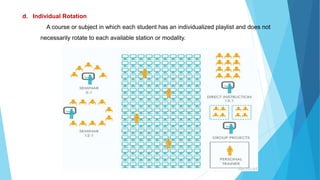
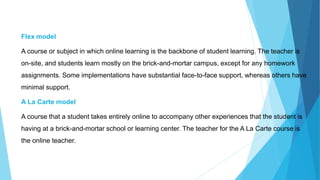
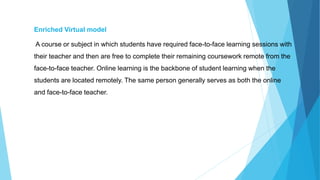
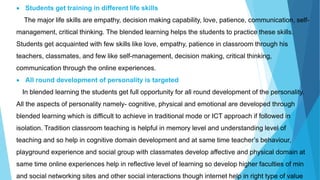
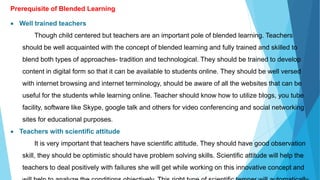
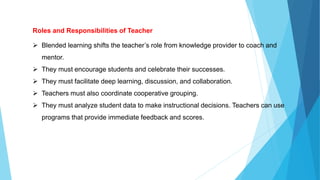
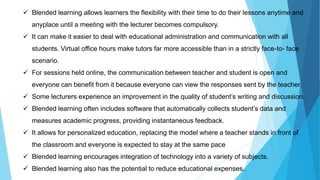
Blended learning combines traditional face-to-face instruction with online learning, allowing flexibility in educational delivery through various models including rotation, flex, a la carte, and enriched virtual. Key advantages include improved access to resources, personalized education, and the integration of technology, while challenges encompass technical dependencies and the need for extensive preparation by educators. Successful implementation requires well-trained teachers, adequate infrastructure, and a collaborative approach from both students and instructors.