Download to read offline



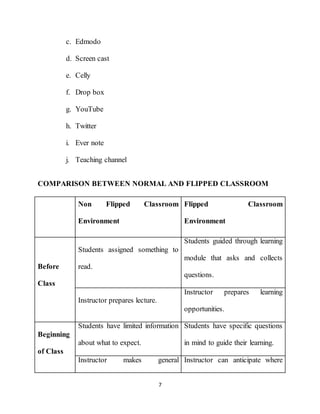

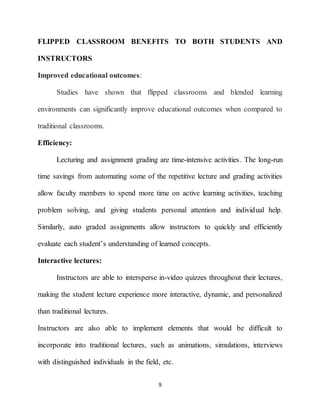
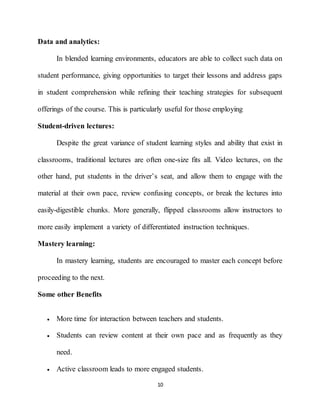
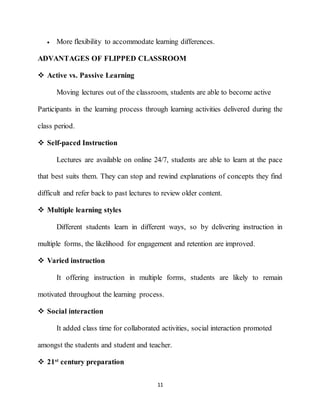


The document discusses the flipped classroom pedagogy. It defines flipped classroom as reversing traditional teaching where students gain first exposure to new material outside of class through videos or readings, and class time is used for hands-on learning like problem solving and discussions. This shifts the focus from passive learning to active learning and higher-order thinking skills. Key aspects of flipped classrooms include providing first exposure materials for students beforehand, assessing understanding, and using class time for activities that develop cognitive skills. Benefits include improved outcomes, efficiency, interactive lectures, data-driven instruction, and mastery-based learning.


