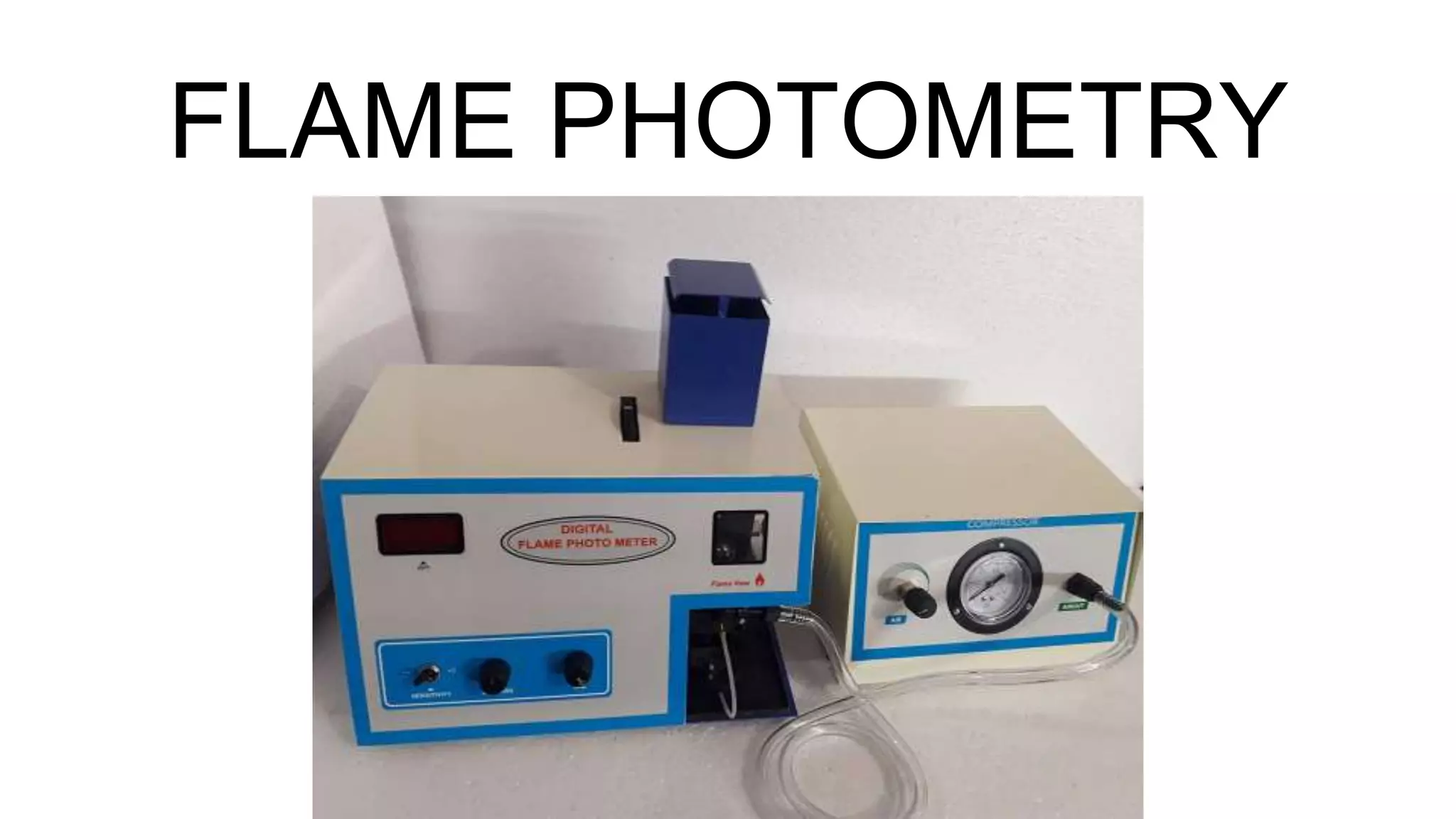
FLAME PHOTOMETRY
THEORY
- Photoelectric flame photometry, a branch of atomic
spectroscopy is used for inorganic chemical analysis for
determining the concentration of certain metal ions such
as sodium, potassium, lithium, calcium, Cesium, etc.
- In flame photometry the species (metal ions) used in
the spectrum are in the form of atoms.
- It is also called as flame atomic emission spectrometry
(FAES).
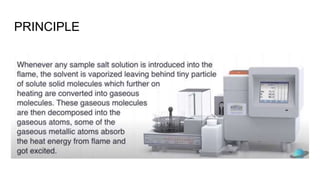
PRINCIPLE
FLAME PHOTOMETRY VIDEO
https://www.youtube.com/watch?v=9DYV25Ki-kc
INSTRUMENTATION
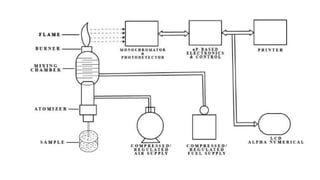
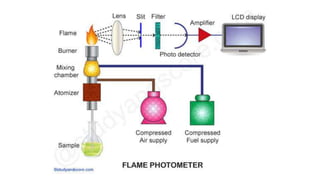
1. Source of flame:
A burner that provides flame and can be
maintained in a constant form and at a
constant temperature.
2. Nebuliser and mixing chamber:
Helps to transport the homogeneous solution of the
substance into the flame at a steady rate.
3. Optical system (optical filter):
The optical system comprises three parts: convex mirror, lens
and filter. The convex mirror helps to transmit light emitted from
the atoms and focus the emissions to the lens.
The convex lens help to focus the light on a point called slit. The
reflections from the mirror pass through the slit and reach the
filters.
This will isolate the wavelength to be measured from that of any
other extraneous emissions. Hence it acts as interference type
color filters.
4. Photo detector:
Detect the emitted light and measure the
intensity of radiation emitted by the flame.
That is, the emitted radiation is converted to an
electrical signal with the help of photo detector.
The produced electrical signals are directly
proportional to the intensity of light.
WORKING
The working of the flame photometer involves a
series of steps which is discussed in the following
sections.
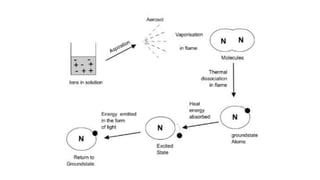
Nebulisation:
The solution of the substance to be analyzed
is first aspirated into the burner, which is then
dispersed into the flame as fine spray
particles.
PROCESS
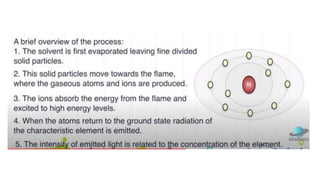
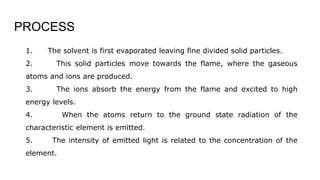
1. The solvent is first evaporated leaving fine divided solid particles.
2. This solid particles move towards the flame, where the gaseous
atoms and ions are produced.
3. The ions absorb the energy from the flame and excited to high
energy levels.
4. When the atoms return to the ground state radiation of the
characteristic element is emitted.
5. The intensity of emitted light is related to the concentration of the
element.
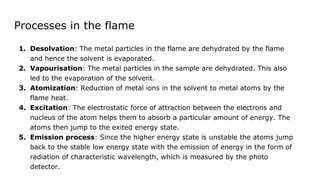
Processes in the flame
1. Desolvation: The metal particles in the flame are dehydrated by the flame
and hence the solvent is evaporated.
2. Vapourisation: The metal particles in the sample are dehydrated. This also
led to the evaporation of the solvent.
3. Atomization: Reduction of metal ions in the solvent to metal atoms by the
flame heat.
4. Excitation: The electrostatic force of attraction between the electrons and
nucleus of the atom helps them to absorb a particular amount of energy. The
atoms then jump to the exited energy state.
5. Emission process: Since the higher energy state is unstable the atoms jump
back to the stable low energy state with the emission of energy in the form of
radiation of characteristic wavelength, which is measured by the photo
detector.
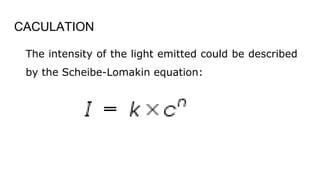
CACULATION
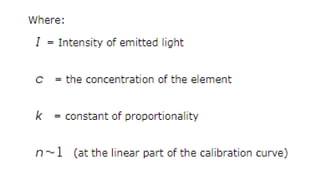
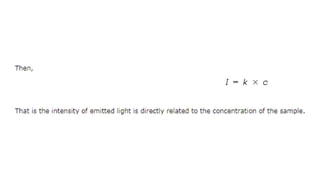
The intensity of the light emitted could be described
by the Scheibe-Lomakin equation:
The comparison of emission intensities of unknown samples to
either that of standard solutions (plotting calibration curve), or
to those of an internal standard (standard addition method),
helps in the quantitative analysis of the analyte metal in the
sample solution.
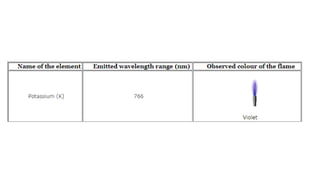
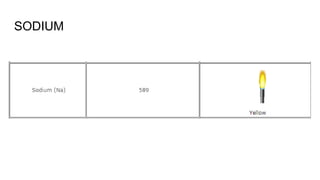
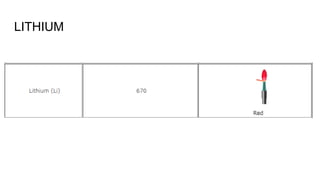
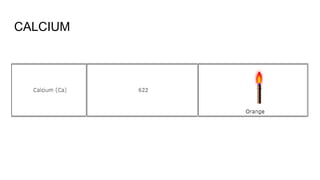
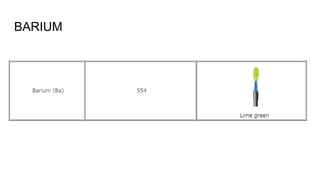
The flame emissions of the alkali and alkaline
earth metals in terms of the emission wavelength
and the characteristic color produced by each
element is shown in table below
SODIUM
LITHIUM
CALCIUM
BARIUM
APPLICATIONS
Flame photometer has both quantitative and qualitative applications.
Flame photometer with monochromators emits radiations of characteristic
wavelengths which help to detect the presence of a particular metal in the sample.
This help to determine the availability of alkali and alkaline earth metals which are
critical for soil cultivation.
In agriculture, the fertilizer requirement of the soil is analyzed by flame test analysis
of the soil.
In clinical field, Na+ and K+ ions in body fluids, muscles and heart can be determined
by diluting the blood serum and aspiration into the flame.
Analysis of soft drinks, fruit juices and alcoholic beverages can also be analyzed by
using flame photometry.
ADVANTAGES
1. Simple quantitative analytical test based on the flame
analysis.
2. Inexpensive.
3. The determination of elements such as alkali and
alkaline earth metals is performed easily with most
reliable and convenient methods.
4. Quite quick, convenient, and selective and sensitive to
even parts per million (ppm) to parts per billion (ppb)
range.
DISADVANTAGES
1. The concentration of the metal ion in the solution cannot be
measured accurately..
2. A standard solution with known molarities is required for determining
the concentration of the ions which will corresponds to the emission
spectra.
3. It is difficult to obtain the accurate results of ions with higher
concentration.
4. The information about the molecular structure of the compound
present in the sample solution cannot be determined.
5. The elements such as carbon, hydrogen and halides cannot be
detected due to its non radiating nature.
TAPAN KUMAR MAHATO
tapan.mahato@gmail.com
FINISHED

Flame photometry

  • 1.
  • 2.
    THEORY - Photoelectric flamephotometry, a branch of atomic spectroscopy is used for inorganic chemical analysis for determining the concentration of certain metal ions such as sodium, potassium, lithium, calcium, Cesium, etc. - In flame photometry the species (metal ions) used in the spectrum are in the form of atoms. - It is also called as flame atomic emission spectrometry (FAES).
  • 3.
  • 7.
  • 8.
  • 11.
    1. Source offlame: A burner that provides flame and can be maintained in a constant form and at a constant temperature.
  • 12.
    2. Nebuliser andmixing chamber: Helps to transport the homogeneous solution of the substance into the flame at a steady rate.
  • 13.
    3. Optical system(optical filter): The optical system comprises three parts: convex mirror, lens and filter. The convex mirror helps to transmit light emitted from the atoms and focus the emissions to the lens. The convex lens help to focus the light on a point called slit. The reflections from the mirror pass through the slit and reach the filters. This will isolate the wavelength to be measured from that of any other extraneous emissions. Hence it acts as interference type color filters.
  • 14.
    4. Photo detector: Detectthe emitted light and measure the intensity of radiation emitted by the flame. That is, the emitted radiation is converted to an electrical signal with the help of photo detector. The produced electrical signals are directly proportional to the intensity of light.
  • 15.
    WORKING The working ofthe flame photometer involves a series of steps which is discussed in the following sections.
  • 16.
    Nebulisation: The solution ofthe substance to be analyzed is first aspirated into the burner, which is then dispersed into the flame as fine spray particles.
  • 17.
    PROCESS 1. The solventis first evaporated leaving fine divided solid particles. 2. This solid particles move towards the flame, where the gaseous atoms and ions are produced. 3. The ions absorb the energy from the flame and excited to high energy levels. 4. When the atoms return to the ground state radiation of the characteristic element is emitted. 5. The intensity of emitted light is related to the concentration of the element.
  • 19.
    Processes in theflame 1. Desolvation: The metal particles in the flame are dehydrated by the flame and hence the solvent is evaporated. 2. Vapourisation: The metal particles in the sample are dehydrated. This also led to the evaporation of the solvent. 3. Atomization: Reduction of metal ions in the solvent to metal atoms by the flame heat. 4. Excitation: The electrostatic force of attraction between the electrons and nucleus of the atom helps them to absorb a particular amount of energy. The atoms then jump to the exited energy state. 5. Emission process: Since the higher energy state is unstable the atoms jump back to the stable low energy state with the emission of energy in the form of radiation of characteristic wavelength, which is measured by the photo detector.
  • 20.
    CACULATION The intensity ofthe light emitted could be described by the Scheibe-Lomakin equation:
  • 23.
    The comparison ofemission intensities of unknown samples to either that of standard solutions (plotting calibration curve), or to those of an internal standard (standard addition method), helps in the quantitative analysis of the analyte metal in the sample solution.
  • 24.
    The flame emissionsof the alkali and alkaline earth metals in terms of the emission wavelength and the characteristic color produced by each element is shown in table below
  • 26.
  • 27.
  • 28.
  • 29.
  • 30.
    APPLICATIONS Flame photometer hasboth quantitative and qualitative applications. Flame photometer with monochromators emits radiations of characteristic wavelengths which help to detect the presence of a particular metal in the sample. This help to determine the availability of alkali and alkaline earth metals which are critical for soil cultivation. In agriculture, the fertilizer requirement of the soil is analyzed by flame test analysis of the soil. In clinical field, Na+ and K+ ions in body fluids, muscles and heart can be determined by diluting the blood serum and aspiration into the flame. Analysis of soft drinks, fruit juices and alcoholic beverages can also be analyzed by using flame photometry.
  • 31.
    ADVANTAGES 1. Simple quantitativeanalytical test based on the flame analysis. 2. Inexpensive. 3. The determination of elements such as alkali and alkaline earth metals is performed easily with most reliable and convenient methods. 4. Quite quick, convenient, and selective and sensitive to even parts per million (ppm) to parts per billion (ppb) range.
  • 32.
    DISADVANTAGES 1. The concentrationof the metal ion in the solution cannot be measured accurately.. 2. A standard solution with known molarities is required for determining the concentration of the ions which will corresponds to the emission spectra. 3. It is difficult to obtain the accurate results of ions with higher concentration. 4. The information about the molecular structure of the compound present in the sample solution cannot be determined. 5. The elements such as carbon, hydrogen and halides cannot be detected due to its non radiating nature.
  • 33.
  • 34.