SUBMITTED BY: VAIBHAV MUDGAL
RITIKA ANAND
PRAKRITI GUPTA
PAINT IS ANY LIQUID OR MASTIC COMPOSITION THAT
AFTER APPLICATION TO A SUBSTRATE IN THIN LAYER ,
CONVERTS TO A SOLID FILM
•IT IS A SIMPLY PIGMENT SUSPENDED WITH A LIQUID
•IT IS USED TO DECORATE, PROTECT AND PROLONG THE
LIFE OF NATURAL AND SYNTHETIC MATERIALS AND
ACTS AS A BARRIER AGAINST ENVIRONMENTAL
CONDITIONS
 PIGMENT: IT IS USED TO IMPART COLOUR
 BINDER: A POLYMER, OFTEN REFERRED TO AS
RESIN, FORMING A MATRIX TO HOLD THE PIGMENT
IN PLACE
 EXTENDER: LARGER PIGMENT PARTICLES ADDED TO
IMPROVE ADHESION , STRENGTHEN THE FILM AND
SAVE BINDER
 SOLVENT(THINNER): EITHER AN ORGANIC SOLVENT
OR WATER IS USED TO REDUCE THE VISCOSITY OF
THE PAINT FOR BETTER
 ADDITIVES: USED TO MODIFY THE PROPERTIES OF
THE LIQUID PAINT OR DRY FILM
 EASE OF APPLICATIONGOOD FLOW OUT OF
APPLICATION MARKS
 FORMING A CONTINUOUS PROTECTIVE FILM
 HIGH OPACITY
 QUICK DRYING
 CORROSION, WATER AND HEAT RESISTANCE
 COLOUR STABILITY
 ABRASION AND SCRATCH RESISTANCE
 DURABILITY
 FLEXIBILITY
 EASILY CLEANED
 IT CONSISTS OF PORTLAND CEMENT AND OTHER
INGREDIENTS LIKE LIME, PIGMENTS, HYDROSCOPIC SALTS,
WATER REPELLANTS, FUNGICIDES ETC.
 COMPOSITION
PORTLAND CEMENT 65%
HYDRATED LIME 25%
AND OTHER INGREDIENTS IN SUITABLE PROPORTIONS
 THE MATERIAL SHALL BE FREE FROM ORGANIC BINDERS
 THE MATERIAL SHALL BE IN THE POWDER FORM, FREE FROM
LUMPS WHEN MIXED WITH WATER
 DURABILITY: WHEN PREPARED AND TESTED FOR NORMAL
OUTDOOR EXPOSURE A GENERAL BREAKDOWN OF THE FILM
PREPARED FROM THE REGISTERED SAMPLE SHALL NOT OCCUR
IN LESS THAN 18 MONTHS
 PACKING: THE DRY MATERIAL SHALL BE PACKED IN POLYTHENE
BAGS IN SUITABLE METAL/ PLASTICC CONTAINERS
 MARKING: EACH CONTAINER SHALL BE MARKED WITH
 NAME OF THE MATERIAL
 INDICATION OF THE SOURCE OF MANUFACTURE
 MASS OF THE MATERIAL
 MONTH AND YEAR OF MANUFACTURE
CHARACTER
REQUIREMENT
DRYING TIME AND RECOATING PROPERTIES NOT MORE
THAN 24
HOURS
FINISH
SMOOTH AND MALT
COLOUR CLOSE
MATCH TO THE
SPECIFIED IS CODE
COLOUR
 Paint and natural wood finishes are an effective
way to protect and decorate surfaces.
 For a decorative finish coat to last and look as
good as possible, the right base coats are
essential. For interiors, a combined primer-first
coat is a good option.
 Interior Painting can be done by brush, rollers,
pads and also through the method of spray gun.
 Traditionally, homeowners had a choice between
water-based and oil-based paints, but because
they tend to have higher VOC levels, it's important
to consider if oil-based paints are for you.
 Most paints fall into one of the general categories
of eggshell, semi-gloss, flat or gloss.
 Paints can be categorized in two types i.e. Water
based paint and Oil based paint.
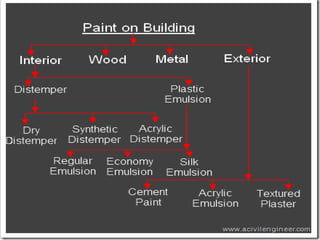
 There are different types of interior paints for e.g.
Matt paint,Matt Enamel,SatinEggshell,Semi-
Gloss,Gloss Paint etc.
• low VOCs
• easy cleanup with water
• quick drying
• an elastic, flexible finish resistant to cracking
• stable color over time, without yellowing
• attractive gloss
• good "leveling" (brush strokes fill themselves in to
create a smooth finish)
• hard, durable finish.
 Oil Based Paints are popular for glossy woodwork,
doors, and furniture, as well as demanding
surfaces such as floors.
 Be cautious when switching to a water-based paint
if the surface has previously been coated with an
oil-based product, as the new paint may not stick.
In this situation,washing the surface and then
roughening it all over with a medium to smooth
grit sandpaper—making it clean, dry, and dull in
order to prevent peeling of the new coat.
 When applying over a porus surface,mix wall and
ceiling primer and undercoat with upto 20% water
to make a diluted coat.this will seal the surface and
promote adhesion.
 Dilution rate will depend on the porosity of the
surface.A rear patch is required to determine the
correct dilution rate.
 Finish with a full coat of wall and ceiling and
undercoat to enhance the top coat colour.
 Sand down and then clean with a detergent.
 Apply one full coat of wall and ceiling primer and
undercoat to promote adhesion and enhance the
top coat colour.
 For plaster surface which are porous,chalky or
slightly degraded but otherwise structurally
sound,apply one coat of farrow and ball masonry
and plaster stabilizing primer.
 Although latex- and oil-based paints can be
applied with rollers or pads as well as brushes,
cleaning them after using oil paints is difficult and
will require lots of white spirit or thinner.
 Primer
Use a brush, roller or pad.
 First Coat
Use a brush, roller or pad.
 Flat
Use a brush, roller, pad or sprayer.
 When using more than one tin of the same
colour check than the batch numbers are the
same.
 Stir paint thoroughly before use.
 Apply two coats using a brush or roller. On
application of the final coat lay off the paint in a
single direction.
 Estate emulsion modern emulsions, dead flat,
full gloss and estate eggshell as eggshell are dry
in two hours and can be recoated in four hours.
 Clean brushes and rollers with warm soapy
water.

Estimation & Specification on Paints

  • 1.
    SUBMITTED BY: VAIBHAVMUDGAL RITIKA ANAND PRAKRITI GUPTA
  • 2.
    PAINT IS ANYLIQUID OR MASTIC COMPOSITION THAT AFTER APPLICATION TO A SUBSTRATE IN THIN LAYER , CONVERTS TO A SOLID FILM •IT IS A SIMPLY PIGMENT SUSPENDED WITH A LIQUID •IT IS USED TO DECORATE, PROTECT AND PROLONG THE LIFE OF NATURAL AND SYNTHETIC MATERIALS AND ACTS AS A BARRIER AGAINST ENVIRONMENTAL CONDITIONS
  • 3.
     PIGMENT: ITIS USED TO IMPART COLOUR  BINDER: A POLYMER, OFTEN REFERRED TO AS RESIN, FORMING A MATRIX TO HOLD THE PIGMENT IN PLACE  EXTENDER: LARGER PIGMENT PARTICLES ADDED TO IMPROVE ADHESION , STRENGTHEN THE FILM AND SAVE BINDER  SOLVENT(THINNER): EITHER AN ORGANIC SOLVENT OR WATER IS USED TO REDUCE THE VISCOSITY OF THE PAINT FOR BETTER  ADDITIVES: USED TO MODIFY THE PROPERTIES OF THE LIQUID PAINT OR DRY FILM
  • 4.
     EASE OFAPPLICATIONGOOD FLOW OUT OF APPLICATION MARKS  FORMING A CONTINUOUS PROTECTIVE FILM  HIGH OPACITY  QUICK DRYING  CORROSION, WATER AND HEAT RESISTANCE  COLOUR STABILITY  ABRASION AND SCRATCH RESISTANCE  DURABILITY  FLEXIBILITY  EASILY CLEANED
  • 6.
     IT CONSISTSOF PORTLAND CEMENT AND OTHER INGREDIENTS LIKE LIME, PIGMENTS, HYDROSCOPIC SALTS, WATER REPELLANTS, FUNGICIDES ETC.  COMPOSITION PORTLAND CEMENT 65% HYDRATED LIME 25% AND OTHER INGREDIENTS IN SUITABLE PROPORTIONS  THE MATERIAL SHALL BE FREE FROM ORGANIC BINDERS  THE MATERIAL SHALL BE IN THE POWDER FORM, FREE FROM LUMPS WHEN MIXED WITH WATER  DURABILITY: WHEN PREPARED AND TESTED FOR NORMAL OUTDOOR EXPOSURE A GENERAL BREAKDOWN OF THE FILM PREPARED FROM THE REGISTERED SAMPLE SHALL NOT OCCUR IN LESS THAN 18 MONTHS
  • 7.
     PACKING: THEDRY MATERIAL SHALL BE PACKED IN POLYTHENE BAGS IN SUITABLE METAL/ PLASTICC CONTAINERS  MARKING: EACH CONTAINER SHALL BE MARKED WITH  NAME OF THE MATERIAL  INDICATION OF THE SOURCE OF MANUFACTURE  MASS OF THE MATERIAL  MONTH AND YEAR OF MANUFACTURE CHARACTER REQUIREMENT DRYING TIME AND RECOATING PROPERTIES NOT MORE THAN 24 HOURS FINISH SMOOTH AND MALT COLOUR CLOSE MATCH TO THE SPECIFIED IS CODE COLOUR
  • 20.
     Paint andnatural wood finishes are an effective way to protect and decorate surfaces.  For a decorative finish coat to last and look as good as possible, the right base coats are essential. For interiors, a combined primer-first coat is a good option.  Interior Painting can be done by brush, rollers, pads and also through the method of spray gun.  Traditionally, homeowners had a choice between water-based and oil-based paints, but because they tend to have higher VOC levels, it's important to consider if oil-based paints are for you.
  • 21.
     Most paintsfall into one of the general categories of eggshell, semi-gloss, flat or gloss.  Paints can be categorized in two types i.e. Water based paint and Oil based paint.  There are different types of interior paints for e.g. Matt paint,Matt Enamel,SatinEggshell,Semi- Gloss,Gloss Paint etc.
  • 22.
    • low VOCs •easy cleanup with water • quick drying • an elastic, flexible finish resistant to cracking • stable color over time, without yellowing
  • 23.
    • attractive gloss •good "leveling" (brush strokes fill themselves in to create a smooth finish) • hard, durable finish.  Oil Based Paints are popular for glossy woodwork, doors, and furniture, as well as demanding surfaces such as floors.  Be cautious when switching to a water-based paint if the surface has previously been coated with an oil-based product, as the new paint may not stick. In this situation,washing the surface and then roughening it all over with a medium to smooth grit sandpaper—making it clean, dry, and dull in order to prevent peeling of the new coat.
  • 24.
     When applyingover a porus surface,mix wall and ceiling primer and undercoat with upto 20% water to make a diluted coat.this will seal the surface and promote adhesion.  Dilution rate will depend on the porosity of the surface.A rear patch is required to determine the correct dilution rate.  Finish with a full coat of wall and ceiling and undercoat to enhance the top coat colour.
  • 25.
     Sand downand then clean with a detergent.  Apply one full coat of wall and ceiling primer and undercoat to promote adhesion and enhance the top coat colour.  For plaster surface which are porous,chalky or slightly degraded but otherwise structurally sound,apply one coat of farrow and ball masonry and plaster stabilizing primer.
  • 26.
     Although latex-and oil-based paints can be applied with rollers or pads as well as brushes, cleaning them after using oil paints is difficult and will require lots of white spirit or thinner.  Primer Use a brush, roller or pad.  First Coat Use a brush, roller or pad.  Flat Use a brush, roller, pad or sprayer.
  • 27.
     When usingmore than one tin of the same colour check than the batch numbers are the same.  Stir paint thoroughly before use.  Apply two coats using a brush or roller. On application of the final coat lay off the paint in a single direction.  Estate emulsion modern emulsions, dead flat, full gloss and estate eggshell as eggshell are dry in two hours and can be recoated in four hours.  Clean brushes and rollers with warm soapy water.