GRAMMAR BOOK 2ND SEMESTER
Emilia Snook
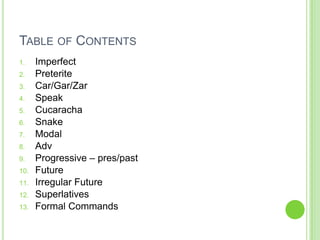
TABLE OF CONTENTS
1.    Imperfect
2.    Preterite
3.    Car/Gar/Zar
4.    Speak
5.    Cucaracha
6.    Snake
7.    Modal
8.    Adv
9.    Progressive – pres/past
10.   Future
11.   Irregular Future
12.   Superlatives
13.   Formal Commands
IMPERFECT VERB TENSE
HABLAR           COMER            ESCRIBIR
 Yo hablaba      Yo comía        Yo escribía

 Tú hablabas     Tú comías       Tú escribías

 Él/Ella/Ud.     Él/Ella/Ud.     Él/Ella/Ud.
  hablaba          comÍa            escribía
 Nosotros        Nosotros        Nosotros
  hablábamos       comíamos         escribíamos
 Vosotros        Vosotros        Vosotros
  hablabais        comíais          escribíais
 Ellos/Ellas/Uds Ellos/Ellas/Uds Ellos/Ellas/Uds
  Hablaban         comían           escribían
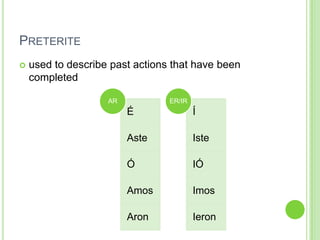
PRETERITE
   used to describe past actions that have been
    completed

                    AR           ER/IR
                         É               Í

                         Aste            Iste

                         Ó               IÓ

                         Amos            Imos

                         Aron            Ieron
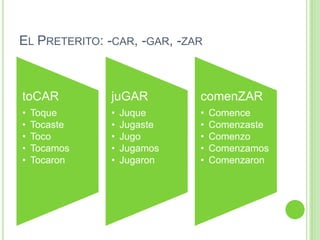
EL PRETERITO: -CAR, -GAR, -ZAR


toCAR          juGAR         comenZAR
•   Toque      •   Juque     •   Comence
•   Tocaste    •   Jugaste   •   Comenzaste
•   Toco       •   Jugo      •   Comenzo
•   Tocamos    •   Jugamos   •   Comenzamos
•   Tocaron    •   Jugaron   •   Comenzaron
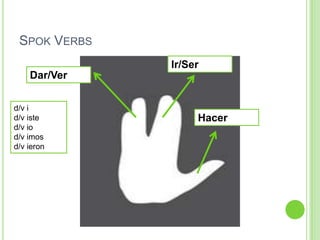
SPOK VERBS
              Ir/Ser
    Dar/Ver


d/v i
d/v iste           Hacer
d/v io
d/v imos
d/v ieron
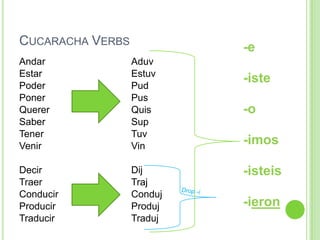
CUCARACHA VERBS            -e
Andar             Aduv
Estar             Estuv
Poder             Pud
                           -iste
Poner             Pus
Querer            Quis     -o
Saber             Sup
Tener             Tuv
Venir             Vin
                           -imos

Decir             Dij      -isteis
Traer             Traj
Conducir          Conduj
Producir          Produj   -ieron
Traducir          Traduj
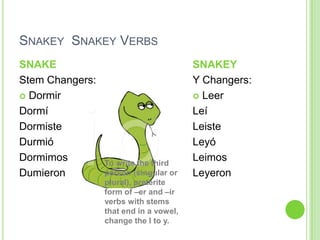
SNAKEY SNAKEY VERBS
SNAKE                                   SNAKEY
Stem Changers:                          Y Changers:
 Dormir                                 Leer

Dormí                                   Leí
Dormiste                                Leiste
Durmió                                  Leyó
Dormimos         To write the third
                                        Leimos
Dumieron         person (singular or    Leyeron
                 plural), preterite
                 form of –er and –ir
                 verbs with stems
                 that end in a vowel,
                 change the I to y.
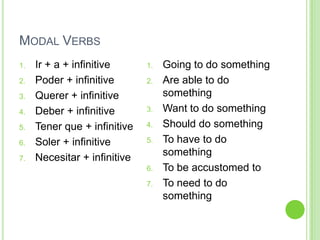
MODAL VERBS
1.   Ir + a + infinitive      1.   Going to do something
2.   Poder + infinitive       2.   Are able to do
3.   Querer + infinitive           something
4.   Deber + infinitive       3.   Want to do something
5.   Tener que + infinitive   4.   Should do something
6.   Soler + infinitive       5.   To have to do
                                   something
7.   Necesitar + infinitive
                              6.   To be accustomed to
                              7.   To need to do
                                   something
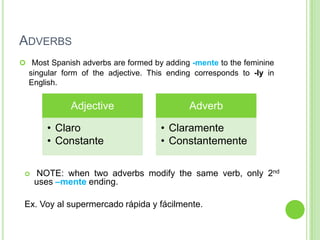
ADVERBS
 Most Spanish adverbs are formed by adding -mente to the feminine
  singular form of the adjective. This ending corresponds to -ly in
  English.


             Adjective                      Adverb

       • Claro                      • Claramente
       • Constante                  • Constantemente

    NOTE: when two adverbs modify the same verb, only 2nd
     uses –mente ending.

 Ex. Voy al supermercado rápida y fácilmente.
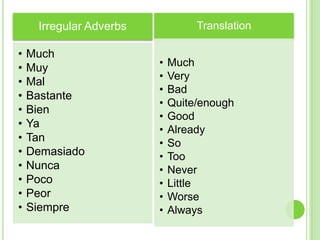
Irregular Adverbs            Translation

•   Much
•   Muy                  •   Much
                         •   Very
•   Mal
                         •   Bad
•   Bastante
                         •   Quite/enough
•   Bien
                         •   Good
•   Ya
                         •   Already
•   Tan                  •   So
•   Demasiado            •   Too
•   Nunca                •   Never
•   Poco                 •   Little
•   Peor                 •   Worse
•   Siempre              •   Always
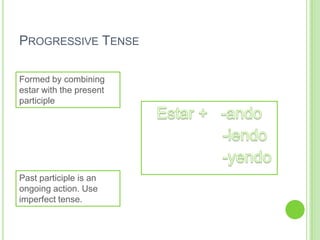
PROGRESSIVE TENSE

Formed by combining
estar with the present
participle


Past participle is an
ongoing action. Use
imperfect tense.
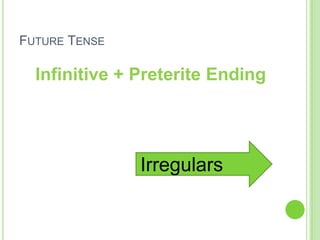
FUTURE TENSE

  Infinitive + Preterite Ending


               Irregulars
IRREGULARS IN THE FUTURE TENSE
decir        dir-         to say
                          there to be
haber        habr-        [impersonal]; to have
                          [helping verb]
hacer        har-         to make, do
poder        podr-        to be able
poner        pondr-       to put, place, set
querer       querr-       to want, love
                          to know [a fact], know
saber        sabr-
                          how [+ infinitive]
salir        saldr-       to leave, go out
tener        tendr-       to have
valer        valdr-       to be worth
venir        vendr-       to come
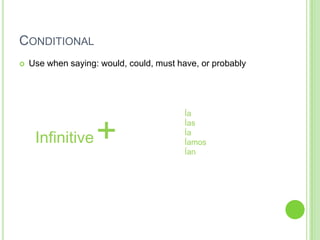
CONDITIONAL
   Use when saying: would, could, must have, or probably


                                          Ía


     Infinitive     +                     Ías
                                          Ía
                                          Íamos
                                          Ían
Espanol grammar book 2 semester

Espanol grammar book 2 semester

  • 1.
    GRAMMAR BOOK 2NDSEMESTER Emilia Snook
  • 2.
    TABLE OF CONTENTS 1. Imperfect 2. Preterite 3. Car/Gar/Zar 4. Speak 5. Cucaracha 6. Snake 7. Modal 8. Adv 9. Progressive – pres/past 10. Future 11. Irregular Future 12. Superlatives 13. Formal Commands
  • 3.
    IMPERFECT VERB TENSE HABLAR COMER ESCRIBIR  Yo hablaba  Yo comía  Yo escribía  Tú hablabas  Tú comías  Tú escribías  Él/Ella/Ud.  Él/Ella/Ud.  Él/Ella/Ud. hablaba comÍa escribía  Nosotros  Nosotros  Nosotros hablábamos comíamos escribíamos  Vosotros  Vosotros  Vosotros hablabais comíais escribíais  Ellos/Ellas/Uds Ellos/Ellas/Uds Ellos/Ellas/Uds Hablaban comían escribían
  • 4.
    PRETERITE  used to describe past actions that have been completed AR ER/IR É Í Aste Iste Ó IÓ Amos Imos Aron Ieron
  • 5.
    EL PRETERITO: -CAR,-GAR, -ZAR toCAR juGAR comenZAR • Toque • Juque • Comence • Tocaste • Jugaste • Comenzaste • Toco • Jugo • Comenzo • Tocamos • Jugamos • Comenzamos • Tocaron • Jugaron • Comenzaron
  • 6.
    SPOK VERBS Ir/Ser Dar/Ver d/v i d/v iste Hacer d/v io d/v imos d/v ieron
  • 7.
    CUCARACHA VERBS -e Andar Aduv Estar Estuv Poder Pud -iste Poner Pus Querer Quis -o Saber Sup Tener Tuv Venir Vin -imos Decir Dij -isteis Traer Traj Conducir Conduj Producir Produj -ieron Traducir Traduj
  • 8.
    SNAKEY SNAKEY VERBS SNAKE SNAKEY Stem Changers: Y Changers:  Dormir  Leer Dormí Leí Dormiste Leiste Durmió Leyó Dormimos To write the third Leimos Dumieron person (singular or Leyeron plural), preterite form of –er and –ir verbs with stems that end in a vowel, change the I to y.
  • 9.
    MODAL VERBS 1. Ir + a + infinitive 1. Going to do something 2. Poder + infinitive 2. Are able to do 3. Querer + infinitive something 4. Deber + infinitive 3. Want to do something 5. Tener que + infinitive 4. Should do something 6. Soler + infinitive 5. To have to do something 7. Necesitar + infinitive 6. To be accustomed to 7. To need to do something
  • 10.
    ADVERBS  Most Spanishadverbs are formed by adding -mente to the feminine singular form of the adjective. This ending corresponds to -ly in English. Adjective Adverb • Claro • Claramente • Constante • Constantemente  NOTE: when two adverbs modify the same verb, only 2nd uses –mente ending. Ex. Voy al supermercado rápida y fácilmente.
  • 11.
    Irregular Adverbs Translation • Much • Muy • Much • Very • Mal • Bad • Bastante • Quite/enough • Bien • Good • Ya • Already • Tan • So • Demasiado • Too • Nunca • Never • Poco • Little • Peor • Worse • Siempre • Always
  • 12.
    PROGRESSIVE TENSE Formed bycombining estar with the present participle Past participle is an ongoing action. Use imperfect tense.
  • 13.
    FUTURE TENSE Infinitive + Preterite Ending Irregulars
  • 14.
    IRREGULARS IN THEFUTURE TENSE decir dir- to say there to be haber habr- [impersonal]; to have [helping verb] hacer har- to make, do poder podr- to be able poner pondr- to put, place, set querer querr- to want, love to know [a fact], know saber sabr- how [+ infinitive] salir saldr- to leave, go out tener tendr- to have valer valdr- to be worth venir vendr- to come
  • 15.
    CONDITIONAL  Use when saying: would, could, must have, or probably Ía Infinitive + Ías Ía Íamos Ían