Blanca Birdsong
Table of contents
 Imperfect preterite
 Preterite : -car, -gar,-zar; spock, cucaracha; snake
 Modal verbs
 Adverbs
 Progressive : present & past
 Future – irregular
 Superlatives
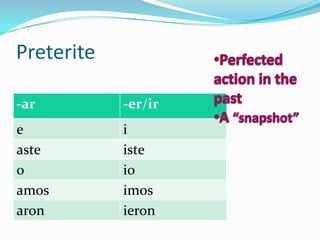
Preterite

-ar         -er/ir
e           i
aste        iste
o           io
amos        imos
aron        ieron
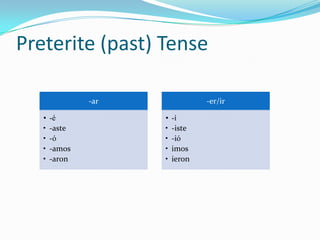
Preterite (past) Tense

               -ar               -er/ir

   •   -é            •   -í
   •   -aste         •   -iste
   •   -ó            •   -ió
   •   -amos         •   imos
   •   -aron         •   ieron
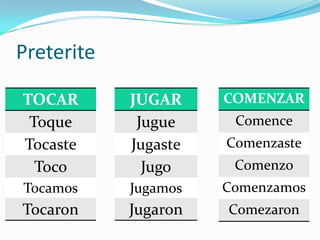
Preterite

TOCAR       JUGAR     COMENZAR
 Toque       Jugue     Comence
Tocaste     Jugaste   Comenzaste
  Toco        Jugo     Comenzo
Tocamos     Jugamos   Comenzamos
Tocaron     Jugaron   Comezaron
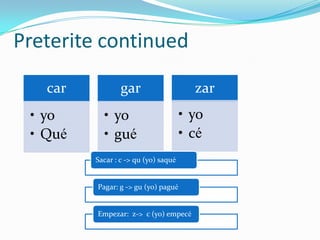
Preterite continued

   car           gar                    zar
 • yo      • yo                       • yo
 • Qué     • gué                      • cé
         Sacar : c -> qu (yo) saqué


         Pagar: g -> gu (yo) pagué


         Empezar: z-> c (yo) empecé
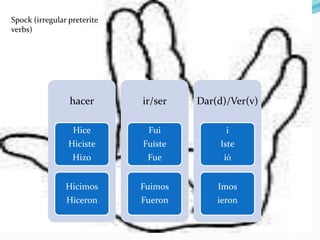
Spock (irregular preterite
verbs)


                 hacer       ir/ser   Dar(d)/Ver(v)

                  Hice        Fui           i
                 Hiciste     Fuiste        Iste
                  Hizo        Fue          ió


                Hicimos      Fuimos       Imos
                Hiceron      Fueron       ieron
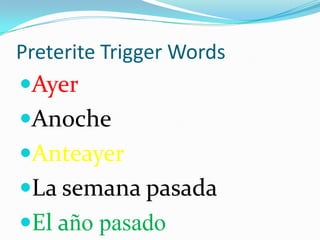
Preterite Trigger Words
Ayer
Anoche
Anteayer
La semana pasada
El año pasado
cucaracha
snake
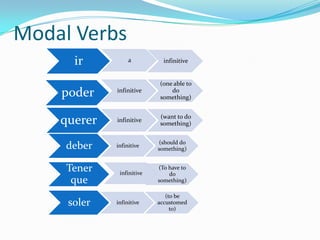
Modal Verbs
      ir          a          infinitive


                           (one able to
    poder    infinitive        do
                           something)


                           (want to do
    querer   infinitive
                           something)


                           (should do
     deber   infinitive
                           something)


     Tener    infinitive
                           (To have to
                               do
      que                  something)

                              (to be
     soler   infinitive    accustomed
                                to)
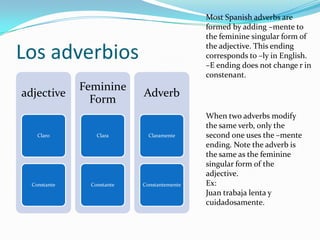
Most Spanish adverbs are
                                            formed by adding –mente to
                                            the feminine singular form of

Los adverbios                               the adjective. This ending
                                            corresponds to –ly in English.
                                            –E ending does not change r in
                                            constenant.
              Feminine
adjective                  Adverb
                Form
                                            When two adverbs modify
                                            the same verb, only the
    Claro        Clara       Claramente     second one uses the –mente
                                            ending. Note the adverb is
                                            the same as the feminine
                                            singular form of the
                                            adjective.
  Constante    Constante   Constantemente   Ex:
                                            Juan trabaja lenta y
                                            cuidadosamente.
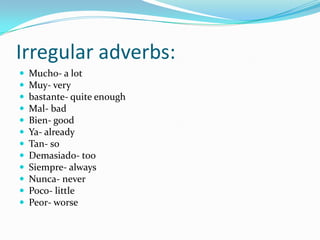
Irregular adverbs:
   Mucho- a lot
   Muy- very
   bastante- quite enough
   Mal- bad
   Bien- good
   Ya- already
   Tan- so
   Demasiado- too
   Siempre- always
   Nunca- never
   Poco- little
   Peor- worse
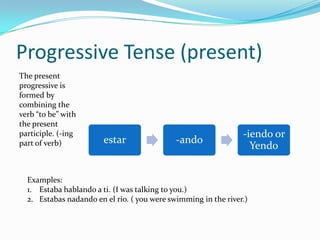
Progressive Tense (present)
The present
progressive is
formed by
combining the
verb “to be” with
the present
participle. (-ing                                               -iendo or
part of verb)           estar                -ando
                                                                  Yendo


  Examples:
  1. Estaba hablando a ti. (I was talking to you.)
  2. Estabas nadando en el rio. ( you were swimming in the river.)
Progressive Tense (past)
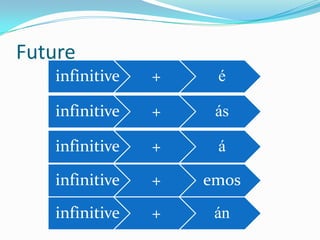
Future
   infinitive   +    é

   infinitive   +    ás

   infinitive   +    á

   infinitive   +   emos

   infinitive   +    án
Future -Irregular
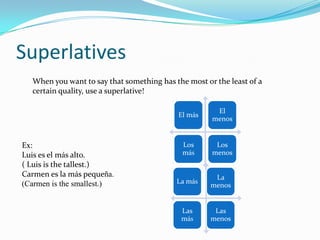
Superlatives
  When you want to say that something has the most or the least of a
  certain quality, use a superlative!

                                                      El
                                           El más
                                                     menos


Ex:                                          Los      Los
Luis es el más alto.                         más     menos
( Luis is the tallest.)
Carmen es la más pequeña.                             La
(Carmen is the smallest.)                  La más
                                                     menos


                                            Las       Las
                                            más      menos

Grammer book

  • 1.
  • 2.
    Table of contents Imperfect preterite  Preterite : -car, -gar,-zar; spock, cucaracha; snake  Modal verbs  Adverbs  Progressive : present & past  Future – irregular  Superlatives
  • 3.
    Preterite -ar -er/ir e i aste iste o io amos imos aron ieron
  • 4.
    Preterite (past) Tense -ar -er/ir • -é • -í • -aste • -iste • -ó • -ió • -amos • imos • -aron • ieron
  • 5.
    Preterite TOCAR JUGAR COMENZAR Toque Jugue Comence Tocaste Jugaste Comenzaste Toco Jugo Comenzo Tocamos Jugamos Comenzamos Tocaron Jugaron Comezaron
  • 6.
    Preterite continued car gar zar • yo • yo • yo • Qué • gué • cé Sacar : c -> qu (yo) saqué Pagar: g -> gu (yo) pagué Empezar: z-> c (yo) empecé
  • 7.
    Spock (irregular preterite verbs) hacer ir/ser Dar(d)/Ver(v) Hice Fui i Hiciste Fuiste Iste Hizo Fue ió Hicimos Fuimos Imos Hiceron Fueron ieron
  • 8.
  • 9.
  • 10.
  • 11.
    Modal Verbs ir a infinitive (one able to poder infinitive do something) (want to do querer infinitive something) (should do deber infinitive something) Tener infinitive (To have to do que something) (to be soler infinitive accustomed to)
  • 12.
    Most Spanish adverbsare formed by adding –mente to the feminine singular form of Los adverbios the adjective. This ending corresponds to –ly in English. –E ending does not change r in constenant. Feminine adjective Adverb Form When two adverbs modify the same verb, only the Claro Clara Claramente second one uses the –mente ending. Note the adverb is the same as the feminine singular form of the adjective. Constante Constante Constantemente Ex: Juan trabaja lenta y cuidadosamente.
  • 13.
    Irregular adverbs:  Mucho- a lot  Muy- very  bastante- quite enough  Mal- bad  Bien- good  Ya- already  Tan- so  Demasiado- too  Siempre- always  Nunca- never  Poco- little  Peor- worse
  • 14.
    Progressive Tense (present) Thepresent progressive is formed by combining the verb “to be” with the present participle. (-ing -iendo or part of verb) estar -ando Yendo Examples: 1. Estaba hablando a ti. (I was talking to you.) 2. Estabas nadando en el rio. ( you were swimming in the river.)
  • 15.
  • 16.
    Future infinitive + é infinitive + ás infinitive + á infinitive + emos infinitive + án
  • 17.
  • 18.
    Superlatives Whenyou want to say that something has the most or the least of a certain quality, use a superlative! El El más menos Ex: Los Los Luis es el más alto. más menos ( Luis is the tallest.) Carmen es la más pequeña. La (Carmen is the smallest.) La más menos Las Las más menos