Aida Wilkinson
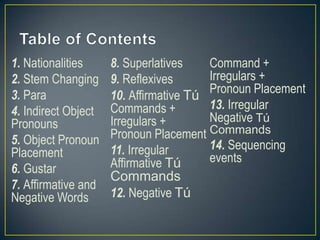
1. Nationalities     8. Superlatives    Command +
2. Stem Changing     9. Reflexives      Irregulars +
3. Para                                 Pronoun Placement
                     10. Affirmative Tú
4. Indirect Object   Commands +         13. Irregular
Pronouns             Irregulars +       Negative Tú
5. Object Pronoun    Pronoun Placement Commands
                     11. Irregular      14. Sequencing
Placement                               events
6. Gustar            Affirmative Tú
                     Commands
7. Affirmative and
Negative Words       12. Negative Tú
Nationalities
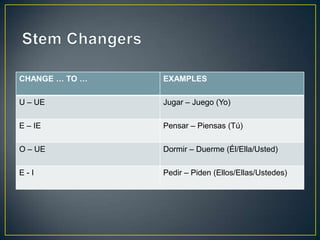
CHANGE … TO …   EXAMPLES

U – UE          Jugar – Juego (Yo)

E – IE          Pensar – Piensas (Tú)

O – UE          Dormir – Duerme (Él/Ella/Usted)

E-I             Pedir – Piden (Ellos/Ellas/Ustedes)
Use para (for, in order to) to indicate…
The recipient of items
      …el regalo para tu mamá
Purpose
      Vamos al restaurante para comer.
Implied purpose
      Tengo dinero para [comprar] algo.
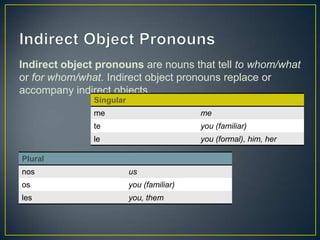
Indirect object pronouns are nouns that tell to whom/what
or for whom/what. Indirect object pronouns replace or
accompany indirect objects.
               Singular
               me                          me
               te                          you (familiar)
               le                          you (formal), him, her

Plural
nos                       us
os                        you (familiar)
les                       you, them
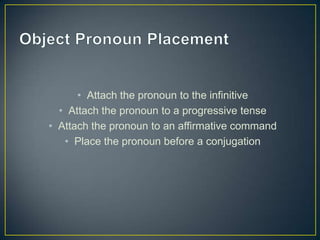
• Attach the pronoun to the infinitive
  • Attach the pronoun to a progressive tense
• Attach the pronoun to an affirmative command
   • Place the pronoun before a conjugation
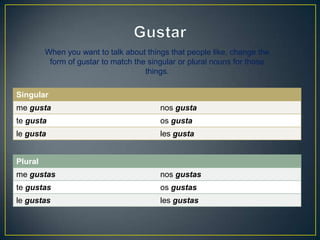
When you want to talk about things that people like, change the
          form of gustar to match the singular or plural nouns for those
                                     things.

Singular
me gusta                                 nos gusta
te gusta                                 os gusta
le gusta                                 les gusta


Plural
me gustas                                nos gustas
te gustas                                os gustas
le gustas                                les gustas
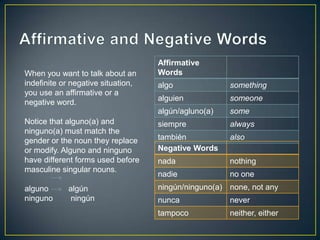
Affirmative
When you want to talk about an      Words
indefinite or negative situation,   algo              something
you use an affirmative or a
                                    alguien           someone
negative word.
                                    algún/agluno(a)   some
Notice that alguno(a) and           siempre           always
ninguno(a) must match the
gender or the noun they replace     también           also
or modify. Alguno and ninguno       Negative Words
have different forms used before    nada              nothing
masculine singular nouns.
                                    nadie             no one
alguno      algún                   ningún/ninguno(a) none, not any
ninguno      ningún                 nunca             never
                                    tampoco           neither, either
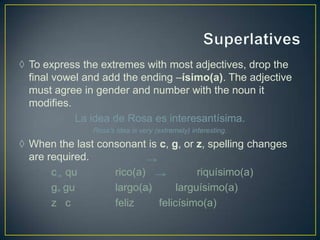
◊ To express the extremes with most adjectives, drop the
  final vowel and add the ending –ísimo(a). The adjective
  must agree in gender and number with the noun it
  modifies.
            La idea de Rosa es interesantísima.
               Rosa’s idea is very (extremely) interesting.

◊ When the last consonant is c, g, or z, spelling changes
  are required.
       c qu        rico(a)             riquísimo(a)
       g gu        largo(a)       larguísimo(a)
       z c         feliz     felicísimo(a)
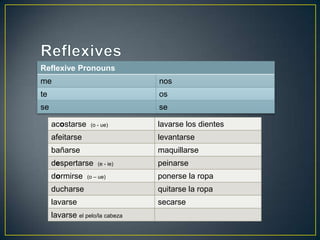
Reflexive Pronouns
me                               nos
te                               os
se                               se

     acostarse    (o - ue)       lavarse los dientes
     afeitarse                   levantarse
     bañarse                     maquillarse
     despertarse     (e - ie)    peinarse
     dormirse    (o – ue)        ponerse la ropa
     ducharse                    quitarse la ropa
     lavarse                     secarse
     lavarse el pelo/la cabeza
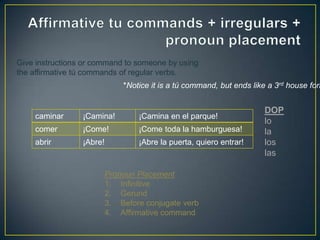
Give instructions or command to someone by using
the affirmative tú commands of regular verbs.
                              *Notice it is a tú command, but ends like a 3rd house form


                                                                      DOP
    caminar      ¡Camina!         ¡Camina en el parque!
                                                                      lo
    comer        ¡Come!           ¡Come toda la hamburguesa!          la
    abrir        ¡Abre!           ¡Abre la puerta, quiero entrar!     los
                                                                      las

                          Pronoun Placement
                          1. Infinitive
                          2. Gerund
                          3. Before conjugate verb
                          4. Affirmative command
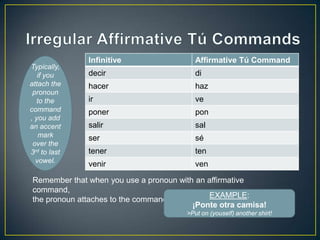
Infinitive                  Affirmative Tú Command
Typically,
   if you     decir                       di
attach the    hacer                       haz
 pronoun
   to the     ir                          ve
command       poner                       pon
, you add
an accent     salir                       sal
    mark      ser                         sé
 over the
3rd to last   tener                       ten
  vowel.
              venir                       ven

Remember that when you use a pronoun with an affirmative
command,
                                              EXAMPLE:
the pronoun attaches to the command.
                                         ¡Ponte otra camisa!
                                       >Put on (youself) another shirt!
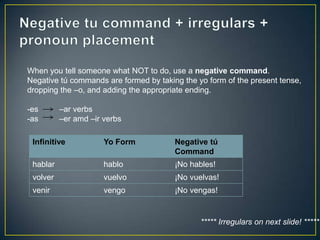
When you tell someone what NOT to do, use a negative command.
Negative tú commands are formed by taking the yo form of the present tense,
dropping the –o, and adding the appropriate ending.

-es       –ar verbs
-as       –er amd –ir verbs

 Infinitive           Yo Form           Negative tú
                                        Command
 hablar               hablo             ¡No hables!
 volver               vuelvo            ¡No vuelvas!
 venir                vengo             ¡No vengas!


                                               ***** Irregulars on next slide! *****
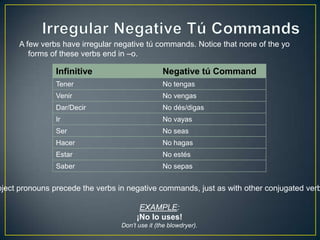
A few verbs have irregular negative tú commands. Notice that none of the yo
         forms of these verbs end in –o.

                Infinitive                       Negative tú Command
                Tener                            No tengas
                Venir                            No vengas
                Dar/Decir                        No dés/digas
                Ir                               No vayas
                Ser                              No seas
                Hacer                            No hagas
                Estar                            No estés
                Saber                            No sepas


bject pronouns precede the verbs in negative commands, just as with other conjugated verb

                                        EXAMPLE:
                                       ¡No lo uses!
                                  Don’t use it (the blowdryer).
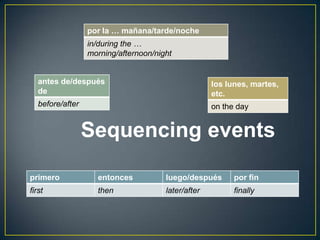
por la … mañana/tarde/noche
                  in/during the …
                  morning/afternoon/night


   antes de/después                                  los lunes, martes,
   de                                                etc.
   before/after                                      on the day


                  Sequencing events

primero             entonces           luego/después       por fin
first               then               later/after         finally

Grammar Book

  • 1.
  • 2.
    1. Nationalities 8. Superlatives Command + 2. Stem Changing 9. Reflexives Irregulars + 3. Para Pronoun Placement 10. Affirmative Tú 4. Indirect Object Commands + 13. Irregular Pronouns Irregulars + Negative Tú 5. Object Pronoun Pronoun Placement Commands 11. Irregular 14. Sequencing Placement events 6. Gustar Affirmative Tú Commands 7. Affirmative and Negative Words 12. Negative Tú
  • 3.
  • 4.
    CHANGE … TO… EXAMPLES U – UE Jugar – Juego (Yo) E – IE Pensar – Piensas (Tú) O – UE Dormir – Duerme (Él/Ella/Usted) E-I Pedir – Piden (Ellos/Ellas/Ustedes)
  • 5.
    Use para (for,in order to) to indicate… The recipient of items …el regalo para tu mamá Purpose Vamos al restaurante para comer. Implied purpose Tengo dinero para [comprar] algo.
  • 6.
    Indirect object pronounsare nouns that tell to whom/what or for whom/what. Indirect object pronouns replace or accompany indirect objects. Singular me me te you (familiar) le you (formal), him, her Plural nos us os you (familiar) les you, them
  • 7.
    • Attach thepronoun to the infinitive • Attach the pronoun to a progressive tense • Attach the pronoun to an affirmative command • Place the pronoun before a conjugation
  • 8.
    When you wantto talk about things that people like, change the form of gustar to match the singular or plural nouns for those things. Singular me gusta nos gusta te gusta os gusta le gusta les gusta Plural me gustas nos gustas te gustas os gustas le gustas les gustas
  • 9.
    Affirmative When you wantto talk about an Words indefinite or negative situation, algo something you use an affirmative or a alguien someone negative word. algún/agluno(a) some Notice that alguno(a) and siempre always ninguno(a) must match the gender or the noun they replace también also or modify. Alguno and ninguno Negative Words have different forms used before nada nothing masculine singular nouns. nadie no one alguno algún ningún/ninguno(a) none, not any ninguno ningún nunca never tampoco neither, either
  • 10.
    ◊ To expressthe extremes with most adjectives, drop the final vowel and add the ending –ísimo(a). The adjective must agree in gender and number with the noun it modifies. La idea de Rosa es interesantísima. Rosa’s idea is very (extremely) interesting. ◊ When the last consonant is c, g, or z, spelling changes are required. c qu rico(a) riquísimo(a) g gu largo(a) larguísimo(a) z c feliz felicísimo(a)
  • 11.
    Reflexive Pronouns me nos te os se se acostarse (o - ue) lavarse los dientes afeitarse levantarse bañarse maquillarse despertarse (e - ie) peinarse dormirse (o – ue) ponerse la ropa ducharse quitarse la ropa lavarse secarse lavarse el pelo/la cabeza
  • 12.
    Give instructions orcommand to someone by using the affirmative tú commands of regular verbs. *Notice it is a tú command, but ends like a 3rd house form DOP caminar ¡Camina! ¡Camina en el parque! lo comer ¡Come! ¡Come toda la hamburguesa! la abrir ¡Abre! ¡Abre la puerta, quiero entrar! los las Pronoun Placement 1. Infinitive 2. Gerund 3. Before conjugate verb 4. Affirmative command
  • 13.
    Infinitive Affirmative Tú Command Typically, if you decir di attach the hacer haz pronoun to the ir ve command poner pon , you add an accent salir sal mark ser sé over the 3rd to last tener ten vowel. venir ven Remember that when you use a pronoun with an affirmative command, EXAMPLE: the pronoun attaches to the command. ¡Ponte otra camisa! >Put on (youself) another shirt!
  • 14.
    When you tellsomeone what NOT to do, use a negative command. Negative tú commands are formed by taking the yo form of the present tense, dropping the –o, and adding the appropriate ending. -es –ar verbs -as –er amd –ir verbs Infinitive Yo Form Negative tú Command hablar hablo ¡No hables! volver vuelvo ¡No vuelvas! venir vengo ¡No vengas! ***** Irregulars on next slide! *****
  • 15.
    A few verbshave irregular negative tú commands. Notice that none of the yo forms of these verbs end in –o. Infinitive Negative tú Command Tener No tengas Venir No vengas Dar/Decir No dés/digas Ir No vayas Ser No seas Hacer No hagas Estar No estés Saber No sepas bject pronouns precede the verbs in negative commands, just as with other conjugated verb EXAMPLE: ¡No lo uses! Don’t use it (the blowdryer).
  • 16.
    por la …mañana/tarde/noche in/during the … morning/afternoon/night antes de/después los lunes, martes, de etc. before/after on the day Sequencing events primero entonces luego/después por fin first then later/after finally