EPIDEMIOLOGY OF
SMALLPOX
DR. MAHESWARI JAIKUMAR
maheswarijaikumar2103@gmail.com
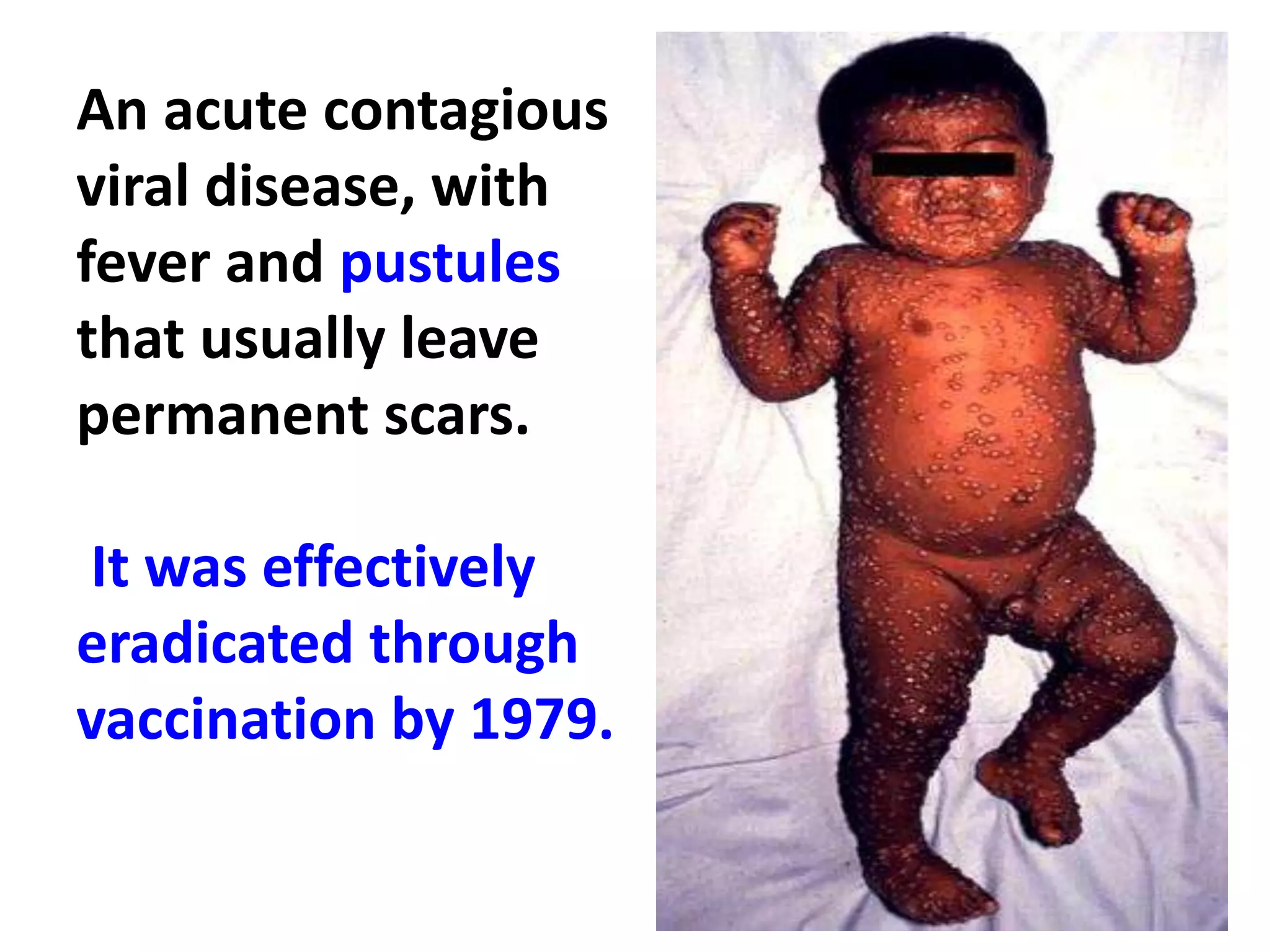
An acute contagious
viral disease, with
fever and pustules
that usually leave
permanent scars.
It was effectively
eradicated through
vaccination by 1979.
• Smallpox is a very serious illness
caused by a virus called the
variola (say: vair-ee-OH-luh) virus.
• Smallpox gets its name from the
pus-filled blisters (or pocks) that
form during the illness.
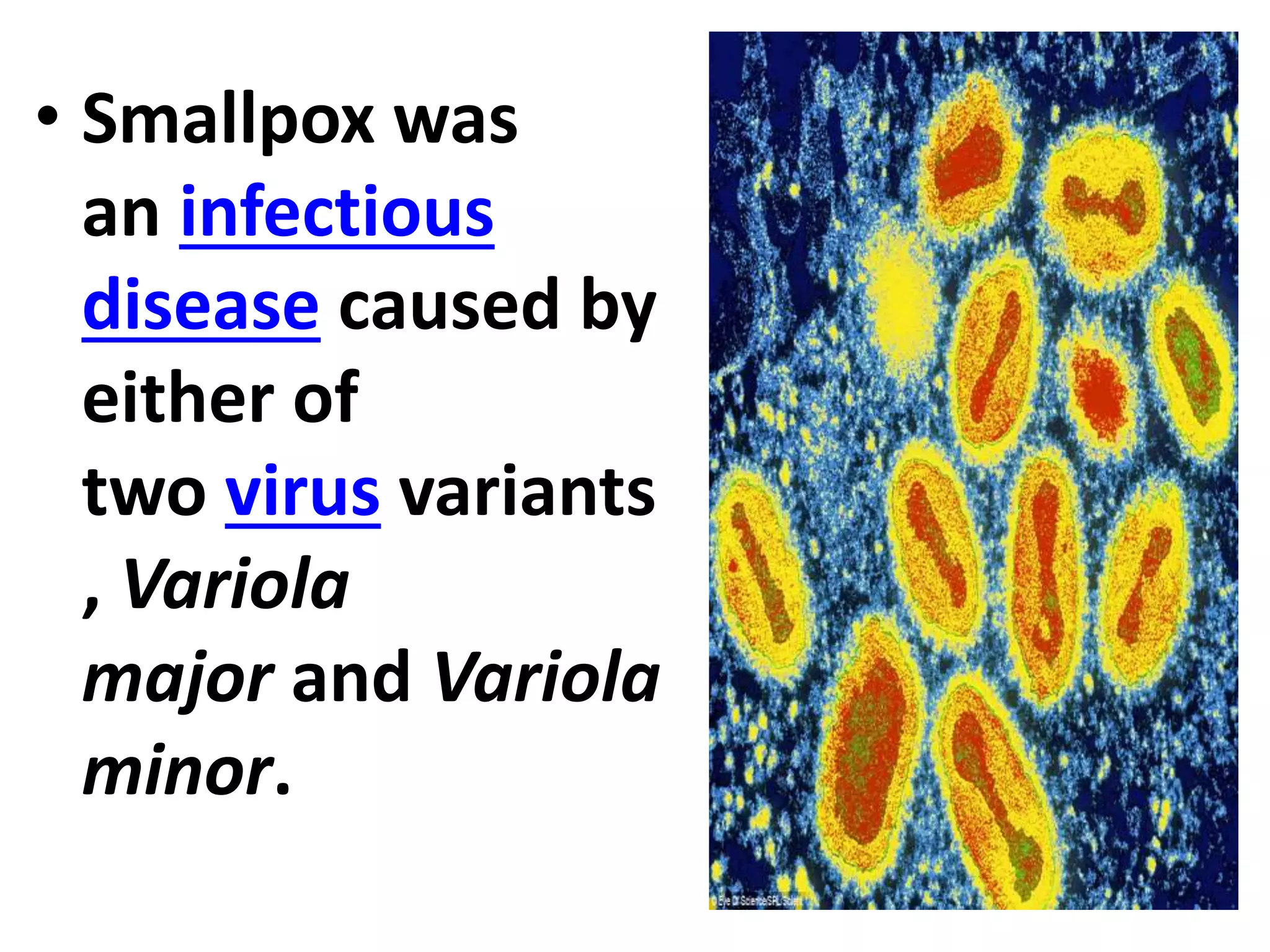
• Smallpox was
an infectious
disease caused by
either of
two virus variants
, Variola
major and Variola
minor.
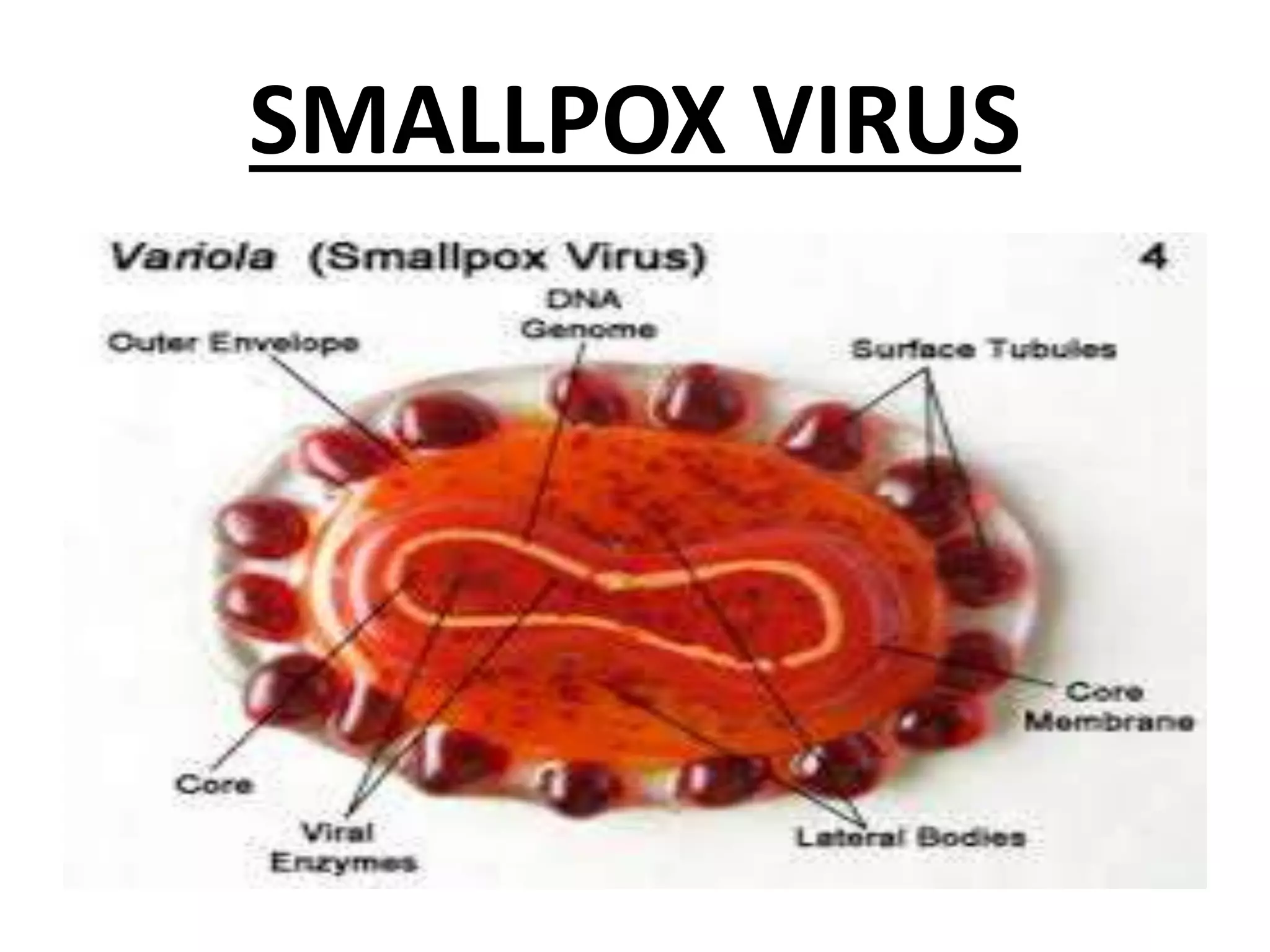
SMALLPOX VIRUS
• It has an incubation period of
between 7 and 17 days after
exposure and only becomes
infectious once the fever
develops.
• The disease is also known by
the Latin names Variola or Variol
a vera, derived
from varius ("spotted")
or varus ("pimple")
DISEASE BURDEN
• As recently as 1967, the World
Health Organization (WHO)
estimated that 15 million people
contracted the disease and that
two million died in that year.
TRANSMISSION
• Smallpox is contagious. That
means the virus can spread to
others.
• It spreads through tiny drops of
an infected person's saliva (spit)
when the person coughs, talks,
or sneezes.
• Smallpox usually passes from
person to person during close,
face-to-face contact.
• Breathing in the virus from a
cough, sneeze, or saliva (spit) of
someone with smallpox.
• Touching skin that has smallpox
skin blisters
• Touching contaminated body
fluids or objects such as bedding
or clothing.
• Breathing in the virus in a room,
bus, or train shared with
someone who has smallpox
• Sharing a razor, tableware, or a
toothbrush with someone who
has smallpox
DIAGNOSIS
• If someone does get smallpox, a
doctor can recognize the disease
because it causes a special kind
of rash.
• The rash shows up as blisters on
the skin that fill with fluid and
crust over.
• This might sound like
chickenpox, but the blisters look
different from the blisters of
chickenpox.
• Smallpox was localized in
small blood vessels of the skin
and in the mouth and throat. In
the skin it resulted in a
characteristic maculopapular
rash and, later, raised fluid-
filled blisters.
• V. major produced a more
serious disease and had an
overall mortality rate of 30–35
percent.
• The other symptoms of
smallpox are like those of
many other less serious
illnesses: fever,headache,
backache, and feeling tired.
CLINICAL MANIFESTATION
• After exposure to the smallpox
virus, it usually takes 7-17 days
until illness begins.
• Fever (>38.3 C /101 F)
• Smallpox generally begins with
fever, headaches, body aches,
and weakness on day 1. Then:
• Day 2-3: small, round pox
(blisters) appear and spread on
the face, arms, legs, and inside
the mouth.
• Day 7: the pox turn into bigger
blisters and fill with pus.
BLISTERS
• Day 12: the blisters crust over;
stomach pain and confusion can
also occur.
• Week 3-4: the blisters turn into
scabs and fall off, leaving pitted
scars on the skin
• Long-term effects of smallpox
include scars, blindness, and
deformed hands and feet.
BLINDNESS
PREVENTION
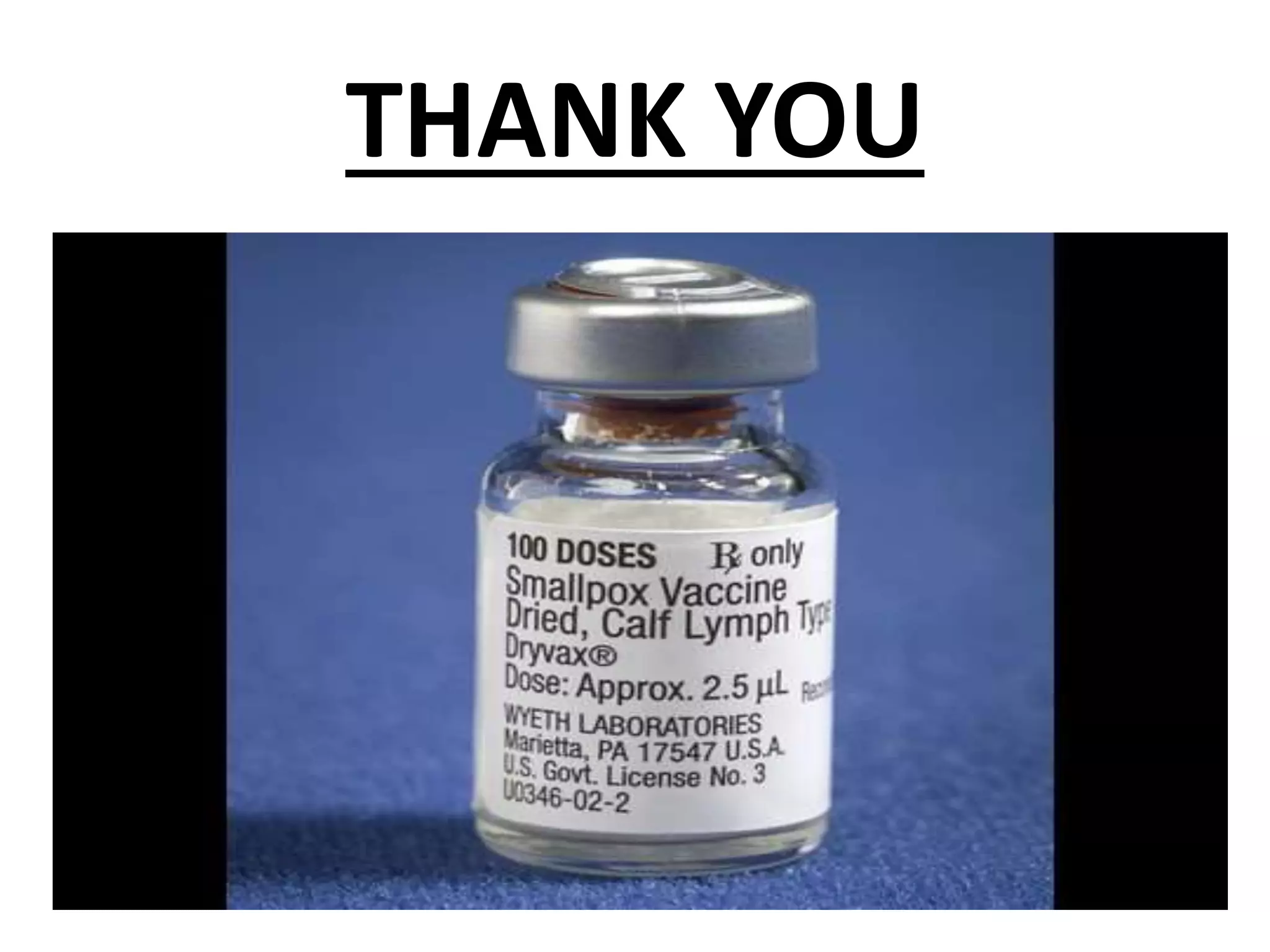
• A vaccine (say: vak-SEEN), a type
of shot, can prevent infection
with the virus that causes
smallpox.
• Years ago, people were
vaccinated against smallpox.
• Today, smallpox vaccines aren't
given because nobody has had
the disease for many years.
• Scientists also are working to
make more vaccine to have on
hand for the future (in case of
outbreak).
TREATMENT
• There are no pills that can treat
smallpox, but scientists are doing
research to try to develop
medicine for the disease.
• If someone does become
infected with the smallpox virus,
getting the vaccine within a few
days of becoming infected can
lessen the disease's symptoms.
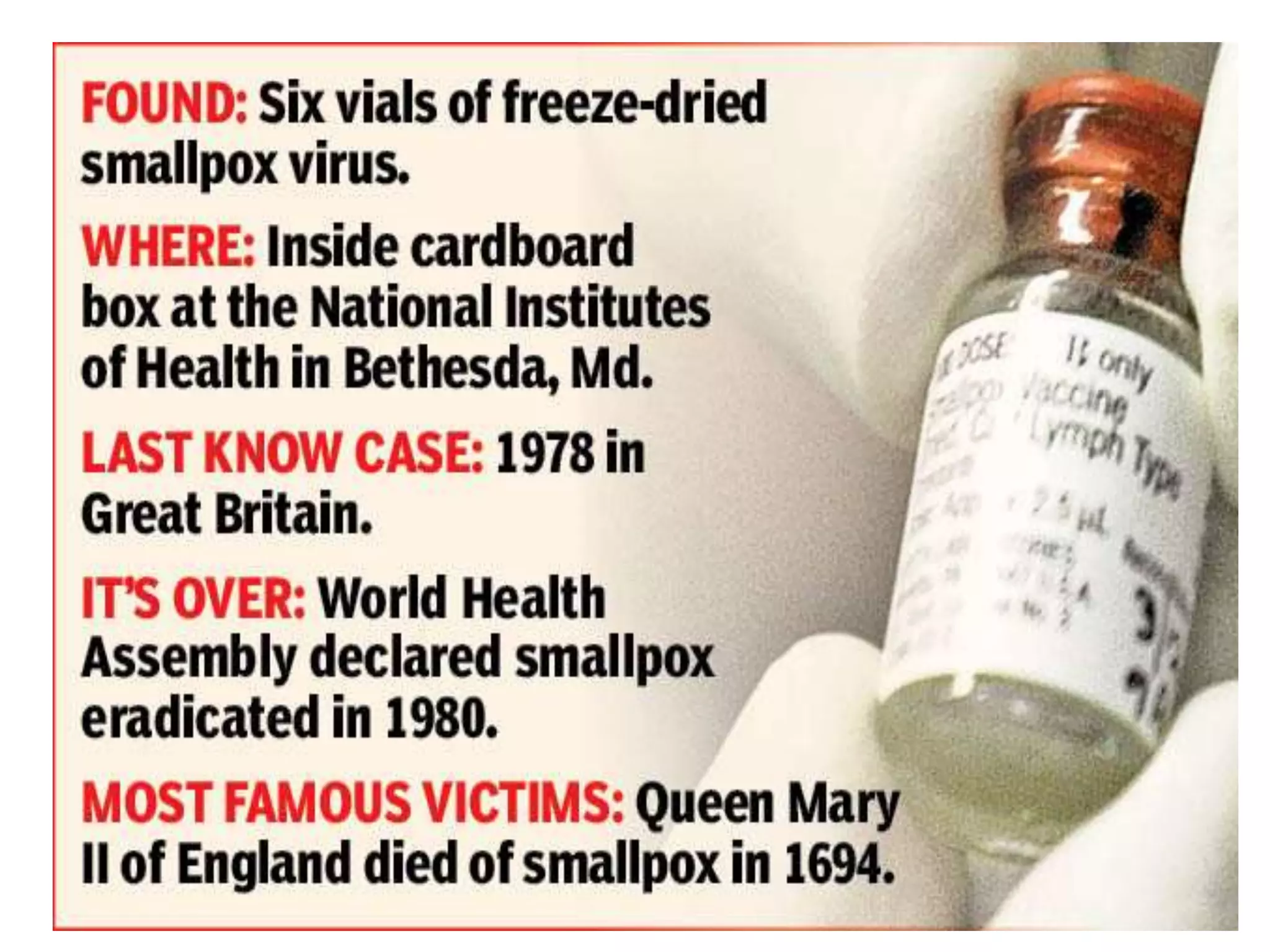
• India was declared smallpox free
on 5 July 1975.
• It was effectively eradicated
(globally) through vaccination by
1979.
SMALLPOX VIRUS HAS NOT
BEEN COMPLETELY
DESTROYED.!!!!!!
• Stocks are still held at Govt
Research Centres in the Russian
Federation and at the US.
THANK YOU

EPIDEMIOLOGY OF SMALL POX

  • 2.
    EPIDEMIOLOGY OF SMALLPOX DR. MAHESWARIJAIKUMAR maheswarijaikumar2103@gmail.com
  • 3.
    An acute contagious viraldisease, with fever and pustules that usually leave permanent scars. It was effectively eradicated through vaccination by 1979.
  • 4.
    • Smallpox isa very serious illness caused by a virus called the variola (say: vair-ee-OH-luh) virus. • Smallpox gets its name from the pus-filled blisters (or pocks) that form during the illness.
  • 5.
    • Smallpox was aninfectious disease caused by either of two virus variants , Variola major and Variola minor.
  • 6.
  • 7.
    • It hasan incubation period of between 7 and 17 days after exposure and only becomes infectious once the fever develops.
  • 8.
    • The diseaseis also known by the Latin names Variola or Variol a vera, derived from varius ("spotted") or varus ("pimple")
  • 9.
    DISEASE BURDEN • Asrecently as 1967, the World Health Organization (WHO) estimated that 15 million people contracted the disease and that two million died in that year.
  • 10.
    TRANSMISSION • Smallpox iscontagious. That means the virus can spread to others. • It spreads through tiny drops of an infected person's saliva (spit) when the person coughs, talks, or sneezes.
  • 11.
    • Smallpox usuallypasses from person to person during close, face-to-face contact.
  • 12.
    • Breathing inthe virus from a cough, sneeze, or saliva (spit) of someone with smallpox. • Touching skin that has smallpox skin blisters
  • 13.
    • Touching contaminatedbody fluids or objects such as bedding or clothing. • Breathing in the virus in a room, bus, or train shared with someone who has smallpox
  • 14.
    • Sharing arazor, tableware, or a toothbrush with someone who has smallpox
  • 15.
    DIAGNOSIS • If someonedoes get smallpox, a doctor can recognize the disease because it causes a special kind of rash. • The rash shows up as blisters on the skin that fill with fluid and crust over.
  • 16.
    • This mightsound like chickenpox, but the blisters look different from the blisters of chickenpox.
  • 17.
    • Smallpox waslocalized in small blood vessels of the skin and in the mouth and throat. In the skin it resulted in a characteristic maculopapular rash and, later, raised fluid- filled blisters.
  • 18.
    • V. majorproduced a more serious disease and had an overall mortality rate of 30–35 percent.
  • 19.
    • The othersymptoms of smallpox are like those of many other less serious illnesses: fever,headache, backache, and feeling tired.
  • 20.
    CLINICAL MANIFESTATION • Afterexposure to the smallpox virus, it usually takes 7-17 days until illness begins. • Fever (>38.3 C /101 F)
  • 21.
    • Smallpox generallybegins with fever, headaches, body aches, and weakness on day 1. Then:
  • 22.
    • Day 2-3:small, round pox (blisters) appear and spread on the face, arms, legs, and inside the mouth. • Day 7: the pox turn into bigger blisters and fill with pus.
  • 23.
  • 24.
    • Day 12:the blisters crust over; stomach pain and confusion can also occur. • Week 3-4: the blisters turn into scabs and fall off, leaving pitted scars on the skin
  • 25.
    • Long-term effectsof smallpox include scars, blindness, and deformed hands and feet.
  • 26.
  • 28.
    PREVENTION • A vaccine(say: vak-SEEN), a type of shot, can prevent infection with the virus that causes smallpox. • Years ago, people were vaccinated against smallpox.
  • 30.
    • Today, smallpoxvaccines aren't given because nobody has had the disease for many years. • Scientists also are working to make more vaccine to have on hand for the future (in case of outbreak).
  • 31.
    TREATMENT • There areno pills that can treat smallpox, but scientists are doing research to try to develop medicine for the disease.
  • 32.
    • If someonedoes become infected with the smallpox virus, getting the vaccine within a few days of becoming infected can lessen the disease's symptoms.
  • 34.
    • India wasdeclared smallpox free on 5 July 1975. • It was effectively eradicated (globally) through vaccination by 1979.
  • 35.
    SMALLPOX VIRUS HASNOT BEEN COMPLETELY DESTROYED.!!!!!!
  • 36.
    • Stocks arestill held at Govt Research Centres in the Russian Federation and at the US.
  • 38.