PRESENTED BY:
OM VERMA
ASSISTANT PROFESSOR
RELIANCE INSTITUTE OF NURSING
DHAMTARI
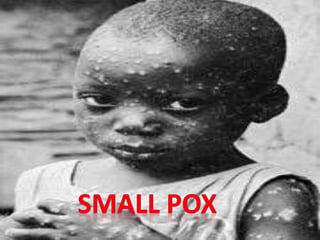
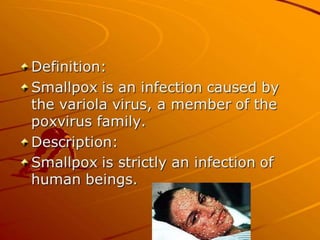
An acute contagious viral disease,
with fever and pustules that
usually leave permanent scars. It
was effectively eradicated through
vaccination by 1979.
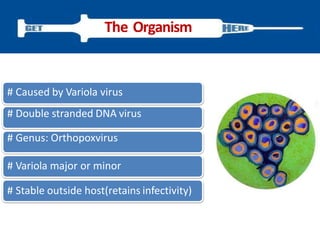
# Caused by Variola virus
# Double stranded DNA virus
# Genus: Orthopoxvirus
# Variola major or minor
# Stable outside host(retains infectivity)
The Organism
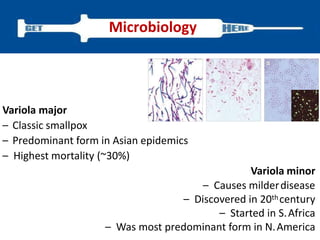
Variola major
– Classic smallpox
– Predominant form in Asian epidemics
– Highest mortality (~30%)
Variola minor
– Causes milderdisease
– Discovered in 20thcentury
– Started in S.Africa
– Was most predominant form in N.America
Microbiology
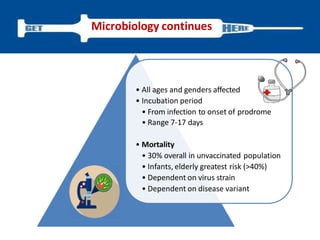
• All ages and genders affected
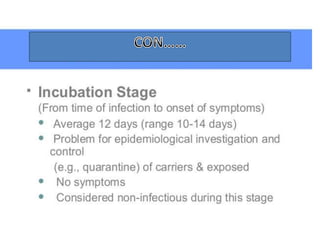
• Incubation period
• From infection to onset of prodrome
• Range 7-17 days
• Mortality
• 30% overall in unvaccinated population
• Infants, elderly greatest risk (>40%)
• Dependent on virus strain
• Dependent on disease variant
Microbiology continues
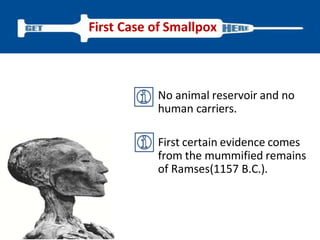
No animal reservoir and no
human carriers.
First certain evidence comes
from the mummified remains
of Ramses(1157 B.C.).
First Case of Smallpox
ETIOLOGY
Smallpox is caused by infection with the variola virus. The
virus can be transmitted:
Directly from person to person.
Direct transmission of the virus requires fairly prolonged
face-to-face contact. The virus can be transmitted
through the air by droplets that escape when an infected
person coughs, sneezes or talks.
Indirectly from an infected person.
In rare instances, airborne virus can spread farther,
possibly through the ventilation system in a building,
infecting people in other rooms or on other floors.
Via contaminated items.
Smallpox can also spread through contact with
contaminated clothing and bedding, although the risk of
infection from these sources is less common.
As a terrorist weapon, potentially.
A deliberate release of smallpox is a remote threat.
However, because any release of the virus could spread
the disease quickly, government officials have taken
numerous precautions to protect against this possibility,
such as stockpiling smallpox vaccine.
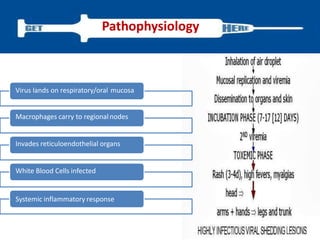
Pathophysiology
Virus lands on respiratory/oral mucosa
Macrophages carry to regionalnodes
Invades reticuloendothelial organs
White Blood Cells infected
Systemic inflammatory response
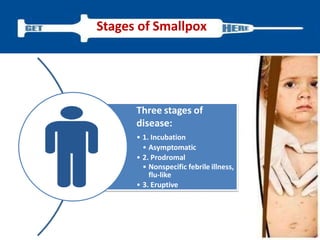
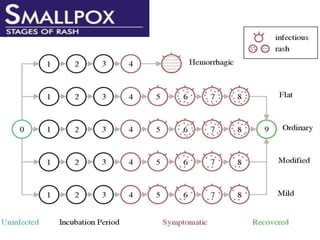
Stages of Smallpox
Three stages of
disease:
• 1. Incubation
• Asymptomatic
• 2. Prodromal
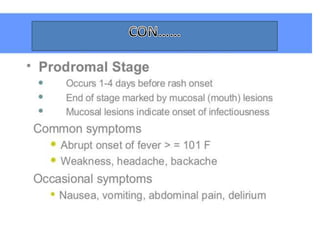
• Nonspecific febrile illness,
flu-like
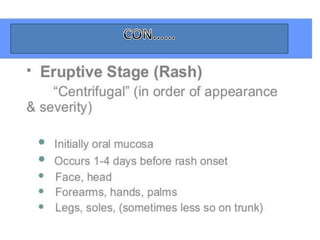
• 3. Eruptive
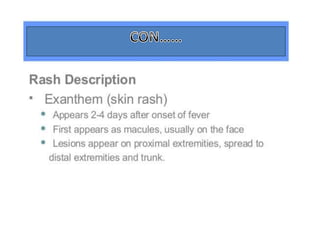
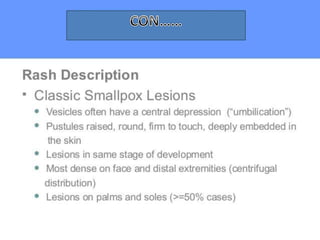
• Characteristic rash
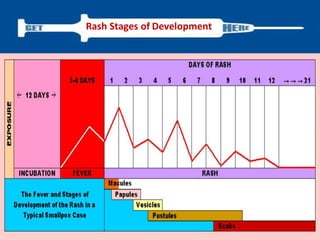
Rash Stages of Development
• The first symptoms of smallpox usually appear
12 to 14 days after you're infected.
• During the incubation period of seven to 17
days, you look and feel healthy and can't
infect others.
Symptoms & Signs
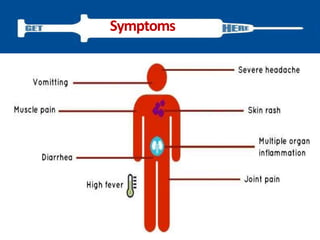
Symptoms
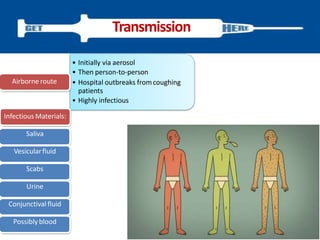
• Initially via aerosol
• Then person-to-person
• Hospital outbreaks fromcoughing
patients
• Highly infectious
Airborne route
Infectious Materials:
Saliva
Vesicularfluid
Scabs
Urine
Conjunctival fluid
Possiblyblood
Transmission
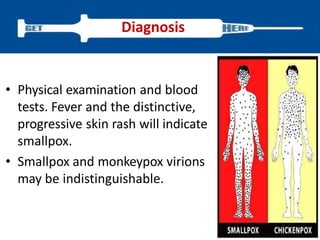
• Physical examination and blood
tests. Fever and the distinctive,
progressive skin rash will indicate
smallpox.
• Smallpox and monkeypox virions
may be indistinguishable.
Diagnosis
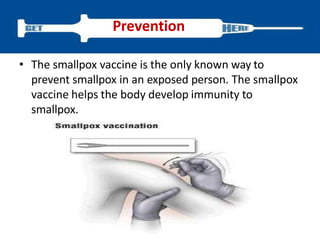
• The smallpox vaccine is the only known way to
prevent smallpox in an exposed person. The smallpox
vaccine helps the body develop immunity to
smallpox.
Prevention
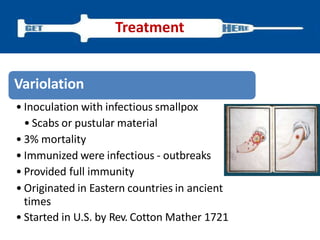
Variolation
• Inoculation with infectious smallpox
• Scabs or pustular material
• 3% mortality
• Immunized were infectious - outbreaks
• Provided full immunity
• Originated in Eastern countries in ancient
times
• Started in U.S. by Rev. Cotton Mather 1721
Treatment
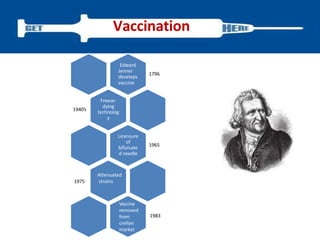
Vaccination
Edward
Jenner
develops
vaccine
1796
Freeze-
dying
technolog
y
1940’s
Licensure
of
bifurcate
d needle
1965
Attenuated
strains1975
Vaccine
removed
from
civilian
market
1983
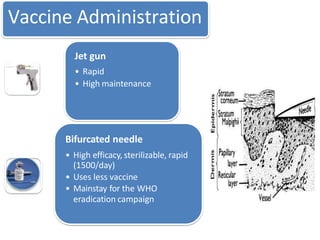
Vaccine Administration
Jet gun
• Rapid
• High maintenance
Bifurcated needle
• High efficacy, sterilizable, rapid
(1500/day)
• Uses less vaccine
• Mainstay for the WHO
eradication campaign
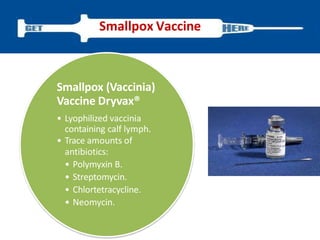
Smallpox (Vaccinia)
Vaccine Dryvax®
• Lyophilized vaccinia
containing calf lymph.
• Trace amounts of
antibiotics:
• Polymyxin B.
• Streptomycin.
• Chlortetracycline.
• Neomycin.
Smallpox Vaccine
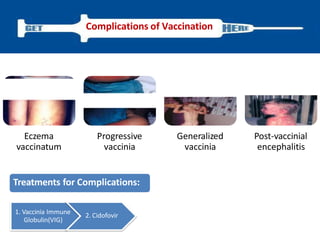
Complications of Vaccination
Treatments for Complications:
1. Vaccinia Immune
Globulin(VIG)
2. Cidofovir
Eczema
vaccinatum
Progressive
vaccinia
Generalized
vaccinia
Post-vaccinial
encephalitis
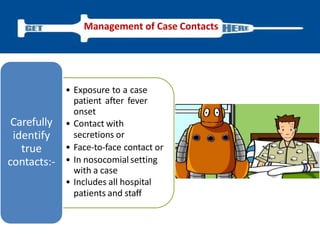
• Exposure to a case
patient after fever
onset
• Contact with
secretions or
• Face-to-face contact or
• In nosocomial setting
with a case
• Includes all hospital
patients and staff
Carefully
identify
true
contacts:-
Management of Case Contacts
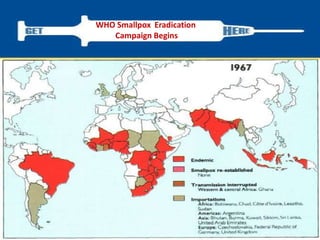
WHO Smallpox Eradication
Campaign Begins
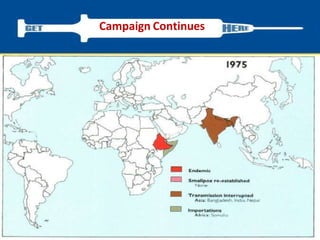
Campaign Continues
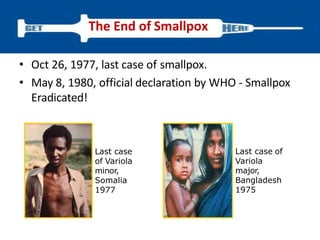
• Oct 26, 1977, last case of smallpox.
• May 8, 1980, official declaration by WHO - Smallpox
Eradicated!
The End of Smallpox
Last case
of Variola
minor,
Somalia
1977
Last case of
Variola
major,
Bangladesh
1975
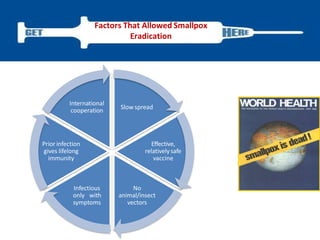
Slowspread
Effective,
relatively safe
vaccine
No
animal/insect
vectors
Infectious
only with
symptoms
Priorinfection
gives lifelong
immunity
International
cooperation
Factors That Allowed Smallpox
Eradication
Thanks
Smallpox

Smallpox

  • 2.
    PRESENTED BY: OM VERMA ASSISTANTPROFESSOR RELIANCE INSTITUTE OF NURSING DHAMTARI
  • 4.
    An acute contagiousviral disease, with fever and pustules that usually leave permanent scars. It was effectively eradicated through vaccination by 1979.
  • 7.
    # Caused byVariola virus # Double stranded DNA virus # Genus: Orthopoxvirus # Variola major or minor # Stable outside host(retains infectivity) The Organism
  • 8.
    Variola major – Classicsmallpox – Predominant form in Asian epidemics – Highest mortality (~30%) Variola minor – Causes milderdisease – Discovered in 20thcentury – Started in S.Africa – Was most predominant form in N.America Microbiology
  • 9.
    • All agesand genders affected • Incubation period • From infection to onset of prodrome • Range 7-17 days • Mortality • 30% overall in unvaccinated population • Infants, elderly greatest risk (>40%) • Dependent on virus strain • Dependent on disease variant Microbiology continues
  • 11.
    No animal reservoirand no human carriers. First certain evidence comes from the mummified remains of Ramses(1157 B.C.). First Case of Smallpox
  • 12.
    ETIOLOGY Smallpox is causedby infection with the variola virus. The virus can be transmitted: Directly from person to person. Direct transmission of the virus requires fairly prolonged face-to-face contact. The virus can be transmitted through the air by droplets that escape when an infected person coughs, sneezes or talks. Indirectly from an infected person. In rare instances, airborne virus can spread farther, possibly through the ventilation system in a building, infecting people in other rooms or on other floors.
  • 13.
    Via contaminated items. Smallpoxcan also spread through contact with contaminated clothing and bedding, although the risk of infection from these sources is less common. As a terrorist weapon, potentially. A deliberate release of smallpox is a remote threat. However, because any release of the virus could spread the disease quickly, government officials have taken numerous precautions to protect against this possibility, such as stockpiling smallpox vaccine.
  • 14.
    Pathophysiology Virus lands onrespiratory/oral mucosa Macrophages carry to regionalnodes Invades reticuloendothelial organs White Blood Cells infected Systemic inflammatory response
  • 15.
    Stages of Smallpox Threestages of disease: • 1. Incubation • Asymptomatic • 2. Prodromal • Nonspecific febrile illness, flu-like • 3. Eruptive • Characteristic rash
  • 23.
    Rash Stages ofDevelopment
  • 25.
    • The firstsymptoms of smallpox usually appear 12 to 14 days after you're infected. • During the incubation period of seven to 17 days, you look and feel healthy and can't infect others. Symptoms & Signs
  • 26.
  • 28.
    • Initially viaaerosol • Then person-to-person • Hospital outbreaks fromcoughing patients • Highly infectious Airborne route Infectious Materials: Saliva Vesicularfluid Scabs Urine Conjunctival fluid Possiblyblood Transmission
  • 29.
    • Physical examinationand blood tests. Fever and the distinctive, progressive skin rash will indicate smallpox. • Smallpox and monkeypox virions may be indistinguishable. Diagnosis
  • 31.
    • The smallpoxvaccine is the only known way to prevent smallpox in an exposed person. The smallpox vaccine helps the body develop immunity to smallpox. Prevention
  • 32.
    Variolation • Inoculation withinfectious smallpox • Scabs or pustular material • 3% mortality • Immunized were infectious - outbreaks • Provided full immunity • Originated in Eastern countries in ancient times • Started in U.S. by Rev. Cotton Mather 1721 Treatment
  • 33.
  • 34.
    Vaccine Administration Jet gun •Rapid • High maintenance Bifurcated needle • High efficacy, sterilizable, rapid (1500/day) • Uses less vaccine • Mainstay for the WHO eradication campaign
  • 35.
    Smallpox (Vaccinia) Vaccine Dryvax® •Lyophilized vaccinia containing calf lymph. • Trace amounts of antibiotics: • Polymyxin B. • Streptomycin. • Chlortetracycline. • Neomycin. Smallpox Vaccine
  • 36.
    Complications of Vaccination Treatmentsfor Complications: 1. Vaccinia Immune Globulin(VIG) 2. Cidofovir Eczema vaccinatum Progressive vaccinia Generalized vaccinia Post-vaccinial encephalitis
  • 37.
    • Exposure toa case patient after fever onset • Contact with secretions or • Face-to-face contact or • In nosocomial setting with a case • Includes all hospital patients and staff Carefully identify true contacts:- Management of Case Contacts
  • 38.
  • 39.
  • 40.
    • Oct 26,1977, last case of smallpox. • May 8, 1980, official declaration by WHO - Smallpox Eradicated! The End of Smallpox Last case of Variola minor, Somalia 1977 Last case of Variola major, Bangladesh 1975
  • 41.
    Slowspread Effective, relatively safe vaccine No animal/insect vectors Infectious only with symptoms Priorinfection giveslifelong immunity International cooperation Factors That Allowed Smallpox Eradication
  • 42.