INFUSION PUMP
DR.MAHESWARI JAIKUMAR
maheswarijaikumar2103@gmail.com
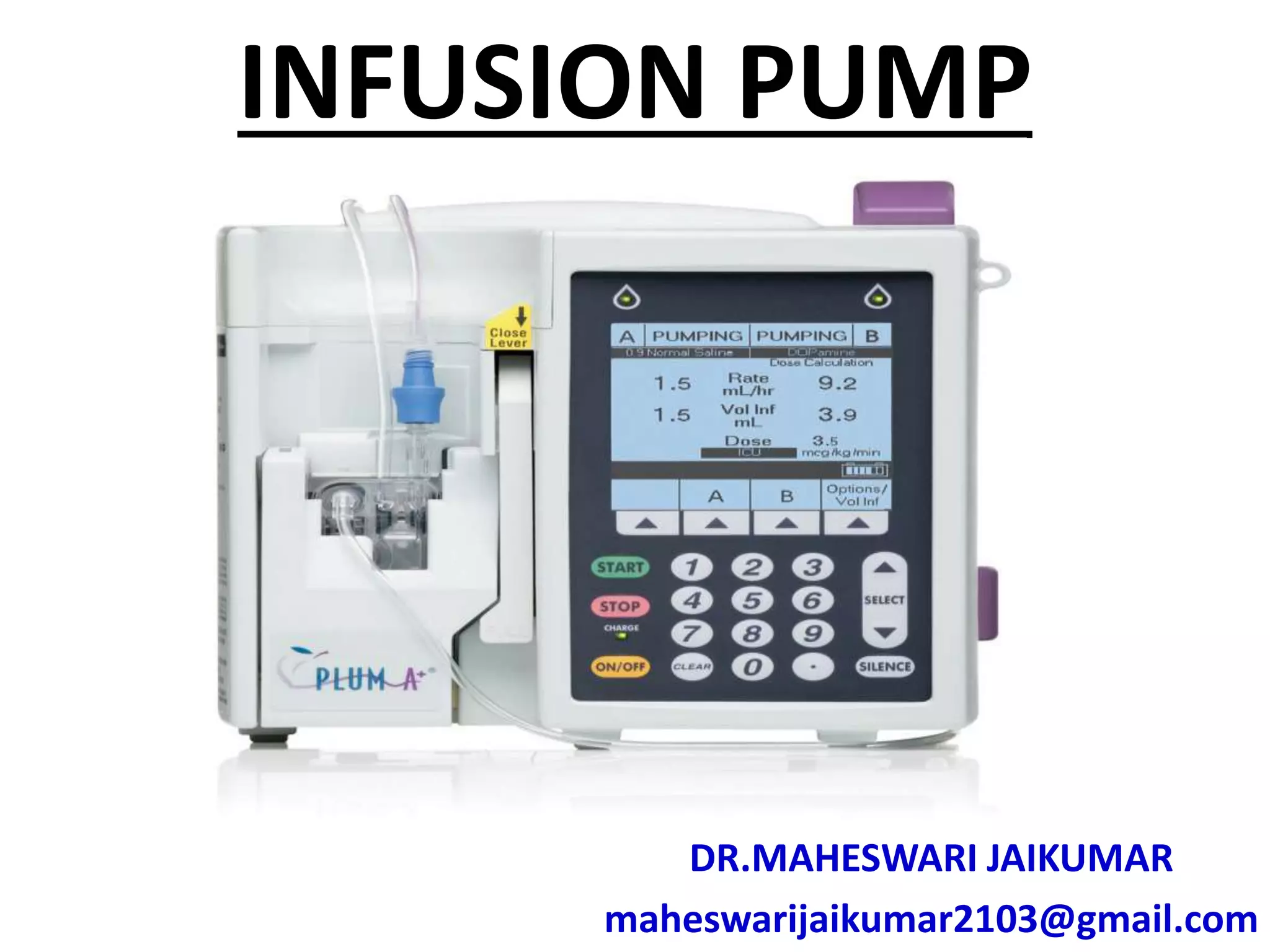
DEFINITION
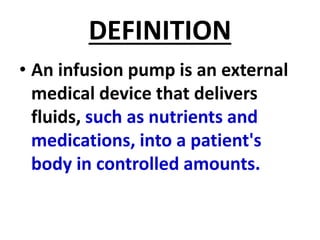
โ€ข An infusion pump is an external
medical device that delivers
fluids, such as nutrients and
medications, into a patient's
body in controlled amounts.
โ€ข Infusion pumps are capable of
delivering fluids in large or small
amounts, and are used to deliver
nutrients or medications โ€“ such
as or other hormones,
antibiotics, chemotherapy drugs,
and pain relievers.
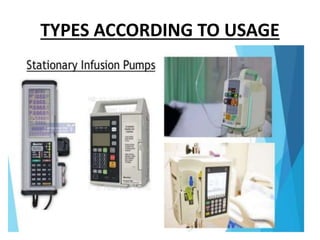
โ€ข Some infusion pumps are designed
mainly for stationary use at a
patientโ€™s bedside.
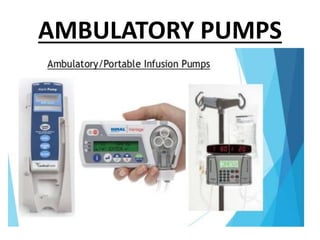
โ€ข Others, called ambulatory infusion
pumps, are designed to be portable
or wearable.
INDICATIONS
โ€ข For prevention of fluid overload
โ€ข Administer specific amount og
pharmacologic agent
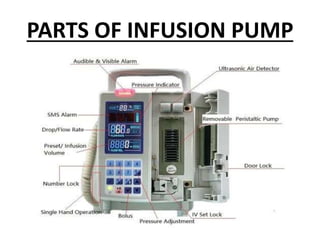
PARTS OF INFUSION PUMP
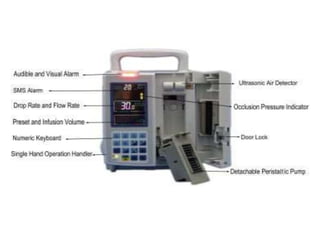
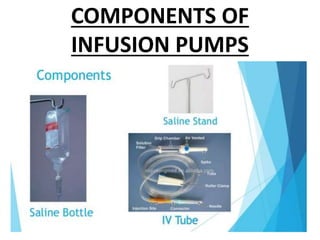
COMPONENTS OF
INFUSION PUMPS
TYPES OF INFUSION
ACCORDING TO
PRINCIPLE OF WORKING
GRAVITY INFUSION DEVICES
Gravity infusion devices are one
of the most common types of IV
systems used like an an IV
pump.
โ€ข This system uses gravity to
deliver medication, making it
simple and low-cost.
โ€ข This was the first infusion pump
used and has been in use since
the late 1960s.
โ€ข Depending on the viscosity of
the fluid being infused, this
method may not be an option.
โ€ข This method is difficult to use
precisely.
VOLUMETRIC PUMPS
These devices are used for large
amounts of medication being
delivered.
Typically, theyโ€™re more advanced,
with many featuring smart pump
features, such as alert systems when
something go wrong.
โ€ข This type of IV infusion pump
need specialized training
therefore this option isnโ€™t always
as accessible.
โ€ข Large-volume pumps usually use
some form of peristaltic pump.
โ€ข Classically, they use computer-
controlled rollers compressing a
silicone-rubber tube through which
the medicine flows. Another
common form is a set of fingers that
press on the tube in sequence.
โ€ข Large volume pumps can
pump fluid replacement such
as Saline solution, medications
such as antibiotics or nutrient
solutions large enough to feed a
patient.
โ€ข Small-volume pumps usually use
a computer-controlled motor
turning a screw that pushes the
plunger on a syringe.
โ€ข Small-volume pumps
infuse hormones, such as insulin,
or other medicines, such
as opiates.
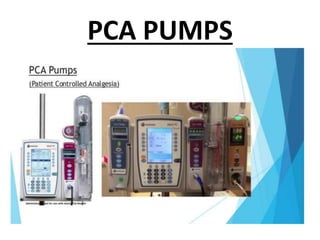
PATIENT-CONTROLLED
ANALGESIA PUMPS
โ€ข As the name suggest, these
types of pumps allow patients to
control their dosage as
necessary.
โ€ข There are highly effective safety
systems put in place to prevent
overdosing.
โ€ข These pumps are best
implemented for specific
medications, rather than long-
term, consistent treatment.
SYRINGE PUMPS
Syringe pumps deliver small
doses of high concentration
medications over the course of a
longer period of time.
โ€ข Similar to volumetric pumps,
these are also often difficult to
use and require specialized
training to be implemented.
TYPES ACCORDING TO USAGE
AMBULATORY PUMPS
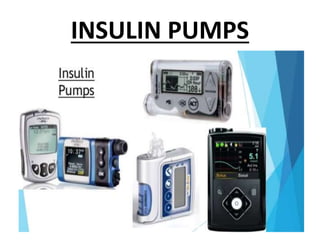
INSULIN PUMPS
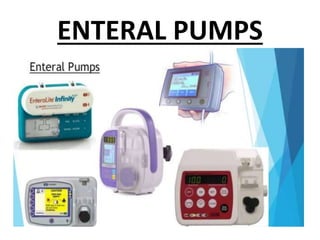
ENTERAL PUMPS
PCA PUMPS
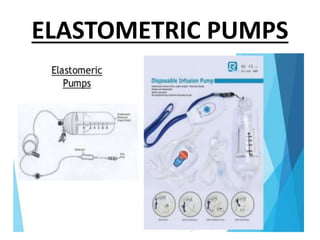
ELASTOMETRIC PUMPS
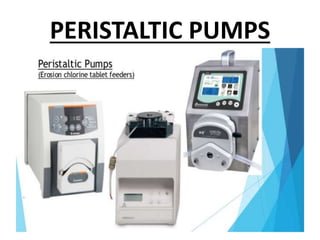
PERISTALTIC PUMPS
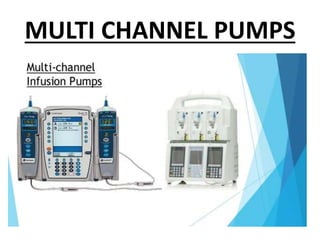
MULTI CHANNEL PUMPS
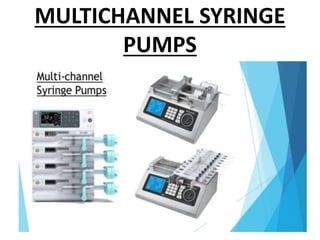
MULTICHANNEL SYRINGE
PUMPS
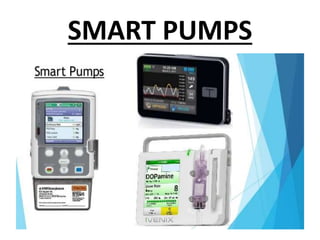
SMART PUMPS
FACTORS TO CONSIDER WHILE
USING INFUSION PUMPS
โ€ข Quality of vasculature
โ€ข Age of the patient
โ€ข IV set
โ€ข Medication
FEATURES OF INFUSION PUMP
โ€ข An air filter is an essential safety
device in a pressure infusor, to
keep air out of the patients'
veins.
โ€ข Small bubbles could cause harm in
arteries, but in the veins they pass
through the heart and leave in the
patients' lungs.
โ€ข The air filter is just a membrane that
passes gas but not fluid
or pathogens. When a large air
bubble reaches it, it bleeds off.
โ€ข Some of the smallest infusion
pumps use osmotic power. Basically,
a bag of salt solution absorbs water
through a membrane, swelling its
volume. The bag presses medicine
out. The rate is precisely controlled
by the salt concentrations and
pump volume. Osmotic pumps are
usually recharged with a syringe.
โ€ข Spring-powered clockwork infusion
pumps are used in veterinary work
and for ambulatory small-volume
pumps.
โ€ข They generally have one spring to
power the infusion, and another for
the alarm bell when the infusion
completes.
โ€ข Many infusion pumps are
controlled by a small embedded
system. They are carefully
designed so that no single cause
of failure can harm the patient.
โ€ข For example, most have batteries in
case the wall-socket power fails.
Additional hazards are uncontrolled
flow causing an overdose,
uncontrolled lack of flow, causing an
underdose, reverse flow, which can
siphon blood from a patient, and air
in the line, which can cause an air
embolism.
PROCESS OF USING
INFUSION PUMP
โ€ข The following are the usual steps
/process of using infusion pumps
โ€ข Ensure that the machine is
plugged properly into suitable
electrical socket
โ€ข Switch on the machine
โ€ข Prepare the materials needed
โ€ข Check for expiry date
โ€ข Flush the primary /secondary set
to IV pump
โ€ข Set rate and volume
โ€ข Connect the line to the patient
โ€ข Start infusion
โ€ข Check safety (machine & keep
the line untangled)
โ€ข Check safety (machine & keep
the line untangled)
โ€ข Document amount of fluid given
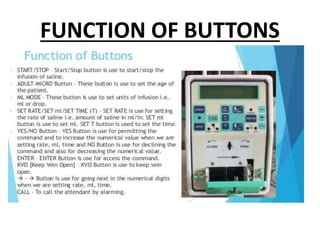
FUNCTION OF BUTTONS
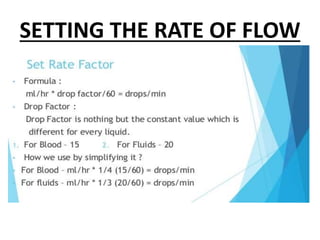
SETTING THE RATE OF FLOW
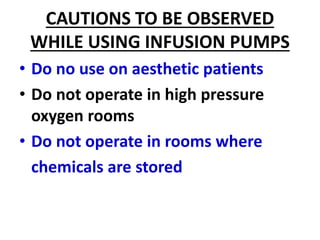
CAUTIONS TO BE OBSERVED
WHILE USING INFUSION PUMPS
โ€ข Do no use on aesthetic patients
โ€ข Do not operate in high pressure
oxygen rooms
โ€ข Do not operate in rooms where
chemicals are stored
โ€ข Do not keep in strong sunlight or in
any strong light
โ€ข Do not operate in areas where air
pressure decrease or increase
spontaneously
โ€ข Do not expose it to dust, or in
presence of corrosive gas in
atmosphere
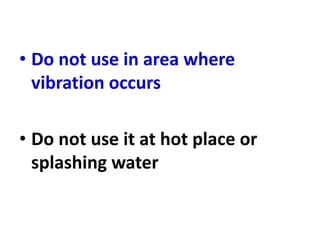
โ€ข Do not use in area where
vibration occurs
โ€ข Do not use it at hot place or
splashing water
PROBLEMS ENCOUNTERED
โ€ข Software problems
โ€ข Alarm errors
โ€ข Inadequate user interface
โ€ข Battery failure
โ€ข Fire, sparks, charing or shocks
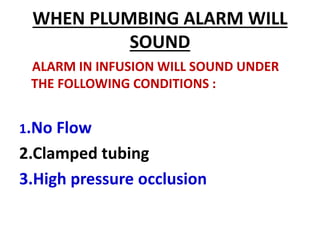
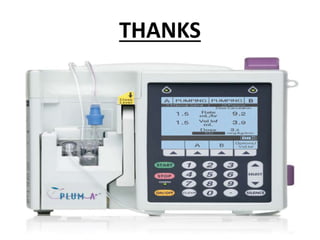
WHEN PLUMBING ALARM WILL
SOUND
ALARM IN INFUSION WILL SOUND UNDER
THE FOLLOWING CONDITIONS :
1.No Flow
2.Clamped tubing
3.High pressure occlusion
โ€ข 4.Device occluded
โ€ข 5.Device infiltrated
โ€ข 6.Volume has been delivered to the
patient
โ€ข Previous volume setting has not
been deleted from programming
DIFFERENCE BETWEEN INFUSION
PUMP & SYRINGE PUMP
Syringe pumps deliver small doses
of high concentration medications
over the course of a longer period of
time.
โ€ข Similar to volumetric pumps, these
are also often difficult to use and
require specialized training to be
implemented.
THANKS

INFUSION PUMPS

  • 1.
  • 2.
    DEFINITION โ€ข An infusionpump is an external medical device that delivers fluids, such as nutrients and medications, into a patient's body in controlled amounts.
  • 3.
    โ€ข Infusion pumpsare capable of delivering fluids in large or small amounts, and are used to deliver nutrients or medications โ€“ such as or other hormones, antibiotics, chemotherapy drugs, and pain relievers.
  • 4.
    โ€ข Some infusionpumps are designed mainly for stationary use at a patientโ€™s bedside. โ€ข Others, called ambulatory infusion pumps, are designed to be portable or wearable.
  • 5.
    INDICATIONS โ€ข For preventionof fluid overload โ€ข Administer specific amount og pharmacologic agent
  • 6.
  • 8.
  • 9.
    TYPES OF INFUSION ACCORDINGTO PRINCIPLE OF WORKING
  • 10.
    GRAVITY INFUSION DEVICES Gravityinfusion devices are one of the most common types of IV systems used like an an IV pump.
  • 11.
    โ€ข This systemuses gravity to deliver medication, making it simple and low-cost. โ€ข This was the first infusion pump used and has been in use since the late 1960s.
  • 12.
    โ€ข Depending onthe viscosity of the fluid being infused, this method may not be an option. โ€ข This method is difficult to use precisely.
  • 13.
    VOLUMETRIC PUMPS These devicesare used for large amounts of medication being delivered. Typically, theyโ€™re more advanced, with many featuring smart pump features, such as alert systems when something go wrong.
  • 14.
    โ€ข This typeof IV infusion pump need specialized training therefore this option isnโ€™t always as accessible.
  • 15.
    โ€ข Large-volume pumpsusually use some form of peristaltic pump. โ€ข Classically, they use computer- controlled rollers compressing a silicone-rubber tube through which the medicine flows. Another common form is a set of fingers that press on the tube in sequence.
  • 16.
    โ€ข Large volumepumps can pump fluid replacement such as Saline solution, medications such as antibiotics or nutrient solutions large enough to feed a patient.
  • 17.
    โ€ข Small-volume pumpsusually use a computer-controlled motor turning a screw that pushes the plunger on a syringe.
  • 18.
    โ€ข Small-volume pumps infusehormones, such as insulin, or other medicines, such as opiates.
  • 19.
    PATIENT-CONTROLLED ANALGESIA PUMPS โ€ข Asthe name suggest, these types of pumps allow patients to control their dosage as necessary.
  • 20.
    โ€ข There arehighly effective safety systems put in place to prevent overdosing. โ€ข These pumps are best implemented for specific medications, rather than long- term, consistent treatment.
  • 21.
    SYRINGE PUMPS Syringe pumpsdeliver small doses of high concentration medications over the course of a longer period of time.
  • 22.
    โ€ข Similar tovolumetric pumps, these are also often difficult to use and require specialized training to be implemented.
  • 23.
  • 24.
  • 25.
  • 26.
  • 27.
  • 28.
  • 29.
  • 30.
  • 31.
  • 32.
  • 33.
    FACTORS TO CONSIDERWHILE USING INFUSION PUMPS โ€ข Quality of vasculature โ€ข Age of the patient โ€ข IV set โ€ข Medication
  • 34.
    FEATURES OF INFUSIONPUMP โ€ข An air filter is an essential safety device in a pressure infusor, to keep air out of the patients' veins.
  • 35.
    โ€ข Small bubblescould cause harm in arteries, but in the veins they pass through the heart and leave in the patients' lungs. โ€ข The air filter is just a membrane that passes gas but not fluid or pathogens. When a large air bubble reaches it, it bleeds off.
  • 36.
    โ€ข Some ofthe smallest infusion pumps use osmotic power. Basically, a bag of salt solution absorbs water through a membrane, swelling its volume. The bag presses medicine out. The rate is precisely controlled by the salt concentrations and pump volume. Osmotic pumps are usually recharged with a syringe.
  • 37.
    โ€ข Spring-powered clockworkinfusion pumps are used in veterinary work and for ambulatory small-volume pumps. โ€ข They generally have one spring to power the infusion, and another for the alarm bell when the infusion completes.
  • 38.
    โ€ข Many infusionpumps are controlled by a small embedded system. They are carefully designed so that no single cause of failure can harm the patient.
  • 39.
    โ€ข For example,most have batteries in case the wall-socket power fails. Additional hazards are uncontrolled flow causing an overdose, uncontrolled lack of flow, causing an underdose, reverse flow, which can siphon blood from a patient, and air in the line, which can cause an air embolism.
  • 40.
    PROCESS OF USING INFUSIONPUMP โ€ข The following are the usual steps /process of using infusion pumps
  • 41.
    โ€ข Ensure thatthe machine is plugged properly into suitable electrical socket โ€ข Switch on the machine โ€ข Prepare the materials needed โ€ข Check for expiry date
  • 42.
    โ€ข Flush theprimary /secondary set to IV pump โ€ข Set rate and volume โ€ข Connect the line to the patient โ€ข Start infusion โ€ข Check safety (machine & keep the line untangled)
  • 43.
    โ€ข Check safety(machine & keep the line untangled) โ€ข Document amount of fluid given
  • 44.
  • 45.
  • 46.
    CAUTIONS TO BEOBSERVED WHILE USING INFUSION PUMPS โ€ข Do no use on aesthetic patients โ€ข Do not operate in high pressure oxygen rooms โ€ข Do not operate in rooms where chemicals are stored
  • 47.
    โ€ข Do notkeep in strong sunlight or in any strong light โ€ข Do not operate in areas where air pressure decrease or increase spontaneously โ€ข Do not expose it to dust, or in presence of corrosive gas in atmosphere
  • 48.
    โ€ข Do notuse in area where vibration occurs โ€ข Do not use it at hot place or splashing water
  • 49.
    PROBLEMS ENCOUNTERED โ€ข Softwareproblems โ€ข Alarm errors โ€ข Inadequate user interface โ€ข Battery failure โ€ข Fire, sparks, charing or shocks
  • 50.
    WHEN PLUMBING ALARMWILL SOUND ALARM IN INFUSION WILL SOUND UNDER THE FOLLOWING CONDITIONS : 1.No Flow 2.Clamped tubing 3.High pressure occlusion
  • 51.
    โ€ข 4.Device occluded โ€ข5.Device infiltrated โ€ข 6.Volume has been delivered to the patient โ€ข Previous volume setting has not been deleted from programming
  • 52.
    DIFFERENCE BETWEEN INFUSION PUMP& SYRINGE PUMP Syringe pumps deliver small doses of high concentration medications over the course of a longer period of time. โ€ข Similar to volumetric pumps, these are also often difficult to use and require specialized training to be implemented.
  • 53.