Electrical Charges

Objectives:
4.4 Demonstrate that there are two
    types of electric charges – (after
    doing experiments &
documentary research)
Electrical Charges:
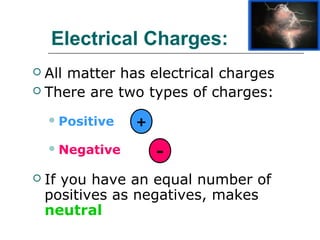
 All matter has electrical charges
 There are two types of charges:

     Positive   +

     Negative
                     -
   If you have an equal number of
    positives as negatives, makes
    neutral
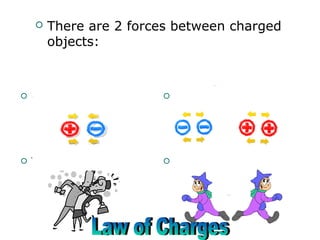
   There are 2 forces between charged
        objects:

        Attraction               Repulsion
   Opposite charges         Same charges


   “Opposites Attract”      “Like repel”
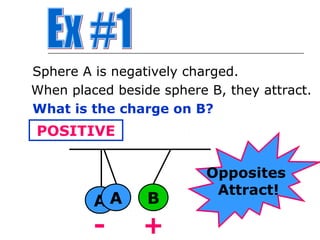
Sphere A is negatively charged.
When placed beside sphere B, they attract.
What is the charge on B?
POSITIVE

                          Opposites
                           Attract!
         AA      B
         -      +
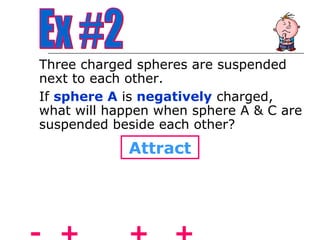
Three charged spheres are suspended
next to each other.
If sphere A is negatively charged,
what will happen when sphere A & C are
suspended beside each other?
            Attract


A   B        B     C        A    C
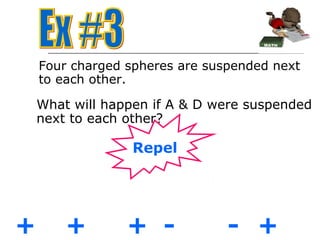
Four charged spheres are suspended next
    to each other.

    What will happen if A & D were suspended
    next to each other?

                  Repel


A       B        B    C         C    D
+       +        + -            - +
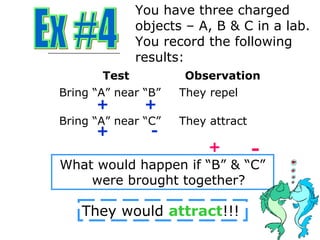
You have three charged
              objects – A, B & C in a lab.
              You record the following
              results:
       Test           Observation
Bring “A” near “B”   They repel
      +        +
Bring “A” near “C”   They attract
      +         -
                          +         -
What would happen if “B” & “C”
    were brought together?

    They would attract!!!
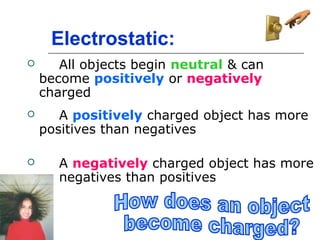
Electrostatic:
      All objects begin neutral & can
    become positively or negatively
    charged
      A positively charged object has more
    positives than negatives

      A negatively charged object has more
       negatives than positives
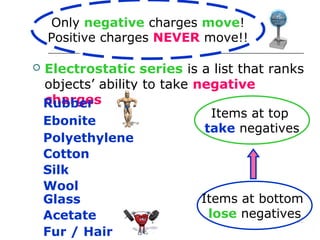
Only negative charges move!
    Electrostatic Series:
    Positive charges NEVER move!!

   Electrostatic series is a list that ranks
    objects’ ability to take negative
    charges
    Rubber
                                 Items at top
    Ebonite
                               take negatives
    Polyethylene
    Cotton
    Silk
    Wool
    Glass                     Items at bottom
    Acetate                     lose negatives
    Fur / Hair
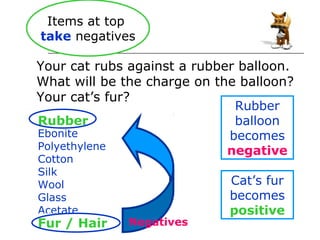
Items at top
take negatives

Your cat rubs against a rubber balloon.
What will be the charge on the balloon?
Your cat’s fur?
                              Rubber
Rubber
Rubber                        balloon
Ebonite                      becomes
Polyethylene                 negative
Cotton
Silk
Wool                         Cat’s fur
Glass                        becomes
Acetate                      positive
Fur/ / Hair
Fur Hair      Negatives
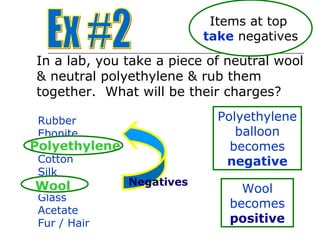
Items at top
                          take negatives
In a lab, you take a piece of neutral wool
& neutral polyethylene & rub them
together. What will be their charges?

 Rubber                     Polyethylene
 Ebonite                       balloon
Polyethylene
 Polyethylene                 becomes
 Cotton                      negative
 Silk
 Wool
 Wool         Negatives
                                Wool
 Glass
                              becomes
 Acetate
 Fur / Hair                   positive
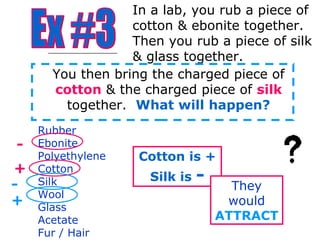
In a lab, you rub a piece of
                  cotton & ebonite together.
                  Then you rub a piece of silk
                  & glass together.
      You then bring the charged piece of
      cotton & the charged piece of silk
        together. What will happen?
    Rubber
-   Ebonite
    Polyethylene   Cotton is +
+   Cotton
-   Silk             Silk is   -
                                     They
    Wool
+   Glass
                                    would
    Acetate                        ATTRACT
    Fur / Hair
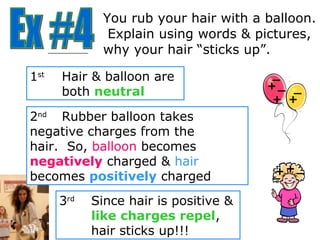
You rub your hair with a balloon.
               Explain using words & pictures,
              why your hair “sticks up”.

1st   Hair & balloon are                _
                                       +_ _
      both neutral
                                        + +
2nd Rubber balloon takes
negative charges from the
hair. So, balloon becomes
negatively charged & hair
becomes positively charged              _ +_
                                        +

      3rd   Since hair is positive &
            like charges repel,
            hair sticks up!!!
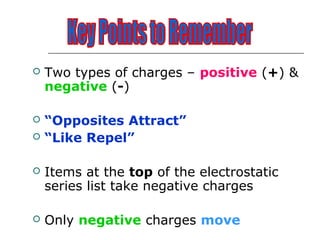
   Two types of charges – positive (+) &
    negative (-)

   “Opposites Attract”
   “Like Repel”

   Items at the top of the electrostatic
    series list take negative charges

   Only negative charges move
Activities
   Physical Science Worksheet #5
References
   Student Study Guide – Physical
    Science 416/436 - MEQ
   Science Quest – Grenier, Daigle,
    Rheaume – 1998, Cheneliere
   Google Images
   Animation Factory

AST 406 Electrical Charges

  • 1.
    Electrical Charges Objectives: 4.4 Demonstratethat there are two types of electric charges – (after doing experiments & documentary research)
  • 2.
    Electrical Charges:  Allmatter has electrical charges  There are two types of charges:  Positive +  Negative -  If you have an equal number of positives as negatives, makes neutral
  • 3.
    There are 2 forces between charged objects: Attraction Repulsion  Opposite charges  Same charges  “Opposites Attract”  “Like repel”
  • 4.
    Sphere A isnegatively charged. When placed beside sphere B, they attract. What is the charge on B? POSITIVE Opposites Attract! AA B - +
  • 5.
    Three charged spheresare suspended next to each other. If sphere A is negatively charged, what will happen when sphere A & C are suspended beside each other? Attract A B B C A C
  • 6.
    Four charged spheresare suspended next to each other. What will happen if A & D were suspended next to each other? Repel A B B C C D + + + - - +
  • 7.
    You have threecharged objects – A, B & C in a lab. You record the following results: Test Observation Bring “A” near “B” They repel + + Bring “A” near “C” They attract + - + - What would happen if “B” & “C” were brought together? They would attract!!!
  • 8.
    Electrostatic:  All objects begin neutral & can become positively or negatively charged  A positively charged object has more positives than negatives  A negatively charged object has more negatives than positives
  • 9.
    Only negative chargesmove! Electrostatic Series: Positive charges NEVER move!!  Electrostatic series is a list that ranks objects’ ability to take negative charges Rubber Items at top Ebonite take negatives Polyethylene Cotton Silk Wool Glass Items at bottom Acetate lose negatives Fur / Hair
  • 10.
    Items at top takenegatives Your cat rubs against a rubber balloon. What will be the charge on the balloon? Your cat’s fur? Rubber Rubber Rubber balloon Ebonite becomes Polyethylene negative Cotton Silk Wool Cat’s fur Glass becomes Acetate positive Fur/ / Hair Fur Hair Negatives
  • 11.
    Items at top take negatives In a lab, you take a piece of neutral wool & neutral polyethylene & rub them together. What will be their charges? Rubber Polyethylene Ebonite balloon Polyethylene Polyethylene becomes Cotton negative Silk Wool Wool Negatives Wool Glass becomes Acetate Fur / Hair positive
  • 12.
    In a lab,you rub a piece of cotton & ebonite together. Then you rub a piece of silk & glass together. You then bring the charged piece of cotton & the charged piece of silk together. What will happen? Rubber - Ebonite Polyethylene Cotton is + + Cotton - Silk Silk is - They Wool + Glass would Acetate ATTRACT Fur / Hair
  • 13.
    You rub yourhair with a balloon. Explain using words & pictures, why your hair “sticks up”. 1st Hair & balloon are _ +_ _ both neutral + + 2nd Rubber balloon takes negative charges from the hair. So, balloon becomes negatively charged & hair becomes positively charged _ +_ + 3rd Since hair is positive & like charges repel, hair sticks up!!!
  • 14.
    Two types of charges – positive (+) & negative (-)  “Opposites Attract”  “Like Repel”  Items at the top of the electrostatic series list take negative charges  Only negative charges move
  • 15.
    Activities  Physical Science Worksheet #5
  • 16.
    References  Student Study Guide – Physical Science 416/436 - MEQ  Science Quest – Grenier, Daigle, Rheaume – 1998, Cheneliere  Google Images  Animation Factory