Downloaded 32 times

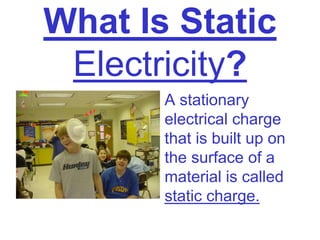
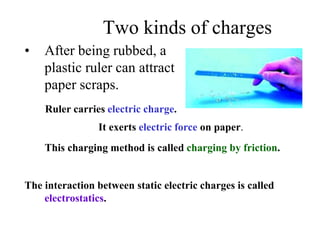
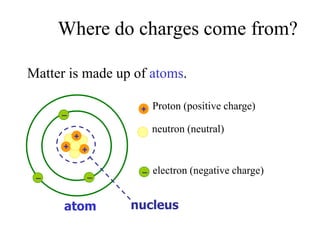
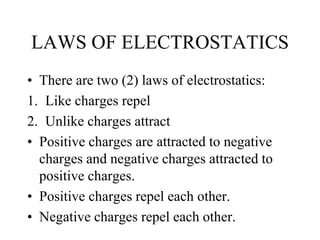
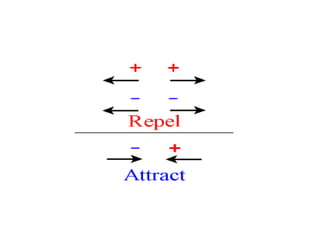
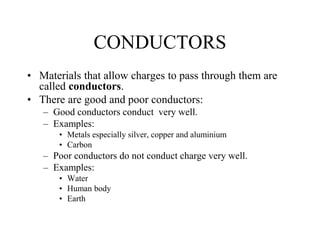
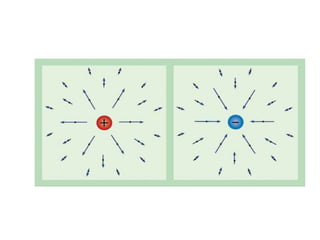
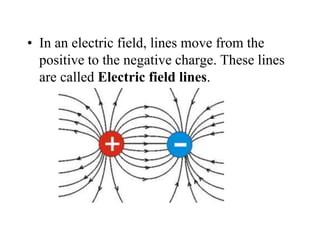
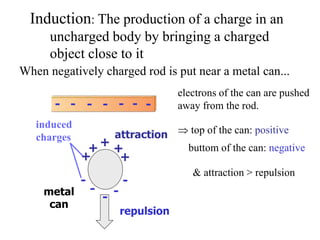
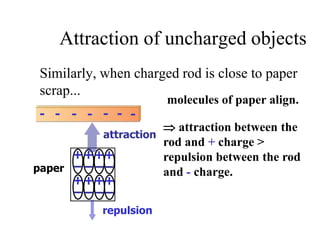
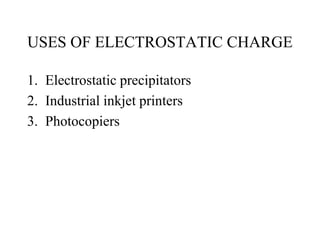
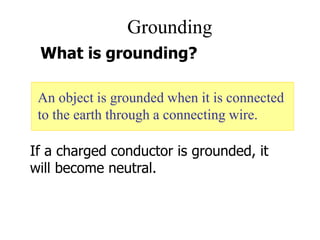
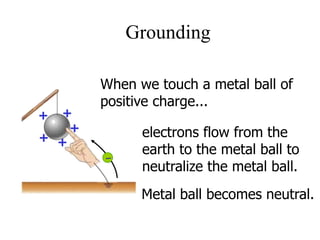
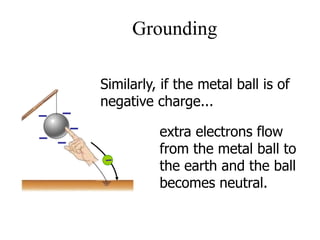



Static electricity is a stationary electric charge built up on the surface of materials. It is caused by electrons being transferred between two objects during friction. There are two types of charges - positive and negative. Atoms contain protons which have a positive charge and electrons which have a negative charge. The laws of electrostatics state that like charges repel and unlike charges attract. Materials that allow charge to pass through are conductors, while insulators do not. When a charged object is brought near an uncharged object, the electric field can induce charges in the uncharged object. Some applications of static electricity include electrostatic precipitators, printers, and photocopiers. Grounding neutralizes charged objects by connecting them to the earth.


![谷歌留痕技术 [ 𝙩𝙤𝙥 𝟮𝟯𝟯. 𝙘 𝙤𝙢 ]](https://cdn.slidesharecdn.com/ss_thumbnails/top233-260130174328-3833018c-thumbnail.jpg?width=640&height=640&fit=bounds)