FRICTION,
CONDUCTION AND
INDUCTION
How do you charge an object?
• There are three ways to charge an object:
1. Charge by Friction
2. Charge by Conduction
3. Charge by Induction
How do you measure “charge”
• The unit of measure for electrical charge is the
Coulomb (C). In equations it is symbolized by a
“q”
• Eg: q = 900C
• One Coulomb is equal to the charge of 6.25 X 10¹⁸
electrons (-) or protons (+).
• That is to say, one Coulomb has 6.25 X 10¹⁸
electrons.
Charging Objects
• Most objects start out electrically neutral, but by
CHARGING an object you create an imbalance in the
number of electrons and protons; the object is then
charged and is either positive or negative.
• You can charge an object through:
• Friction – the transfer of electrons from one object to the other
• Conduction – by having two objects TOUCH each other and
transfer electrons from one object to the next.
• Induction – By inducing electrons to move from one object to the
other.
Charging by Friction
• When two neutral objects are rubbed against each other,
one object may pull electrons away from the other
creating one positive object and one negative object.
Electrostatic Series:
 All objects begin neutral & can become
positively or negatively charged
 A positively charged object has more
positives than negatives
 A negatively charged object has more
negatives than positives
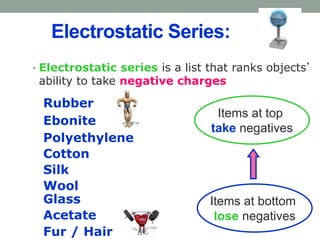
• Electrostatic series is a list that ranks objects’
ability to take negative charges
Electrostatic Series:
Rubber
Ebonite
Polyethylene
Cotton
Silk
Wool
Glass
Acetate
Fur / Hair
Items at top
take negatives
Items at bottom
lose negatives
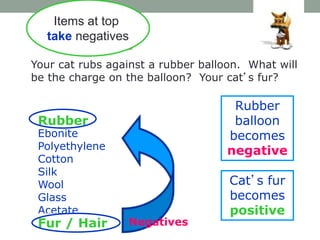
Your cat rubs against a rubber balloon. What will
be the charge on the balloon? Your cat’s fur?
Rubber
Ebonite
Polyethylene
Cotton
Silk
Wool
Glass
Acetate
Fur / Hair
Rubber
Fur / Hair
Items at top
take negatives
Negatives
Rubber
balloon
becomes
negative
Cat’s fur
becomes
positive
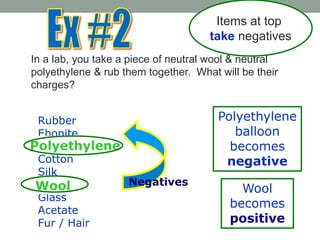
In a lab, you take a piece of neutral wool & neutral
polyethylene & rub them together. What will be their
charges?
Rubber
Ebonite
Polyethylene
Cotton
Silk
Wool
Glass
Acetate
Fur / Hair
Wool
Polyethylene
Items at top
take negatives
Negatives
Polyethylene
balloon
becomes
negative
Wool
becomes
positive
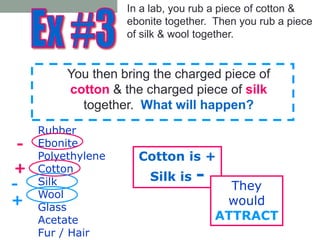
In a lab, you rub a piece of cotton &
ebonite together. Then you rub a piece
of silk & wool together.
Rubber
Ebonite
Polyethylene
Cotton
Silk
Wool
Glass
Acetate
Fur / Hair
Cotton is +
Silk is -
They
would
ATTRACT
You then bring the charged piece of
cotton & the charged piece of silk
together. What will happen?
+
-
-
+
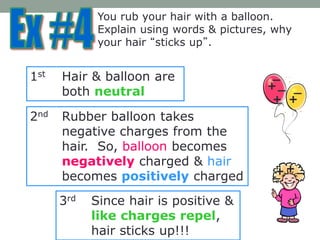
You rub your hair with a balloon.
Explain using words & pictures, why
your hair “sticks up”.
1st Hair & balloon are
both neutral
2nd Rubber balloon takes
negative charges from the
hair. So, balloon becomes
negatively charged & hair
becomes positively charged
3rd Since hair is positive &
like charges repel,
hair sticks up!!!
+
+
++
+
_ _
_
_
_
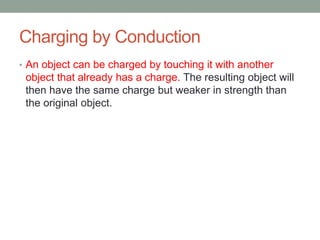
Charging by Conduction
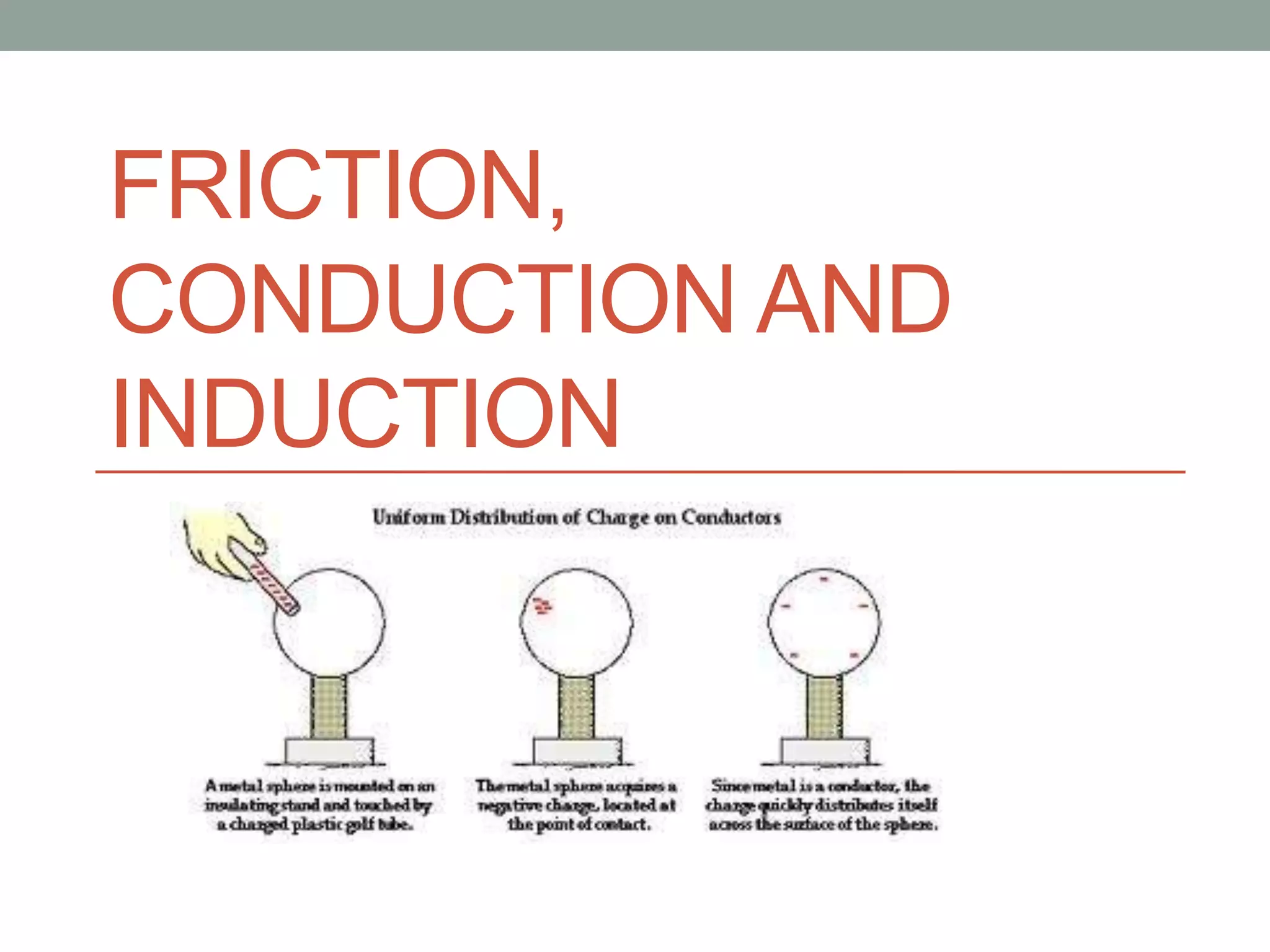
• An object can be charged by touching it with another
object that already has a charge. The resulting object will
then have the same charge but weaker in strength than
the original object.
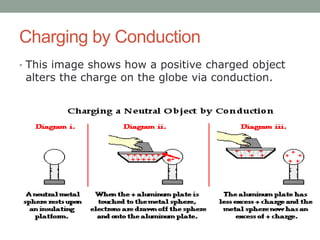
Charging by Conduction
• This image shows how a positive charged object
alters the charge on the globe via conduction.
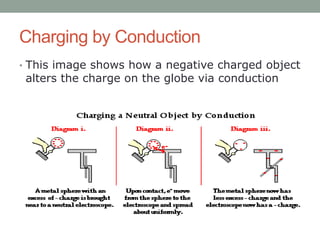
Charging by Conduction
• This image shows how a negative charged object
alters the charge on the globe via conduction
Charging by Induction
• Objects do not touch (one is charged, one is neutral)
• Proximity of the charged object causes (induces) the
charges in the neutral object to separate.
Charging by Induction
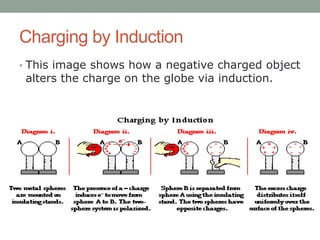
• This image shows how a negative charged object
alters the charge on the globe via induction.
Charging by Induction
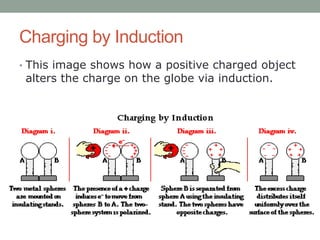
• This image shows how a positive charged object
alters the charge on the globe via induction.
• Two types of charges – positive (+) &
negative (-)
• “Opposites Attract”
• “Like Repel”
• Items at the top of the electrostatic series
list take negative charges
• Only negative charges move
• Three methods to charge an object:
friction, conduction, induction. These three
methods are what cause static
electricity.

Friction Conduction and Induction .pptx

  • 1.
  • 2.
    How do youcharge an object? • There are three ways to charge an object: 1. Charge by Friction 2. Charge by Conduction 3. Charge by Induction
  • 3.
    How do youmeasure “charge” • The unit of measure for electrical charge is the Coulomb (C). In equations it is symbolized by a “q” • Eg: q = 900C • One Coulomb is equal to the charge of 6.25 X 10¹⁸ electrons (-) or protons (+). • That is to say, one Coulomb has 6.25 X 10¹⁸ electrons.
  • 4.
    Charging Objects • Mostobjects start out electrically neutral, but by CHARGING an object you create an imbalance in the number of electrons and protons; the object is then charged and is either positive or negative. • You can charge an object through: • Friction – the transfer of electrons from one object to the other • Conduction – by having two objects TOUCH each other and transfer electrons from one object to the next. • Induction – By inducing electrons to move from one object to the other.
  • 5.
    Charging by Friction •When two neutral objects are rubbed against each other, one object may pull electrons away from the other creating one positive object and one negative object.
  • 6.
    Electrostatic Series:  Allobjects begin neutral & can become positively or negatively charged  A positively charged object has more positives than negatives  A negatively charged object has more negatives than positives
  • 7.
    • Electrostatic seriesis a list that ranks objects’ ability to take negative charges Electrostatic Series: Rubber Ebonite Polyethylene Cotton Silk Wool Glass Acetate Fur / Hair Items at top take negatives Items at bottom lose negatives
  • 8.
    Your cat rubsagainst a rubber balloon. What will be the charge on the balloon? Your cat’s fur? Rubber Ebonite Polyethylene Cotton Silk Wool Glass Acetate Fur / Hair Rubber Fur / Hair Items at top take negatives Negatives Rubber balloon becomes negative Cat’s fur becomes positive
  • 9.
    In a lab,you take a piece of neutral wool & neutral polyethylene & rub them together. What will be their charges? Rubber Ebonite Polyethylene Cotton Silk Wool Glass Acetate Fur / Hair Wool Polyethylene Items at top take negatives Negatives Polyethylene balloon becomes negative Wool becomes positive
  • 10.
    In a lab,you rub a piece of cotton & ebonite together. Then you rub a piece of silk & wool together. Rubber Ebonite Polyethylene Cotton Silk Wool Glass Acetate Fur / Hair Cotton is + Silk is - They would ATTRACT You then bring the charged piece of cotton & the charged piece of silk together. What will happen? + - - +
  • 11.
    You rub yourhair with a balloon. Explain using words & pictures, why your hair “sticks up”. 1st Hair & balloon are both neutral 2nd Rubber balloon takes negative charges from the hair. So, balloon becomes negatively charged & hair becomes positively charged 3rd Since hair is positive & like charges repel, hair sticks up!!! + + ++ + _ _ _ _ _
  • 12.
    Charging by Conduction •An object can be charged by touching it with another object that already has a charge. The resulting object will then have the same charge but weaker in strength than the original object.
  • 13.
    Charging by Conduction •This image shows how a positive charged object alters the charge on the globe via conduction.
  • 14.
    Charging by Conduction •This image shows how a negative charged object alters the charge on the globe via conduction
  • 15.
    Charging by Induction •Objects do not touch (one is charged, one is neutral) • Proximity of the charged object causes (induces) the charges in the neutral object to separate.
  • 16.
    Charging by Induction •This image shows how a negative charged object alters the charge on the globe via induction.
  • 17.
    Charging by Induction •This image shows how a positive charged object alters the charge on the globe via induction.
  • 18.
    • Two typesof charges – positive (+) & negative (-) • “Opposites Attract” • “Like Repel” • Items at the top of the electrostatic series list take negative charges • Only negative charges move • Three methods to charge an object: friction, conduction, induction. These three methods are what cause static electricity.