Unit :
      Electricity
  Topic :
  Static
Electricity
  Matthayomsuk
Physic
objecti
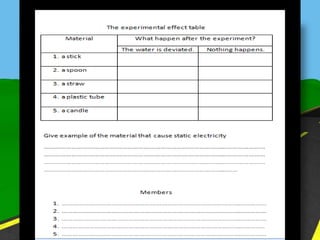
  vetell which materials
  To
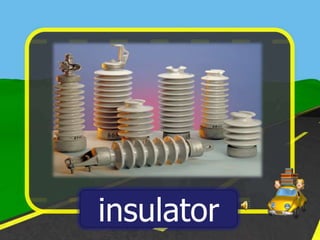
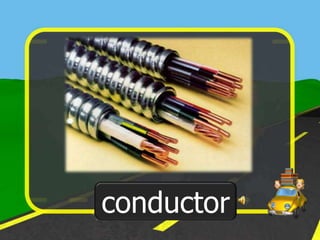
   are conductor and also
   which materials are
   insulators
   To exemplify the
   materials that cause
   static electricity
vocabulary
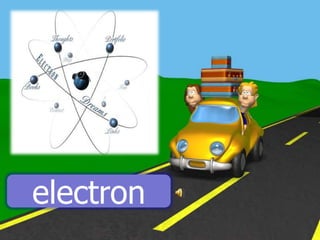
electron
insulator
conductor
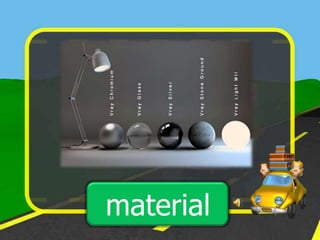
material
ELECTRICAL
CHARGES

Protons, neutrons and
electrons are very
different from each
other. They have their
own properties, or
characteristics. One of
these properties is
called an electrical
Protons have what we call a
"positive" (+) charge.
Electrons have a "negative"
(-) charge. Neutrons have
no charge, they are neutral.
The charge of one proton is
equal in strength to the
charge of one electron. When
the number of protons in an
atom equals the number of
ELECTRONS
CAN MOVE


 The protons and
 neutrons in the nucleus
 are held together very
 tightly. Normally the
 nucleus does not
 change. But some of
 the outer electrons are
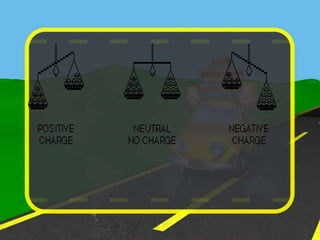
They can move from one
atom to another. An atom
that loses electrons has
more positive charges
(protons) than negative
charges (electrons). It is
positively charged. An atom
that gains electrons has
more negative than positive
Some materials hold their
electrons very tightly.
Electrons do not move
through them very well.
These things are called
insulators. Plastic, cloth,
glass and dry air are good
insulators. Other materials
have some loosely held
How can we move electrons
from one place to another?
One very common way is to
rub two objects together. If
they are made of different
materials, and are both
insulators, electrons may be
transferred (or moved) from
The more rubbing, the
more electrons move, and
the larger the static
charge that builds up.
(Scientists believe that it
is not the rubbing or
friction that causes
electrons to move. It is
Experime
  nt on
  Static
Electricit
    y
Activit
             y1
There will be an
experiment.
You have to follow the steps
below:
    - Make a group of 4 people.
    - The experimental
equipments are given for you.
Equipme
  nts
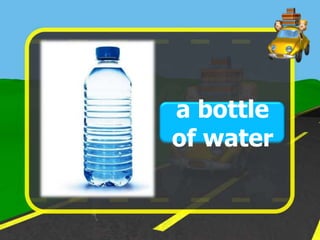
a bottle
of water
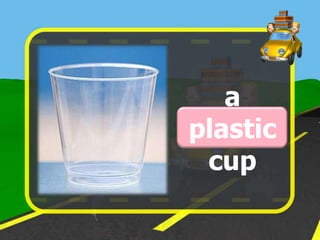
a
plastic
 cup
a
candl
  e
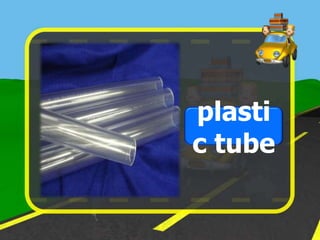
plasti
c tube
a
handker
chief
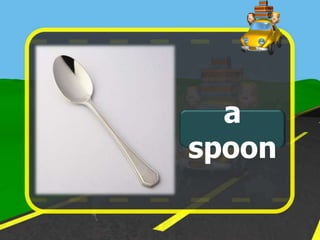
a
spoon
a
straw
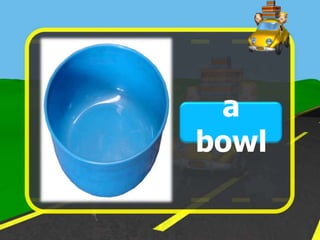
a
bowl
a stick
time to do
    the
experiment
     !
Step
1
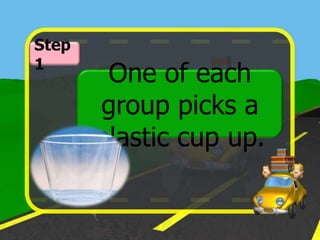
        One of each
       group picks a
       plastic cup up.
Step
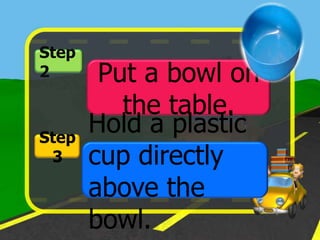
2       Put a bowl on
          the table.
Step
       Hold a plastic
 3     cup directly
       above the
       bowl.
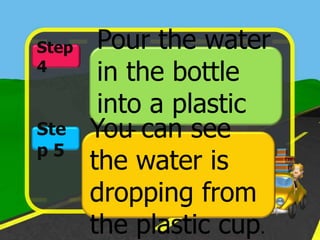
Step    Pour the water
4
        in the bottle
        into a plastic
Ste    You .can see
        cup
p5
       the water is
       dropping from
       the plastic cup.
Another one of
Step
6    each group
     picks a
Ste
     Use a
     handkerchief
p7   handkerchief
     and stick up.
     rub a stick as
     fast long as
     you can.
would like you
Step
8      to close the
       stick to
Step   dropping the
       Everyone in
9      each group
       water
       observes or
       notices what’s
       happening
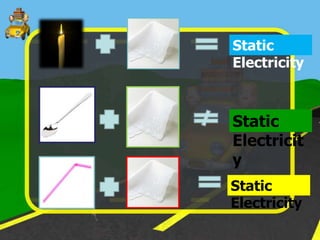
Static
Electricity


Static
Electricit
y
Static
Electricity
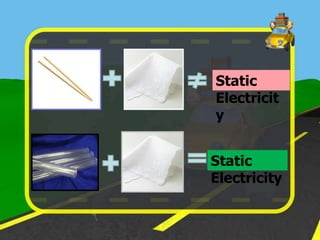
Static
Electricit
y


Static
Electricity

CLIL

  • 1.
    Unit : Electricity Topic : Static Electricity Matthayomsuk
  • 2.
  • 3.
    objecti vetellwhich materials To are conductor and also which materials are insulators To exemplify the materials that cause static electricity
  • 5.
  • 6.
  • 7.
  • 8.
  • 9.
  • 10.
    ELECTRICAL CHARGES Protons, neutrons and electronsare very different from each other. They have their own properties, or characteristics. One of these properties is called an electrical
  • 11.
    Protons have whatwe call a "positive" (+) charge. Electrons have a "negative" (-) charge. Neutrons have no charge, they are neutral. The charge of one proton is equal in strength to the charge of one electron. When the number of protons in an atom equals the number of
  • 12.
    ELECTRONS CAN MOVE Theprotons and neutrons in the nucleus are held together very tightly. Normally the nucleus does not change. But some of the outer electrons are
  • 13.
    They can movefrom one atom to another. An atom that loses electrons has more positive charges (protons) than negative charges (electrons). It is positively charged. An atom that gains electrons has more negative than positive
  • 15.
    Some materials holdtheir electrons very tightly. Electrons do not move through them very well. These things are called insulators. Plastic, cloth, glass and dry air are good insulators. Other materials have some loosely held
  • 16.
    How can wemove electrons from one place to another? One very common way is to rub two objects together. If they are made of different materials, and are both insulators, electrons may be transferred (or moved) from
  • 17.
    The more rubbing,the more electrons move, and the larger the static charge that builds up. (Scientists believe that it is not the rubbing or friction that causes electrons to move. It is
  • 18.
    Experime nton Static Electricit y
  • 19.
    Activit y1 There will be an experiment. You have to follow the steps below: - Make a group of 4 people. - The experimental equipments are given for you.
  • 20.
  • 21.
  • 22.
  • 23.
  • 24.
  • 25.
  • 26.
  • 27.
  • 28.
  • 29.
  • 30.
    time to do the experiment !
  • 31.
    Step 1 One of each group picks a plastic cup up.
  • 32.
    Step 2 Put a bowl on the table. Step Hold a plastic 3 cup directly above the bowl.
  • 33.
    Step Pour the water 4 in the bottle into a plastic Ste You .can see cup p5 the water is dropping from the plastic cup.
  • 34.
    Another one of Step 6 each group picks a Ste Use a handkerchief p7 handkerchief and stick up. rub a stick as fast long as you can.
  • 35.
    would like you Step 8 to close the stick to Step dropping the Everyone in 9 each group water observes or notices what’s happening
  • 37.
  • 38.