Electrical Charges
Electricity – describes all the
phenomena caused by positive and
negative charges.
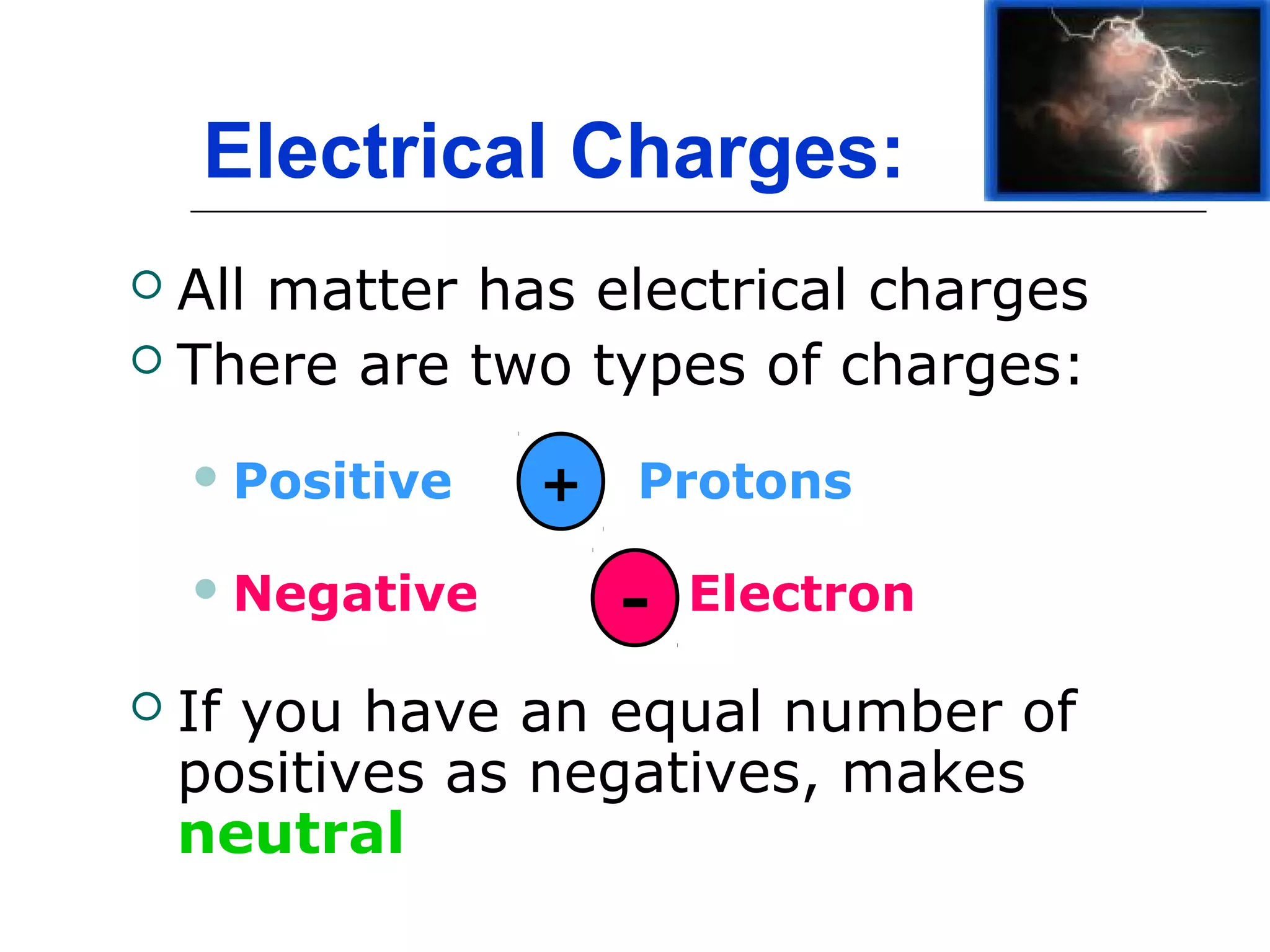
 All matter has electrical charges
 There are two types of charges:
Positive Protons
Negative Electron
 If you have an equal number of
positives as negatives, makes
neutral
Electrical Charges:
+
-
Electrical Charges:
 All objects begin neutral & can become
positively or negatively charged
 A negatively charged object contains
more Electrons than Protons
 A positively charged body contains more
Protons than Electrons
Electrical Charge (Q)
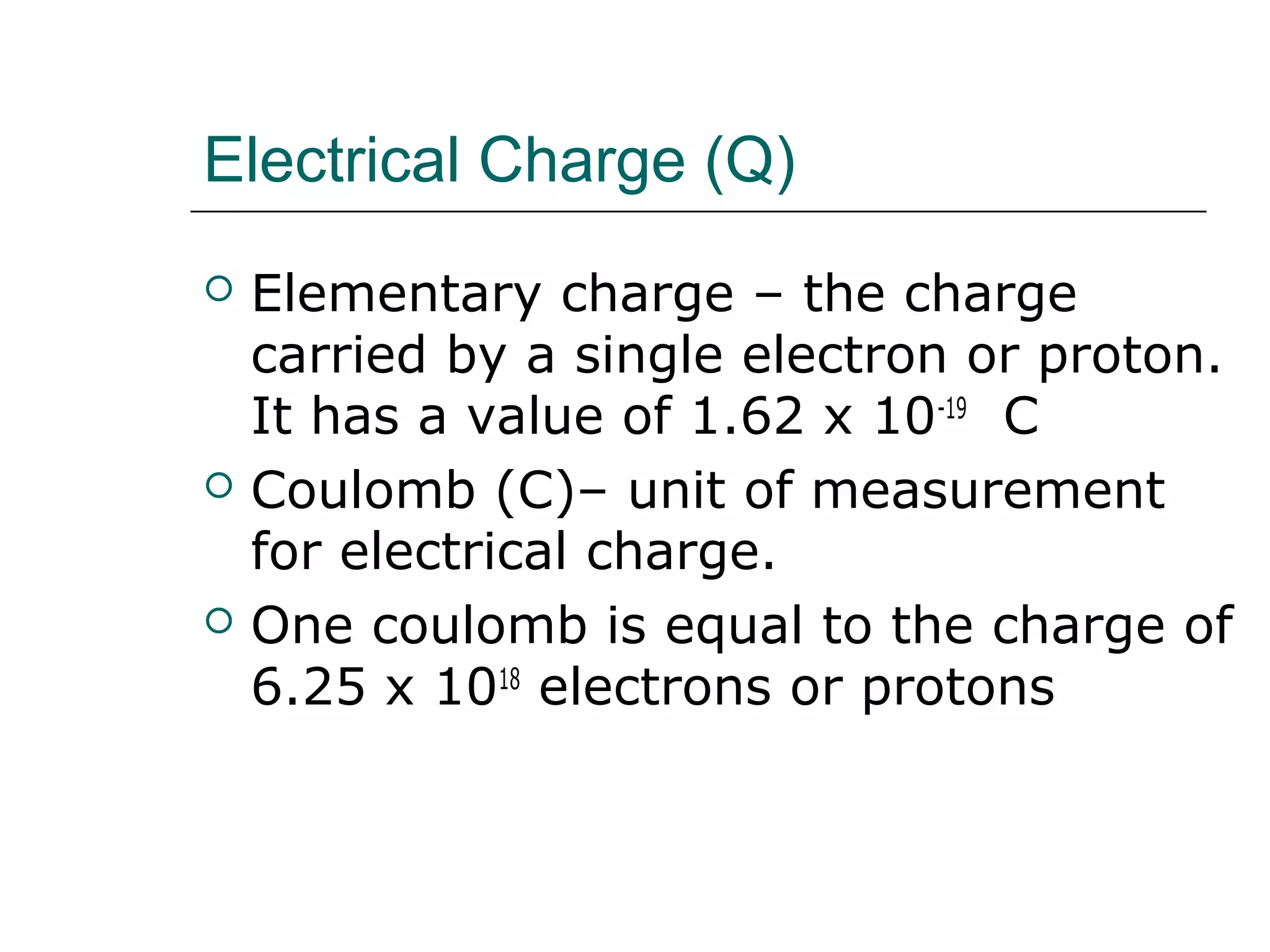
 Elementary charge – the charge
carried by a single electron or proton.
It has a value of 1.62 x 10⁻¹⁹
C
 Coulomb (C)– unit of measurement
for electrical charge.
 One coulomb is equal to the charge of
6.25 x 10¹⁸
electrons or protons
Current Intensity (I)
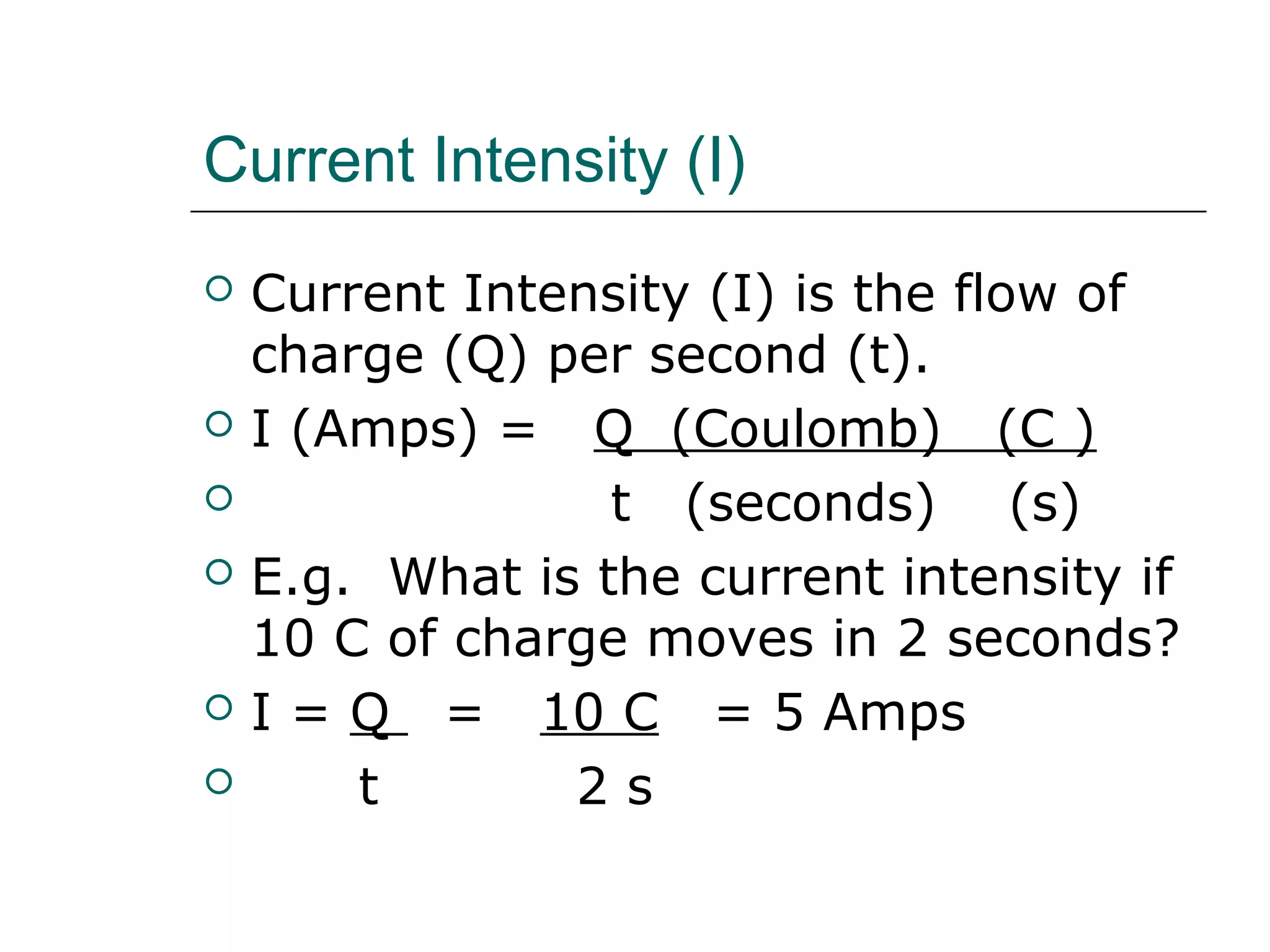
 Current Intensity (I) is the flow of
charge (Q) per second (t).
 I (Amps) = Q (Coulomb) (C )
 t (seconds) (s)
 E.g. What is the current intensity if
10 C of charge moves in 2 seconds?
 I = Q = 10 C = 5 Amps
 t 2 s
 There are 2 forces between charged
objects:
Attraction Repulsion
 Opposite charges
 “Opposites Attract”
 Same charges
 “Like repel”
Electrical Forces
 Electrical Force – force at work in
attraction or repulsion
 Law of conservation of charge –
electrical charges can neither be
created nor destroyed only
transferred from one body to
another.
Sphere A is negatively charged.
A
When placed beside sphere B, they attract.
What is the charge on B?
-
BA
+
Opposites
Attract!
POSITIVE
Three charged spheres are suspended
next to each other.
A B B C
If sphere A is negatively charged,
what will happen when sphere A & C are
suspended beside each other?
A C
Attract
Four charged spheres are suspended next
to each other.
A B B C C D
What will happen if A & D were suspended
next to each other?
+ + + - - +
Repel
You have three charged
objects – A, B & C in a lab.
You record the following
results:
Test Observation
Bring “A” near “B” They repel
Bring “A” near “C” They attract
What would happen if “B” & “C”
were brought together?
They would attract!!!
+ +
+ -
+ -
Electrostatic:
 Static electricity describes all the
phenomena related to electrical charges at
rest. (read pg 145)
 Friction
 Conduction
 Induction
Charging by Friction
 When two items are rubbed together, 1
item takes the electrons and the other
item loses the electrons, resulting in 2
different charges on the items! (p.146)
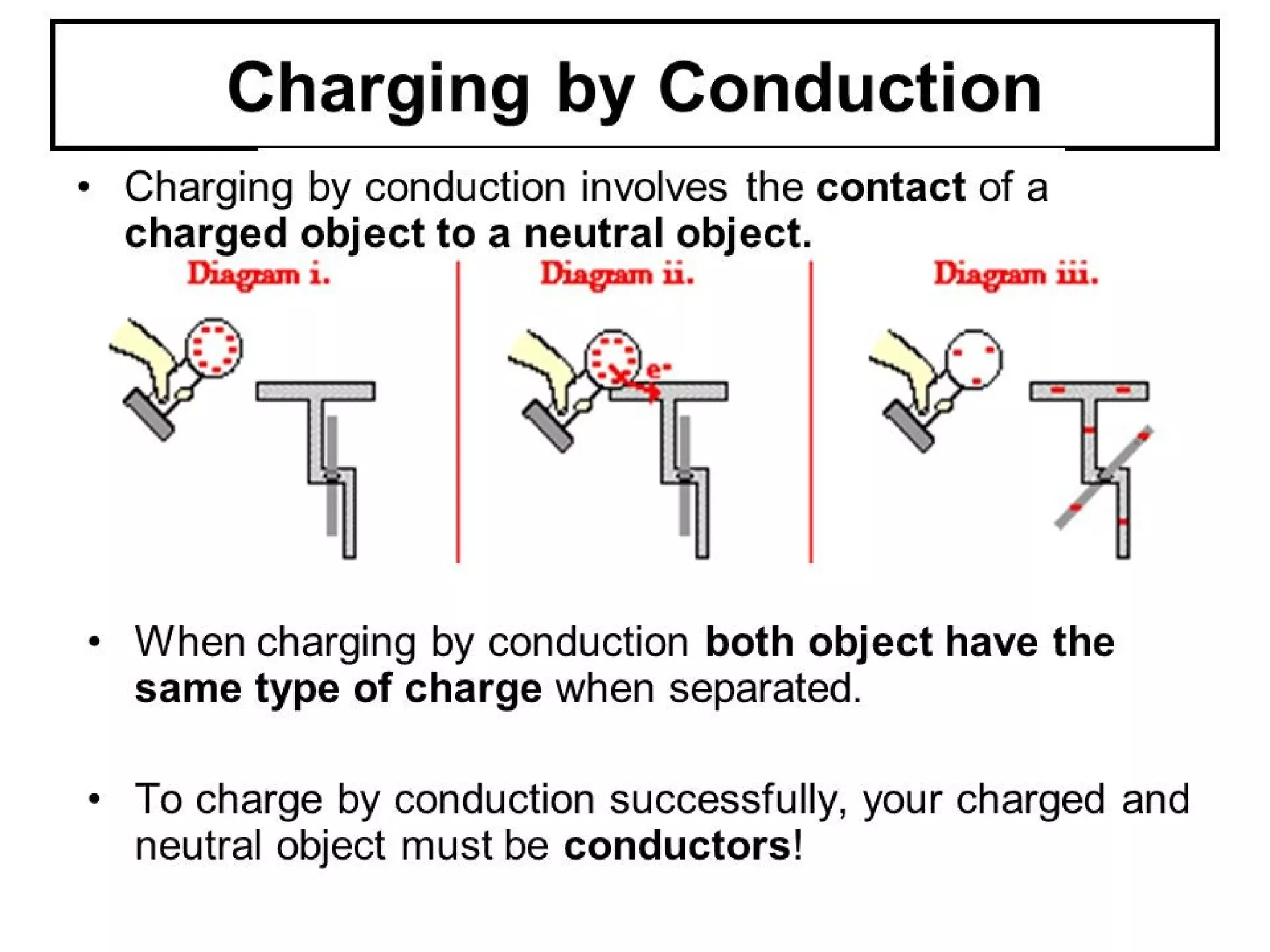
Charging by Conduction
Charging by Induction
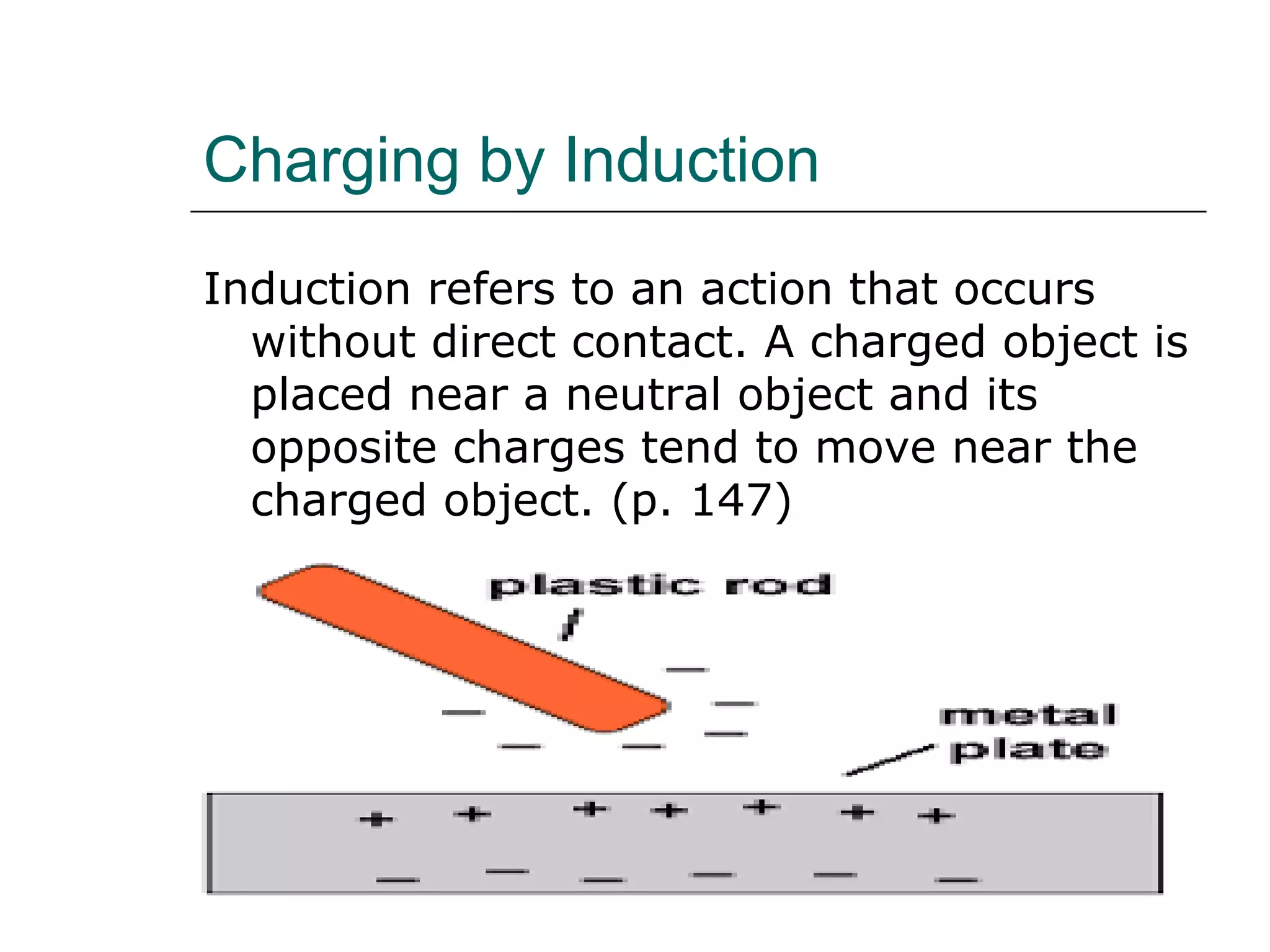
Induction refers to an action that occurs
without direct contact. A charged object is
placed near a neutral object and its
opposite charges tend to move near the
charged object. (p. 147)
 Triboelectric series is a list that ranks
objects’ ability to take negative
charges
Triboelectric Series:
Rubber
Ebonite
Polyethylene
Cotton
Silk
Wool
Glass
Acetate
Fur / Hair
Items above
take negatives
Items below
lose negatives
Only negative charges move!
Positive charges NEVER move!!
You rub your hair with a balloon. Explain
using words & pictures, why your hair
“sticks up”.
1st
Hair & balloon are
both neutral
2nd
Rubber balloon takes
negative charges from the
hair. So, balloon becomes
negatively charged & hair
becomes positively charged
3rd
Since hair is positive &
like charges repel,
hair sticks up!!!
+
+
++
+
_ _
_
_
_
Your cat rubs against a rubber balloon.
What will be the charge on the balloon?
Your cat’s fur?
Rubber
Ebonite
Polyethylene
Cotton
Silk
Wool
Glass
Acetate
Fur / Hair
Rubber
Fur / Hair
Items at top
take negatives
Negatives
Rubber
balloon
becomes
negative
Cat’s fur
becomes
positive
In a lab, you take a piece of neutral wool
& neutral polyethylene & rub them
together. What will be their charges?
Rubber
Ebonite
Polyethylene
Cotton
Silk
Wool
Glass
Acetate
Fur / Hair
Wool
Polyethylene
Items at top
take negatives
Negatives
Polyethylene
balloon
becomes
negative
Wool
becomes
positive
In a lab, you rub a piece of
cotton & ebonite together.
Then you rub a piece of silk
& wool together.
Rubber
Ebonite
Polyethylene
Cotton
Silk
Wool
Glass
Acetate
Fur / Hair
Cotton is +
Silk is -
They
would
ATTRACT
You then bring the charged piece of
cotton & the charged piece of silk
together. What will happen?
+
-
-
+
 Two types of charges – positive (+) &
negative (-)
 “Opposites Attract”
 “Like Repel”
 Items at the top of the triboelectric
series list take negative charges
 Only negative charges move
Activities
 Electric Charges Worksheet
References
 Student Study Guide – Physical
Science 416/436 - MEQ
 Science Quest – Grenier, Daigle,
Rheaume – 1998, Cheneliere
 Google Images
 Animation Factory

Electricity 1

  • 1.
    Electrical Charges Electricity –describes all the phenomena caused by positive and negative charges.
  • 2.
     All matterhas electrical charges  There are two types of charges: Positive Protons Negative Electron  If you have an equal number of positives as negatives, makes neutral Electrical Charges: + -
  • 3.
    Electrical Charges:  Allobjects begin neutral & can become positively or negatively charged  A negatively charged object contains more Electrons than Protons  A positively charged body contains more Protons than Electrons
  • 4.
    Electrical Charge (Q) Elementary charge – the charge carried by a single electron or proton. It has a value of 1.62 x 10⁻¹⁹ C  Coulomb (C)– unit of measurement for electrical charge.  One coulomb is equal to the charge of 6.25 x 10¹⁸ electrons or protons
  • 5.
    Current Intensity (I) Current Intensity (I) is the flow of charge (Q) per second (t).  I (Amps) = Q (Coulomb) (C )  t (seconds) (s)  E.g. What is the current intensity if 10 C of charge moves in 2 seconds?  I = Q = 10 C = 5 Amps  t 2 s
  • 6.
     There are2 forces between charged objects: Attraction Repulsion  Opposite charges  “Opposites Attract”  Same charges  “Like repel”
  • 7.
    Electrical Forces  ElectricalForce – force at work in attraction or repulsion  Law of conservation of charge – electrical charges can neither be created nor destroyed only transferred from one body to another.
  • 8.
    Sphere A isnegatively charged. A When placed beside sphere B, they attract. What is the charge on B? - BA + Opposites Attract! POSITIVE
  • 9.
    Three charged spheresare suspended next to each other. A B B C If sphere A is negatively charged, what will happen when sphere A & C are suspended beside each other? A C Attract
  • 10.
    Four charged spheresare suspended next to each other. A B B C C D What will happen if A & D were suspended next to each other? + + + - - + Repel
  • 11.
    You have threecharged objects – A, B & C in a lab. You record the following results: Test Observation Bring “A” near “B” They repel Bring “A” near “C” They attract What would happen if “B” & “C” were brought together? They would attract!!! + + + - + -
  • 12.
    Electrostatic:  Static electricitydescribes all the phenomena related to electrical charges at rest. (read pg 145)  Friction  Conduction  Induction
  • 13.
    Charging by Friction When two items are rubbed together, 1 item takes the electrons and the other item loses the electrons, resulting in 2 different charges on the items! (p.146)
  • 14.
  • 15.
    Charging by Induction Inductionrefers to an action that occurs without direct contact. A charged object is placed near a neutral object and its opposite charges tend to move near the charged object. (p. 147)
  • 16.
     Triboelectric seriesis a list that ranks objects’ ability to take negative charges Triboelectric Series: Rubber Ebonite Polyethylene Cotton Silk Wool Glass Acetate Fur / Hair Items above take negatives Items below lose negatives Only negative charges move! Positive charges NEVER move!!
  • 17.
    You rub yourhair with a balloon. Explain using words & pictures, why your hair “sticks up”. 1st Hair & balloon are both neutral 2nd Rubber balloon takes negative charges from the hair. So, balloon becomes negatively charged & hair becomes positively charged 3rd Since hair is positive & like charges repel, hair sticks up!!! + + ++ + _ _ _ _ _
  • 18.
    Your cat rubsagainst a rubber balloon. What will be the charge on the balloon? Your cat’s fur? Rubber Ebonite Polyethylene Cotton Silk Wool Glass Acetate Fur / Hair Rubber Fur / Hair Items at top take negatives Negatives Rubber balloon becomes negative Cat’s fur becomes positive
  • 19.
    In a lab,you take a piece of neutral wool & neutral polyethylene & rub them together. What will be their charges? Rubber Ebonite Polyethylene Cotton Silk Wool Glass Acetate Fur / Hair Wool Polyethylene Items at top take negatives Negatives Polyethylene balloon becomes negative Wool becomes positive
  • 20.
    In a lab,you rub a piece of cotton & ebonite together. Then you rub a piece of silk & wool together. Rubber Ebonite Polyethylene Cotton Silk Wool Glass Acetate Fur / Hair Cotton is + Silk is - They would ATTRACT You then bring the charged piece of cotton & the charged piece of silk together. What will happen? + - - +
  • 21.
     Two typesof charges – positive (+) & negative (-)  “Opposites Attract”  “Like Repel”  Items at the top of the triboelectric series list take negative charges  Only negative charges move
  • 22.
  • 23.
    References  Student StudyGuide – Physical Science 416/436 - MEQ  Science Quest – Grenier, Daigle, Rheaume – 1998, Cheneliere  Google Images  Animation Factory