Friction and the Electrostatic Series

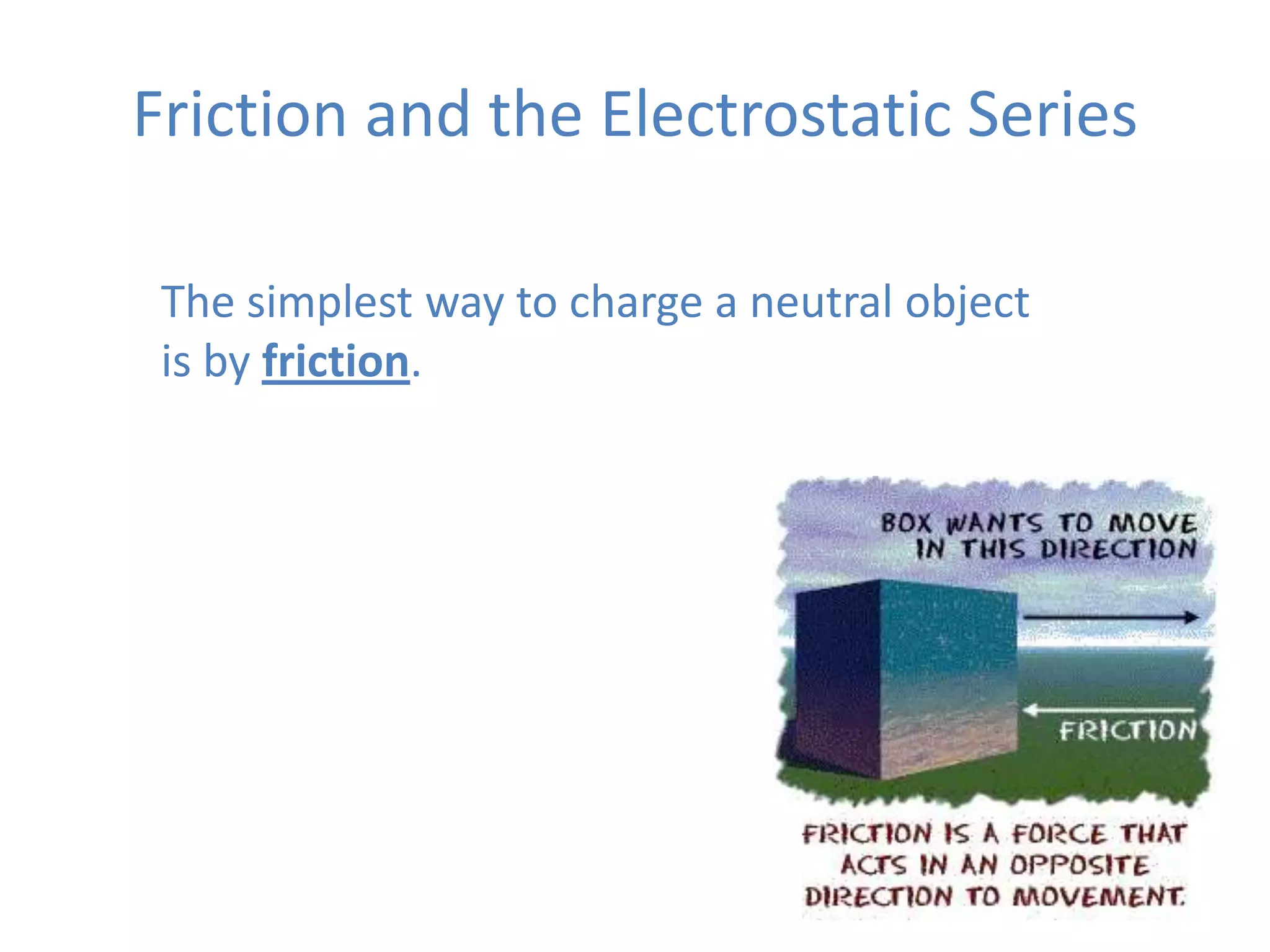
 The simplest way to charge a neutral object
 is by friction.


                                               1
Friction and the Electrostatic Series


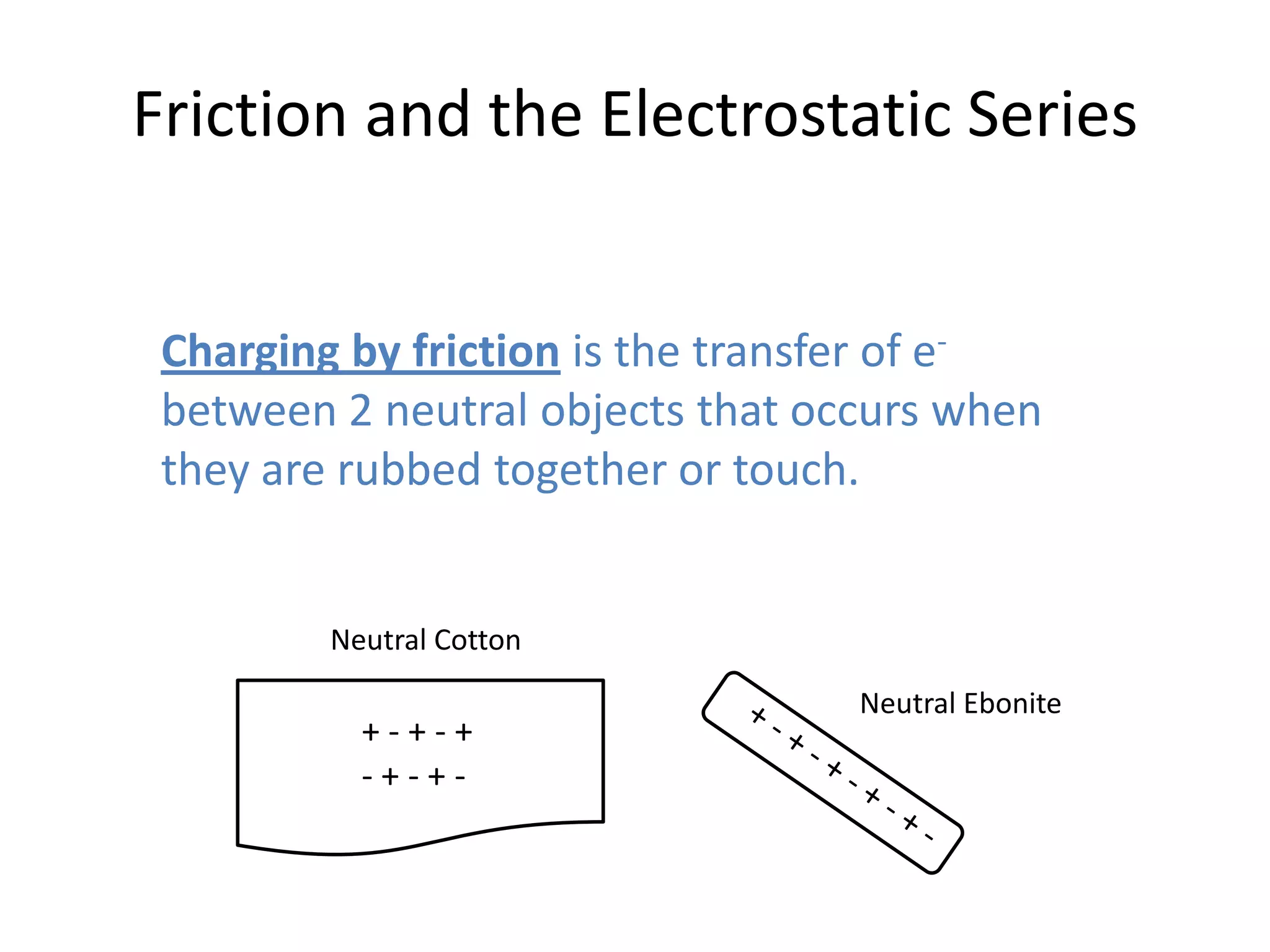
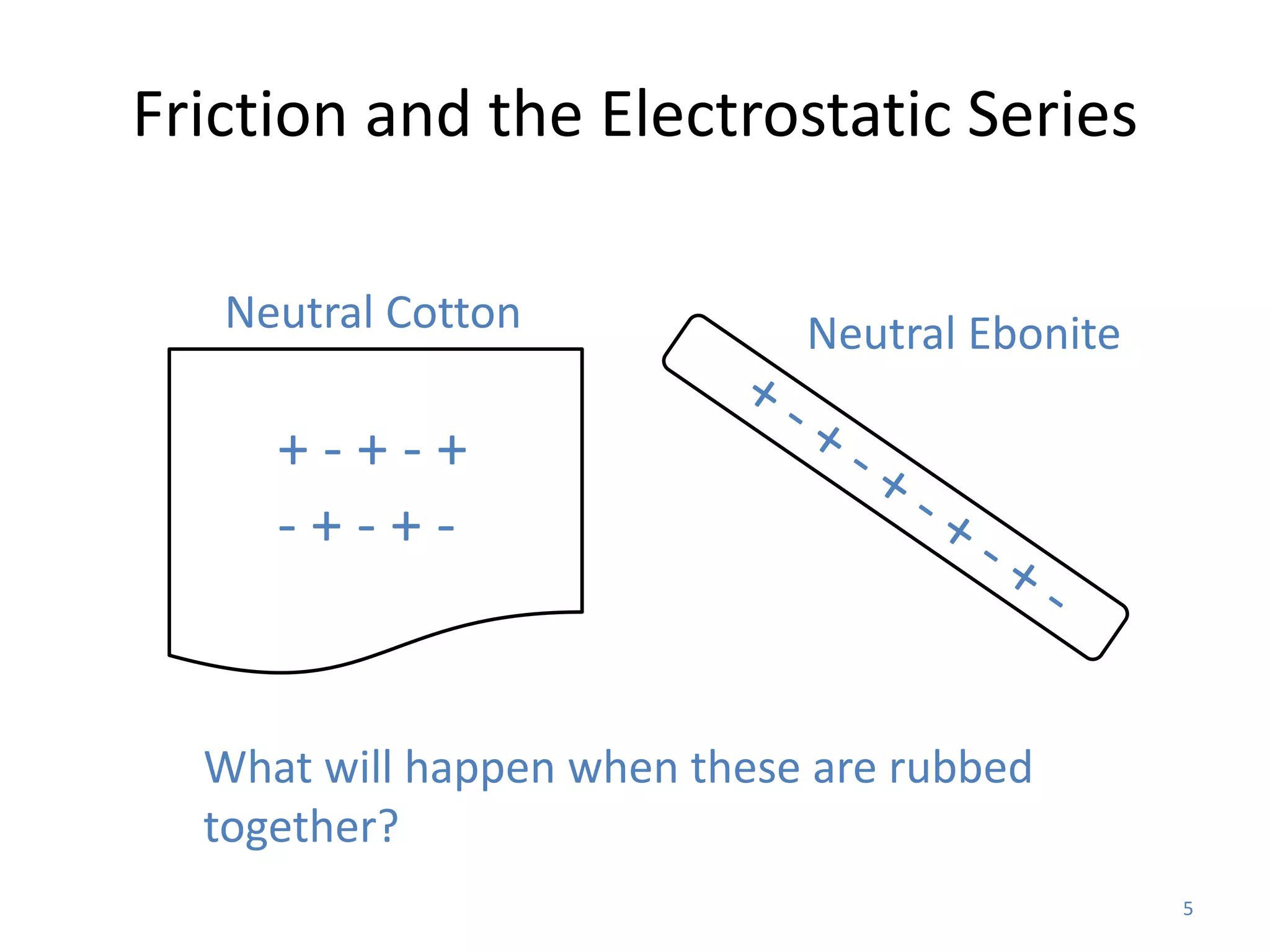
 Charging by friction is the transfer of e-
 between 2 neutral objects that occurs when
 they are rubbed together or touch.


         Neutral Cotton

                                  Neutral Ebonite
           +-+-+
           -+-+-
Friction and the Electrostatic Series


 When rubbed together, different materials
 lose or gain e- more easily than others.


                                             3
Friction and the Electrostatic Series
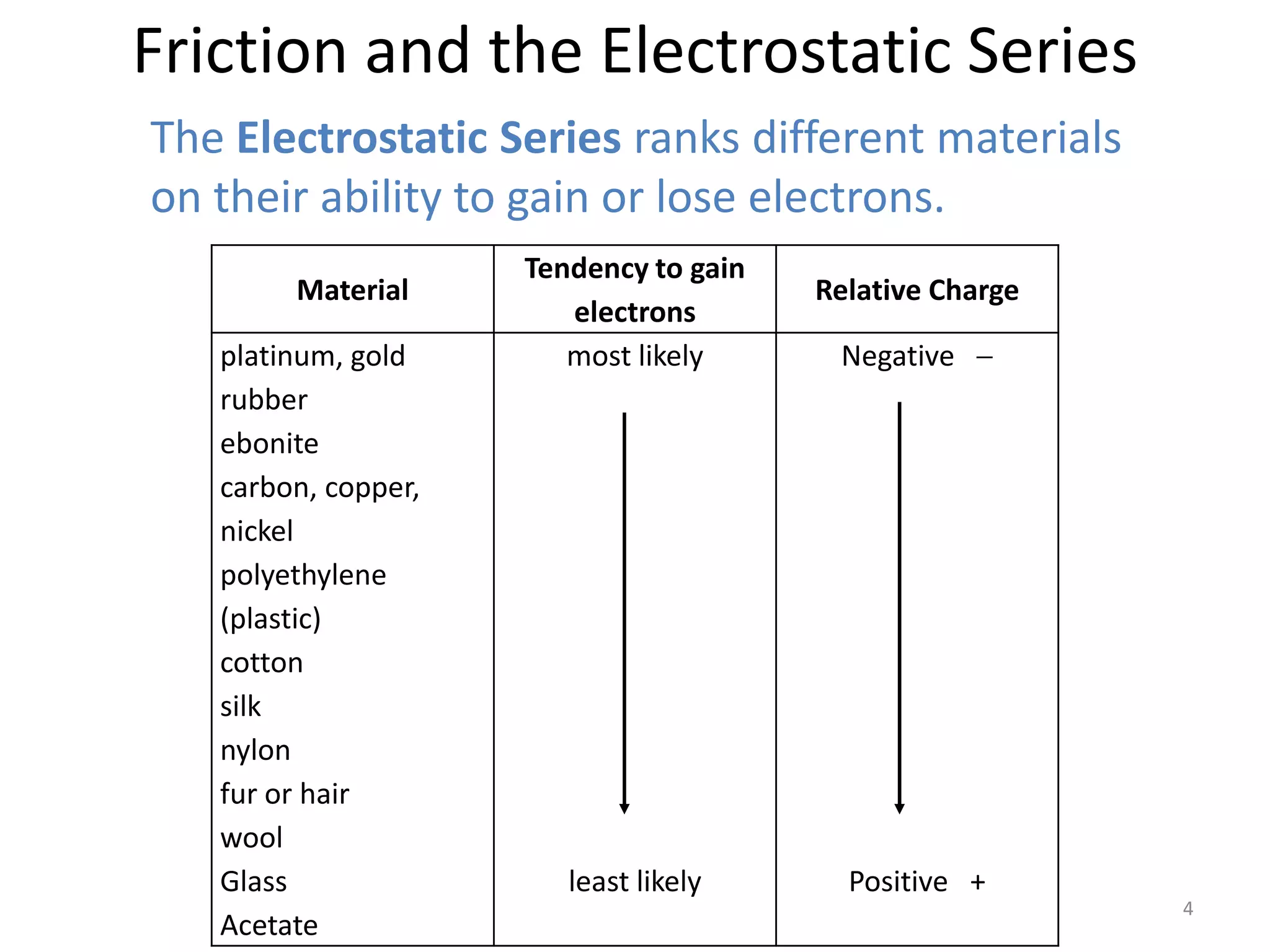
The Electrostatic Series ranks different materials
on their ability to gain or lose electrons.
                     Tendency to gain
        Material                        Relative Charge
                        electrons
   platinum, gold       most likely      Negative
   rubber
   ebonite
   carbon, copper,
   nickel
   polyethylene
   (plastic)
   cotton
   silk
   nylon
   fur or hair
   wool
   Glass                least likely      Positive +
                                                          4
   Acetate
Friction and the Electrostatic Series

   Neutral Cotton            Neutral Ebonite

     +-+-+
     -+-+-


  What will happen when these are rubbed
  together?
                                               5
Friction and the Electrostatic Series

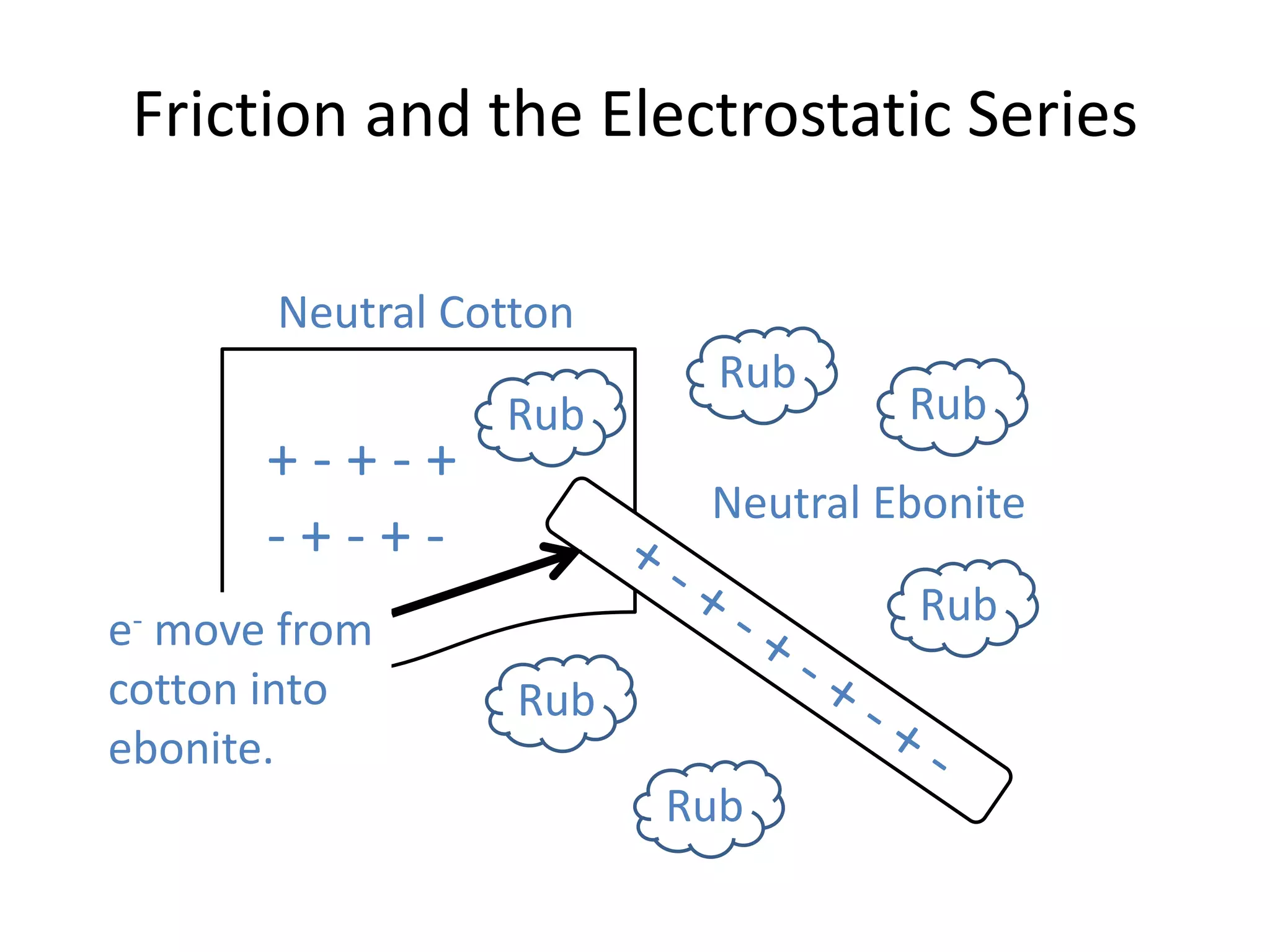
       Neutral Cotton
                          Rub
                 Rub              Rub
      +-+-+
                         Neutral Ebonite
      -+-+-
                                  Rub
e-move from
cotton into       Rub
ebonite.
                        Rub
Friction and the Electrostatic Series
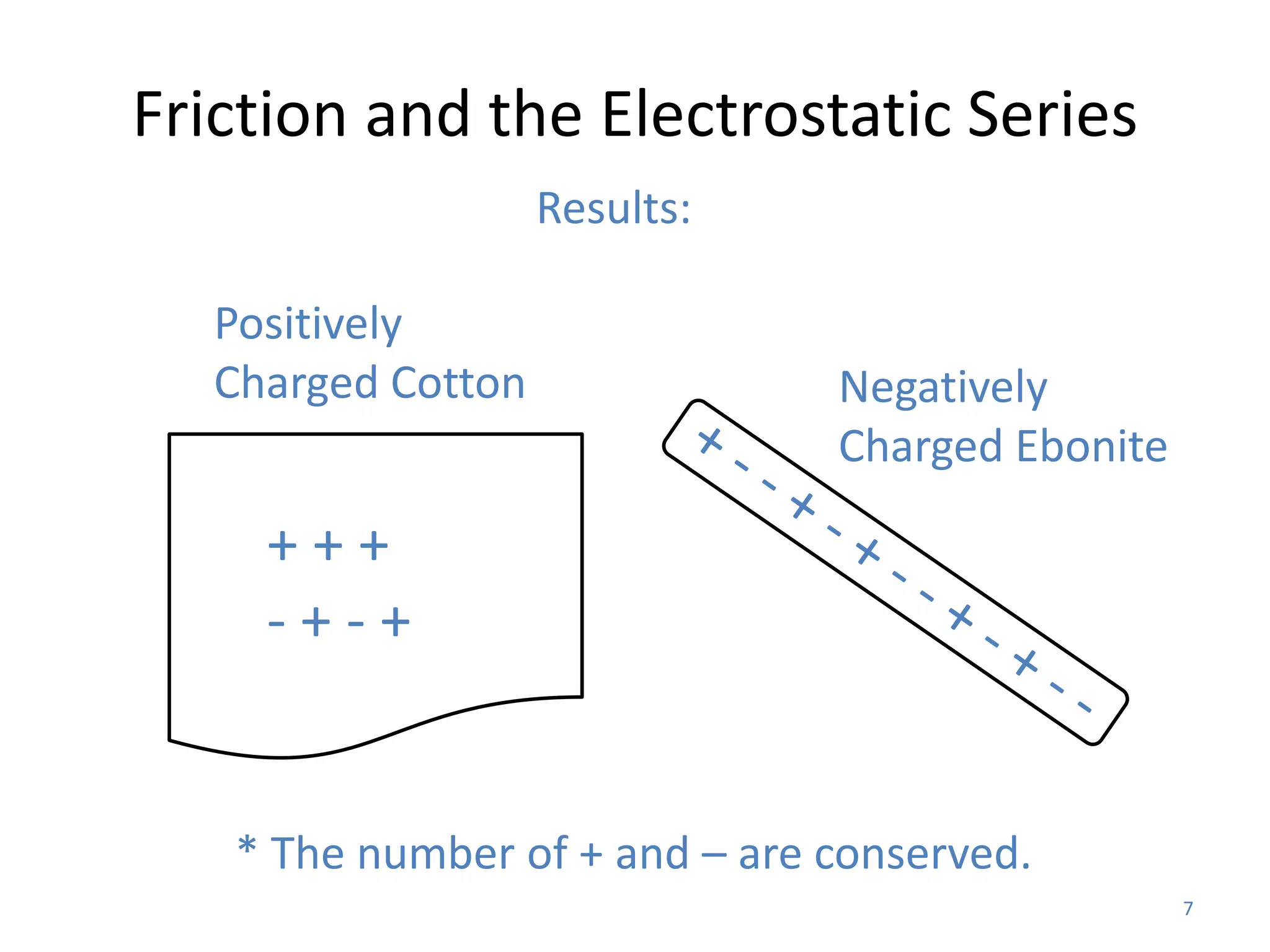
                    Results:

   Positively
   Charged Cotton              Negatively
                               Charged Ebonite

     +++
     -+-+


   * The number of + and – are conserved.
                                                 7
Friction and the Electrostatic Series


Note: the + and signs do not represent the
actual number of positive and negative charges
(protons or electrons).

They represent a collection of charges (protons or
electrons).


                                                     8

09 elec 02

  • 1.
    Friction and theElectrostatic Series The simplest way to charge a neutral object is by friction. 1
  • 2.
    Friction and theElectrostatic Series Charging by friction is the transfer of e- between 2 neutral objects that occurs when they are rubbed together or touch. Neutral Cotton Neutral Ebonite +-+-+ -+-+-
  • 3.
    Friction and theElectrostatic Series When rubbed together, different materials lose or gain e- more easily than others. 3
  • 4.
    Friction and theElectrostatic Series The Electrostatic Series ranks different materials on their ability to gain or lose electrons. Tendency to gain Material Relative Charge electrons platinum, gold most likely Negative rubber ebonite carbon, copper, nickel polyethylene (plastic) cotton silk nylon fur or hair wool Glass least likely Positive + 4 Acetate
  • 5.
    Friction and theElectrostatic Series Neutral Cotton Neutral Ebonite +-+-+ -+-+- What will happen when these are rubbed together? 5
  • 6.
    Friction and theElectrostatic Series Neutral Cotton Rub Rub Rub +-+-+ Neutral Ebonite -+-+- Rub e-move from cotton into Rub ebonite. Rub
  • 7.
    Friction and theElectrostatic Series Results: Positively Charged Cotton Negatively Charged Ebonite +++ -+-+ * The number of + and – are conserved. 7
  • 8.
    Friction and theElectrostatic Series Note: the + and signs do not represent the actual number of positive and negative charges (protons or electrons). They represent a collection of charges (protons or electrons). 8