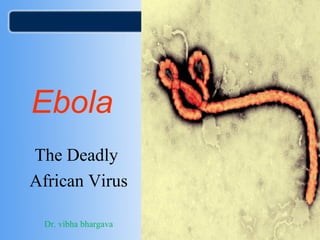
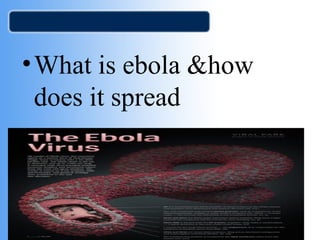
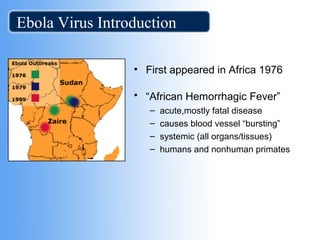
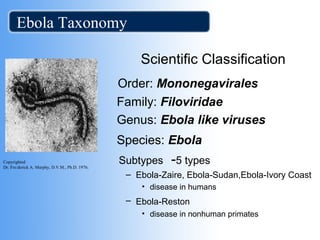
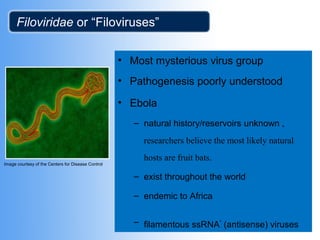
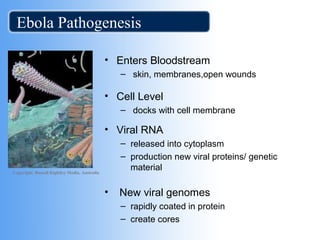
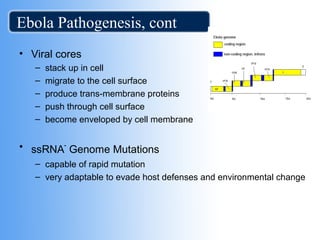
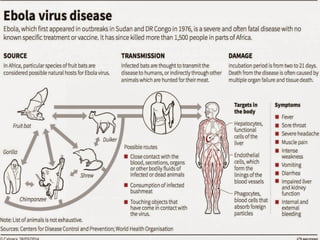
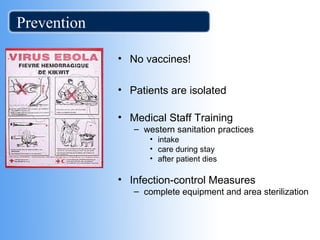
The document discusses Ebola virus disease (EVD), also known as Ebola hemorrhagic fever. It first appeared in Africa in 1976 and causes severe bleeding and organ failure in humans and nonhuman primates. The virus spreads through direct contact with body fluids of infected individuals or contaminated environments. While there is no approved vaccine or treatment, prevention focuses on isolation of patients, medical staff training in infection control, safe burials, and avoiding contact with high-risk animals like bats that may carry the virus. The document provides details on the virus's pathogenesis, symptoms, subtypes, transmission methods, and the challenges it poses given its rapid multiplication and ability to evade immune responses.