Dysrrhythmia

    Dr. Ahmed Taha Hussein
Assistant lecturer cardiology and
        electrophysiology
       Faculty of medicine
        Zagazig university
                                    2
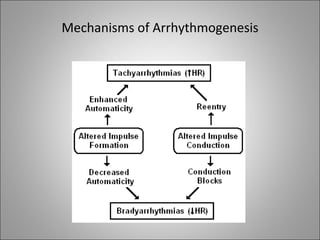
Mechanisms of Arrhythmogenesis
BRADYARRYTHMIA

The heart runs down !!!!
Classification
โ€ข   Sinus Bradycardia
โ€ข   Junctional Rhythm
โ€ข   Sino Atrial Block
โ€ข   Atrioventricular block
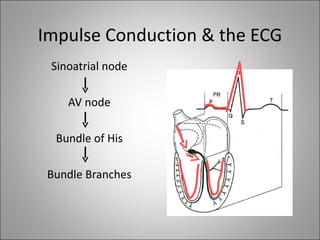
Impulse Conduction & the ECG
 Sinoatrial node

    AV node

  Bundle of His

 Bundle Branches
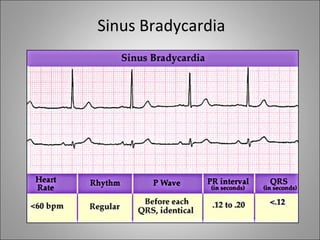
Sinus Bradycardia
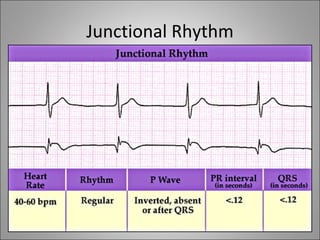
Junctional Rhythm
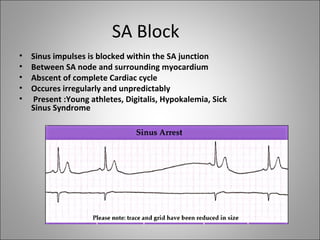
SA Block
โ€ข   Sinus impulses is blocked within the SA junction
โ€ข   Between SA node and surrounding myocardium
โ€ข   Abscent of complete Cardiac cycle
โ€ข   Occures irregularly and unpredictably
โ€ข   Present :Young athletes, Digitalis, Hypokalemia, Sick
    Sinus Syndrome
AV Block
โ€ข First Degree AV Block
โ€ข Second Degree AV Block
โ€ข Third Degree AV Block
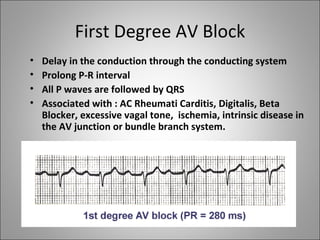
First Degree AV Block
โ€ข   Delay in the conduction through the conducting system
โ€ข   Prolong P-R interval
โ€ข   All P waves are followed by QRS
โ€ข   Associated with : AC Rheumati Carditis, Digitalis, Beta
    Blocker, excessive vagal tone, ischemia, intrinsic disease in
    the AV junction or bundle branch system.
Second Degree AV Block
โ€ข   Intermittent failure of AV conduction
โ€ข   Impulse blocked by AV node
โ€ข   Types:
โ€ข   Mobitz type 1 (Wenckebach Phenomenon)
โ€ข   Mobitz type 2
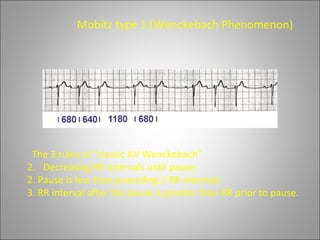
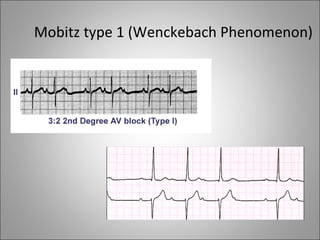
Mobitz type 1 (Wenckebach Phenomenon)


 The 3 rules of "classic AV Wenckebach"
2. Decreasing RR intervals until pause;
2. Pause is less than preceding 2 RR intervals
3. RR interval after the pause is greater than RR prior to pause.
Mobitz type 1 (Wenckebach Phenomenon)
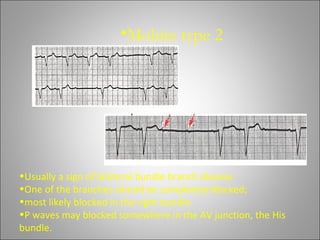
โ€ขMobitz type 2


โ€ขUsually a sign of bilateral bundle branch disease.
โ€ขOne of the branches should be completely blocked;
โ€ขmost likely blocked in the right bundle
โ€ขP waves may blocked somewhere in the AV junction, the His
bundle.
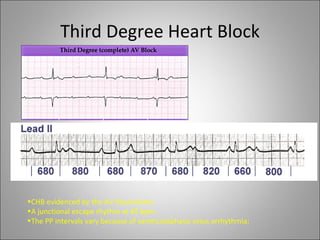
Third Degree Heart Block


โ€ขCHB evidenced by the AV dissociation
โ€ขA junctional escape rhythm at 45 bpm.
โ€ขThe PP intervals vary because of ventriculophasic sinus arrhythmia;
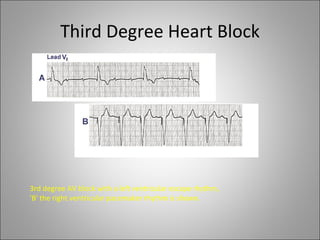
Third Degree Heart Block


3rd degree AV block with a left ventricular escape rhythm,
'B' the right ventricular pacemaker rhythm is shown.
Tachyarrythmia

also known as things that go
     crump in the night!)
Ventricular Arrhythmias
โ€ข Ventricular Tachycardia


โ€ข Ventricular Fibrillation
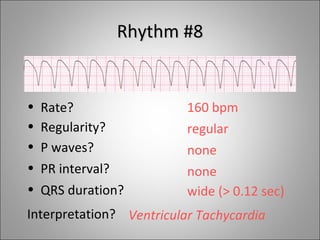
Rhythm #8


โ€ข   Rate?                 160 bpm
โ€ข   Regularity?           regular
โ€ข   P waves?              none
โ€ข   PR interval?          none
โ€ข QRS duration?           wide (> 0.12 sec)
Interpretation? Ventricular Tachycardia
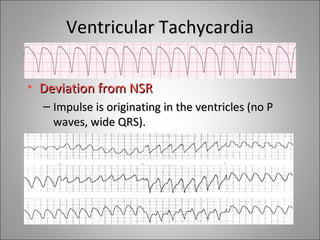
Ventricular Tachycardia

โ€ข Deviation from NSR
  โ€“ Impulse is originating in the ventricles (no P
    waves, wide QRS).
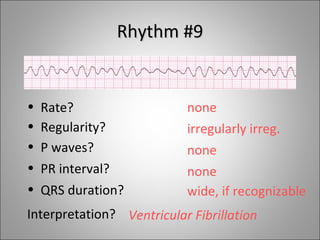
Rhythm #9


โ€ข   Rate?                  none
โ€ข   Regularity?            irregularly irreg.
โ€ข   P waves?               none
โ€ข   PR interval?           none
โ€ข QRS duration?            wide, if recognizable
Interpretation? Ventricular Fibrillation
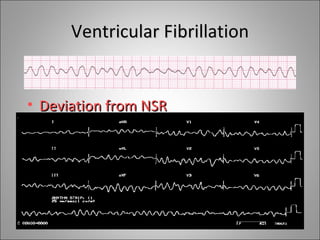
Ventricular Fibrillation


โ€ข Deviation from NSR
  โ€“ Completely abnormal.
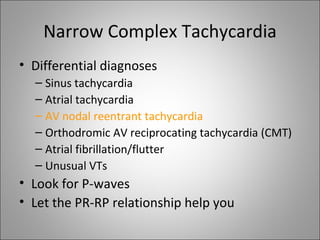
Narrow Complex Tachycardia
โ€ข Differential diagnoses
  โ€“ Sinus tachycardia
  โ€“ Atrial tachycardia
  โ€“ AV nodal reentrant tachycardia
  โ€“ Orthodromic AV reciprocating tachycardia (CMT)
  โ€“ Atrial fibrillation/flutter
  โ€“ Unusual VTs
โ€ข Look for P-waves
โ€ข Let the PR-RP relationship help you
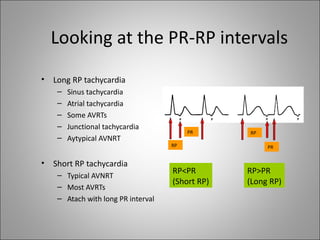
Looking at the PR-RP intervals
โ€ข   Long RP tachycardia
     โ€“   Sinus tachycardia
     โ€“   Atrial tachycardia
     โ€“   Some AVRTs
     โ€“   Junctional tachycardia
                                          PR      RP
     โ€“   Aytypical AVNRT
                                     RP                PR


โ€ข   Short RP tachycardia
     โ€“ Typical AVNRT
                                     RP<PR        RP>PR
                                     (Short RP)   (Long RP)
     โ€“ Most AVRTs
     โ€“ Atach with long PR interval
AV Nodal Reentrant Tachycardia
               (AVNRT)
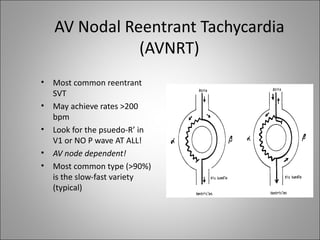
โ€ข   Most common reentrant
    SVT
โ€ข   May achieve rates >200
    bpm
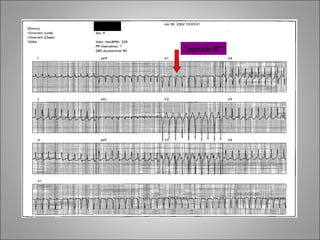
โ€ข   Look for the psuedo-Rโ€™ in
    V1 or NO P wave AT ALL!
โ€ข   AV node dependent!
โ€ข   Most common type (>90%)
    is the slow-fast variety
    (typical)
โ€œpseudo-Rโ€™โ€
Atrial tachycardia
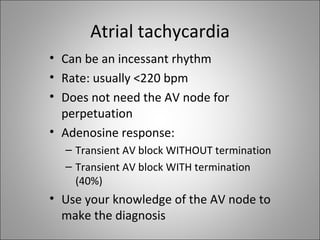
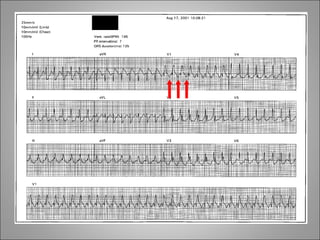
โ€ข Can be an incessant rhythm
โ€ข Rate: usually <220 bpm
โ€ข Does not need the AV node for
  perpetuation
โ€ข Adenosine response:
  โ€“ Transient AV block WITHOUT termination
  โ€“ Transient AV block WITH termination
    (40%)
โ€ข Use your knowledge of the AV node to
  make the diagnosis
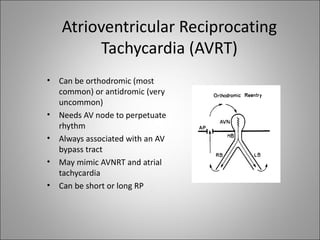
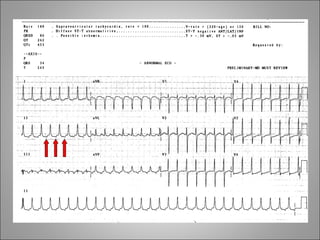
Atrioventricular Reciprocating
         Tachycardia (AVRT)
โ€ข   Can be orthodromic (most
    common) or antidromic (very
    uncommon)
โ€ข   Needs AV node to perpetuate
    rhythm
โ€ข   Always associated with an AV
    bypass tract
โ€ข   May mimic AVNRT and atrial
    tachycardia
โ€ข   Can be short or long RP
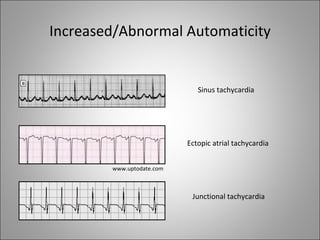
Increased/Abnormal Automaticity


                              Sinus tachycardia


                           Ectopic atrial tachycardia


        www.uptodate.com


                            Junctional tachycardia

Dysrrhythmia

  • 2.
    Dysrrhythmia Dr. Ahmed Taha Hussein Assistant lecturer cardiology and electrophysiology Faculty of medicine Zagazig university 2
  • 3.
  • 4.
  • 5.
    Classification โ€ข Sinus Bradycardia โ€ข Junctional Rhythm โ€ข Sino Atrial Block โ€ข Atrioventricular block
  • 6.
    Impulse Conduction &the ECG Sinoatrial node AV node Bundle of His Bundle Branches
  • 7.
  • 8.
  • 9.
    SA Block โ€ข Sinus impulses is blocked within the SA junction โ€ข Between SA node and surrounding myocardium โ€ข Abscent of complete Cardiac cycle โ€ข Occures irregularly and unpredictably โ€ข Present :Young athletes, Digitalis, Hypokalemia, Sick Sinus Syndrome
  • 10.
    AV Block โ€ข FirstDegree AV Block โ€ข Second Degree AV Block โ€ข Third Degree AV Block
  • 11.
    First Degree AVBlock โ€ข Delay in the conduction through the conducting system โ€ข Prolong P-R interval โ€ข All P waves are followed by QRS โ€ข Associated with : AC Rheumati Carditis, Digitalis, Beta Blocker, excessive vagal tone, ischemia, intrinsic disease in the AV junction or bundle branch system.
  • 12.
    Second Degree AVBlock โ€ข Intermittent failure of AV conduction โ€ข Impulse blocked by AV node โ€ข Types: โ€ข Mobitz type 1 (Wenckebach Phenomenon) โ€ข Mobitz type 2
  • 13.
    Mobitz type 1(Wenckebach Phenomenon) The 3 rules of "classic AV Wenckebach" 2. Decreasing RR intervals until pause; 2. Pause is less than preceding 2 RR intervals 3. RR interval after the pause is greater than RR prior to pause.
  • 14.
    Mobitz type 1(Wenckebach Phenomenon)
  • 15.
    โ€ขMobitz type 2 โ€ขUsuallya sign of bilateral bundle branch disease. โ€ขOne of the branches should be completely blocked; โ€ขmost likely blocked in the right bundle โ€ขP waves may blocked somewhere in the AV junction, the His bundle.
  • 16.
    Third Degree HeartBlock โ€ขCHB evidenced by the AV dissociation โ€ขA junctional escape rhythm at 45 bpm. โ€ขThe PP intervals vary because of ventriculophasic sinus arrhythmia;
  • 17.
    Third Degree HeartBlock 3rd degree AV block with a left ventricular escape rhythm, 'B' the right ventricular pacemaker rhythm is shown.
  • 18.
    Tachyarrythmia also known asthings that go crump in the night!)
  • 19.
    Ventricular Arrhythmias โ€ข VentricularTachycardia โ€ข Ventricular Fibrillation
  • 20.
    Rhythm #8 โ€ข Rate? 160 bpm โ€ข Regularity? regular โ€ข P waves? none โ€ข PR interval? none โ€ข QRS duration? wide (> 0.12 sec) Interpretation? Ventricular Tachycardia
  • 21.
    Ventricular Tachycardia โ€ข Deviationfrom NSR โ€“ Impulse is originating in the ventricles (no P waves, wide QRS).
  • 22.
    Rhythm #9 โ€ข Rate? none โ€ข Regularity? irregularly irreg. โ€ข P waves? none โ€ข PR interval? none โ€ข QRS duration? wide, if recognizable Interpretation? Ventricular Fibrillation
  • 23.
    Ventricular Fibrillation โ€ข Deviationfrom NSR โ€“ Completely abnormal.
  • 24.
    Narrow Complex Tachycardia โ€ขDifferential diagnoses โ€“ Sinus tachycardia โ€“ Atrial tachycardia โ€“ AV nodal reentrant tachycardia โ€“ Orthodromic AV reciprocating tachycardia (CMT) โ€“ Atrial fibrillation/flutter โ€“ Unusual VTs โ€ข Look for P-waves โ€ข Let the PR-RP relationship help you
  • 25.
    Looking at thePR-RP intervals โ€ข Long RP tachycardia โ€“ Sinus tachycardia โ€“ Atrial tachycardia โ€“ Some AVRTs โ€“ Junctional tachycardia PR RP โ€“ Aytypical AVNRT RP PR โ€ข Short RP tachycardia โ€“ Typical AVNRT RP<PR RP>PR (Short RP) (Long RP) โ€“ Most AVRTs โ€“ Atach with long PR interval
  • 26.
    AV Nodal ReentrantTachycardia (AVNRT) โ€ข Most common reentrant SVT โ€ข May achieve rates >200 bpm โ€ข Look for the psuedo-Rโ€™ in V1 or NO P wave AT ALL! โ€ข AV node dependent! โ€ข Most common type (>90%) is the slow-fast variety (typical)
  • 27.
  • 28.
    Atrial tachycardia โ€ข Canbe an incessant rhythm โ€ข Rate: usually <220 bpm โ€ข Does not need the AV node for perpetuation โ€ข Adenosine response: โ€“ Transient AV block WITHOUT termination โ€“ Transient AV block WITH termination (40%) โ€ข Use your knowledge of the AV node to make the diagnosis
  • 30.
    Atrioventricular Reciprocating Tachycardia (AVRT) โ€ข Can be orthodromic (most common) or antidromic (very uncommon) โ€ข Needs AV node to perpetuate rhythm โ€ข Always associated with an AV bypass tract โ€ข May mimic AVNRT and atrial tachycardia โ€ข Can be short or long RP
  • 33.
    Increased/Abnormal Automaticity Sinus tachycardia Ectopic atrial tachycardia www.uptodate.com Junctional tachycardia