AV BLOCK
By Dr Haneef (Medical Resident )
Academic advisor: Assistant professor Behroz Noori
Content
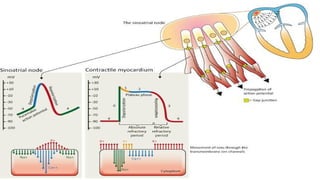
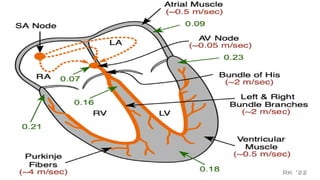
• Normal heart conductive system
• Definition
• Etiology
• Pathophysiology
• Classification
• ECG findings
• Management
• Pacemaker
• BBB
Definition
• Atrioventricular block (AV block) is characterized by an
interrupted or delayed conduction between the atria
and the ventricles.
Etiology of atrioventricular blocks
1:structural causes
a) Ischemic heart disease
a) Acute MI
b) Chronic ischemic cardiomyopathy
b) Congenital heart disease and congenital third-degree AV block
c) Post-cardiac intervention: e.g., surgery(particularly involving valves), ablations, or TAVI
d) Inflammatory/infiltrative cardiomyopathy:
e.g., myocarditis, amyloidosis,sarcoidosis, autoimmune connective tissue
disorders, lymphoma
e) Degenerative: idiopathic fibrosis of the conduction system (Lenègre-Lev syndrome)
causing RBBB and eventually AV block
2:Neurocardiogenic
A. Increased vagal tone: can be physiological or pathological
A. Healthy individuals with high levels of exercise (e.g., in
professional athletes): most often transient 1° AV
block and Mobitz 1
B. Obstructive sleep apnea
C. During vomiting, suctioning, or intubation [7]
3:Toxic/Metabolic
A. Electrolyte disorders: e.g., hyperkalemia
B. Acid-base disorders
C. Cardiotoxic drugs: e.g., beta blockers, calcium channel
blockers, or digoxin(therapeutic doses or overdoses)
D. Other toxicity: e.g., carbon monoxide, cyanide
• 4:Infectious
• 5:Endocrine
• 6:Neuromuscular
•Bacterial endocarditis
•Lyme carditis
•Acute rheumatic fever
•Thyroid disease
•Adrenal disease
•Myotonic dystrophy
Pathophysiology
1. AV blocks result from the interruption of the electrical
impulse anywhere within the atrioventricular conduction
system, including the:
1. AV node
2. Bundle of His
3. Left and right bundle branches
Clinical features
1. Asymptomatic (common): especially with first-degree
and Mobitz type I blocks [2]
2. Clinical features of end-organ hypoperfusion(due
to bradycardia) may be present, including: [9]
1. Fatigue
2. Exercise intolerance
3. Dyspnea
4. Dizziness
5. Syncope
Cont…
• Irregular rhythms (e.g., Mobitz I): palpitations
• Loss of atrioventricular synchrony (e.g., extreme 1° AV
block or 3° AV block) :
• Feeling of pulsations in the neck or chest
• Cannon A waves: physical examination finding seen in AV
dissociation (e.g., in third-degree heart block)
• Caused by the atria and ventricles contracting simultaneously, which leads to
blood being pushed against a closed tricuspid valve
• The result is a retrograde pressure wave throughout the venous system that
may appear as pulsations in the jugular vein.
• Symptoms of heart failure
Cont…
• Significant pauses of asystole
• Stokes-Adams attacks [10]
• Sudden losses of consciousness that may occur with
brief prodromal symptoms, e.g., dizziness, or without any warning, usually
lasting a few seconds
• Attacks are caused by ventricular asystole, most commonly due to third-
degree heart block, especially idiopathic paroxysmal AV block.
• Cardiac arrest
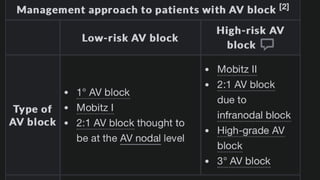
First-degree AV block
• Description
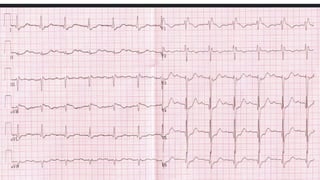
• PR interval > 200 ms
• No interruption in atrial to ventricular conduction
• Rate of SA node = heart rate
• Often discovered incidentally on ECG
• Risk of progression to complete heart block: low, as the
block results from slowed conduction through the AV node
• First-degree and Mobitz type I second-degree AVblocks may
be seen in healthy individuals, e.g., in athletes with
increased vagal tone. Patients are often asymptomatic.
Second-degree AV block
1: Mobitz type I (Wenckebach) [2]
• Description
• Progressive lengthening of the PR interval until a beat is dropped, which
means a regular atrial impulse does not reach the ventricles (a normal P
wave is not followed by a QRS complex)
• Mostly regular rhythm separated by short pauses, which may lead
to bradycardia(regularly irregular rhythm)
• Rate of SA node > heart rate
• Risk of progression to complete heart block: typically low, as the
block is most often at the level of the AV node
2:Mobitz type II
• Description
• Single or intermittent nonconducted P waves without QRS complexes
• The PR interval remains constant.
• The conduction of atrial impulses to the ventricles typically follows a regular
pattern, e.g.:
• 3:2 block: regular AV block with 3 atrialdepolarizations but only 2 atrial impulses that
reach the ventricles (heart rate = ⅔ SA node rate)
• 4:3 block: regular AV block with 4 atrialdepolarizations but only 3 atrial impulses that
reach the ventricles (heart rate = ¾ SA node rate)
• While 2:1 block follows a regular pattern, it cannot be classified as Mobitz
type I or II and is classified separately
• Risk of progression to complete heart block: high (> 50%), as it is
typically due to infranodal block (usually in the His-Purkinje system)
• Mobitz type II block can progress to third-degree heart
block; therefore, all patients should be admitted
for continuous cardiac monitoring and treatment.
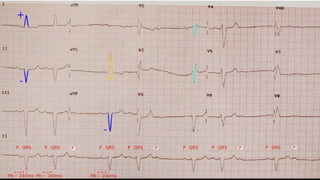
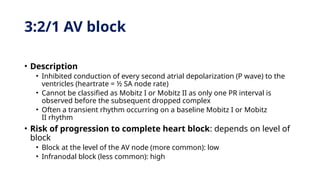
3:2/1 AV block
• Description
• Inhibited conduction of every second atrial depolarization (P wave) to the
ventricles (heartrate = ½ SA node rate)
• Cannot be classified as Mobitz I or Mobitz II as only one PR interval is
observed before the subsequent dropped complex
• Often a transient rhythm occurring on a baseline Mobitz I or Mobitz
II rhythm
• Risk of progression to complete heart block: depends on level of
block
• Block at the level of the AV node (more common): low
• Infranodal block (less common): high
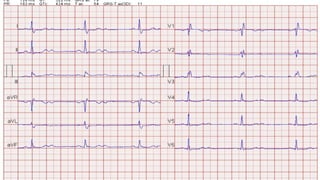
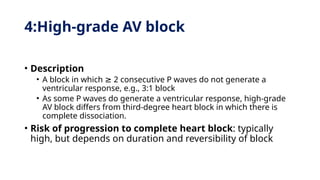
4:High-grade AV block
• Description
• A block in which 2 consecutive P waves do not generate a
≥
ventricular response, e.g., 3:1 block
• As some P waves do generate a ventricular response, high-grade
AV block differs from third-degree heart block in which there is
complete dissociation.
• Risk of progression to complete heart block: typically
high, but depends on duration and reversibility of block
 Third-degree AV block (complete heart block)
•
• Description
• Third-degree AV block is a complete block with no conduction between the atria and ventricles.
• P waves and QRS complexes have their own regular rhythm but bear no relationship to each other (AV
dissociation).
• Risk of progression to cardiogenic shock or cardiac arrest: High; Sudden onset 3° AV
blockcan result in ventricular asystole, which lasts until an escape rhythm takes over.
• Escape rhythms: can be generated by sites that are usually located near the AV node or
near the bundle of His.
• Ventricular escape rhythm [11]
• A rhythm generated at the level of the bundle of His
• Heart rate 20–40/minute
• Wide QRS complexes
• Junctional escape rhythm [11]
• A rhythm generated at the level of the AV node
• Heart rate 40–60/minute
• Narrow QRS complexes
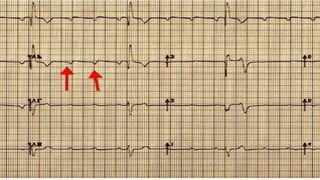
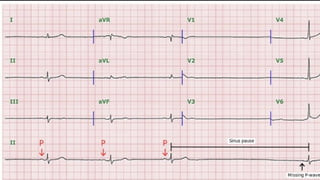
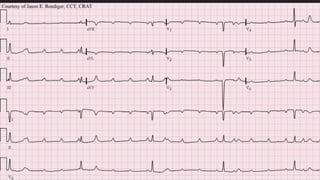
• Differential diagnoses
• Left bundle branch block
• Right bundle branch block
• Left anterior fascicular block
• Left posterior fascicular block
• Sinus node dysfunction
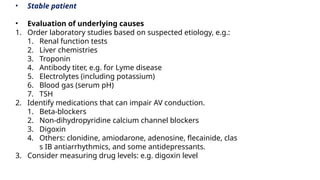
• Stable patient
• Evaluation of underlying causes
1. Order laboratory studies based on suspected etiology, e.g.:
1. Renal function tests
2. Liver chemistries
3. Troponin
4. Antibody titer, e.g. for Lyme disease
5. Electrolytes (including potassium)
6. Blood gas (serum pH)
7. TSH
2. Identify medications that can impair AV conduction.
1. Beta-blockers
2. Non-dihydropyridine calcium channel blockers
3. Digoxin
4. Others: clonidine, amiodarone, adenosine, flecainide, clas
s IB antiarrhythmics, and some antidepressants.
3. Consider measuring drug levels: e.g. digoxin level
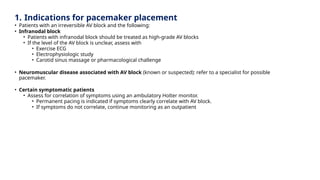
1. Indications for pacemaker placement
• Patients with an irreversible AV block and the following:
• Infranodal block
• Patients with infranodal block should be treated as high-grade AV blocks
• If the level of the AV block is unclear, assess with
• Exercise ECG
• Electrophysiologic study
• Carotid sinus massage or pharmacological challenge
• Neuromuscular disease associated with AV block (known or suspected): refer to a specialist for possible
pacemaker.
• Certain symptomatic patients
• Assess for correlation of symptoms using an ambulatory Holter monitor.
• Permanent pacing is indicated if symptoms clearly correlate with AV block.
• If symptoms do not correlate, continue monitoring as an outpatient
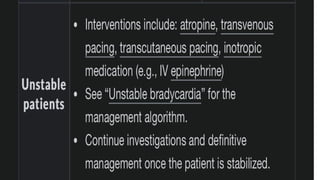
I. 1:Management of high-risk AV block
• Potentially reversible cause
• Consider temporary pacing.
• Adapt management depending on the suspected underlying cause
• Manage medication-induced bradycardia, e.g., beta blocker toxicity, digoxin toxicity, CCB
toxicity
• Perform PCI and avoid early pacemaker implantation < 72 h in patients with AV block caused
by acute MI.
• See “Special situations” in “Unstable bradycardia” for other patient groups (e.g., cardiac
transplant).
• Permanent pacemaker placement is indicated if:
• AV block persists despite adequate treatment
• Medication causing AV block is necessary and not replaceable
• Irreversible cause
• All patients with Mobitz Type II, high-grade, or third-degree AV block require the
placement of a permanent pacemaker.
• Consider a defibrillator if the AV block is caused by infiltrative processes or
neuromuscular disease with conduction block.
• Bundle branch blocks
Incomplete bundle branch block: QRS duration of 0.1–0.12 s
Complete bundle branch block: QRS duration 0.12 s
≥
• LBBB
• RBBB
• Bifasciculare block
1. LBBB
Etiology
• Cardiac
• Coronary artery disease
• Myocardial infarction
• Hypertension
• Myocardial contusion
• Restrictive cardiomyopathy
• Dilated cardiomyopathy
• Myocarditis
• Hyperkalemia
• Digoxin toxicity
• Degenerative disease of the conduction tissue
Pathophysiology
• BBB transmission of impulse via the faster His-Purkinje
→
system (i.e., the remaining functional branch or fascicle) →
slower
ventricular depolarizationvia myocyte to myocyteconduction
long QRS complex
→
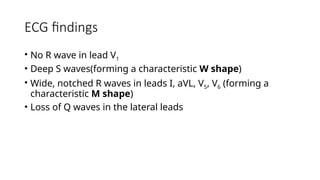
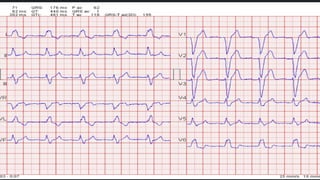
ECG findings
• No R wave in lead V1
• Deep S waves(forming a characteristic W shape)
• Wide, notched R waves in leads I, aVL, V5, V6 (forming a
characteristic M shape)
• Loss of Q waves in the lateral leads
RBBB
• Cardiac
• Coronary artery disease
• Myocardial infarction
• Myocardial contusion
• Cardiomyopathy
• Myocarditis
• Mitral stenosis
• Pulmonary
• Pulmonary hypertension
• Pulmonary embolism
• COPD
• Congenital heart defects
• Atrial septal defect
• VSD
• Pulmonary stenosis
• Tetralogy of Fallot
• Brugada syndrome(a pseudo-RBBB)
• Degenerative disease of the conduction tissue
Pathophysiology
• BBB transmission of impulse via the faster His-Purkinje
→
system (i.e., the remaining functional branch or fascicle) →
slower
ventricular depolarizationvia myocyte to myocyteconduction
long QRS complex
→
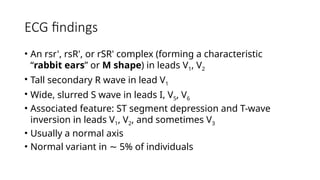
ECG findings
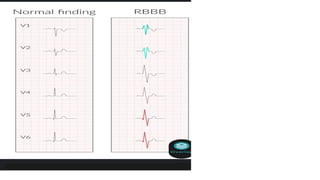
• An rsr', rsR', or rSR' complex (forming a characteristic
“rabbit ears” or M shape) in leads V1, V2
• Tall secondary R wave in lead V1
• Wide, slurred S wave in leads I, V5, V6
• Associated feature: ST segment depression and T-wave
inversion in leads V1, V2, and sometimes V3
• Usually a normal axis
• Normal variant in 5% of individuals
∼
Bifascicular block
1. Etiology
• Coronary artery disease
• Valvular heart disease
• Hypertension
• Cardiomyopathies
• Chagas disease
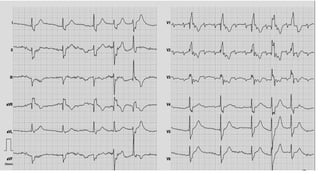
ECG findings
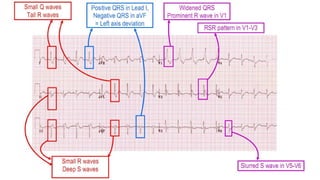
• An RBBB with either of the following:
• Left anterior fascicular block(common form)
• Left axisdeviation
• qR patternin lead aVL
• Left posterior fascicular block (rare)
• Right axisdeviation
• rS patternin leads Iand aVL
• qR patternin leads III and aVF
Thank You

AV Block presentation high yield 1.pptx

  • 1.
    AV BLOCK By DrHaneef (Medical Resident ) Academic advisor: Assistant professor Behroz Noori
  • 2.
    Content • Normal heartconductive system • Definition • Etiology • Pathophysiology • Classification • ECG findings • Management • Pacemaker • BBB
  • 5.
    Definition • Atrioventricular block(AV block) is characterized by an interrupted or delayed conduction between the atria and the ventricles.
  • 6.
    Etiology of atrioventricularblocks 1:structural causes a) Ischemic heart disease a) Acute MI b) Chronic ischemic cardiomyopathy b) Congenital heart disease and congenital third-degree AV block c) Post-cardiac intervention: e.g., surgery(particularly involving valves), ablations, or TAVI d) Inflammatory/infiltrative cardiomyopathy: e.g., myocarditis, amyloidosis,sarcoidosis, autoimmune connective tissue disorders, lymphoma e) Degenerative: idiopathic fibrosis of the conduction system (Lenègre-Lev syndrome) causing RBBB and eventually AV block
  • 7.
    2:Neurocardiogenic A. Increased vagaltone: can be physiological or pathological A. Healthy individuals with high levels of exercise (e.g., in professional athletes): most often transient 1° AV block and Mobitz 1 B. Obstructive sleep apnea C. During vomiting, suctioning, or intubation [7]
  • 8.
    3:Toxic/Metabolic A. Electrolyte disorders:e.g., hyperkalemia B. Acid-base disorders C. Cardiotoxic drugs: e.g., beta blockers, calcium channel blockers, or digoxin(therapeutic doses or overdoses) D. Other toxicity: e.g., carbon monoxide, cyanide
  • 9.
    • 4:Infectious • 5:Endocrine •6:Neuromuscular •Bacterial endocarditis •Lyme carditis •Acute rheumatic fever •Thyroid disease •Adrenal disease •Myotonic dystrophy
  • 10.
    Pathophysiology 1. AV blocksresult from the interruption of the electrical impulse anywhere within the atrioventricular conduction system, including the: 1. AV node 2. Bundle of His 3. Left and right bundle branches
  • 11.
    Clinical features 1. Asymptomatic(common): especially with first-degree and Mobitz type I blocks [2] 2. Clinical features of end-organ hypoperfusion(due to bradycardia) may be present, including: [9] 1. Fatigue 2. Exercise intolerance 3. Dyspnea 4. Dizziness 5. Syncope
  • 12.
    Cont… • Irregular rhythms(e.g., Mobitz I): palpitations • Loss of atrioventricular synchrony (e.g., extreme 1° AV block or 3° AV block) : • Feeling of pulsations in the neck or chest • Cannon A waves: physical examination finding seen in AV dissociation (e.g., in third-degree heart block) • Caused by the atria and ventricles contracting simultaneously, which leads to blood being pushed against a closed tricuspid valve • The result is a retrograde pressure wave throughout the venous system that may appear as pulsations in the jugular vein. • Symptoms of heart failure
  • 13.
    Cont… • Significant pausesof asystole • Stokes-Adams attacks [10] • Sudden losses of consciousness that may occur with brief prodromal symptoms, e.g., dizziness, or without any warning, usually lasting a few seconds • Attacks are caused by ventricular asystole, most commonly due to third- degree heart block, especially idiopathic paroxysmal AV block. • Cardiac arrest
  • 14.
    First-degree AV block •Description • PR interval > 200 ms • No interruption in atrial to ventricular conduction • Rate of SA node = heart rate • Often discovered incidentally on ECG • Risk of progression to complete heart block: low, as the block results from slowed conduction through the AV node
  • 15.
    • First-degree andMobitz type I second-degree AVblocks may be seen in healthy individuals, e.g., in athletes with increased vagal tone. Patients are often asymptomatic.
  • 18.
    Second-degree AV block 1:Mobitz type I (Wenckebach) [2] • Description • Progressive lengthening of the PR interval until a beat is dropped, which means a regular atrial impulse does not reach the ventricles (a normal P wave is not followed by a QRS complex) • Mostly regular rhythm separated by short pauses, which may lead to bradycardia(regularly irregular rhythm) • Rate of SA node > heart rate • Risk of progression to complete heart block: typically low, as the block is most often at the level of the AV node
  • 20.
    2:Mobitz type II •Description • Single or intermittent nonconducted P waves without QRS complexes • The PR interval remains constant. • The conduction of atrial impulses to the ventricles typically follows a regular pattern, e.g.: • 3:2 block: regular AV block with 3 atrialdepolarizations but only 2 atrial impulses that reach the ventricles (heart rate = ⅔ SA node rate) • 4:3 block: regular AV block with 4 atrialdepolarizations but only 3 atrial impulses that reach the ventricles (heart rate = ¾ SA node rate) • While 2:1 block follows a regular pattern, it cannot be classified as Mobitz type I or II and is classified separately • Risk of progression to complete heart block: high (> 50%), as it is typically due to infranodal block (usually in the His-Purkinje system)
  • 21.
    • Mobitz typeII block can progress to third-degree heart block; therefore, all patients should be admitted for continuous cardiac monitoring and treatment.
  • 23.
    3:2/1 AV block •Description • Inhibited conduction of every second atrial depolarization (P wave) to the ventricles (heartrate = ½ SA node rate) • Cannot be classified as Mobitz I or Mobitz II as only one PR interval is observed before the subsequent dropped complex • Often a transient rhythm occurring on a baseline Mobitz I or Mobitz II rhythm • Risk of progression to complete heart block: depends on level of block • Block at the level of the AV node (more common): low • Infranodal block (less common): high
  • 25.
    4:High-grade AV block •Description • A block in which 2 consecutive P waves do not generate a ≥ ventricular response, e.g., 3:1 block • As some P waves do generate a ventricular response, high-grade AV block differs from third-degree heart block in which there is complete dissociation. • Risk of progression to complete heart block: typically high, but depends on duration and reversibility of block
  • 27.
     Third-degree AVblock (complete heart block) • • Description • Third-degree AV block is a complete block with no conduction between the atria and ventricles. • P waves and QRS complexes have their own regular rhythm but bear no relationship to each other (AV dissociation). • Risk of progression to cardiogenic shock or cardiac arrest: High; Sudden onset 3° AV blockcan result in ventricular asystole, which lasts until an escape rhythm takes over. • Escape rhythms: can be generated by sites that are usually located near the AV node or near the bundle of His. • Ventricular escape rhythm [11] • A rhythm generated at the level of the bundle of His • Heart rate 20–40/minute • Wide QRS complexes • Junctional escape rhythm [11] • A rhythm generated at the level of the AV node • Heart rate 40–60/minute • Narrow QRS complexes
  • 30.
    • Differential diagnoses •Left bundle branch block • Right bundle branch block • Left anterior fascicular block • Left posterior fascicular block • Sinus node dysfunction
  • 33.
    • Stable patient •Evaluation of underlying causes 1. Order laboratory studies based on suspected etiology, e.g.: 1. Renal function tests 2. Liver chemistries 3. Troponin 4. Antibody titer, e.g. for Lyme disease 5. Electrolytes (including potassium) 6. Blood gas (serum pH) 7. TSH 2. Identify medications that can impair AV conduction. 1. Beta-blockers 2. Non-dihydropyridine calcium channel blockers 3. Digoxin 4. Others: clonidine, amiodarone, adenosine, flecainide, clas s IB antiarrhythmics, and some antidepressants. 3. Consider measuring drug levels: e.g. digoxin level
  • 34.
    1. Indications forpacemaker placement • Patients with an irreversible AV block and the following: • Infranodal block • Patients with infranodal block should be treated as high-grade AV blocks • If the level of the AV block is unclear, assess with • Exercise ECG • Electrophysiologic study • Carotid sinus massage or pharmacological challenge • Neuromuscular disease associated with AV block (known or suspected): refer to a specialist for possible pacemaker. • Certain symptomatic patients • Assess for correlation of symptoms using an ambulatory Holter monitor. • Permanent pacing is indicated if symptoms clearly correlate with AV block. • If symptoms do not correlate, continue monitoring as an outpatient
  • 35.
    I. 1:Management ofhigh-risk AV block • Potentially reversible cause • Consider temporary pacing. • Adapt management depending on the suspected underlying cause • Manage medication-induced bradycardia, e.g., beta blocker toxicity, digoxin toxicity, CCB toxicity • Perform PCI and avoid early pacemaker implantation < 72 h in patients with AV block caused by acute MI. • See “Special situations” in “Unstable bradycardia” for other patient groups (e.g., cardiac transplant). • Permanent pacemaker placement is indicated if: • AV block persists despite adequate treatment • Medication causing AV block is necessary and not replaceable • Irreversible cause • All patients with Mobitz Type II, high-grade, or third-degree AV block require the placement of a permanent pacemaker. • Consider a defibrillator if the AV block is caused by infiltrative processes or neuromuscular disease with conduction block.
  • 36.
    • Bundle branchblocks Incomplete bundle branch block: QRS duration of 0.1–0.12 s Complete bundle branch block: QRS duration 0.12 s ≥ • LBBB • RBBB • Bifasciculare block
  • 37.
    1. LBBB Etiology • Cardiac •Coronary artery disease • Myocardial infarction • Hypertension • Myocardial contusion • Restrictive cardiomyopathy • Dilated cardiomyopathy • Myocarditis • Hyperkalemia • Digoxin toxicity • Degenerative disease of the conduction tissue
  • 38.
    Pathophysiology • BBB transmissionof impulse via the faster His-Purkinje → system (i.e., the remaining functional branch or fascicle) → slower ventricular depolarizationvia myocyte to myocyteconduction long QRS complex →
  • 39.
    ECG findings • NoR wave in lead V1 • Deep S waves(forming a characteristic W shape) • Wide, notched R waves in leads I, aVL, V5, V6 (forming a characteristic M shape) • Loss of Q waves in the lateral leads
  • 41.
    RBBB • Cardiac • Coronaryartery disease • Myocardial infarction • Myocardial contusion • Cardiomyopathy • Myocarditis • Mitral stenosis • Pulmonary • Pulmonary hypertension • Pulmonary embolism • COPD • Congenital heart defects • Atrial septal defect • VSD • Pulmonary stenosis • Tetralogy of Fallot • Brugada syndrome(a pseudo-RBBB) • Degenerative disease of the conduction tissue
  • 42.
    Pathophysiology • BBB transmissionof impulse via the faster His-Purkinje → system (i.e., the remaining functional branch or fascicle) → slower ventricular depolarizationvia myocyte to myocyteconduction long QRS complex →
  • 43.
    ECG findings • Anrsr', rsR', or rSR' complex (forming a characteristic “rabbit ears” or M shape) in leads V1, V2 • Tall secondary R wave in lead V1 • Wide, slurred S wave in leads I, V5, V6 • Associated feature: ST segment depression and T-wave inversion in leads V1, V2, and sometimes V3 • Usually a normal axis • Normal variant in 5% of individuals ∼
  • 46.
    Bifascicular block 1. Etiology •Coronary artery disease • Valvular heart disease • Hypertension • Cardiomyopathies • Chagas disease
  • 47.
    ECG findings • AnRBBB with either of the following: • Left anterior fascicular block(common form) • Left axisdeviation • qR patternin lead aVL • Left posterior fascicular block (rare) • Right axisdeviation • rS patternin leads Iand aVL • qR patternin leads III and aVF
  • 49.