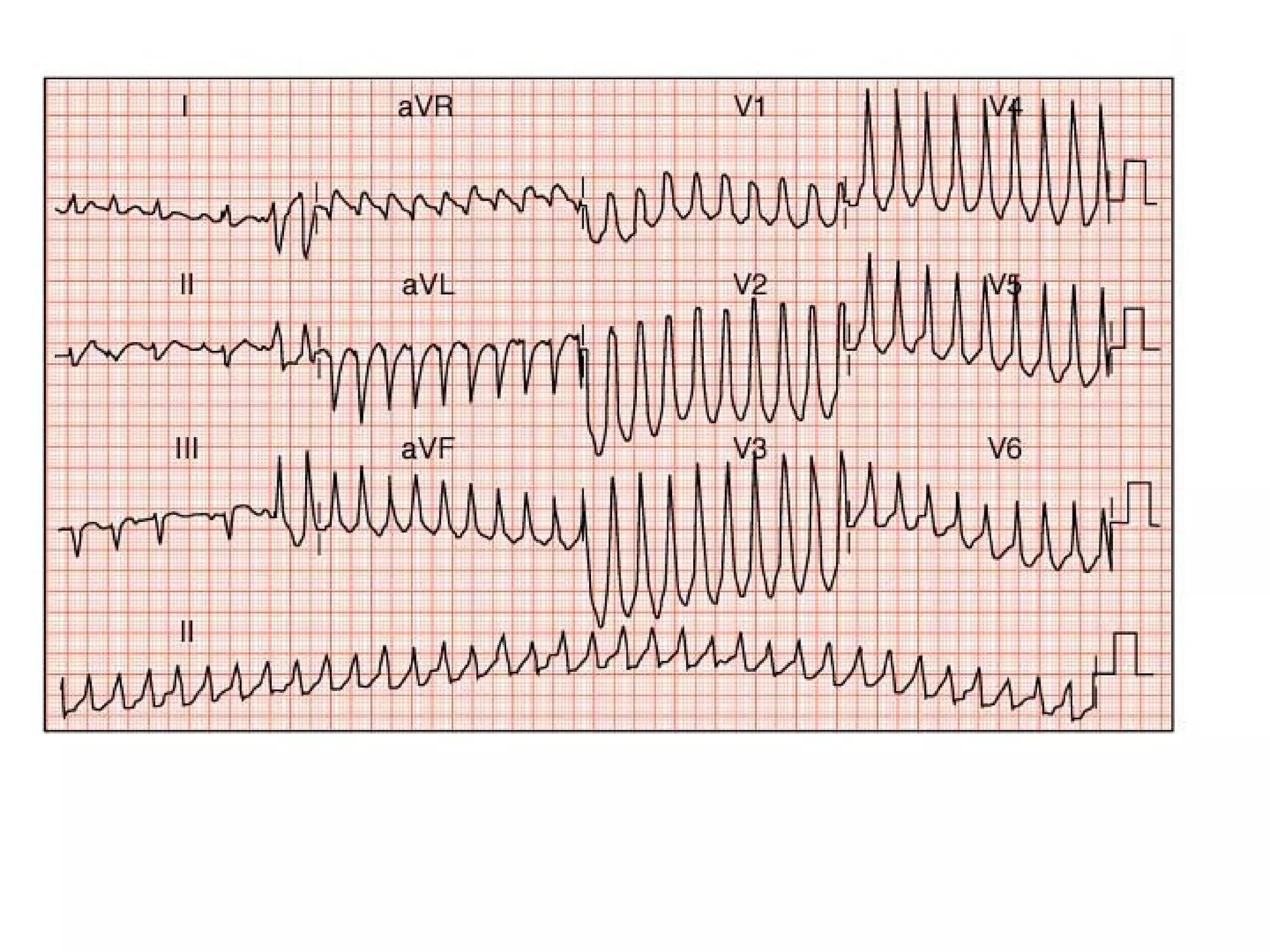
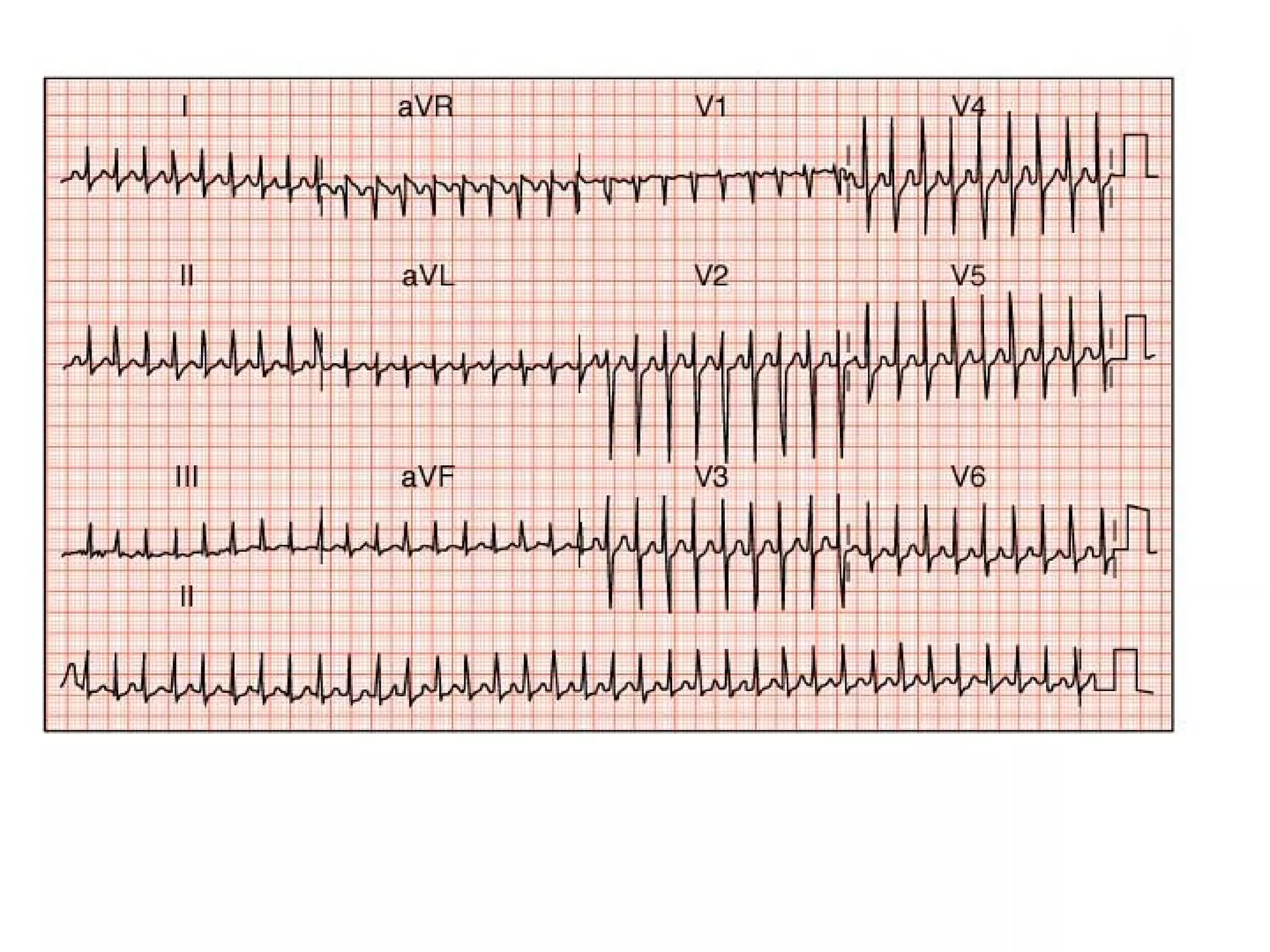
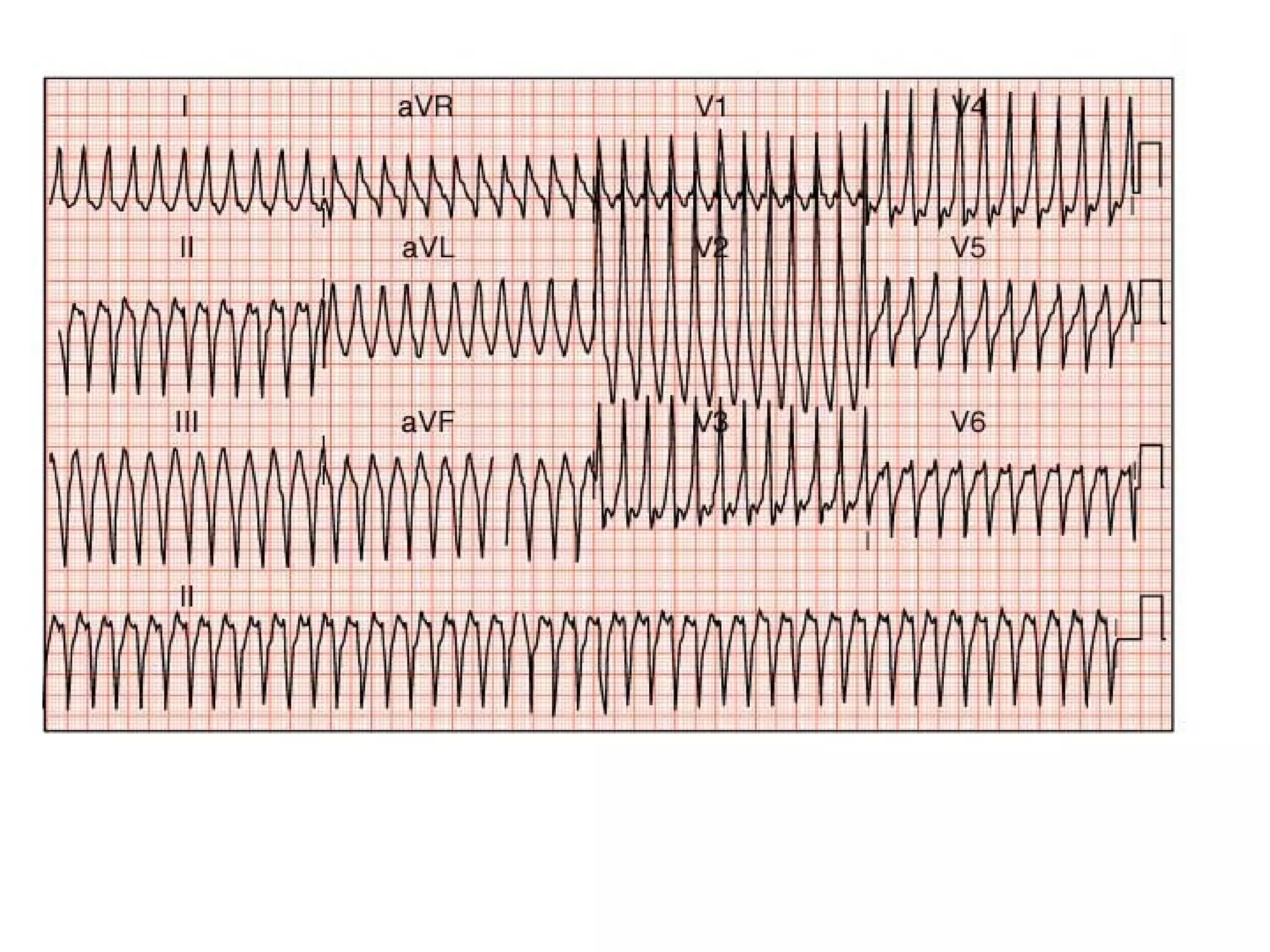
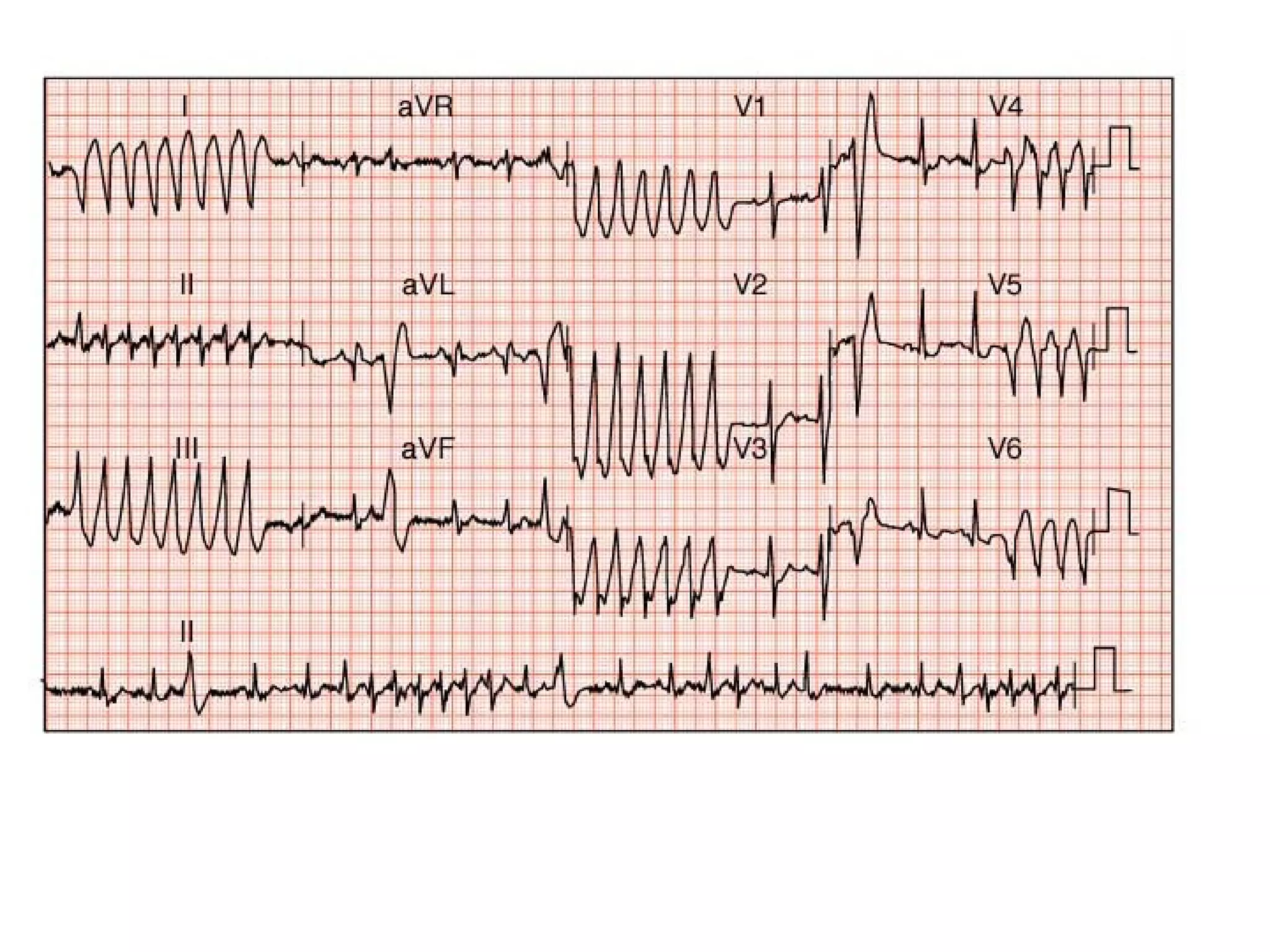
Arrhythmia
Diagnosis and Management
Mohammed R Arafah
MBBS FACP FACPC FACC
King Saud University
Arrhythmia Presentation
• Palpitation.
• Dizziness.
• Chest Pain.
• Dyspnea.
• Fainting.
• Sudden cardiac death.
Etiology
• Physiological
• Pathological:
 Valvular heart disease.
 Ischemic heart disease.
 Hypertensive heart diseases.
 Congenital heart disease.
 Cardiomyopathies.
 Carditis.
 RV dysplasia.
 Drug related.
 Pericarditis.
 Pulmonary diseases.
 Others.
Arrhythmia Assessment
• ECG
• 24h Holter monitor
• Echocardiogram
• Stress test
• Coronary angiography
• Electrophysiology study
Mechanism of Arrhthmogensis
1. Disorder of impulse formation.
a) Automaticity.
b) Triggered Activity.
1) Early after depolarization.
2) Delayed after depolarization.
2. Disorder of impulse conduction.
a) Block – Reentry.
b) Reflection.
3. Combined disorder.
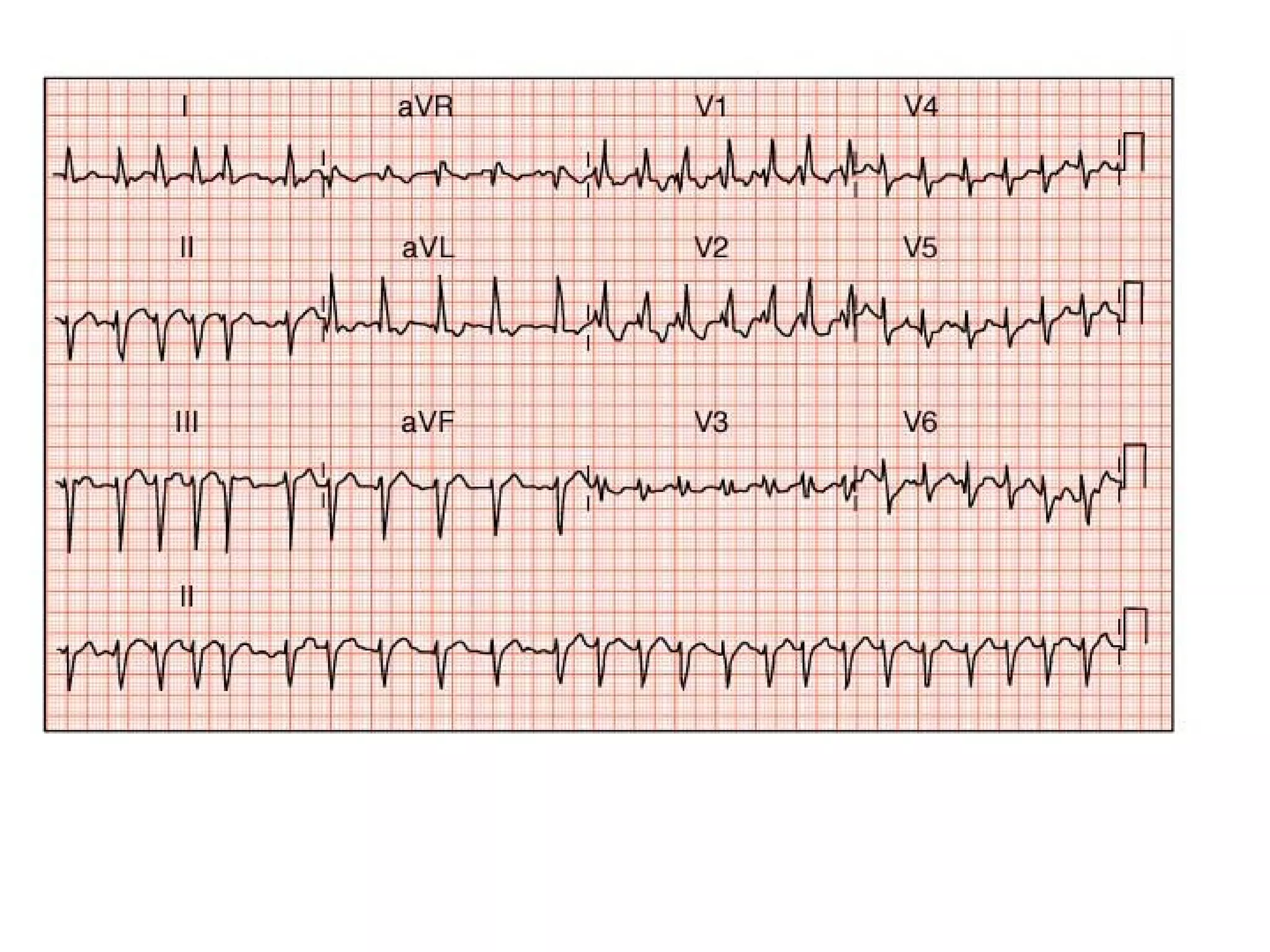
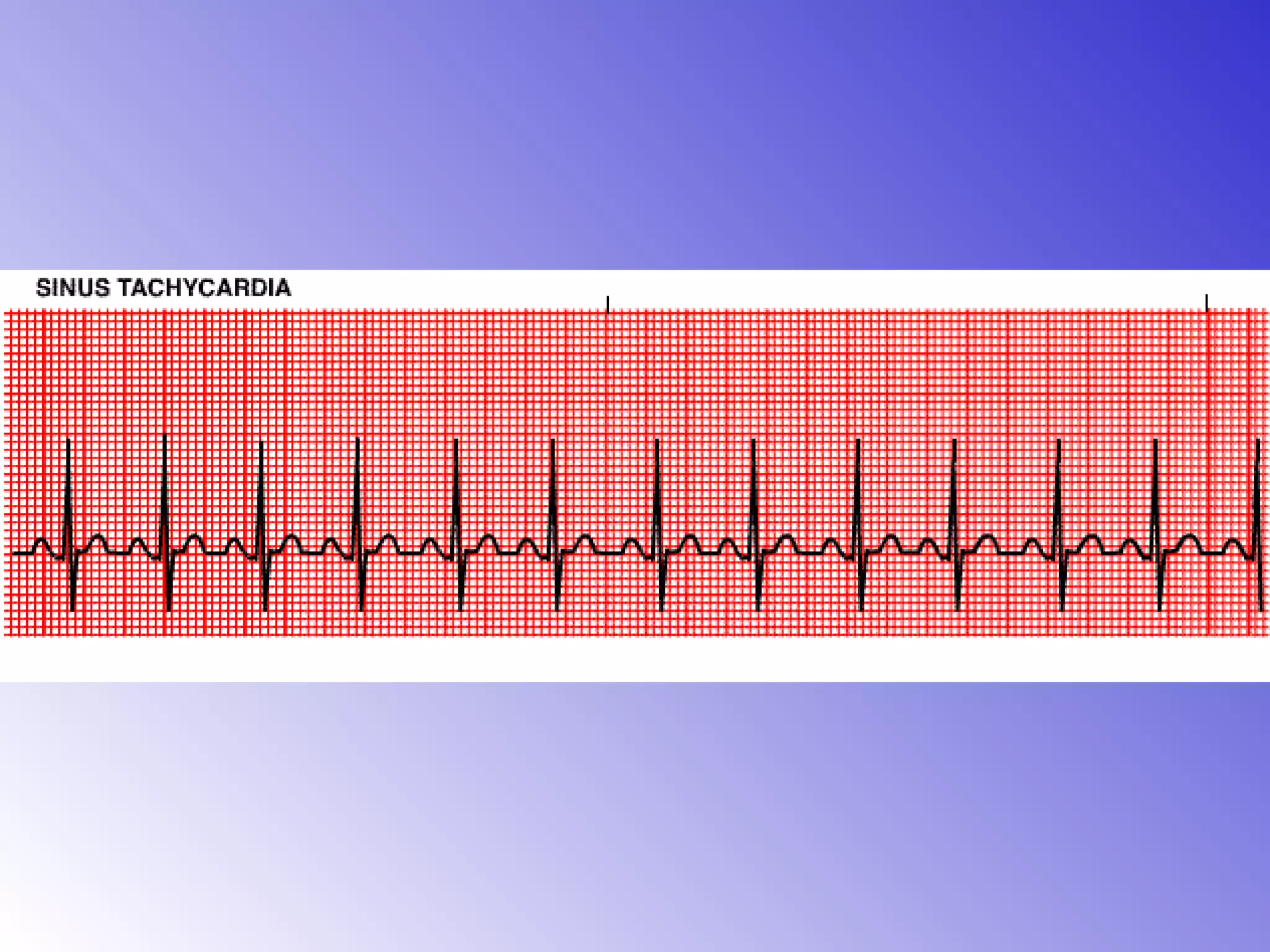
SINUS TACHYCARDIA• Rate: 101-160/min
• P wave: sinus
• QRS: normal
• Conduction: normal
• Rhythm: regular or slightly irregular
• The clinical significance of this dysrhythmia depends on the
underlying cause. It may be normal.
• Underlying causes include:
 increased circulating catecholamines
 CHF
 hypoxia
 PE
 increased temperature
 stress
 response to pain
• Treatment includes identification of the underlying cause and
correction.
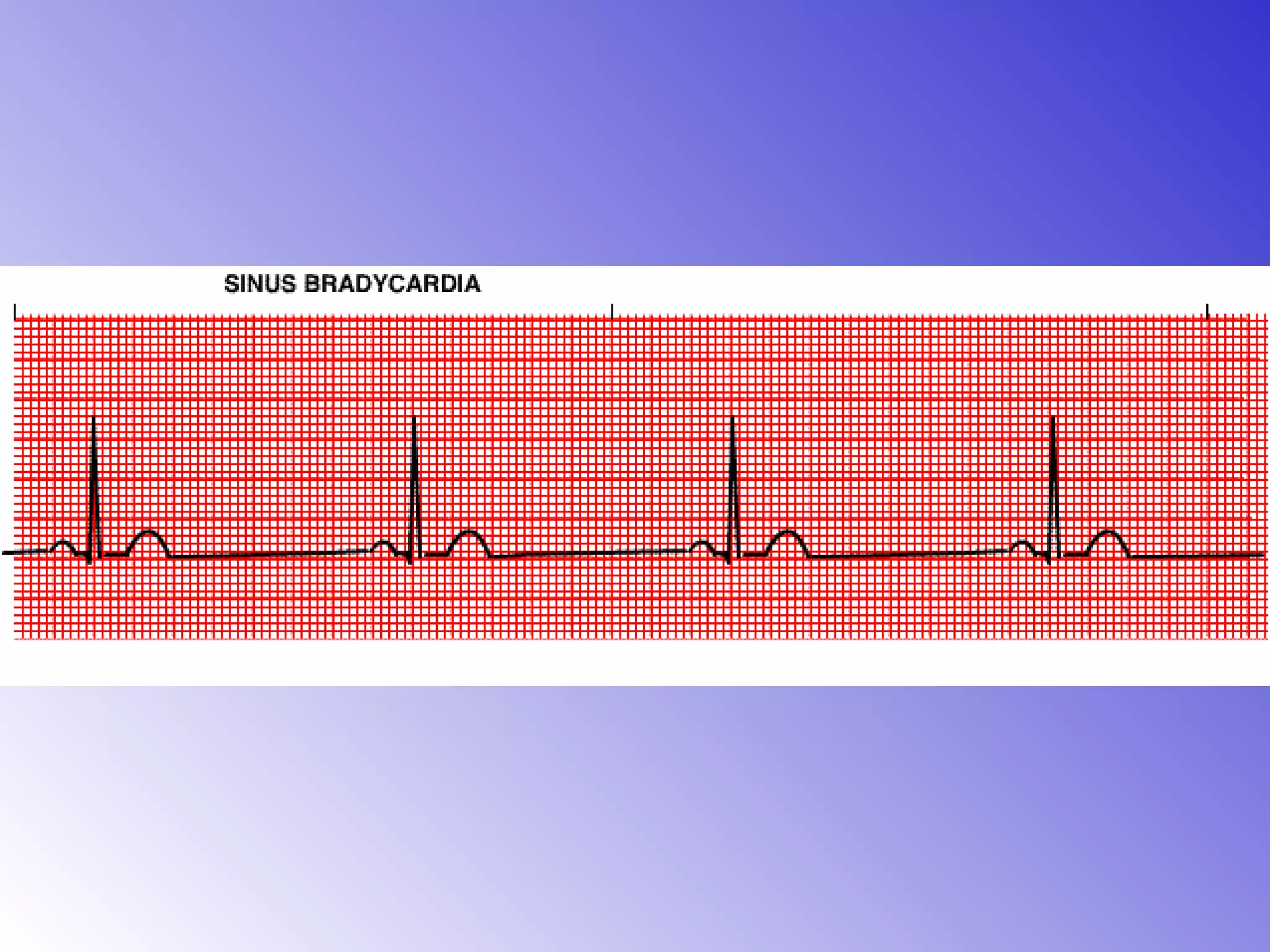
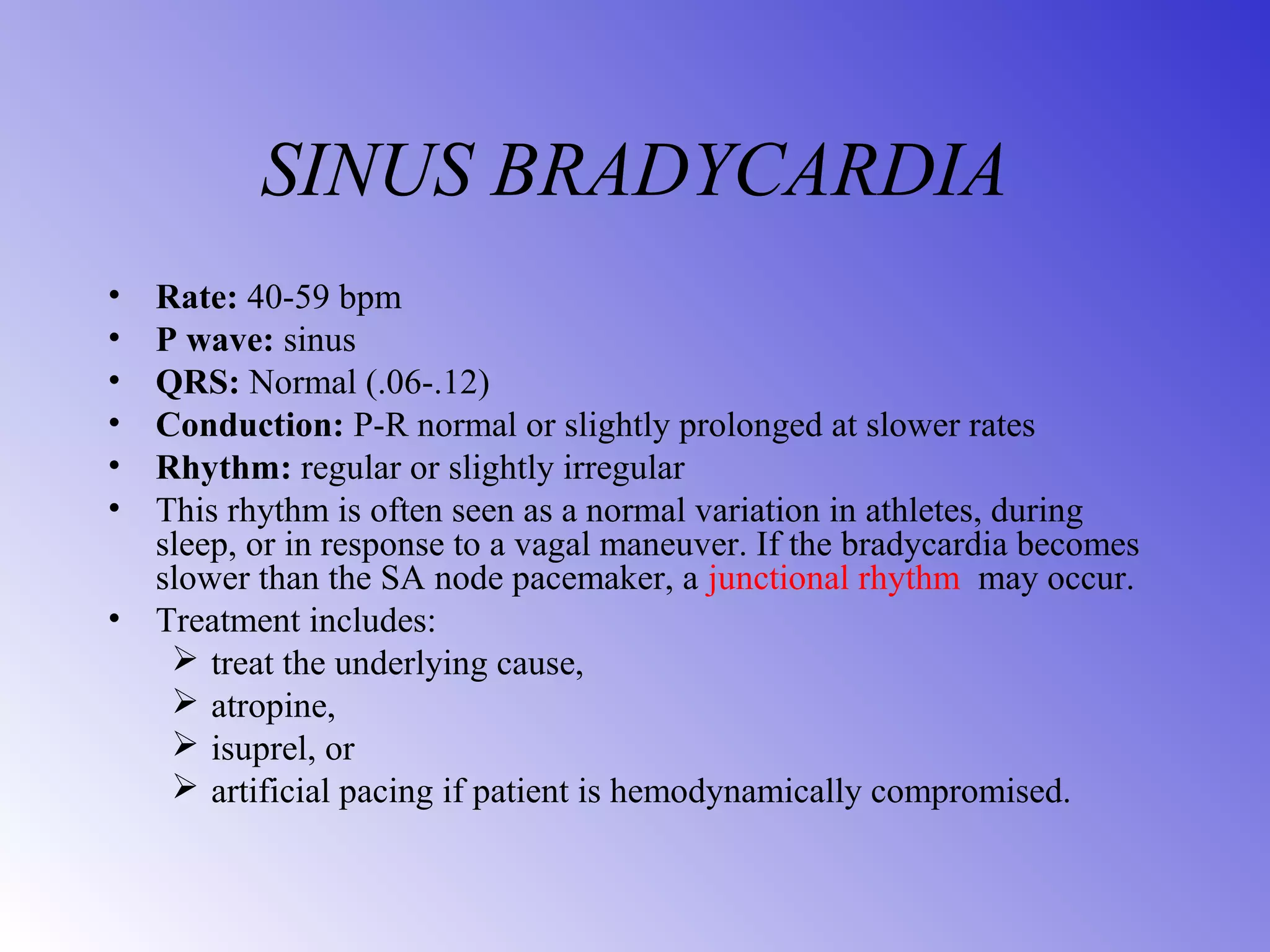
SINUS BRADYCARDIA
• Rate: 40-59 bpm
• P wave: sinus
• QRS: Normal (.06-.12)
• Conduction: P-R normal or slightly prolonged at slower rates
• Rhythm: regular or slightly irregular
• This rhythm is often seen as a normal variation in athletes, during
sleep, or in response to a vagal maneuver. If the bradycardia becomes
slower than the SA node pacemaker, a junctional rhythm may occur.
• Treatment includes:
 treat the underlying cause,
 atropine,
 isuprel, or
 artificial pacing if patient is hemodynamically compromised.
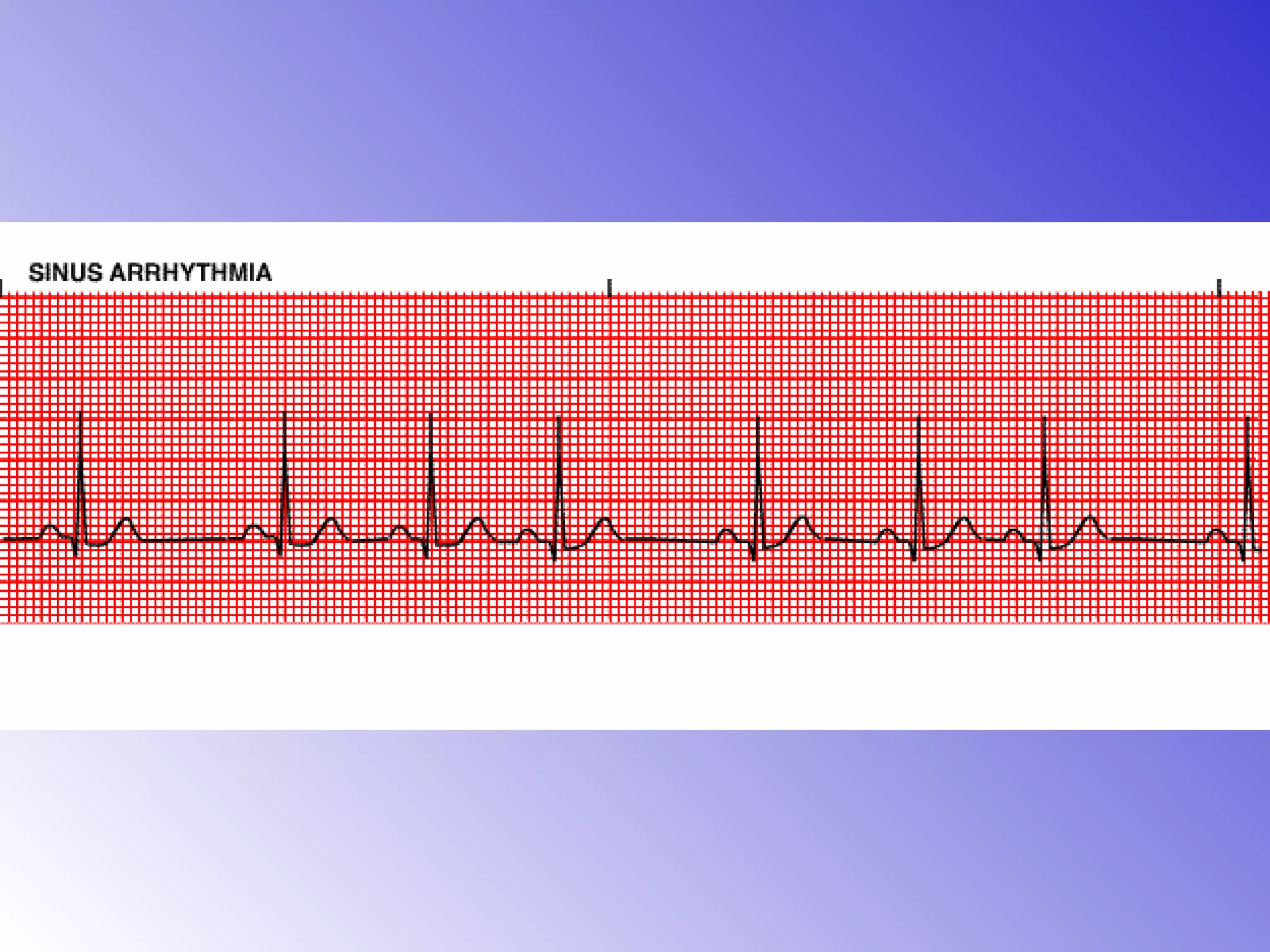
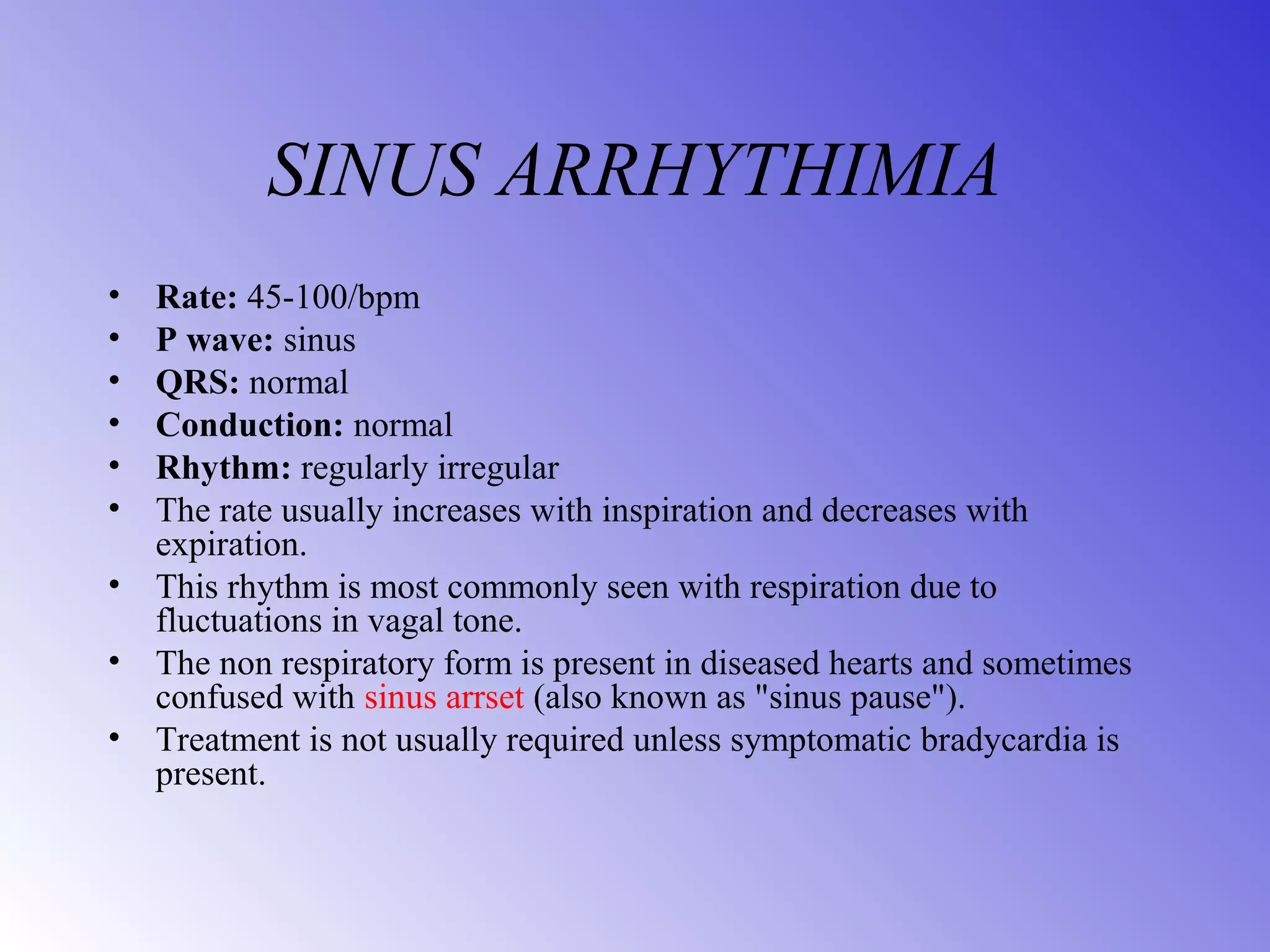
SINUS ARRHYTHIMIA
• Rate: 45-100/bpm
• P wave: sinus
• QRS: normal
• Conduction: normal
• Rhythm: regularly irregular
• The rate usually increases with inspiration and decreases with
expiration.
• This rhythm is most commonly seen with respiration due to
fluctuations in vagal tone.
• The non respiratory form is present in diseased hearts and sometimes
confused with sinus arrset (also known as "sinus pause").
• Treatment is not usually required unless symptomatic bradycardia is
present.
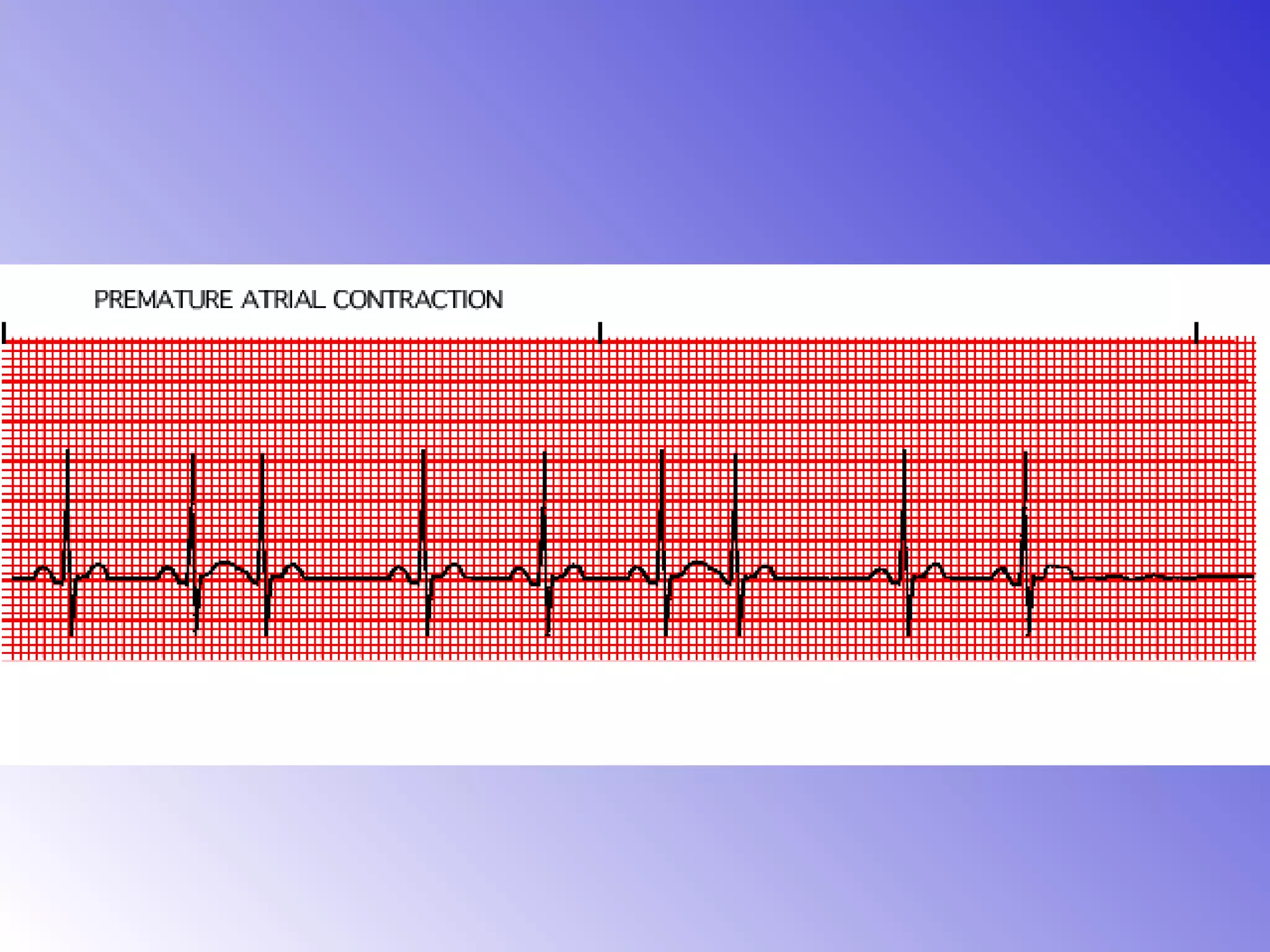
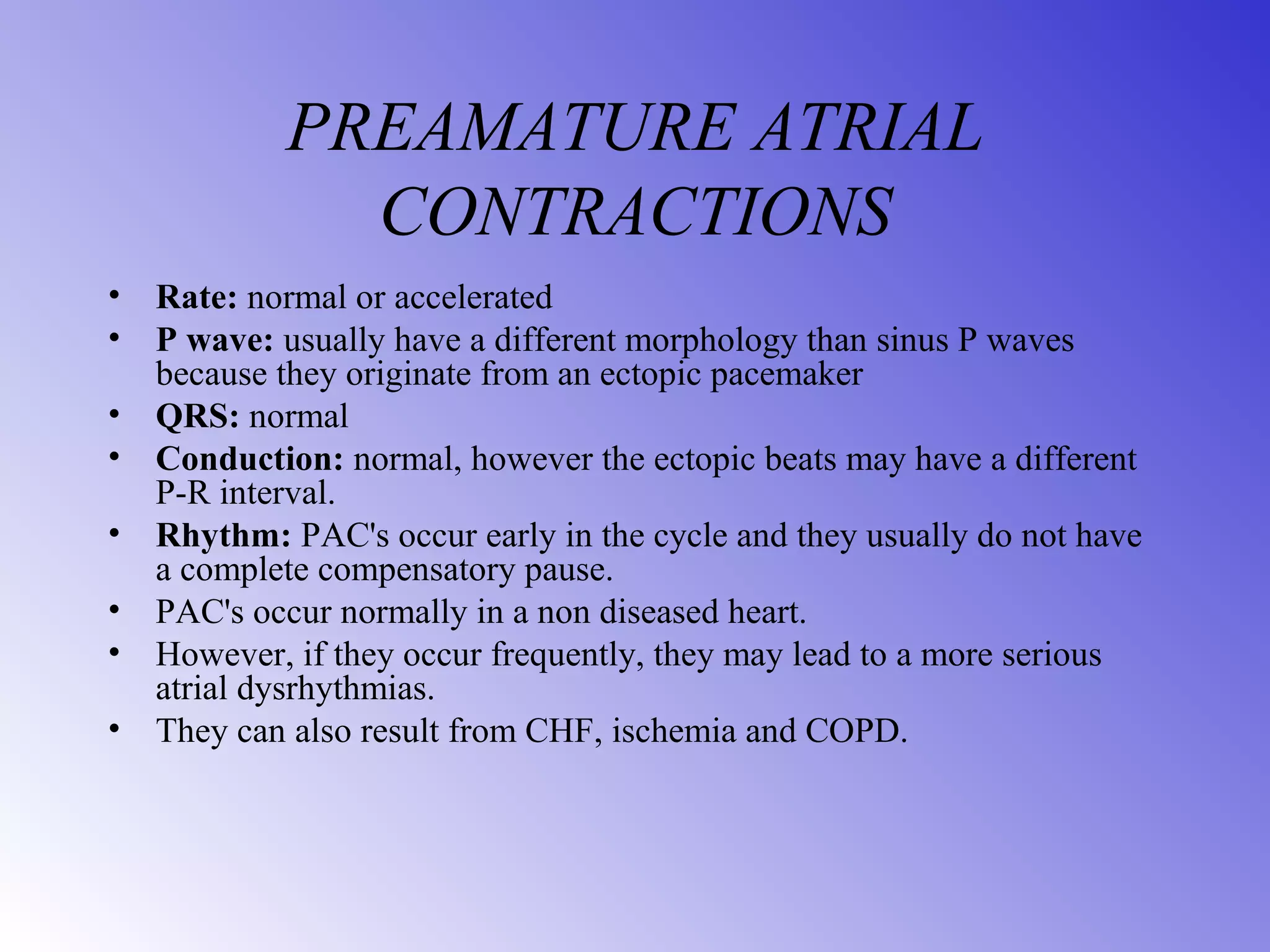
PREAMATURE ATRIAL
CONTRACTIONS
• Rate: normal or accelerated
• P wave: usually have a different morphology than sinus P waves
because they originate from an ectopic pacemaker
• QRS: normal
• Conduction: normal, however the ectopic beats may have a different
P-R interval.
• Rhythm: PAC's occur early in the cycle and they usually do not have
a complete compensatory pause.
• PAC's occur normally in a non diseased heart.
• However, if they occur frequently, they may lead to a more serious
atrial dysrhythmias.
• They can also result from CHF, ischemia and COPD.
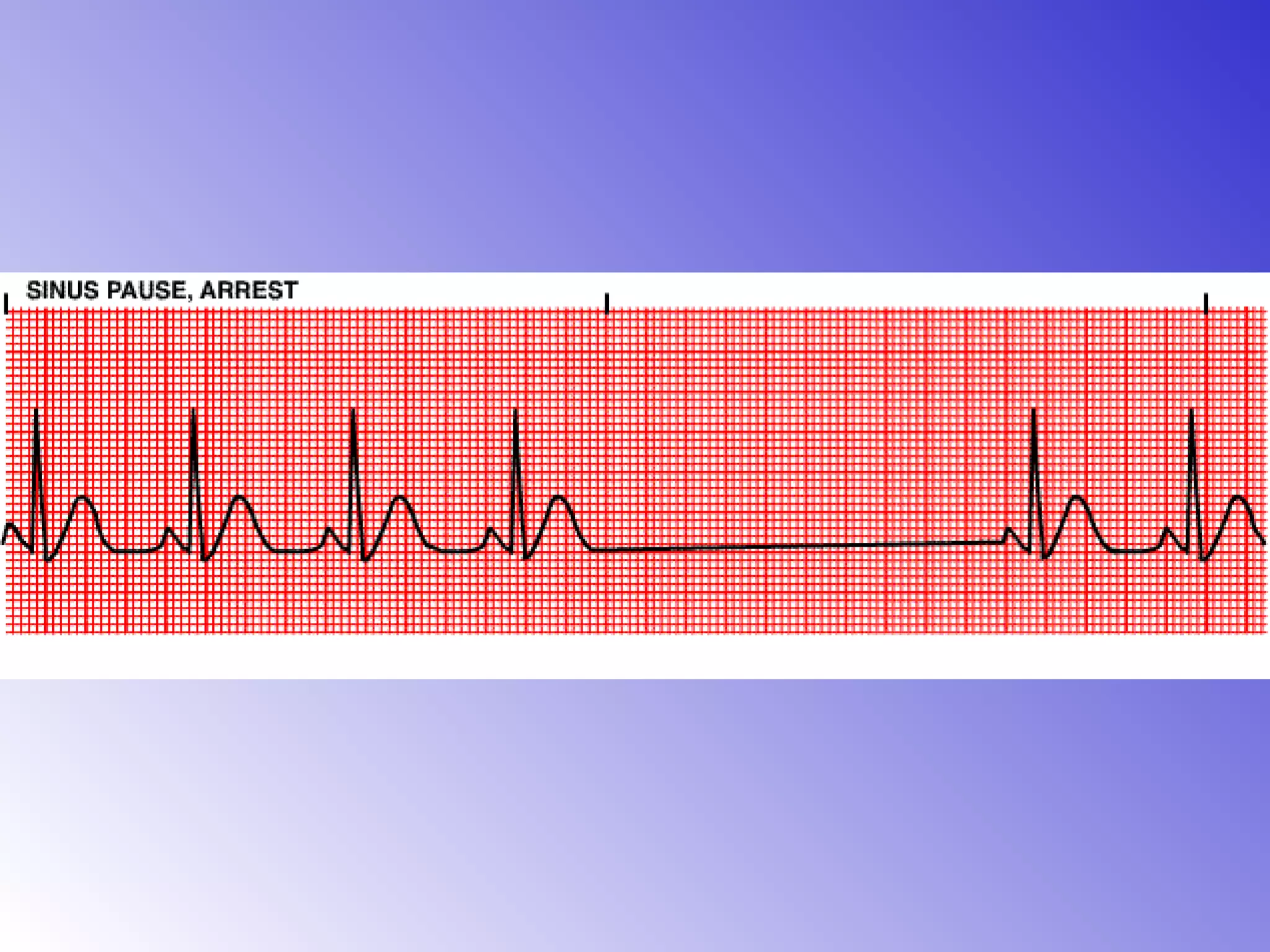
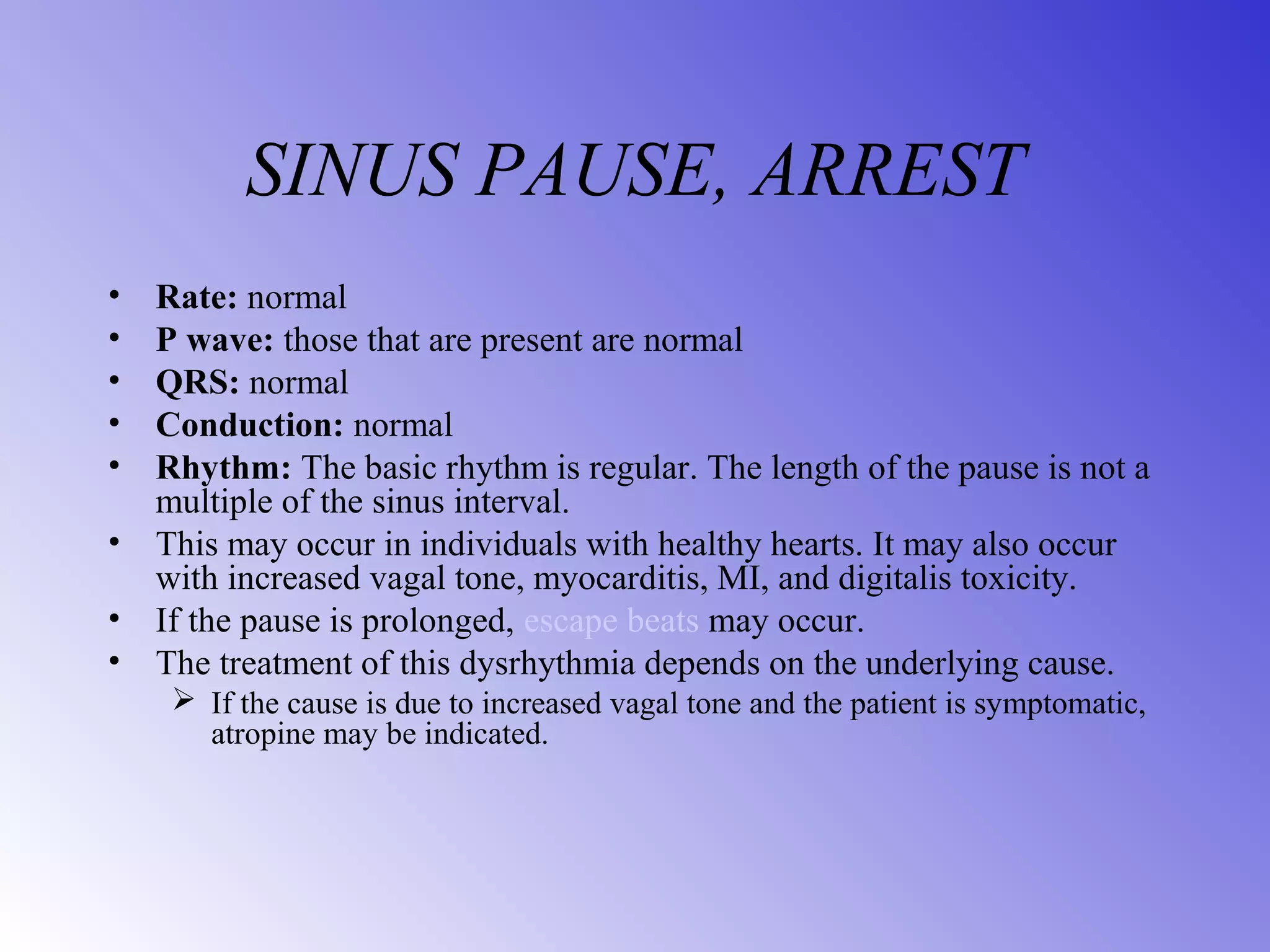
SINUS PAUSE, ARREST
• Rate: normal
• P wave: those that are present are normal
• QRS: normal
• Conduction: normal
• Rhythm: The basic rhythm is regular. The length of the pause is not a
multiple of the sinus interval.
• This may occur in individuals with healthy hearts. It may also occur
with increased vagal tone, myocarditis, MI, and digitalis toxicity.
• If the pause is prolonged, escape beats may occur.
• The treatment of this dysrhythmia depends on the underlying cause.
 If the cause is due to increased vagal tone and the patient is symptomatic,
atropine may be indicated.
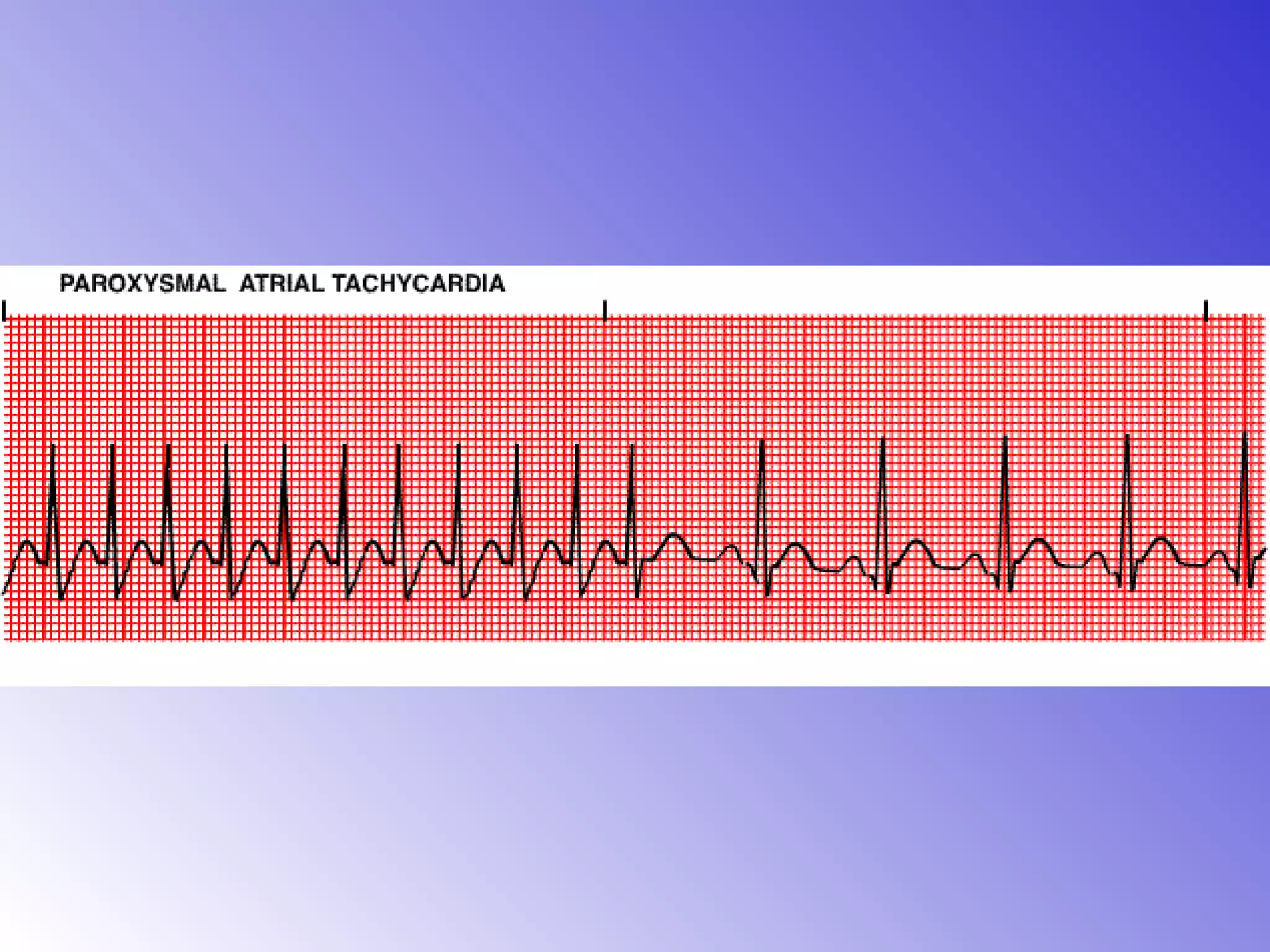
PAROXYSMAL ATRIAL
TACHYCARDIA
• Rate: atrial 160-250/min: may conduct to ventricles 1:1, or 2:1, 3:1,
4:1 into the presence of a block.
• P wave: morphology usually varies from sinus
• QRS: normal (unless associated with aberrant ventricular conduction).
• Conduction: P-R interval depends on the status of AV conduction
tissue and atrial rate: may be normal, abnormal, or not measurable.
• PAT may occur in the normal as well as diseased heart.
 It is a common complication of Wolfe-Parkinson-White syndrome.
• This rhythm is often transient and doesn't require treatment.
 However, it can be terminated with vagal maneuvers.
 Digoxin, antiarrhythmics, and cardioversion may be used.
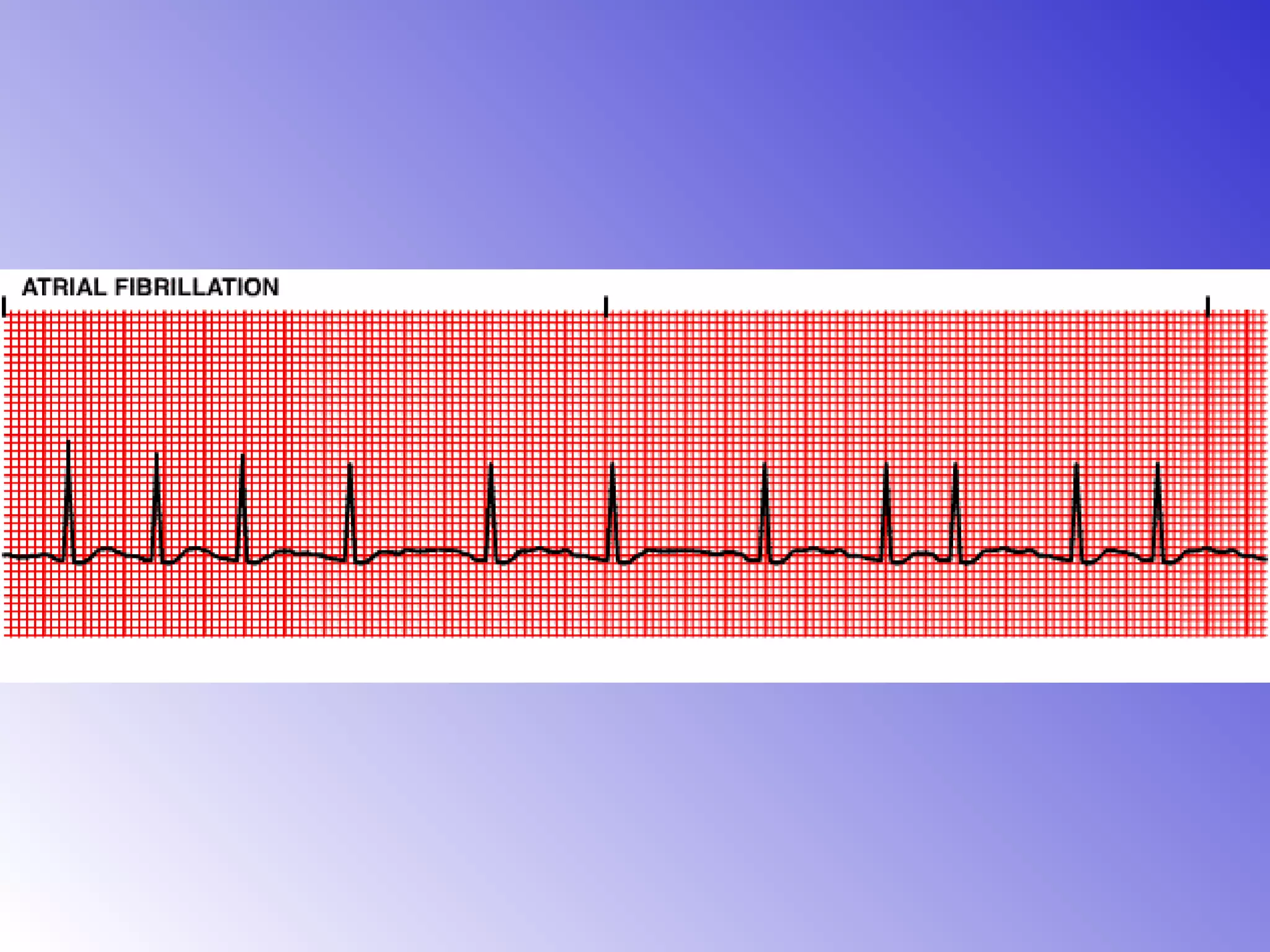
ATRIAL FIBRILLATION
• Rate: atrial rate usually between 400-650/bpm.
• P wave: not present; wavy baseline is seen instead.
• QRS: normal
• Conduction: variable AV conduction; if untreated the ventricular
response is usually rapid.
• Rhythm: irregularly irregular. (This is the hallmark of this
dysrhythmia).
• Atrial fibrillation may occur paroxysmally, but it often becomes
chronic. It is usually associated with COPD, CHF or other heart
disease.
• Treatment includes:
 Digoxin to slow the AV conduction rate.
 Cardioversion may also be necessary to terminate this rhythm.
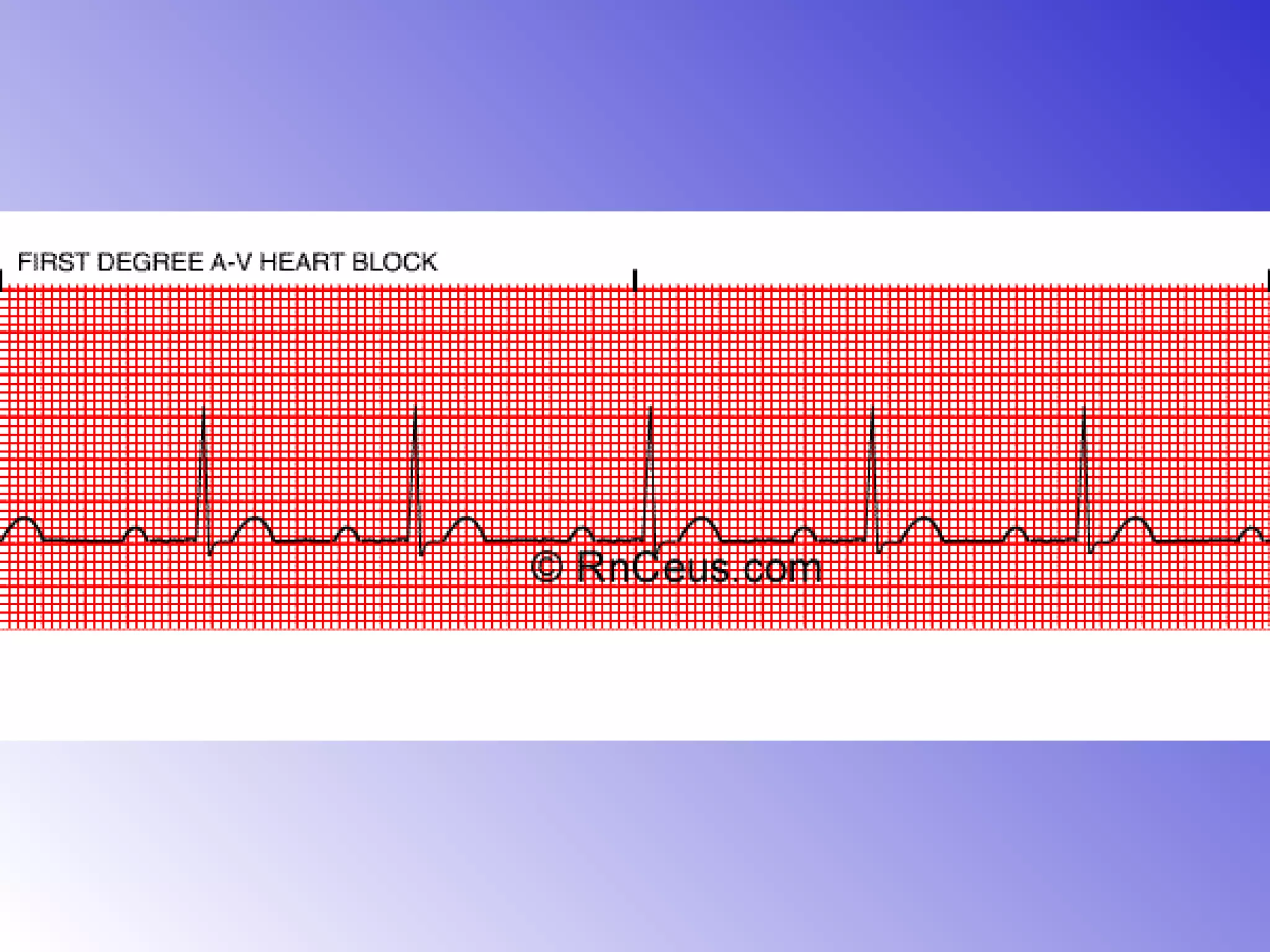
FIRST DEGREE A-V HEART
BLOCK• Rate: variable
• P wave: normal
• QRS: normal
• Conduction: impulse originates in the SA node but has prolonged
conduction in the AV junction; P-R interval is > 0.20 seconds.
• Rhythm: regular
• This is the most common conduction disturbance. It occurs in both
healthy and diseased hearts.
• First degree AV block can be due to:
 inferior MI,
 digitalis toxicity
 hyperkalemia
 increased vagal tone
 acute rheumatic fever
 myocarditis.
• Interventions include treating the underlying cause and observing for
progression to a more advanced AV block.
SECOND DEGREE A-V BLOCK
MOBITZ TYPE I (WENCKEBACK)
• Rate: variable
• P wave: normal morphology with constant P-P interval
• QRS: normal
• Conduction: the P-R interval is progressively longer until one P wave
is blocked; the cycle begins again following the blocked P wave.
• Rhythm: irregular
• Second degree AV block type I occurs in the AV node above the
Bundle of His.
• It is often transient and may be due to acute inferior MI or digitalis
toxicity.
• Treatment is usually not indicated as this rhythm usually produces no
symptoms.
SECOND DEGREE A-V BLOCK
MOBITZ TYPE II
• Rate: variable
• P wave: normal with constant P-P intervals
• QRS: usually widened because this is usually associated with a bundle
branch block.
• Conduction: P-R interval may be normal or prolonged, but it is
constant until one P wave is not conducted to the ventricles.
• Rhythm: usually regular when AV conduction ratios are constant
• This block usually occurs below the Bundle of His and may progress
into a higher degree block.
• It can occur after an acute anterior MI due to damage in the bifurcation
or the bundle branches.
• It is more serious than the type I block.
• Treatment is usually artificial pacing.
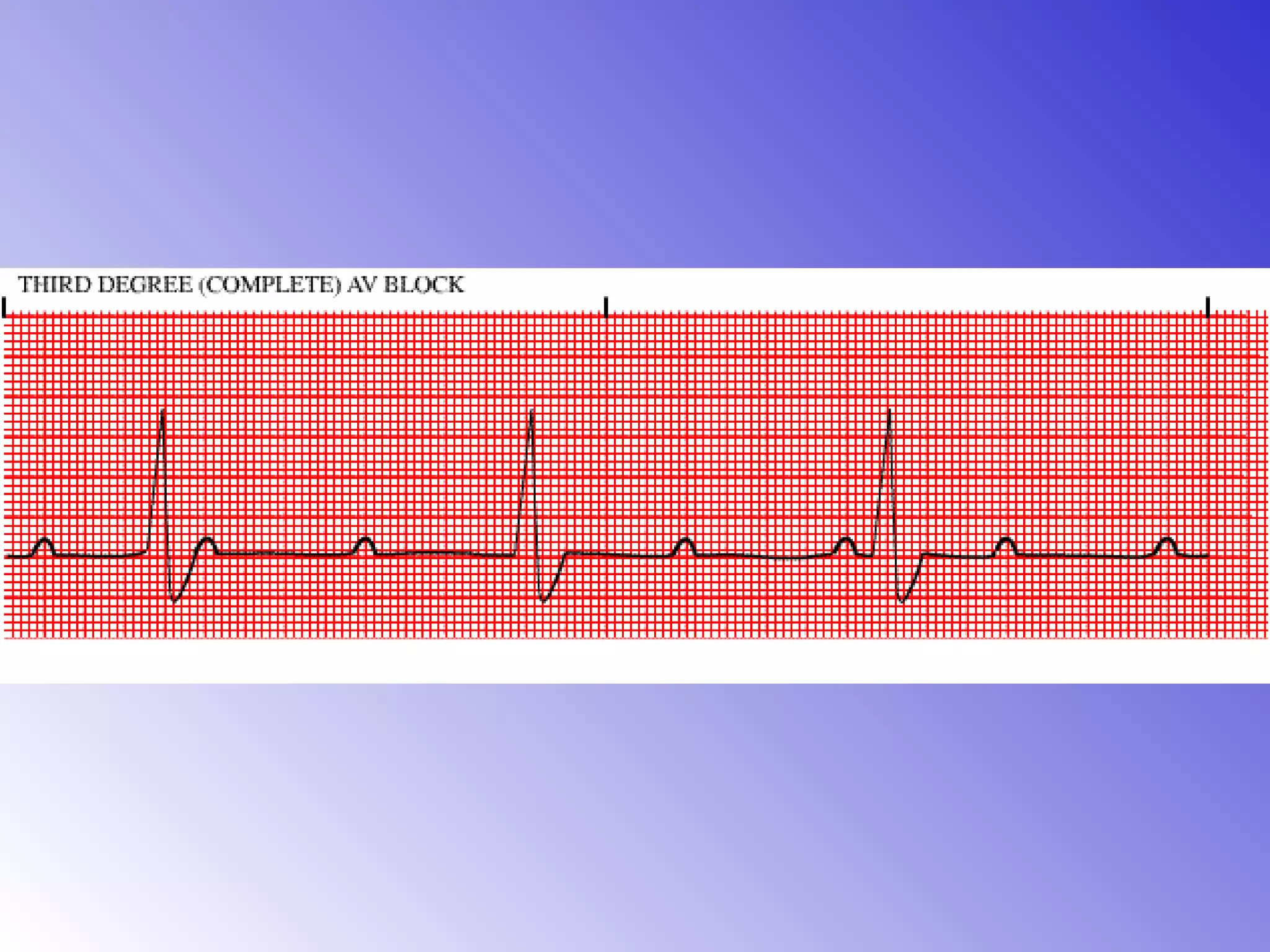
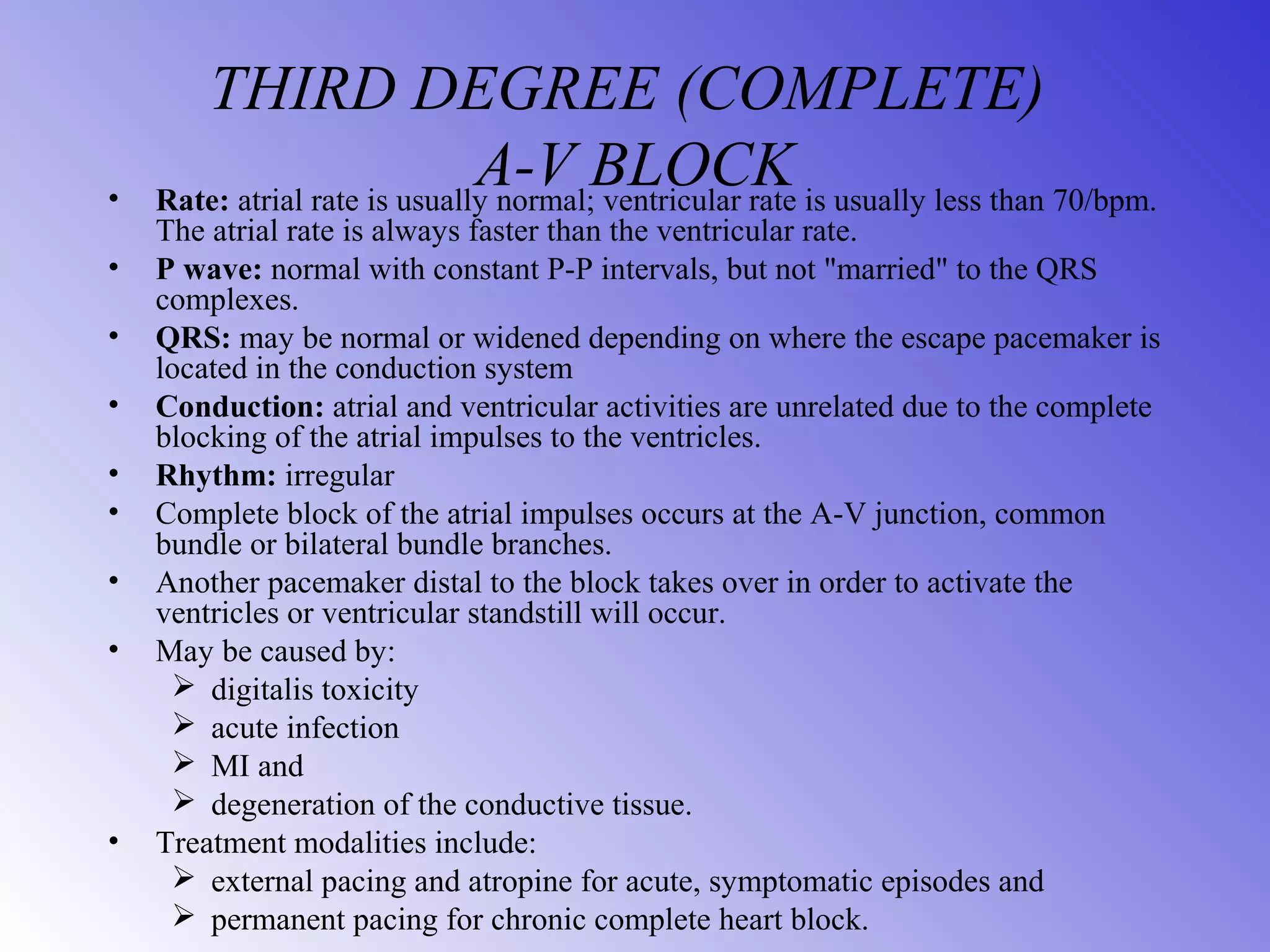
THIRD DEGREE (COMPLETE)
A-V BLOCK• Rate: atrial rate is usually normal; ventricular rate is usually less than 70/bpm.
The atrial rate is always faster than the ventricular rate.
• P wave: normal with constant P-P intervals, but not "married" to the QRS
complexes.
• QRS: may be normal or widened depending on where the escape pacemaker is
located in the conduction system
• Conduction: atrial and ventricular activities are unrelated due to the complete
blocking of the atrial impulses to the ventricles.
• Rhythm: irregular
• Complete block of the atrial impulses occurs at the A-V junction, common
bundle or bilateral bundle branches.
• Another pacemaker distal to the block takes over in order to activate the
ventricles or ventricular standstill will occur.
• May be caused by:
 digitalis toxicity
 acute infection
 MI and
 degeneration of the conductive tissue.
• Treatment modalities include:
 external pacing and atropine for acute, symptomatic episodes and
 permanent pacing for chronic complete heart block.
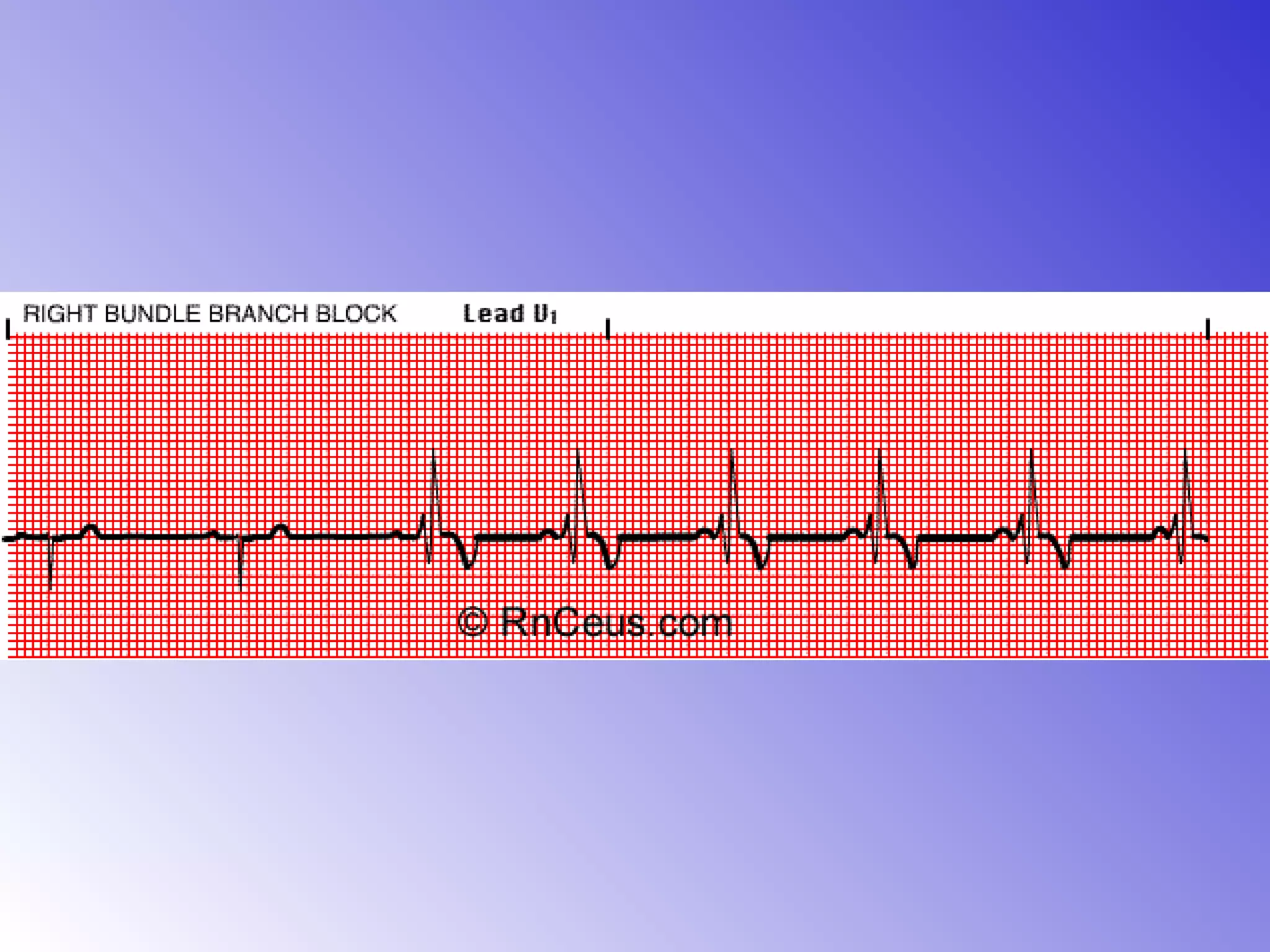
RIGHT BUNDLE BRANCH BLOCK
• Rate: variable
• P wave: normal if the underlying rhythm is sinus
• QRS: wide; > 0.12 seconds
• Conduction: This block occurs in the right or left bundle branches or
in both. The ventricle that is supplied by the blocked bundle is
depolarized abnormally.
• Rhythm: regular or irregular depending on the underlying rhythm.
• Left bundle branch block is more ominous than right bundle branch
block because it usually is present in diseased hearts. Both may be
caused by hypertension, MI, or cardiomyopathy. A bifasicular block
may progress to third degree heart block.
• Treatment is artificial pacing for a bifasicular block that is associated
with an acute MI.
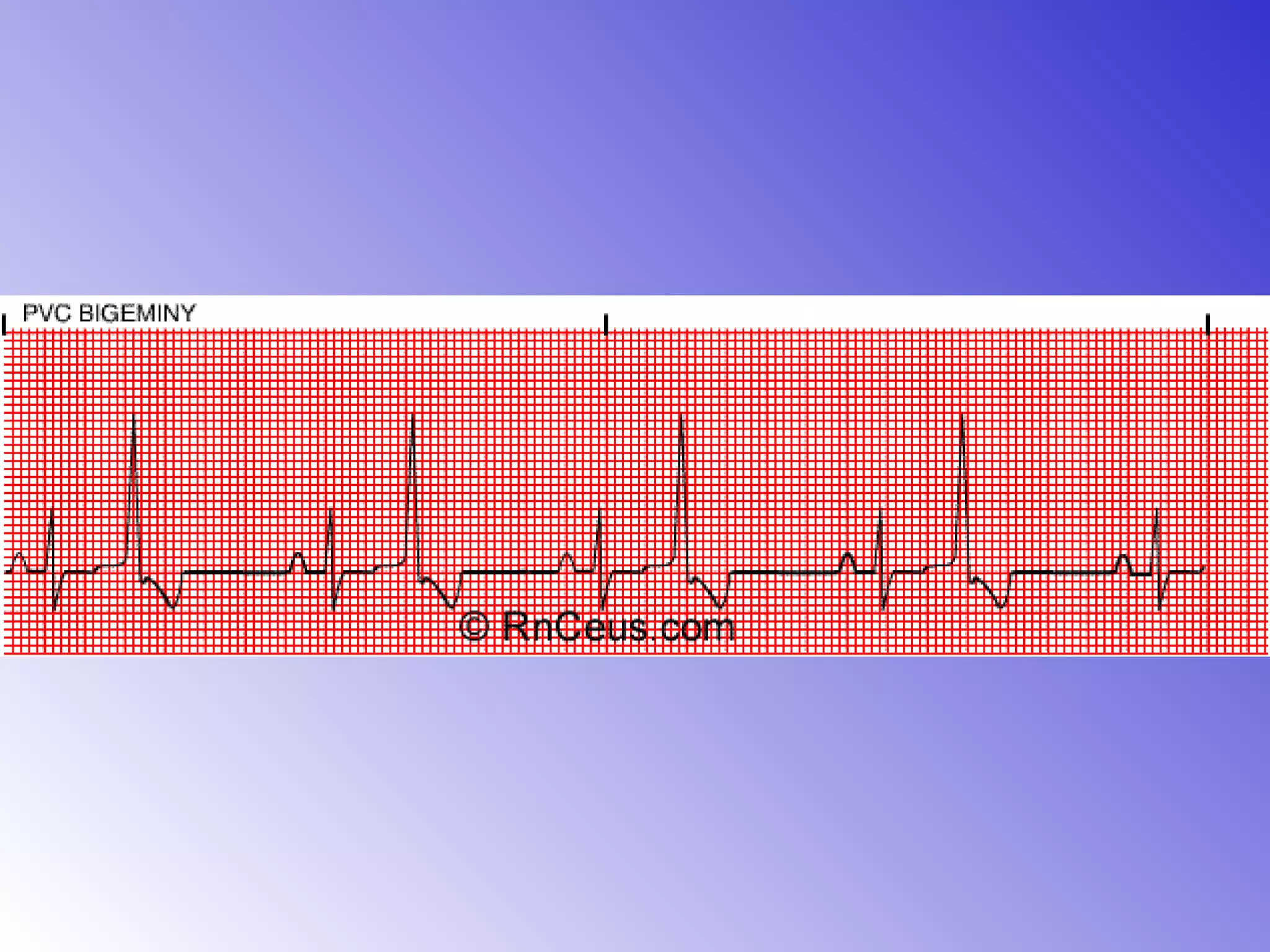
PVC BIGEMNY
• Rate: variable
• P wave: usually obscured by the QRS, PST or T wave of the PVC
• QRS: wide > 0.12 seconds; morphology is bizarre with the ST segment and the T wave
opposite in polarity. May be multifocal and exhibit different morphologies.
• Conduction: the impulse originates below the branching portion of the Bundle of His;
full compensatory pause is characteristic.
• Rhythm: irregular. PVC's may occur in singles, couplets or triplets; or in bigeminy,
trigeminy or quadrigeminy.
• PVCs can occur in healthy hearts. For example, an increase in circulating
catecholamines can cause PVCs. They also occur in diseased hearts and from
drug (such as digitalis) toxicities.
• Treatment is required if they are:
 associated with an acute MI,
 occur as couplets, bigeminy or trigeminy,
 are multifocal, or
 are frequent (>6/min).
• Interventions include:
 lidocaine,
 pronestyl, or
 quinidine.
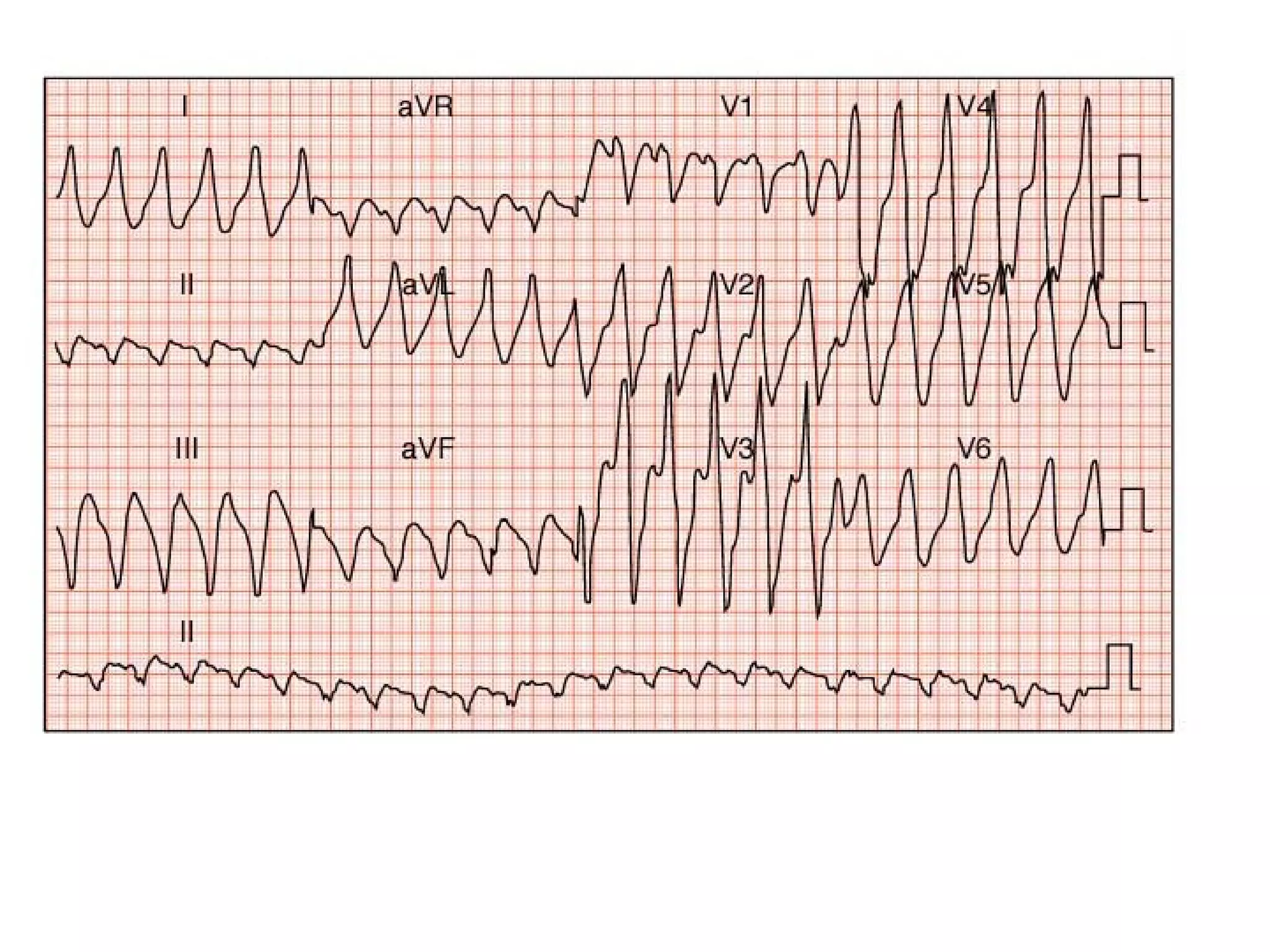
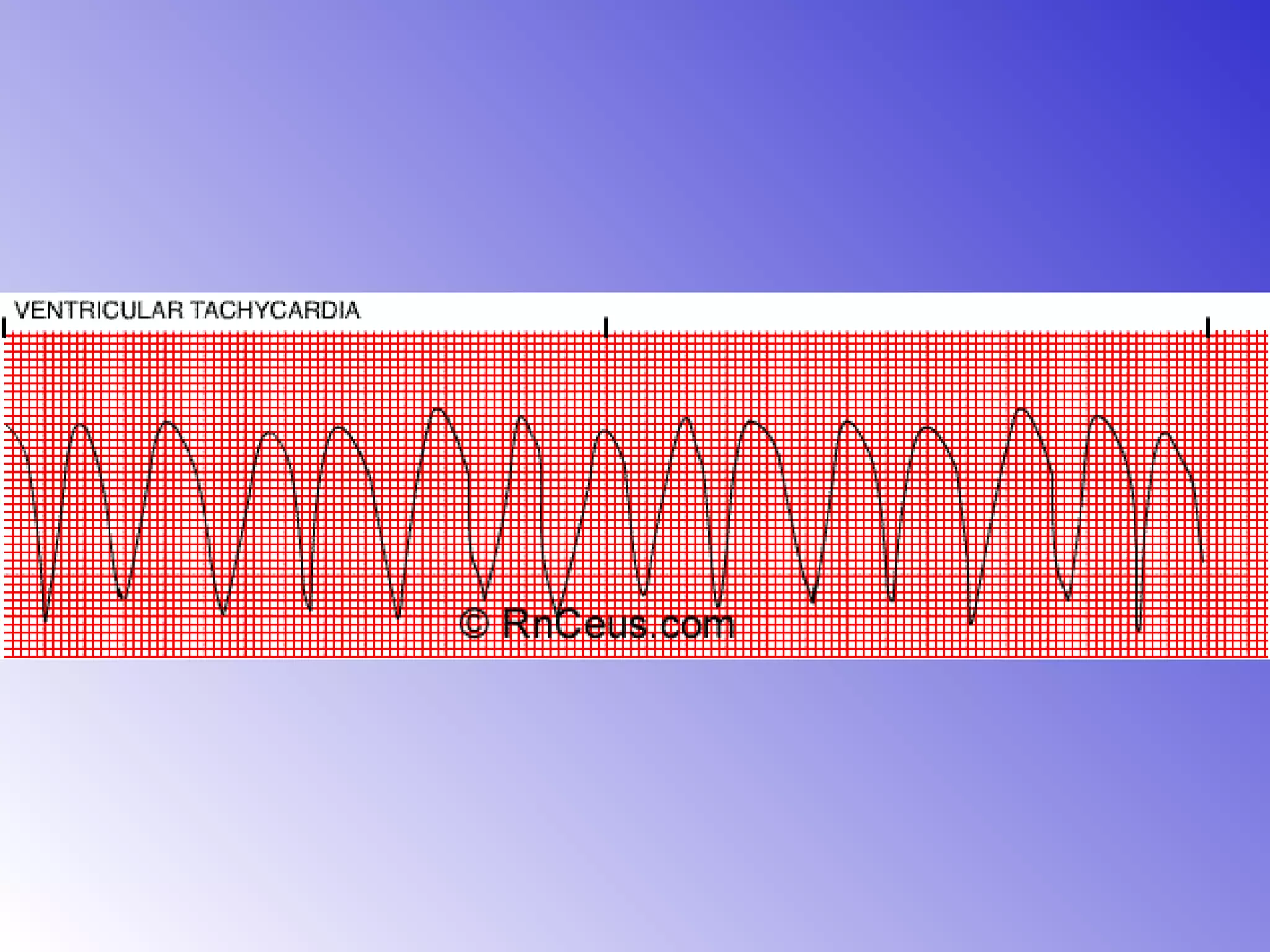
VENTRICULAR TACHYCARDIA
• Rate: usually between 100 to 220/bpm, but can be as rapid as 250/bpm
• P wave: obscured if present and are unrelated to the QRS complexes.
• QRS: wide and bizarre morphology
• Conduction: as with PVCs
• Rhythm: three or more ventricular beats in a row; may be regular or irregular.
• Ventricular tachycardia almost always occurs in diseased hearts.
• Some common causes are:
 CAD
 acute MI
 digitalis toxicity
 CHF
 ventricular aneurysms.
• Patients are often symptomatic with this dysrhythmia.
• Ventricular tachycardia can quickly deteriorate into ventricular fibrillation.
 Electrical countershock is the intervention of choice if the patient is
symptomatic and rapidly deteriorating.
 Some pharmacological interventions include lidocaine, pronestyl, and
bretylium.
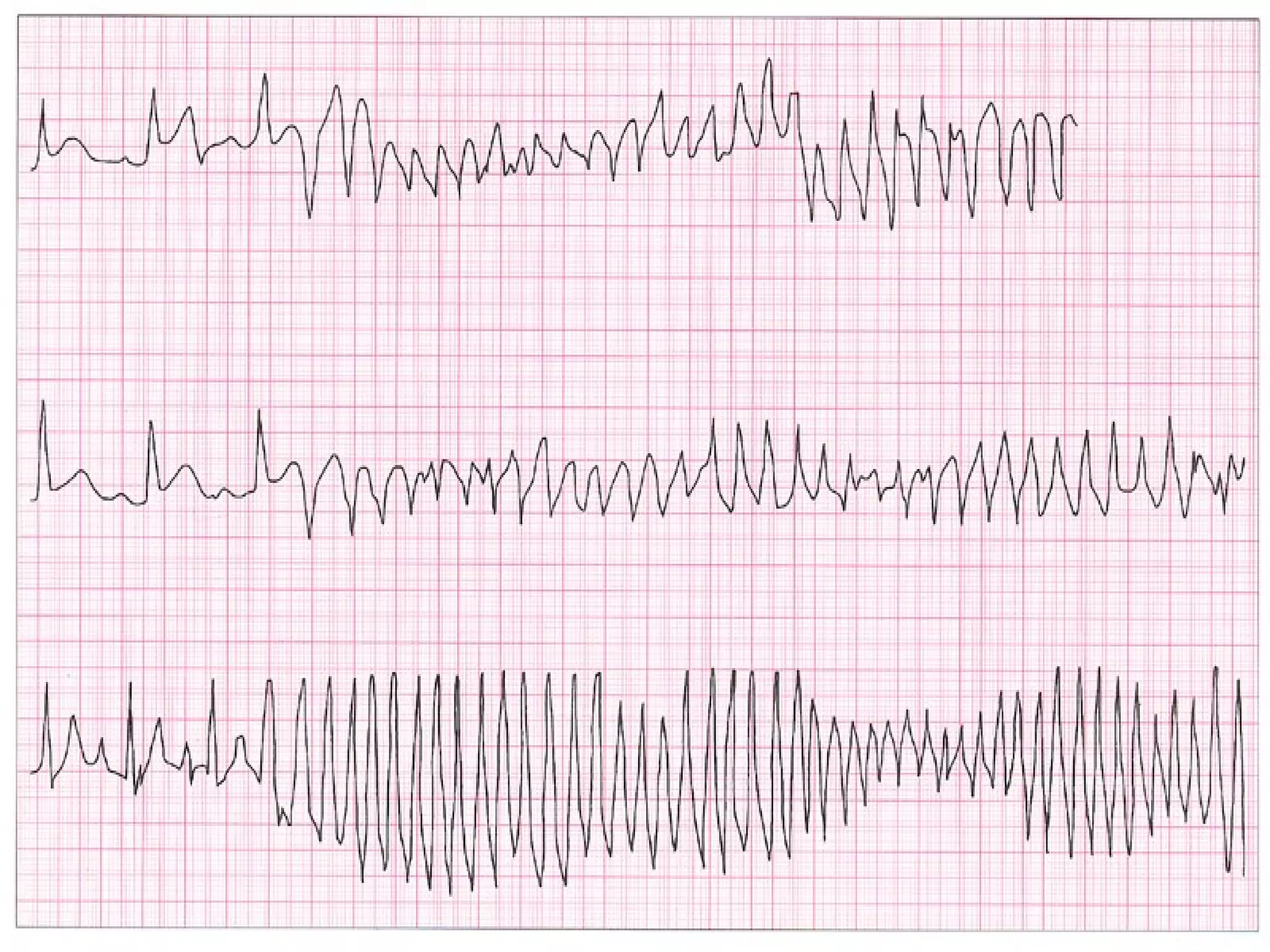
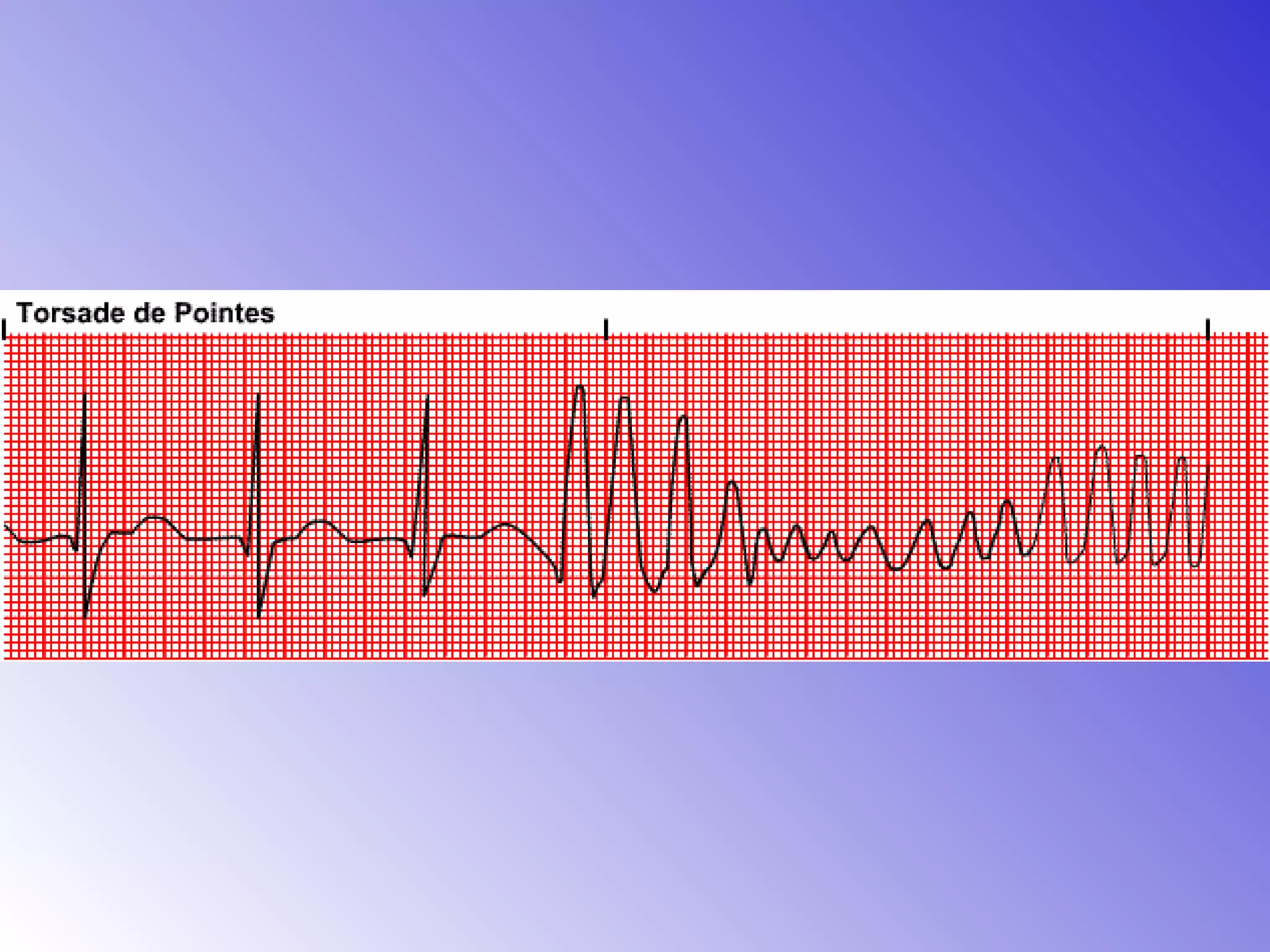
TORSADE DE POINTES
• Rate: usually between 150 to 220/bpm,
• P wave: obscured if present
• QRS: wide and bizarre morphology
• Conduction: as with PVCs
• Rhythm: Irregular
• Paroxysmal –starting and stopping suddenly
• Hallmark of this rhythm is the upward and downward deflection of the QRS
complexes around the baseline. The term Torsade de Pointes means "twisting
about the points."
• Consider it V-tach if it doesn’t respond to antiarrythmic therapy or treatments
• Caused by:
 drugs which lengthen the QT interval such as quinidine
 electrolyte imbalances, particularly hypokalemia
 myocardial ischemia
• Treatment:
 Synchronized cardioversion is indicated when the patient is unstable.
 IV magnesium
 IV Potassium to correct an electrolyte imbalance
 Overdrive pacing
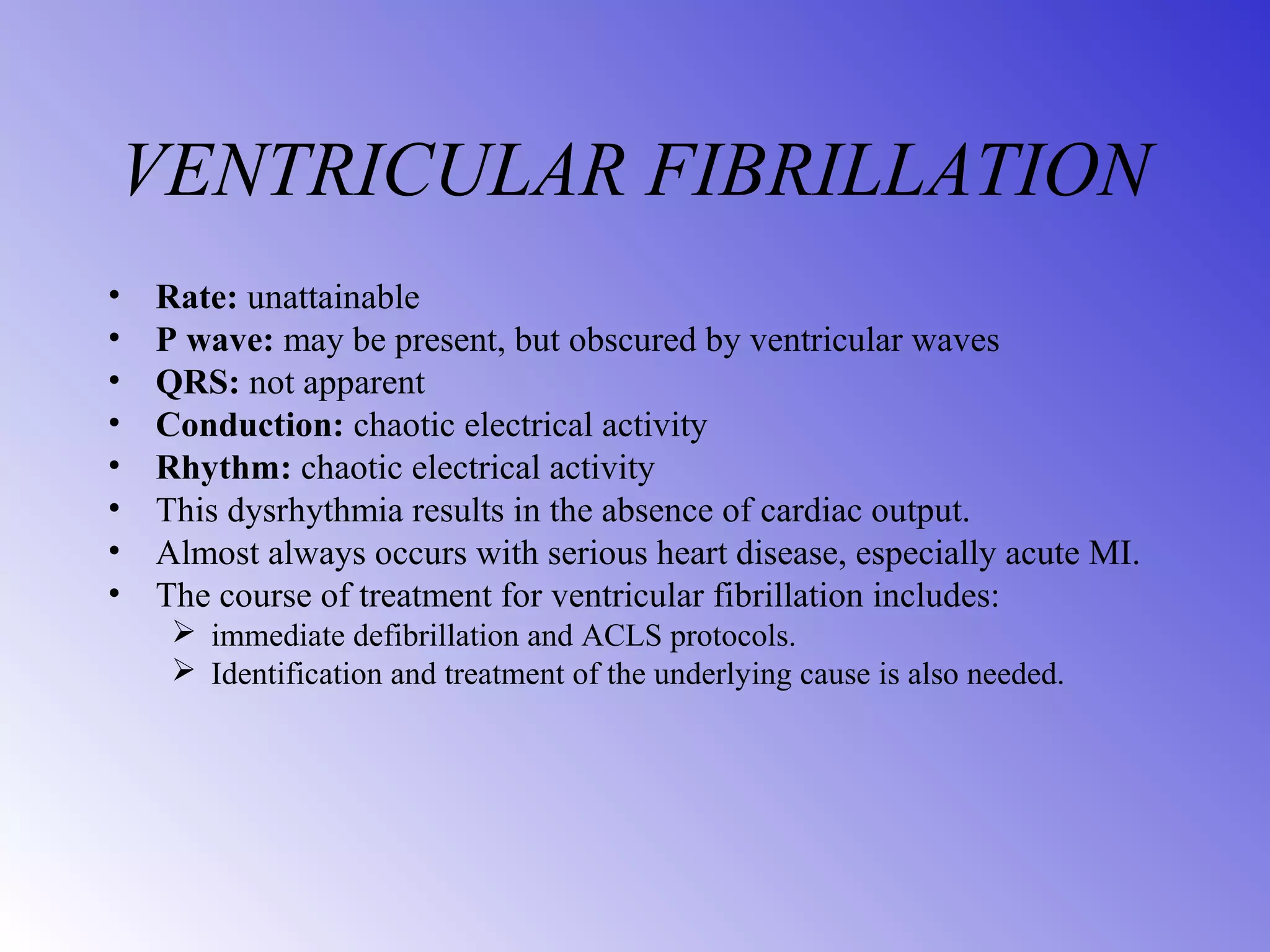
VENTRICULAR FIBRILLATION
• Rate: unattainable
• P wave: may be present, but obscured by ventricular waves
• QRS: not apparent
• Conduction: chaotic electrical activity
• Rhythm: chaotic electrical activity
• This dysrhythmia results in the absence of cardiac output.
• Almost always occurs with serious heart disease, especially acute MI.
• The course of treatment for ventricular fibrillation includes:
 immediate defibrillation and ACLS protocols.
 Identification and treatment of the underlying cause is also needed.
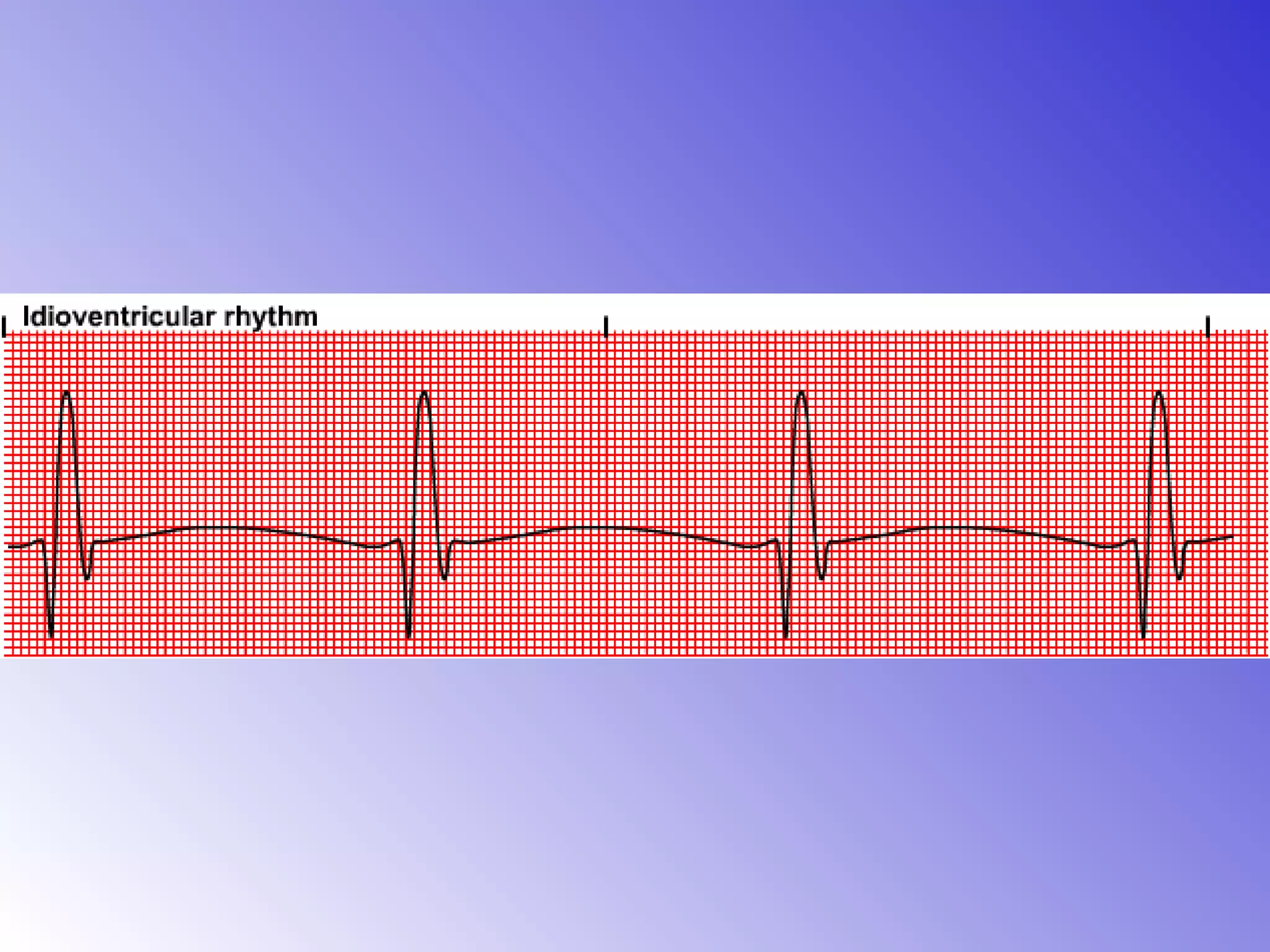
IDIOVENTRICULAR RHYTHM• Rate: 20 to 40 beats per minute
• P wave: Absent
• QRS: Widened
• Conduction: Failure of primary pacemaker
• Rhythm: Regular
• Absent P wave
Widened QRS > 0.12 sec.
Also called " dying heart" rhythm
Pacemaker will most likely be needed to re-establish a normal heart rate.
• Causes:
– Myocardial Infarction
– Pacemaker Failure
– Metabolic imbalance
– Myoardial Ischemia
• Treatment goals include measures to improve cardiac output and establish a normal
rhythm and rate.
• Options include:
– Atropine
– Pacing
• Caution: Supressing the ventricular rhythm is contraindicated because that rhythm
protects the heart from complete standstill.
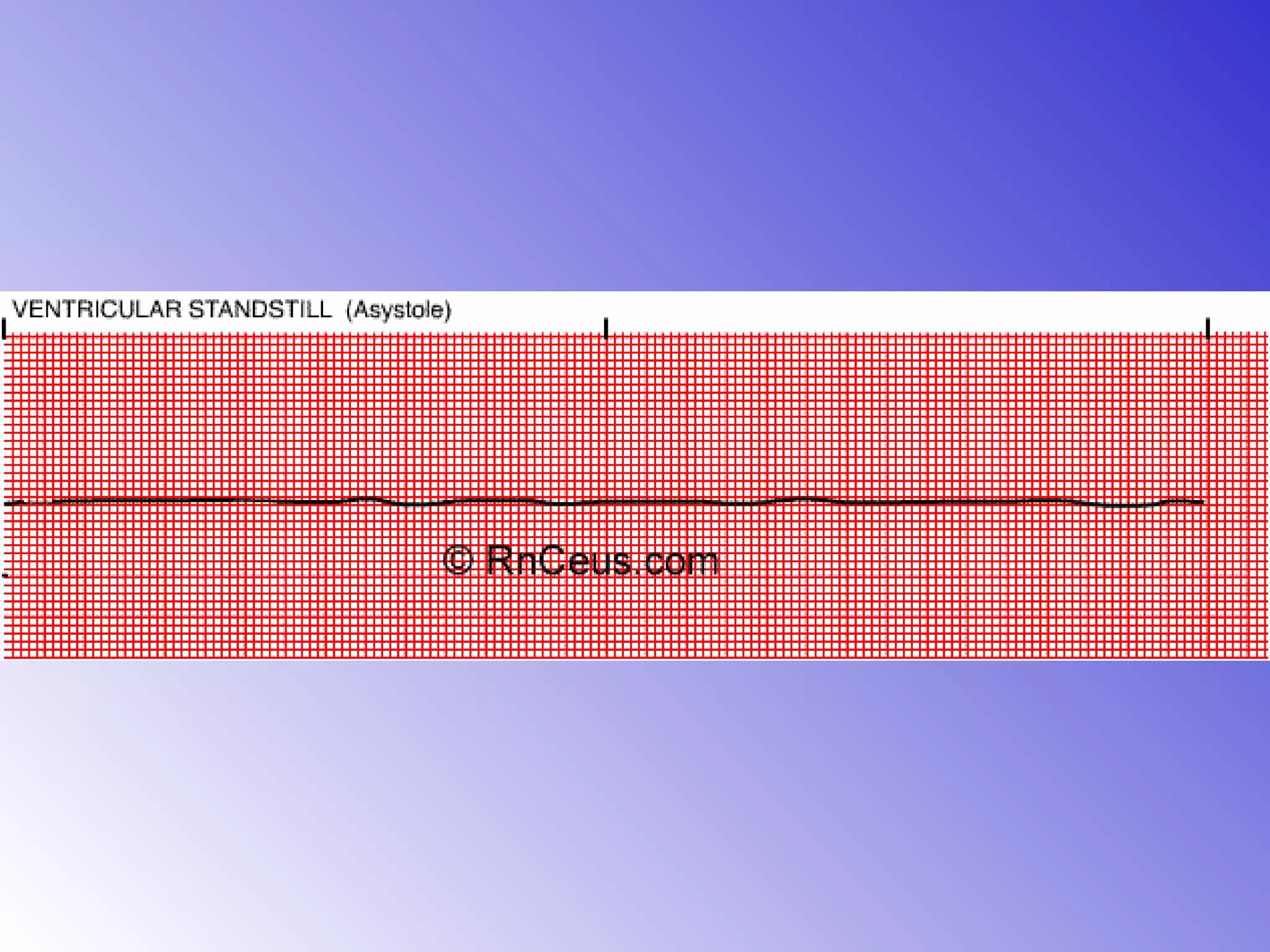
VENTRICULAR STANDSTILL
(ASYSTOLE)
• Rate: none
• P wave: may be seen, but there is no ventricular response
• QRS: none
• Conduction: none
• Rhythm: none
• Asystole occurs most commonly following the termination of atrial,
AV junctional or ventricular tachycardias. This pause is usually
insignificant.
• Asystole of longer duration in the presence of acute MI and CAD is
frequently fatal.
• Interventions include:
 CPR,
 artificial pacing, and
 atropine.

Arrhythmia diagnosis and management

  • 1.
    Arrhythmia Diagnosis and Management MohammedR Arafah MBBS FACP FACPC FACC King Saud University
  • 4.
    Arrhythmia Presentation • Palpitation. •Dizziness. • Chest Pain. • Dyspnea. • Fainting. • Sudden cardiac death.
  • 5.
    Etiology • Physiological • Pathological: Valvular heart disease.  Ischemic heart disease.  Hypertensive heart diseases.  Congenital heart disease.  Cardiomyopathies.  Carditis.  RV dysplasia.  Drug related.  Pericarditis.  Pulmonary diseases.  Others.
  • 6.
    Arrhythmia Assessment • ECG •24h Holter monitor • Echocardiogram • Stress test • Coronary angiography • Electrophysiology study
  • 7.
    Mechanism of Arrhthmogensis 1.Disorder of impulse formation. a) Automaticity. b) Triggered Activity. 1) Early after depolarization. 2) Delayed after depolarization. 2. Disorder of impulse conduction. a) Block – Reentry. b) Reflection. 3. Combined disorder.
  • 17.
    SINUS TACHYCARDIA• Rate:101-160/min • P wave: sinus • QRS: normal • Conduction: normal • Rhythm: regular or slightly irregular • The clinical significance of this dysrhythmia depends on the underlying cause. It may be normal. • Underlying causes include:  increased circulating catecholamines  CHF  hypoxia  PE  increased temperature  stress  response to pain • Treatment includes identification of the underlying cause and correction.
  • 19.
    SINUS BRADYCARDIA • Rate:40-59 bpm • P wave: sinus • QRS: Normal (.06-.12) • Conduction: P-R normal or slightly prolonged at slower rates • Rhythm: regular or slightly irregular • This rhythm is often seen as a normal variation in athletes, during sleep, or in response to a vagal maneuver. If the bradycardia becomes slower than the SA node pacemaker, a junctional rhythm may occur. • Treatment includes:  treat the underlying cause,  atropine,  isuprel, or  artificial pacing if patient is hemodynamically compromised.
  • 21.
    SINUS ARRHYTHIMIA • Rate:45-100/bpm • P wave: sinus • QRS: normal • Conduction: normal • Rhythm: regularly irregular • The rate usually increases with inspiration and decreases with expiration. • This rhythm is most commonly seen with respiration due to fluctuations in vagal tone. • The non respiratory form is present in diseased hearts and sometimes confused with sinus arrset (also known as "sinus pause"). • Treatment is not usually required unless symptomatic bradycardia is present.
  • 23.
    PREAMATURE ATRIAL CONTRACTIONS • Rate:normal or accelerated • P wave: usually have a different morphology than sinus P waves because they originate from an ectopic pacemaker • QRS: normal • Conduction: normal, however the ectopic beats may have a different P-R interval. • Rhythm: PAC's occur early in the cycle and they usually do not have a complete compensatory pause. • PAC's occur normally in a non diseased heart. • However, if they occur frequently, they may lead to a more serious atrial dysrhythmias. • They can also result from CHF, ischemia and COPD.
  • 25.
    SINUS PAUSE, ARREST •Rate: normal • P wave: those that are present are normal • QRS: normal • Conduction: normal • Rhythm: The basic rhythm is regular. The length of the pause is not a multiple of the sinus interval. • This may occur in individuals with healthy hearts. It may also occur with increased vagal tone, myocarditis, MI, and digitalis toxicity. • If the pause is prolonged, escape beats may occur. • The treatment of this dysrhythmia depends on the underlying cause.  If the cause is due to increased vagal tone and the patient is symptomatic, atropine may be indicated.
  • 27.
    PAROXYSMAL ATRIAL TACHYCARDIA • Rate:atrial 160-250/min: may conduct to ventricles 1:1, or 2:1, 3:1, 4:1 into the presence of a block. • P wave: morphology usually varies from sinus • QRS: normal (unless associated with aberrant ventricular conduction). • Conduction: P-R interval depends on the status of AV conduction tissue and atrial rate: may be normal, abnormal, or not measurable. • PAT may occur in the normal as well as diseased heart.  It is a common complication of Wolfe-Parkinson-White syndrome. • This rhythm is often transient and doesn't require treatment.  However, it can be terminated with vagal maneuvers.  Digoxin, antiarrhythmics, and cardioversion may be used.
  • 30.
    ATRIAL FIBRILLATION • Rate:atrial rate usually between 400-650/bpm. • P wave: not present; wavy baseline is seen instead. • QRS: normal • Conduction: variable AV conduction; if untreated the ventricular response is usually rapid. • Rhythm: irregularly irregular. (This is the hallmark of this dysrhythmia). • Atrial fibrillation may occur paroxysmally, but it often becomes chronic. It is usually associated with COPD, CHF or other heart disease. • Treatment includes:  Digoxin to slow the AV conduction rate.  Cardioversion may also be necessary to terminate this rhythm.
  • 32.
    FIRST DEGREE A-VHEART BLOCK• Rate: variable • P wave: normal • QRS: normal • Conduction: impulse originates in the SA node but has prolonged conduction in the AV junction; P-R interval is > 0.20 seconds. • Rhythm: regular • This is the most common conduction disturbance. It occurs in both healthy and diseased hearts. • First degree AV block can be due to:  inferior MI,  digitalis toxicity  hyperkalemia  increased vagal tone  acute rheumatic fever  myocarditis. • Interventions include treating the underlying cause and observing for progression to a more advanced AV block.
  • 34.
    SECOND DEGREE A-VBLOCK MOBITZ TYPE I (WENCKEBACK) • Rate: variable • P wave: normal morphology with constant P-P interval • QRS: normal • Conduction: the P-R interval is progressively longer until one P wave is blocked; the cycle begins again following the blocked P wave. • Rhythm: irregular • Second degree AV block type I occurs in the AV node above the Bundle of His. • It is often transient and may be due to acute inferior MI or digitalis toxicity. • Treatment is usually not indicated as this rhythm usually produces no symptoms.
  • 36.
    SECOND DEGREE A-VBLOCK MOBITZ TYPE II • Rate: variable • P wave: normal with constant P-P intervals • QRS: usually widened because this is usually associated with a bundle branch block. • Conduction: P-R interval may be normal or prolonged, but it is constant until one P wave is not conducted to the ventricles. • Rhythm: usually regular when AV conduction ratios are constant • This block usually occurs below the Bundle of His and may progress into a higher degree block. • It can occur after an acute anterior MI due to damage in the bifurcation or the bundle branches. • It is more serious than the type I block. • Treatment is usually artificial pacing.
  • 38.
    THIRD DEGREE (COMPLETE) A-VBLOCK• Rate: atrial rate is usually normal; ventricular rate is usually less than 70/bpm. The atrial rate is always faster than the ventricular rate. • P wave: normal with constant P-P intervals, but not "married" to the QRS complexes. • QRS: may be normal or widened depending on where the escape pacemaker is located in the conduction system • Conduction: atrial and ventricular activities are unrelated due to the complete blocking of the atrial impulses to the ventricles. • Rhythm: irregular • Complete block of the atrial impulses occurs at the A-V junction, common bundle or bilateral bundle branches. • Another pacemaker distal to the block takes over in order to activate the ventricles or ventricular standstill will occur. • May be caused by:  digitalis toxicity  acute infection  MI and  degeneration of the conductive tissue. • Treatment modalities include:  external pacing and atropine for acute, symptomatic episodes and  permanent pacing for chronic complete heart block.
  • 40.
    RIGHT BUNDLE BRANCHBLOCK • Rate: variable • P wave: normal if the underlying rhythm is sinus • QRS: wide; > 0.12 seconds • Conduction: This block occurs in the right or left bundle branches or in both. The ventricle that is supplied by the blocked bundle is depolarized abnormally. • Rhythm: regular or irregular depending on the underlying rhythm. • Left bundle branch block is more ominous than right bundle branch block because it usually is present in diseased hearts. Both may be caused by hypertension, MI, or cardiomyopathy. A bifasicular block may progress to third degree heart block. • Treatment is artificial pacing for a bifasicular block that is associated with an acute MI.
  • 42.
    PVC BIGEMNY • Rate:variable • P wave: usually obscured by the QRS, PST or T wave of the PVC • QRS: wide > 0.12 seconds; morphology is bizarre with the ST segment and the T wave opposite in polarity. May be multifocal and exhibit different morphologies. • Conduction: the impulse originates below the branching portion of the Bundle of His; full compensatory pause is characteristic. • Rhythm: irregular. PVC's may occur in singles, couplets or triplets; or in bigeminy, trigeminy or quadrigeminy. • PVCs can occur in healthy hearts. For example, an increase in circulating catecholamines can cause PVCs. They also occur in diseased hearts and from drug (such as digitalis) toxicities. • Treatment is required if they are:  associated with an acute MI,  occur as couplets, bigeminy or trigeminy,  are multifocal, or  are frequent (>6/min). • Interventions include:  lidocaine,  pronestyl, or  quinidine.
  • 44.
    VENTRICULAR TACHYCARDIA • Rate:usually between 100 to 220/bpm, but can be as rapid as 250/bpm • P wave: obscured if present and are unrelated to the QRS complexes. • QRS: wide and bizarre morphology • Conduction: as with PVCs • Rhythm: three or more ventricular beats in a row; may be regular or irregular. • Ventricular tachycardia almost always occurs in diseased hearts. • Some common causes are:  CAD  acute MI  digitalis toxicity  CHF  ventricular aneurysms. • Patients are often symptomatic with this dysrhythmia. • Ventricular tachycardia can quickly deteriorate into ventricular fibrillation.  Electrical countershock is the intervention of choice if the patient is symptomatic and rapidly deteriorating.  Some pharmacological interventions include lidocaine, pronestyl, and bretylium.
  • 46.
    TORSADE DE POINTES •Rate: usually between 150 to 220/bpm, • P wave: obscured if present • QRS: wide and bizarre morphology • Conduction: as with PVCs • Rhythm: Irregular • Paroxysmal –starting and stopping suddenly • Hallmark of this rhythm is the upward and downward deflection of the QRS complexes around the baseline. The term Torsade de Pointes means "twisting about the points." • Consider it V-tach if it doesn’t respond to antiarrythmic therapy or treatments • Caused by:  drugs which lengthen the QT interval such as quinidine  electrolyte imbalances, particularly hypokalemia  myocardial ischemia • Treatment:  Synchronized cardioversion is indicated when the patient is unstable.  IV magnesium  IV Potassium to correct an electrolyte imbalance  Overdrive pacing
  • 48.
    VENTRICULAR FIBRILLATION • Rate:unattainable • P wave: may be present, but obscured by ventricular waves • QRS: not apparent • Conduction: chaotic electrical activity • Rhythm: chaotic electrical activity • This dysrhythmia results in the absence of cardiac output. • Almost always occurs with serious heart disease, especially acute MI. • The course of treatment for ventricular fibrillation includes:  immediate defibrillation and ACLS protocols.  Identification and treatment of the underlying cause is also needed.
  • 50.
    IDIOVENTRICULAR RHYTHM• Rate:20 to 40 beats per minute • P wave: Absent • QRS: Widened • Conduction: Failure of primary pacemaker • Rhythm: Regular • Absent P wave Widened QRS > 0.12 sec. Also called " dying heart" rhythm Pacemaker will most likely be needed to re-establish a normal heart rate. • Causes: – Myocardial Infarction – Pacemaker Failure – Metabolic imbalance – Myoardial Ischemia • Treatment goals include measures to improve cardiac output and establish a normal rhythm and rate. • Options include: – Atropine – Pacing • Caution: Supressing the ventricular rhythm is contraindicated because that rhythm protects the heart from complete standstill.
  • 52.
    VENTRICULAR STANDSTILL (ASYSTOLE) • Rate:none • P wave: may be seen, but there is no ventricular response • QRS: none • Conduction: none • Rhythm: none • Asystole occurs most commonly following the termination of atrial, AV junctional or ventricular tachycardias. This pause is usually insignificant. • Asystole of longer duration in the presence of acute MI and CAD is frequently fatal. • Interventions include:  CPR,  artificial pacing, and  atropine.