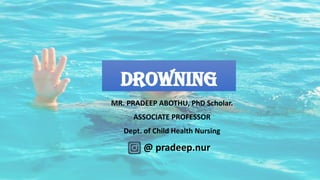
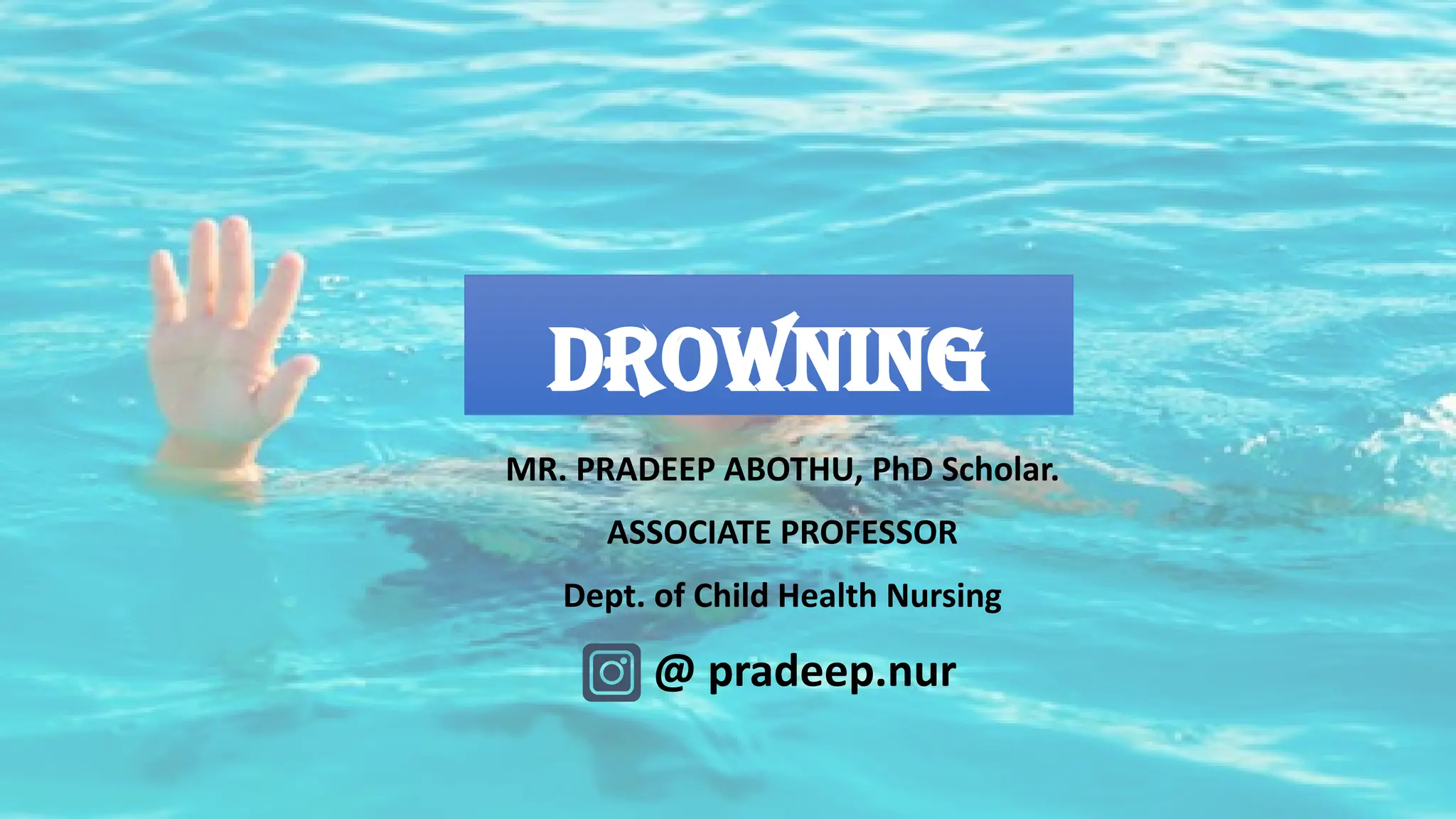

DROWNING
MR. PRADEEP ABOTHU, PhD Scholar.
ASSOCIATE PROFESSOR
Dept. of Child Health Nursing
@ pradeep.nur
INTRODUCTION
• Drowning is a serious and preventable cause of death and injury, particularly in children.
• It occurs when a person's airway becomes blocked by water, preventing them from
breathing.
• Drowning can happen in various settings, including swimming pools, bathtubs, natural
bodies of water, and even small containers with water.
• It is crucial to be aware of the risks and preventive measures to protect children from
drowning.
• Definition: Drowning is defined as the process of experiencing respiratory
impairment from submersion in liquid, usually water. It results in difficulty breathing,
insufficient oxygen intake, and, if not treated promptly, can lead to death.
• Near Drowning: Near drowning, also referred to as a non-fatal drowning incident, is
a term used to describe a situation in which an individual has experienced a
submersion in water but has survived without fatal consequences.
Types of Drowning:
There are two types of drowning.
• Wet Drowning: This is the most common type of drowning. It involves the
aspiration of water into the lungs, causing difficulty breathing. Children who
experience wet drowning typically need immediate medical attention.
• Dry Drowning: This type of drowning occurs when a child inhales water into their
airways, leading to a spasm that can block airflow. Even after the child is removed
from the water, they may still experience breathing difficulties. It can be delayed
and may happen hours after the incident.
Causes of drowning:
The factors leading to drowning incidents can differ
significantly based on age groups, ranging from infants to
adolescents.
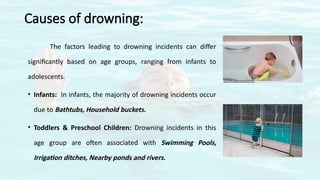
• Infants: In infants, the majority of drowning incidents occur
due to Bathtubs, Household buckets.
• Toddlers & Preschool Children: Drowning incidents in this
age group are often associated with Swimming Pools,
Irrigation ditches, Nearby ponds and rivers.
• School-Age Children: Swimming or boating activities, in natural water reservoirs
such as lakes, ponds, rivers, and canals.
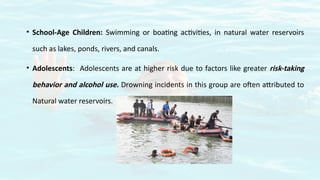
• Adolescents: Adolescents are at higher risk due to factors like greater risk-taking
behavior and alcohol use. Drowning incidents in this group are often attributed to
Natural water reservoirs.
Clinical manifestations:
• Coughing and choking
• Difficulty breathing or rapid breathing
• Bluish skin or lips (cyanosis)
• Altered mental status or confusion
• Chest pain
• Frothy or pink-tinged sputum
• Vomiting
• Hypothermia
• Decreased or absent breath
sounds
• Loss of consciousness
• Abnormal heart rhythms
(arrhythmias)
Drowning can lead to various clinical manifestations, depending on the
extent of water aspiration and the child’s health.
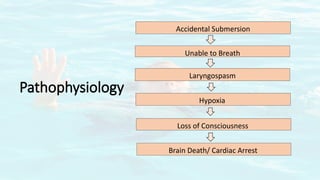
Pathophysiology
Accidental Submersion
Unable to Breath
Laryngospasm
Hypoxia
Loss of Consciousness
Brain Death/ Cardiac Arrest
Therapeutic Management:
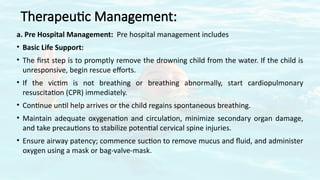
a. Pre Hospital Management: Pre hospital management includes
• Basic Life Support:
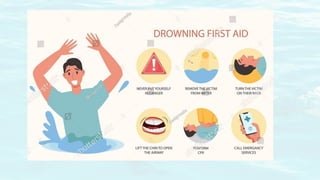
• The first step is to promptly remove the drowning child from the water. If the child is
unresponsive, begin rescue efforts.
• If the victim is not breathing or breathing abnormally, start cardiopulmonary
resuscitation (CPR) immediately.
• Continue until help arrives or the child regains spontaneous breathing.
• Maintain adequate oxygenation and circulation, minimize secondary organ damage,
and take precautions to stabilize potential cervical spine injuries.
• Ensure airway patency; commence suction to remove mucus and fluid, and administer
oxygen using a mask or bag-valve-mask.
b. Hospital Based Management:
• Continue to prioritize maintaining adequate oxygenation and circulation.
• Correct acidosis with sodium bicarbonate if indicated by arterial blood gases.
• Initiate warming measures using warm blankets and oxygen to prevent
hypothermia.
• Institute corrections for fluid and electrolyte imbalances as necessary.
• Admit the child to the hospital for observation, even if they are in a stable
condition after the initial rescue and emergency treatment.
Preventive Measures:
• Never Leave Children Unattended. Ensure that children are closely
supervised by an adult when they are near water.
• Empty containers like buckets, tubs, and inflatable pools immediately
after use to prevent accidents.
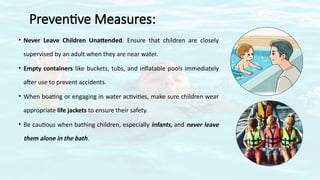
• When boating or engaging in water activities, make sure children wear
appropriate life jackets to ensure their safety.
• Be cautious when bathing children, especially infants, and never leave
them alone in the bath.
• Install secure fencing around home pools and ensure that gates are locked when
the pool is not in use.
• Be aware of open wells, ponds, and other water bodies in rural areas, and take
steps to secure or supervise children in such environments.
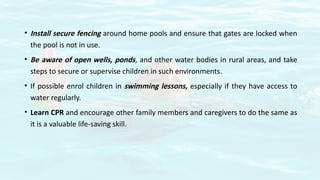
• If possible enrol children in swimming lessons, especially if they have access to
water regularly.
• Learn CPR and encourage other family members and caregivers to do the same as
it is a valuable life-saving skill.
Thanks!

DROWNING: TYPES, CAUSES, TREATMENT, PREVENTION.pptx

  • 1.
    DROWNING MR. PRADEEP ABOTHU,PhD Scholar. ASSOCIATE PROFESSOR Dept. of Child Health Nursing @ pradeep.nur
  • 2.
    INTRODUCTION • Drowning isa serious and preventable cause of death and injury, particularly in children. • It occurs when a person's airway becomes blocked by water, preventing them from breathing. • Drowning can happen in various settings, including swimming pools, bathtubs, natural bodies of water, and even small containers with water. • It is crucial to be aware of the risks and preventive measures to protect children from drowning.
  • 3.
    • Definition: Drowningis defined as the process of experiencing respiratory impairment from submersion in liquid, usually water. It results in difficulty breathing, insufficient oxygen intake, and, if not treated promptly, can lead to death. • Near Drowning: Near drowning, also referred to as a non-fatal drowning incident, is a term used to describe a situation in which an individual has experienced a submersion in water but has survived without fatal consequences.
  • 4.
    Types of Drowning: Thereare two types of drowning. • Wet Drowning: This is the most common type of drowning. It involves the aspiration of water into the lungs, causing difficulty breathing. Children who experience wet drowning typically need immediate medical attention. • Dry Drowning: This type of drowning occurs when a child inhales water into their airways, leading to a spasm that can block airflow. Even after the child is removed from the water, they may still experience breathing difficulties. It can be delayed and may happen hours after the incident.
  • 5.
    Causes of drowning: Thefactors leading to drowning incidents can differ significantly based on age groups, ranging from infants to adolescents. • Infants: In infants, the majority of drowning incidents occur due to Bathtubs, Household buckets. • Toddlers & Preschool Children: Drowning incidents in this age group are often associated with Swimming Pools, Irrigation ditches, Nearby ponds and rivers.
  • 6.
    • School-Age Children:Swimming or boating activities, in natural water reservoirs such as lakes, ponds, rivers, and canals. • Adolescents: Adolescents are at higher risk due to factors like greater risk-taking behavior and alcohol use. Drowning incidents in this group are often attributed to Natural water reservoirs.
  • 7.
    Clinical manifestations: • Coughingand choking • Difficulty breathing or rapid breathing • Bluish skin or lips (cyanosis) • Altered mental status or confusion • Chest pain • Frothy or pink-tinged sputum • Vomiting • Hypothermia • Decreased or absent breath sounds • Loss of consciousness • Abnormal heart rhythms (arrhythmias) Drowning can lead to various clinical manifestations, depending on the extent of water aspiration and the child’s health.
  • 8.
    Pathophysiology Accidental Submersion Unable toBreath Laryngospasm Hypoxia Loss of Consciousness Brain Death/ Cardiac Arrest
  • 9.
    Therapeutic Management: a. PreHospital Management: Pre hospital management includes • Basic Life Support: • The first step is to promptly remove the drowning child from the water. If the child is unresponsive, begin rescue efforts. • If the victim is not breathing or breathing abnormally, start cardiopulmonary resuscitation (CPR) immediately. • Continue until help arrives or the child regains spontaneous breathing. • Maintain adequate oxygenation and circulation, minimize secondary organ damage, and take precautions to stabilize potential cervical spine injuries. • Ensure airway patency; commence suction to remove mucus and fluid, and administer oxygen using a mask or bag-valve-mask.
  • 11.
    b. Hospital BasedManagement: • Continue to prioritize maintaining adequate oxygenation and circulation. • Correct acidosis with sodium bicarbonate if indicated by arterial blood gases. • Initiate warming measures using warm blankets and oxygen to prevent hypothermia. • Institute corrections for fluid and electrolyte imbalances as necessary. • Admit the child to the hospital for observation, even if they are in a stable condition after the initial rescue and emergency treatment.
  • 12.
    Preventive Measures: • NeverLeave Children Unattended. Ensure that children are closely supervised by an adult when they are near water. • Empty containers like buckets, tubs, and inflatable pools immediately after use to prevent accidents. • When boating or engaging in water activities, make sure children wear appropriate life jackets to ensure their safety. • Be cautious when bathing children, especially infants, and never leave them alone in the bath.
  • 13.
    • Install securefencing around home pools and ensure that gates are locked when the pool is not in use. • Be aware of open wells, ponds, and other water bodies in rural areas, and take steps to secure or supervise children in such environments. • If possible enrol children in swimming lessons, especially if they have access to water regularly. • Learn CPR and encourage other family members and caregivers to do the same as it is a valuable life-saving skill.
  • 14.