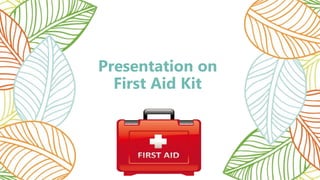
Presentation on
First Aid Kit
What is a First Aid Kit ?
A first aid kit is a collection of supplies and equipment that is
used to give medical treatment.
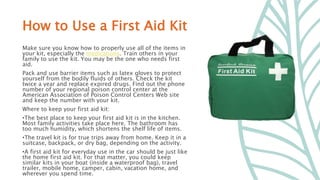
Appearance?
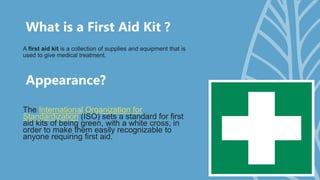
The International Organization for
Standardization (ISO) sets a standard for first
aid kits of being green, with a white cross, in
order to make them easily recognizable to
anyone requiring first aid.
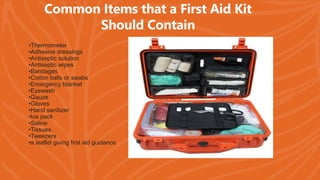
Common Items that a First Aid Kit
Should Contain
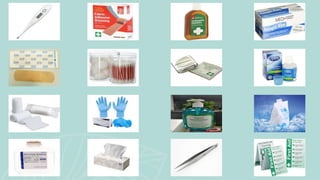
•Thermometer
•Adhesive dressings
•Antiseptic solution
•Antiseptic wipes
•Bandages
•Cotton balls or swabs
•Emergency blanket
•Eyewash
•Gauze
•Gloves
•Hand sanitizer
•Ice pack
•Saline
•Tissues
•Tweezers
•a leaflet giving first aid guidance
Types of First Aid Kit
Class B:
These are kits with a broader range and
quantity of supplies to
deal with injuries in more complex or
high-risk environments
For example, certain construction or job
sites may have a higher likelihood of
serious injuries beyond everyday first aid.
Class A:
These are kits with contents designed to
deal with most
common types of workplace injuries.
For example, office, home and school
environments or other situations with
everyday first aid requirements.
Make Your Own First Aid Kit
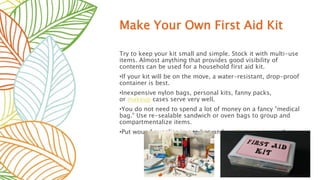
Try to keep your kit small and simple. Stock it with multi-use
items. Almost anything that provides good visibility of
contents can be used for a household first aid kit.
•If your kit will be on the move, a water-resistant, drop-proof
container is best.
•Inexpensive nylon bags, personal kits, fanny packs,
or makeup cases serve very well.
•You do not need to spend a lot of money on a fancy "medical
bag." Use re-sealable sandwich or oven bags to group and
compartmentalize items.
•Put wound supplies in one bag and medications in another.
How to Use a First Aid Kit
Make sure you know how to properly use all of the items in
your kit, especially the medications. Train others in your
family to use the kit. You may be the one who needs first
aid.
Pack and use barrier items such as latex gloves to protect
yourself from the bodily fluids of others. Check the kit
twice a year and replace expired drugs. Find out the phone
number of your regional poison control center at the
American Association of Poison Control Centers Web site
and keep the number with your kit.
Where to keep your first aid kit:
•The best place to keep your first aid kit is in the kitchen.
Most family activities take place here. The bathroom has
too much humidity, which shortens the shelf life of items.
•The travel kit is for true trips away from home. Keep it in a
suitcase, backpack, or dry bag, depending on the activity.
•A first aid kit for everyday use in the car should be just like
the home first aid kit. For that matter, you could keep
similar kits in your boat (inside a waterproof bag), travel
trailer, mobile home, camper, cabin, vacation home, and
wherever you spend time.
Thank You
Prepared By-Shrishti Mishra
Of Class-9th A
From-Sunbeam School Gonda

First aid kit ppt

  • 1.
  • 2.
    What is aFirst Aid Kit ? A first aid kit is a collection of supplies and equipment that is used to give medical treatment. Appearance? The International Organization for Standardization (ISO) sets a standard for first aid kits of being green, with a white cross, in order to make them easily recognizable to anyone requiring first aid.
  • 3.
    Common Items thata First Aid Kit Should Contain •Thermometer •Adhesive dressings •Antiseptic solution •Antiseptic wipes •Bandages •Cotton balls or swabs •Emergency blanket •Eyewash •Gauze •Gloves •Hand sanitizer •Ice pack •Saline •Tissues •Tweezers •a leaflet giving first aid guidance
  • 5.
    Types of FirstAid Kit Class B: These are kits with a broader range and quantity of supplies to deal with injuries in more complex or high-risk environments For example, certain construction or job sites may have a higher likelihood of serious injuries beyond everyday first aid. Class A: These are kits with contents designed to deal with most common types of workplace injuries. For example, office, home and school environments or other situations with everyday first aid requirements.
  • 6.
    Make Your OwnFirst Aid Kit Try to keep your kit small and simple. Stock it with multi-use items. Almost anything that provides good visibility of contents can be used for a household first aid kit. •If your kit will be on the move, a water-resistant, drop-proof container is best. •Inexpensive nylon bags, personal kits, fanny packs, or makeup cases serve very well. •You do not need to spend a lot of money on a fancy "medical bag." Use re-sealable sandwich or oven bags to group and compartmentalize items. •Put wound supplies in one bag and medications in another.
  • 7.
    How to Usea First Aid Kit Make sure you know how to properly use all of the items in your kit, especially the medications. Train others in your family to use the kit. You may be the one who needs first aid. Pack and use barrier items such as latex gloves to protect yourself from the bodily fluids of others. Check the kit twice a year and replace expired drugs. Find out the phone number of your regional poison control center at the American Association of Poison Control Centers Web site and keep the number with your kit. Where to keep your first aid kit: •The best place to keep your first aid kit is in the kitchen. Most family activities take place here. The bathroom has too much humidity, which shortens the shelf life of items. •The travel kit is for true trips away from home. Keep it in a suitcase, backpack, or dry bag, depending on the activity. •A first aid kit for everyday use in the car should be just like the home first aid kit. For that matter, you could keep similar kits in your boat (inside a waterproof bag), travel trailer, mobile home, camper, cabin, vacation home, and wherever you spend time.
  • 8.
    Thank You Prepared By-ShrishtiMishra Of Class-9th A From-Sunbeam School Gonda