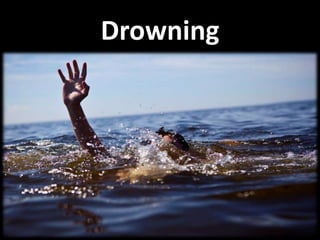
Drowning
Contents
- Examples of reasons for death in body recovered from water
- Definition of drowning
- Types of drowning
- Epidemiology
- Pathophysiology
- Causes of death
- Signs of drowning (P.M picture)
- Time passed since drowning death
- Was drowning accidental , suicidal or homicidal
- Role of Alcohol in drowning
- Drowning resuscitation
Examples of reasons for death in a
body recovered from water
- Died of natural causes before entering / while in water
(e.g. M.I)
- Hypothermia particularly in thin , old and young
people
- Injuries & unnatural causes before entering water (e.g.
assault) or after being in water (e.g. hit by boat )
- True drowning (due to aspiration of water into lungs)
Definition
Process of experiencing respiratory impairment
due to submersion or immersion in a liquid .
Three possible outcomes : No injury , Injury or
Death .
Types of drowning
1-Wet drowning
Water inhaled into lungs & Sever chest pain & if
resuscitated : no pleasant recollections
2-Dry drowning
Water not enter lungs & death occurs by
immediate sustained laryngeal spasm & if
resuscitated : panoramic views of past life
3-Secondary drowning (near drowning)
Death occurs ( from 1/2 h to several days) by
cerebral anoxia & irreversible brain damage
4- Immersion Syndrome
Death occurs by cardiac arrest caused by vagal
inhibition (cold water stimulating nerve
endings & water striking epigastrium &
Alcohol induce such effect)
Epidemiology
- Third leading cause of unintentional injury death
worldwide
- In 2012 , 372.000 people died from drowning making
drowning major public health problem
- Low & Middle income countries account for 91% of
drowning deaths
- China & India account for 43% of drowning deaths
- Africa has the
highest drowning
mortality rate
- Males have higher
drowning mortality
rates than females
for all ages and
regions
- Children under 5
years have highest
rate globally
Pathophysiology
Submersion: airway drops below surface of water
Struggle: victim attempts to resurface
Breath hold: voluntary attempt to protect airway
Gasp: involuntary attempt to inhale oxygen
Reflexive swallowing of water
Respiratory failure: due to airway obstruction & alveolar damage
Hypoxia: lack of oxygen & reduced systemic oxygen
Causes of death
Asphyxia: due to airway obstruction
Ventricular fibrillation: due to anoxia &
disturbed sodium-potassium ratio
Laryngeal spasm
Vagal inhibition: in icy water due to high
emotion & unexpected immersion
Exhaustion
Signs of drowning
(P.M picture)
1-
Washer-woman
hands:
Hands are wrinkled
and bleached due to
loss of skin tone
(after submersion in
water for 12-18
hours)
2-
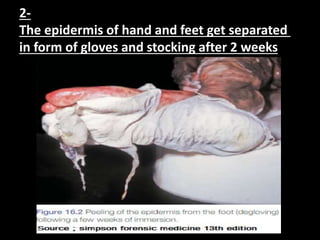
The epidermis of hand and feet get separated
in form of gloves and stocking after 2 weeks
3-
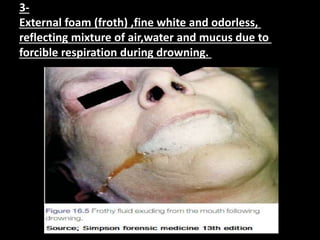
External foam (froth) ,fine white and odorless,
reflecting mixture of air,water and mucus due to
forcible respiration during drowning.
:4- Cadaveric spasm
Involving the hand (firmly grasping weeds or sands)
indicating the victims was alive when immersed
:5- Emphysema aquosum and heavy lungs
Hyper-expanded and water-logged lungs . Ribs imprints may be
present on the surface of lungs
6- Sub-pleural heamorrhages (Paultauf spots) :
In 5-60% of drownings reflecting intra-alveolar heamorrhages
7-Diatoms:
Microscopic organisms present in sea and fresh water, and have
siliceous capsule that survives acid digestion . Its presence in
organs (kidneys and brain) and bone marrow taken to imply
that victim found in water drowned in water where diatoms
found in his body match those found in the water
8-Miscellaneous signs:
Middle ear congestion / heamorrhage
Bloody/Watery fluid in intracranial sinuses
Engorgement of solid organs
Reduced weight of spleen
Muscular heamorrhage / rupture in neck and back (
physical signs of drowning)
Was the drowning accidental , suicide or
homicidal ?
Frequency: accidental drowning the most common ,
Suicide common and homicidal rare and difficult to
prove.
Accident: evidences e.g. wearing bathing costume &
history of epilepsy
Suicide: no struggle signs & suicidal note (may) & history
of psychological illness or financial trouble
Homicide: commonly the victim killed first then thrown
into water & signs of resistance or struggle
Time passed since drowning
Estimated through :
- Rate of body cooling
- Floating of body (occurs
after 5-8 days in summer)
- Volume of pleural fluid
accumulated
Role of alcohol in drowning
- Alcohol frequently found in blood of adult
drowning victims . The strongest association
between the two is “fall related” cases ..
Concussive head injuries exacerbated by
alcohol
- Alcohol also hasten hypothermia (due to V.D)
- If person heavily intoxicated by alcohol, ability
to respond well to save himself hampered by
confusion & in-coordination.
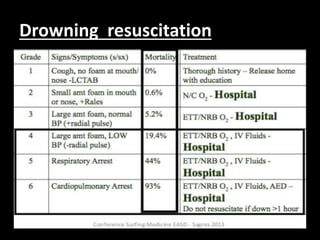
Drowning resuscitation
Thanks

Drowning

  • 1.
  • 2.
    Contents - Examples ofreasons for death in body recovered from water - Definition of drowning - Types of drowning - Epidemiology - Pathophysiology - Causes of death - Signs of drowning (P.M picture) - Time passed since drowning death - Was drowning accidental , suicidal or homicidal - Role of Alcohol in drowning - Drowning resuscitation
  • 3.
    Examples of reasonsfor death in a body recovered from water - Died of natural causes before entering / while in water (e.g. M.I) - Hypothermia particularly in thin , old and young people - Injuries & unnatural causes before entering water (e.g. assault) or after being in water (e.g. hit by boat ) - True drowning (due to aspiration of water into lungs)
  • 4.
    Definition Process of experiencingrespiratory impairment due to submersion or immersion in a liquid . Three possible outcomes : No injury , Injury or Death .
  • 5.
    Types of drowning 1-Wetdrowning Water inhaled into lungs & Sever chest pain & if resuscitated : no pleasant recollections 2-Dry drowning Water not enter lungs & death occurs by immediate sustained laryngeal spasm & if resuscitated : panoramic views of past life
  • 6.
    3-Secondary drowning (neardrowning) Death occurs ( from 1/2 h to several days) by cerebral anoxia & irreversible brain damage 4- Immersion Syndrome Death occurs by cardiac arrest caused by vagal inhibition (cold water stimulating nerve endings & water striking epigastrium & Alcohol induce such effect)
  • 7.
    Epidemiology - Third leadingcause of unintentional injury death worldwide - In 2012 , 372.000 people died from drowning making drowning major public health problem - Low & Middle income countries account for 91% of drowning deaths - China & India account for 43% of drowning deaths
  • 8.
    - Africa hasthe highest drowning mortality rate - Males have higher drowning mortality rates than females for all ages and regions - Children under 5 years have highest rate globally
  • 9.
    Pathophysiology Submersion: airway dropsbelow surface of water Struggle: victim attempts to resurface Breath hold: voluntary attempt to protect airway Gasp: involuntary attempt to inhale oxygen Reflexive swallowing of water Respiratory failure: due to airway obstruction & alveolar damage Hypoxia: lack of oxygen & reduced systemic oxygen
  • 11.
    Causes of death Asphyxia:due to airway obstruction Ventricular fibrillation: due to anoxia & disturbed sodium-potassium ratio Laryngeal spasm Vagal inhibition: in icy water due to high emotion & unexpected immersion Exhaustion
  • 12.
    Signs of drowning (P.Mpicture) 1- Washer-woman hands: Hands are wrinkled and bleached due to loss of skin tone (after submersion in water for 12-18 hours)
  • 13.
    2- The epidermis ofhand and feet get separated in form of gloves and stocking after 2 weeks
  • 14.
    3- External foam (froth),fine white and odorless, reflecting mixture of air,water and mucus due to forcible respiration during drowning.
  • 15.
    :4- Cadaveric spasm Involvingthe hand (firmly grasping weeds or sands) indicating the victims was alive when immersed
  • 16.
    :5- Emphysema aquosumand heavy lungs Hyper-expanded and water-logged lungs . Ribs imprints may be present on the surface of lungs 6- Sub-pleural heamorrhages (Paultauf spots) : In 5-60% of drownings reflecting intra-alveolar heamorrhages
  • 17.
    7-Diatoms: Microscopic organisms presentin sea and fresh water, and have siliceous capsule that survives acid digestion . Its presence in organs (kidneys and brain) and bone marrow taken to imply that victim found in water drowned in water where diatoms found in his body match those found in the water
  • 18.
    8-Miscellaneous signs: Middle earcongestion / heamorrhage Bloody/Watery fluid in intracranial sinuses Engorgement of solid organs Reduced weight of spleen Muscular heamorrhage / rupture in neck and back ( physical signs of drowning)
  • 19.
    Was the drowningaccidental , suicide or homicidal ? Frequency: accidental drowning the most common , Suicide common and homicidal rare and difficult to prove. Accident: evidences e.g. wearing bathing costume & history of epilepsy Suicide: no struggle signs & suicidal note (may) & history of psychological illness or financial trouble Homicide: commonly the victim killed first then thrown into water & signs of resistance or struggle
  • 20.
    Time passed sincedrowning Estimated through : - Rate of body cooling - Floating of body (occurs after 5-8 days in summer) - Volume of pleural fluid accumulated
  • 21.
    Role of alcoholin drowning
  • 22.
    - Alcohol frequentlyfound in blood of adult drowning victims . The strongest association between the two is “fall related” cases .. Concussive head injuries exacerbated by alcohol - Alcohol also hasten hypothermia (due to V.D) - If person heavily intoxicated by alcohol, ability to respond well to save himself hampered by confusion & in-coordination.
  • 23.
  • 24.