R.T.VINODHINI
UNIT-5
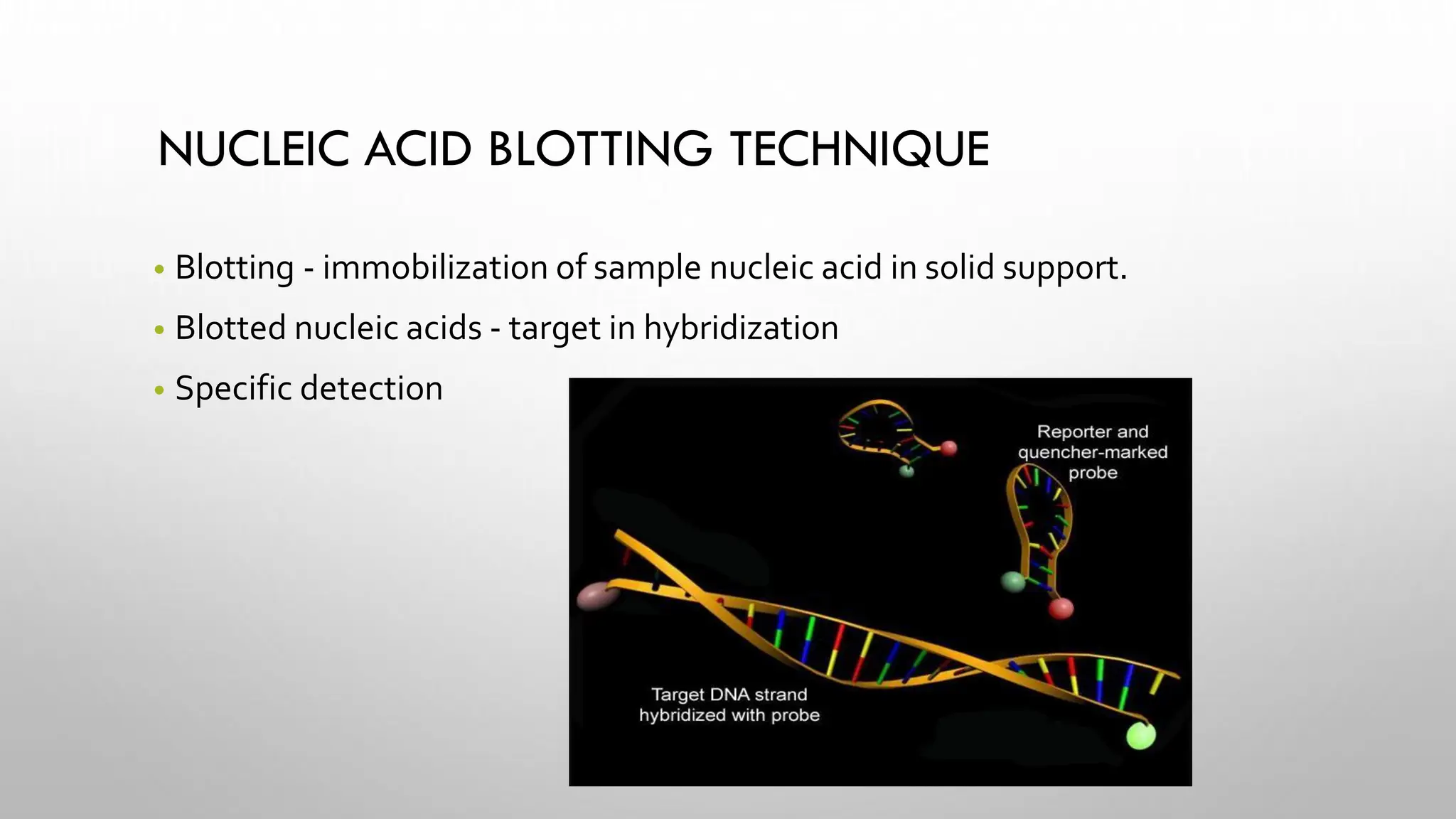
NUCLEIC ACID BLOTTING TECHNIQUE
• Blotting - immobilization of sample nucleic acid in solid support.
• Blotted nucleic acids - target in hybridization
• Specific detection
TYPES
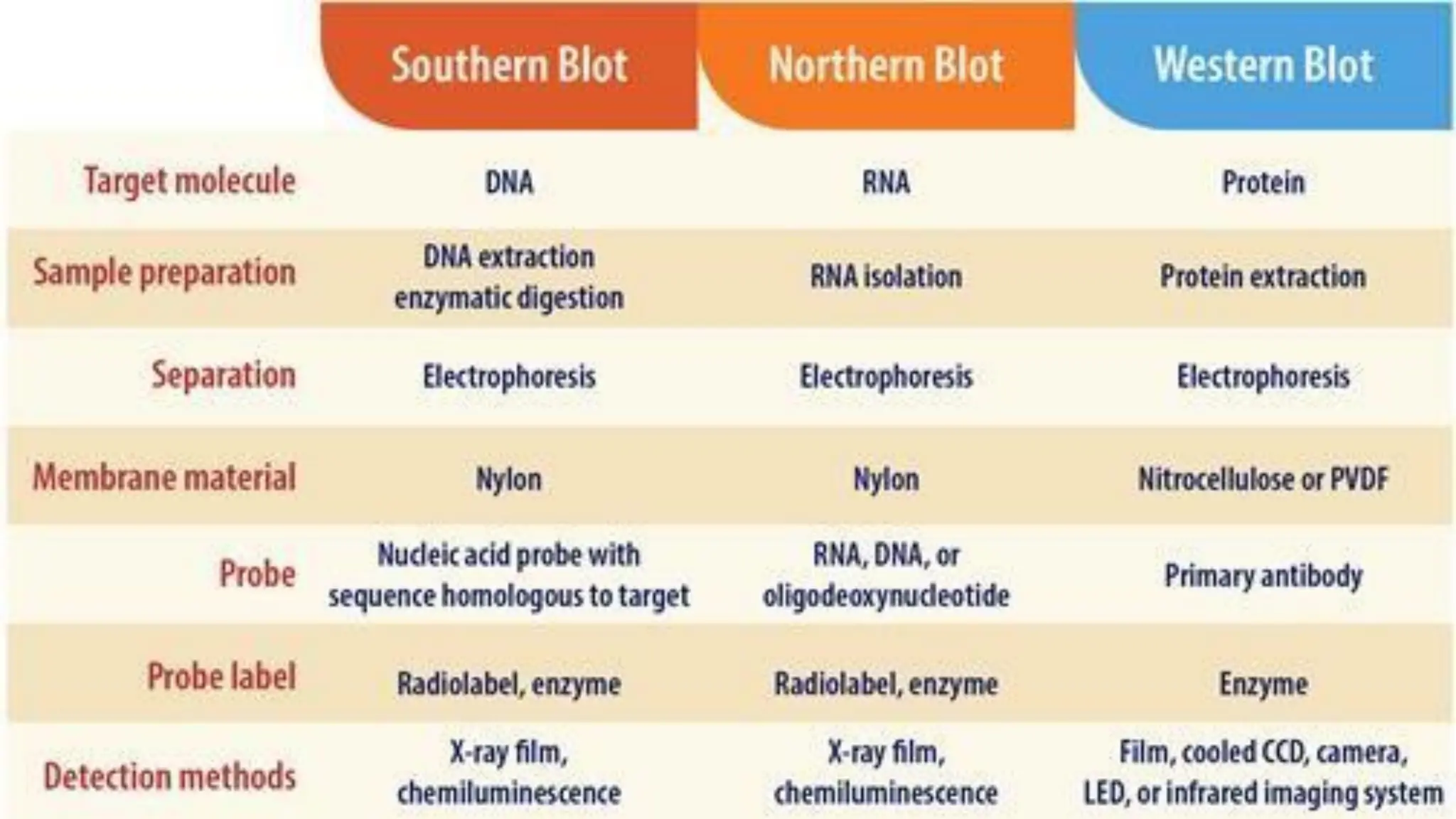
• Southern blotting
• Northern blotting
• Westernblotting
• Colony blotting
• Dot blotting
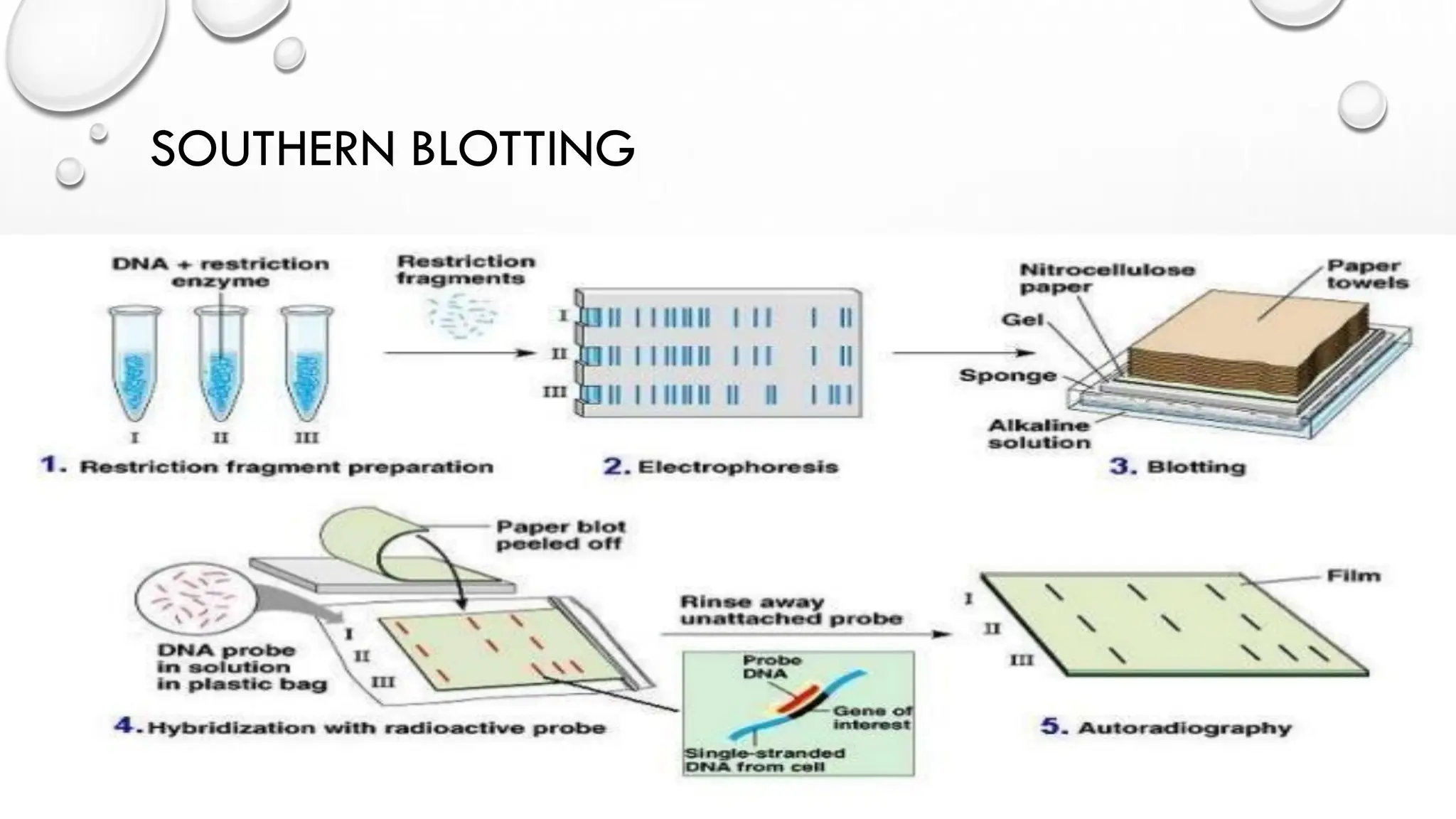
SOUTHERN BLOTTING
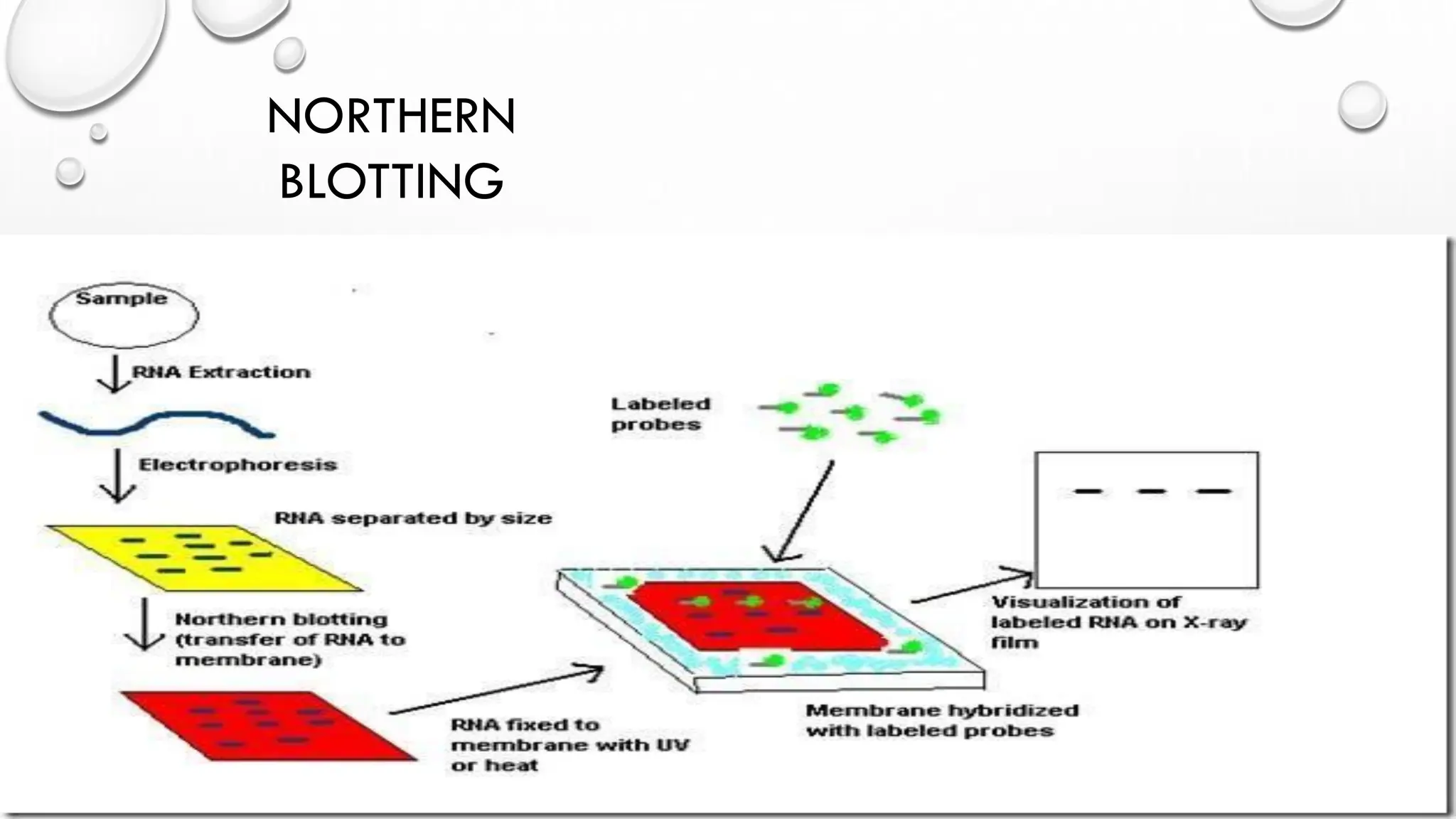
NORTHERN
BLOTTING
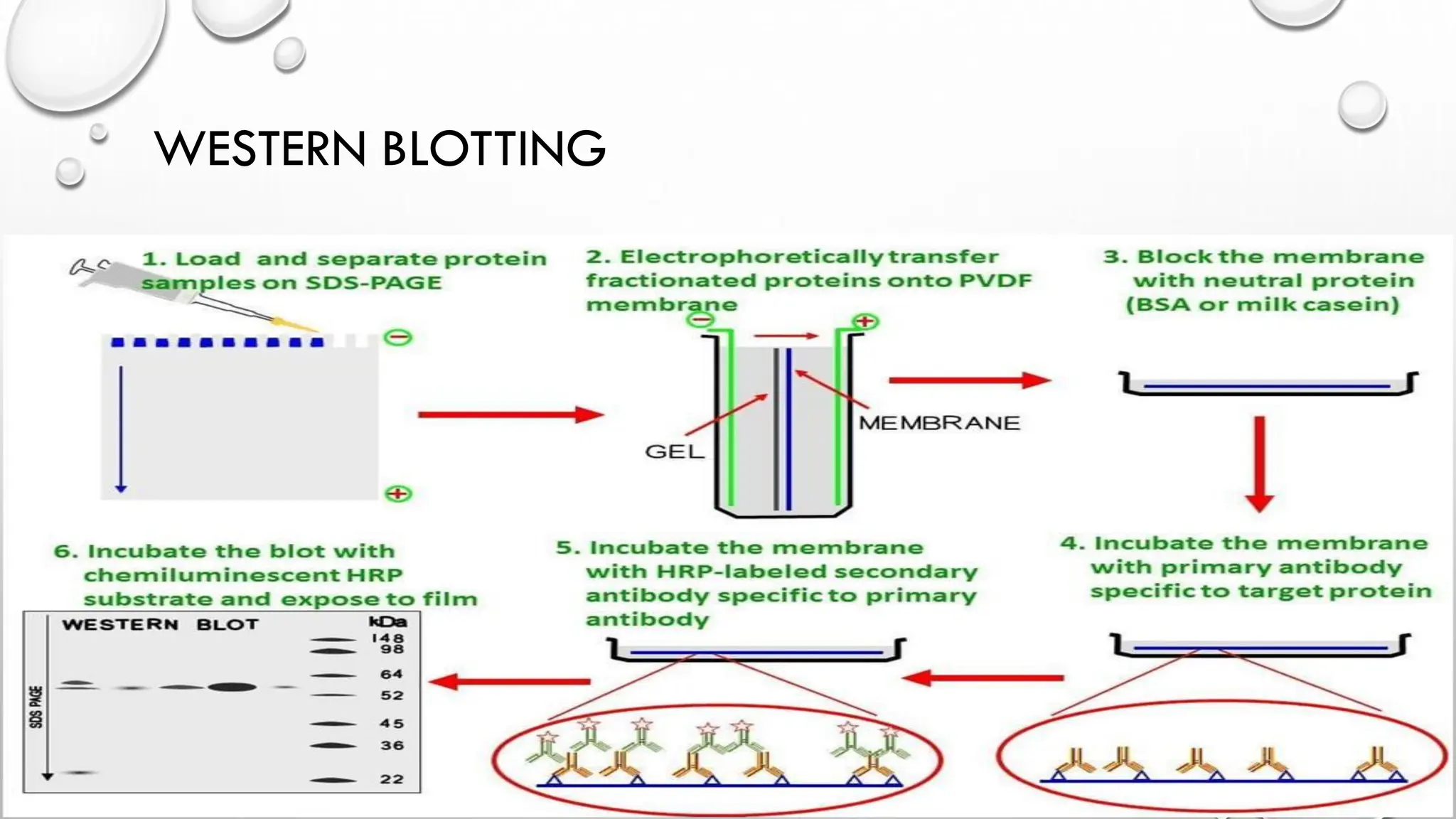
WESTERN BLOTTING
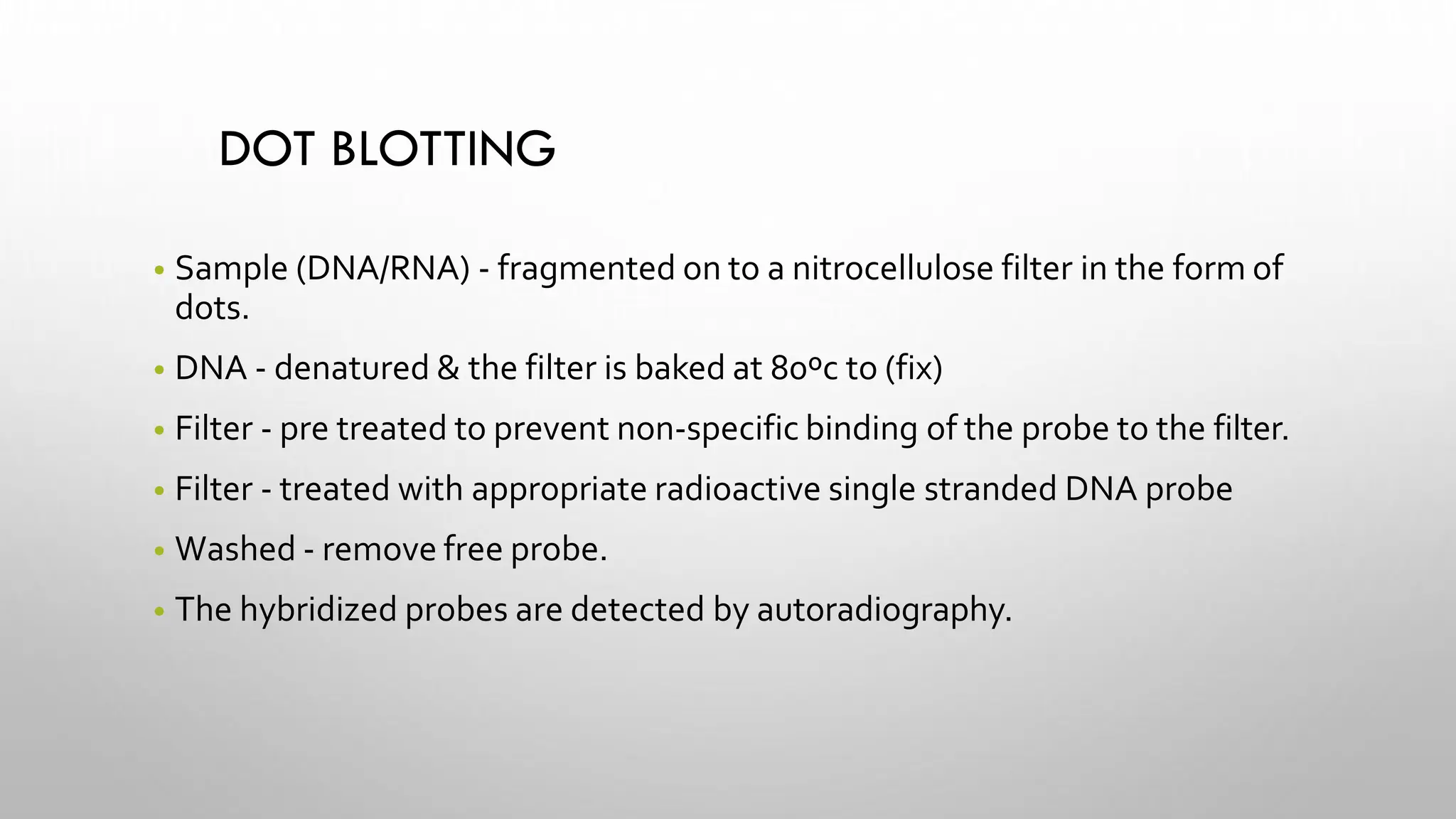
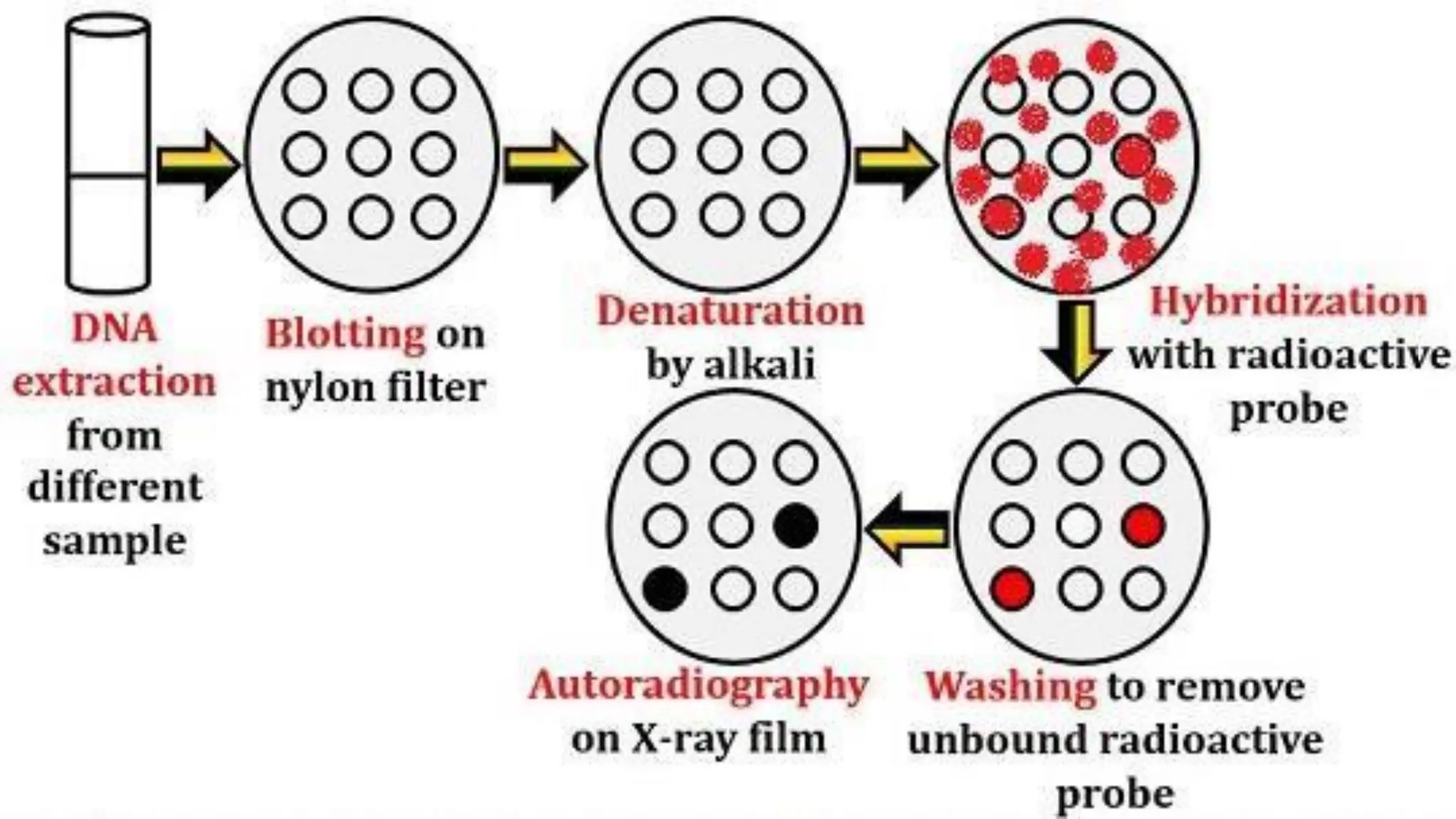
DOT BLOTTING
• Sample (DNA/RNA) - fragmented on to a nitrocellulose filter in the form of
dots.
• DNA - denatured & the filter is baked at 80ºc to (fix)
• Filter - pre treated to prevent non-specific binding of the probe to the filter.
• Filter - treated with appropriate radioactive single stranded DNA probe
• Washed - remove free probe.
• The hybridized probes are detected by autoradiography.
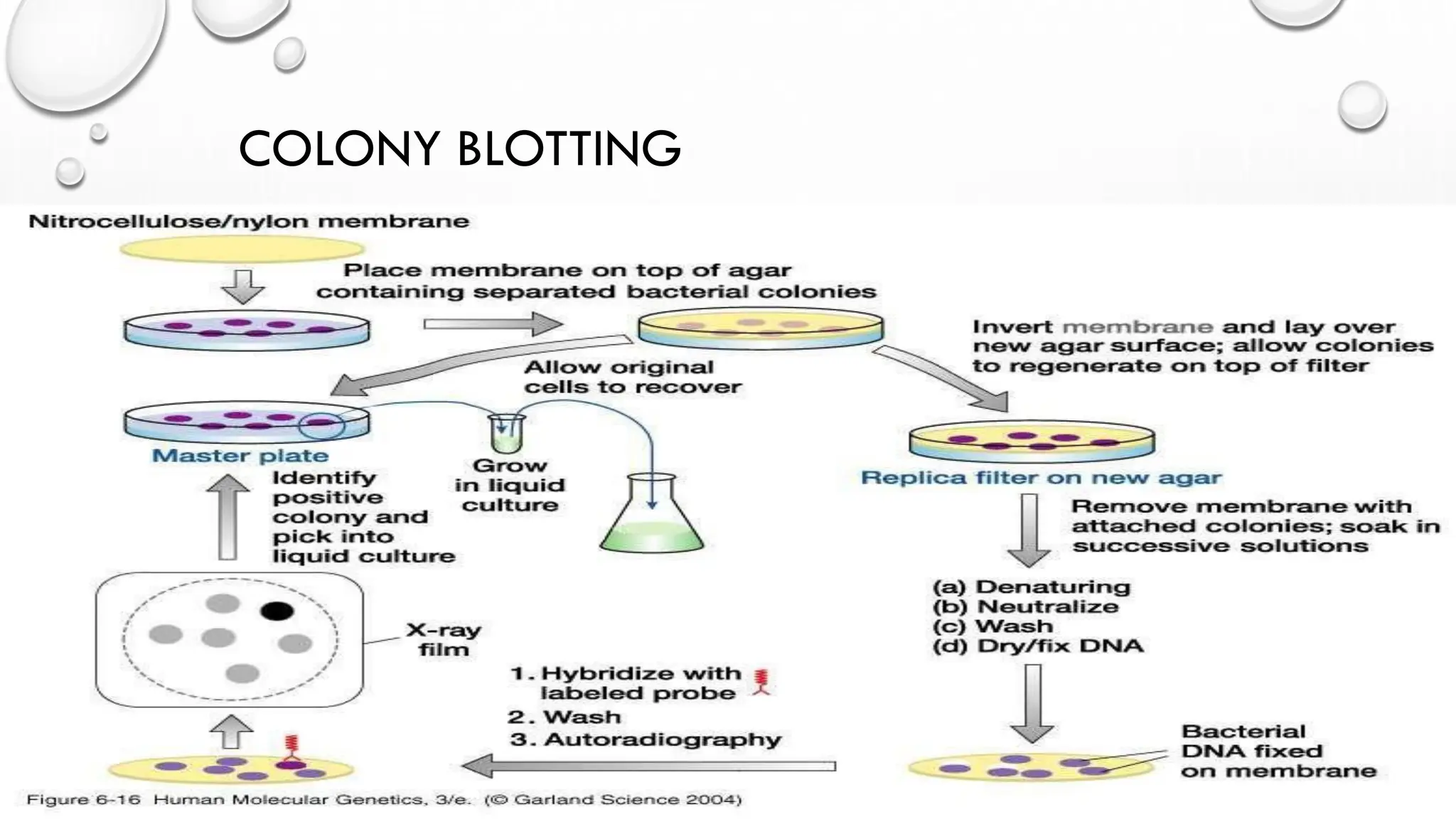
COLONY BLOTTING
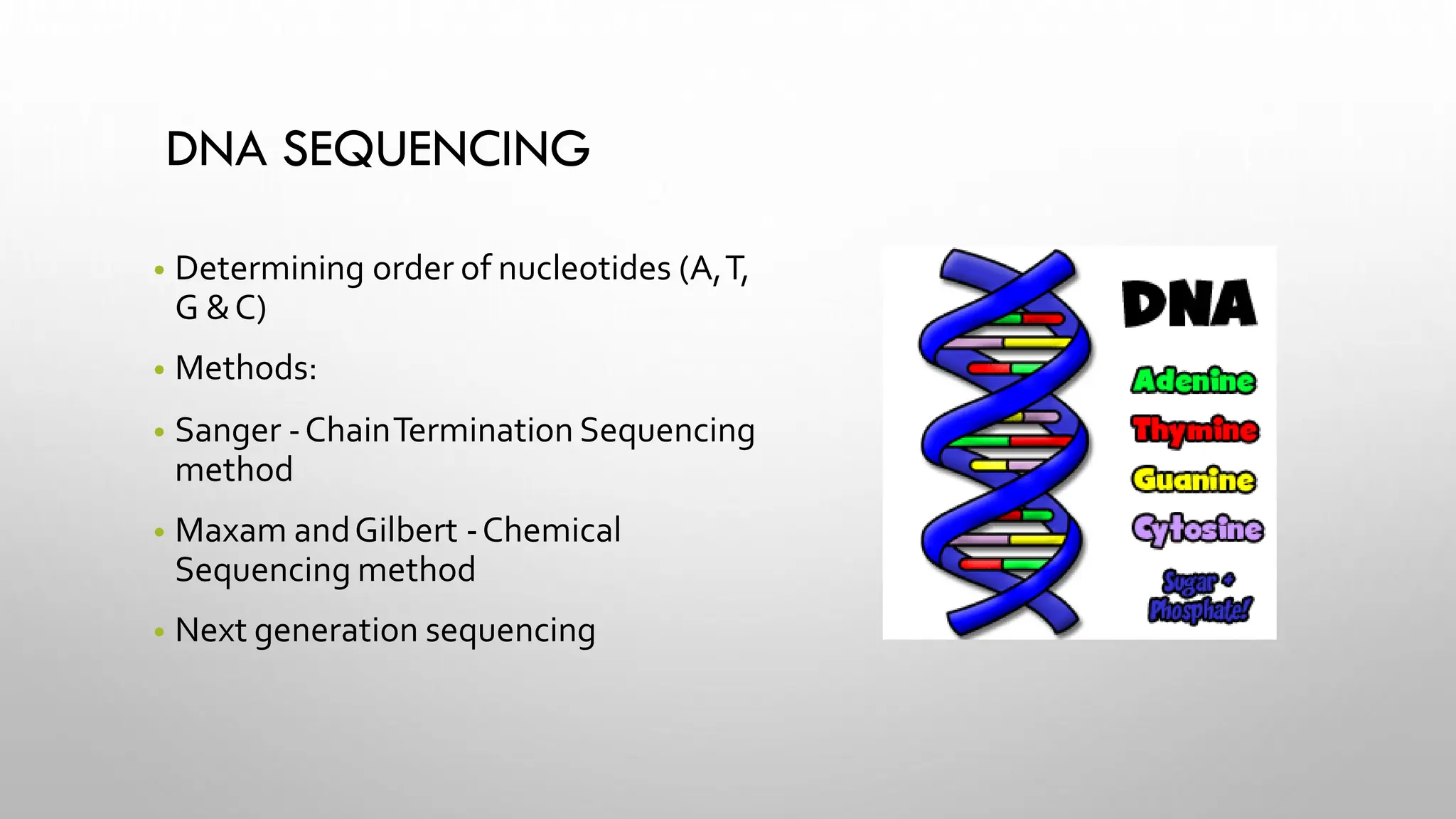
DNA SEQUENCING
• Determining order of nucleotides (A,T,
G &C)
• Methods:
• Sanger -ChainTermination Sequencing
method
• Maxam andGilbert -Chemical
Sequencing method
• Next generation sequencing
SANGER METHOD
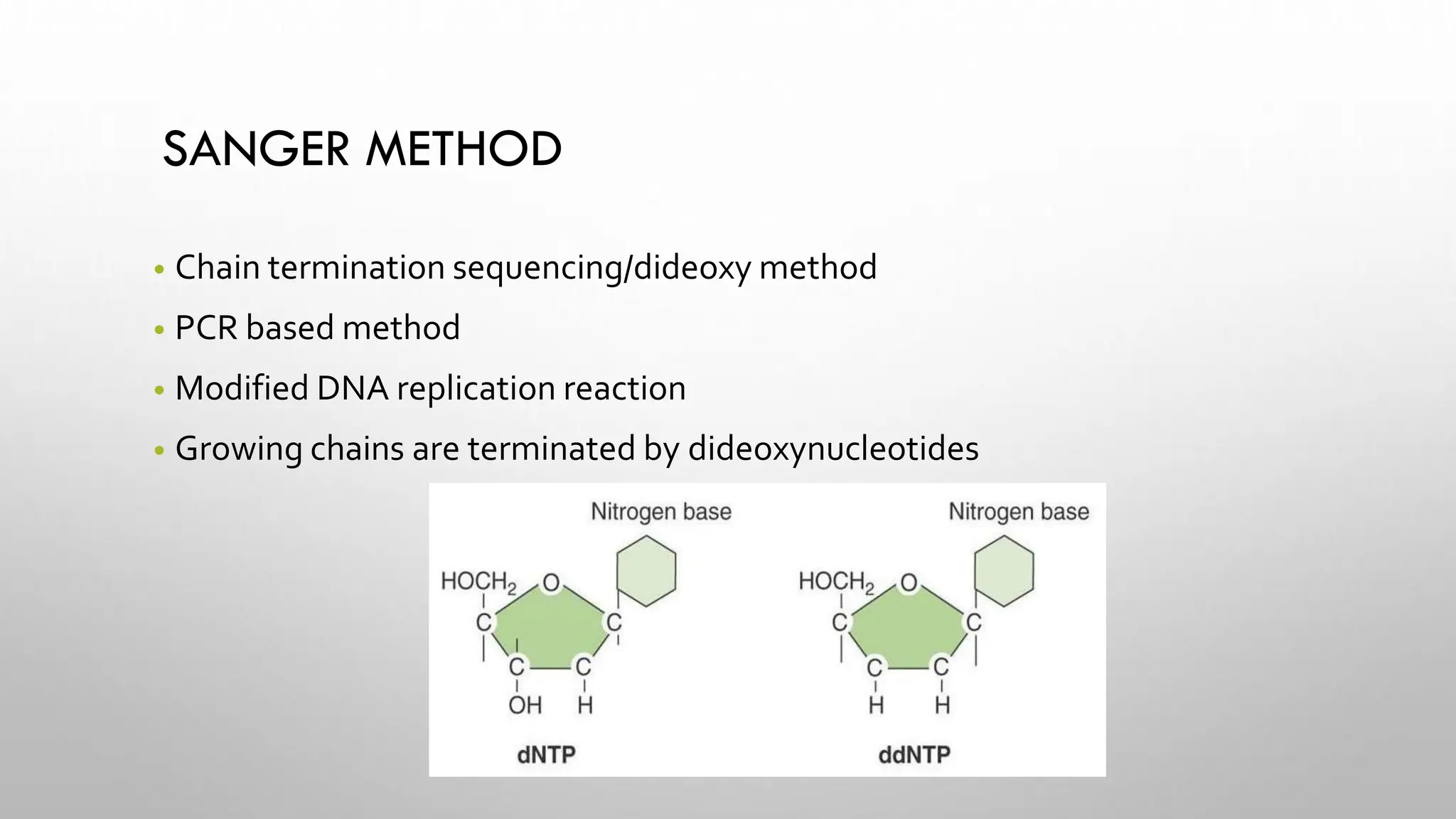
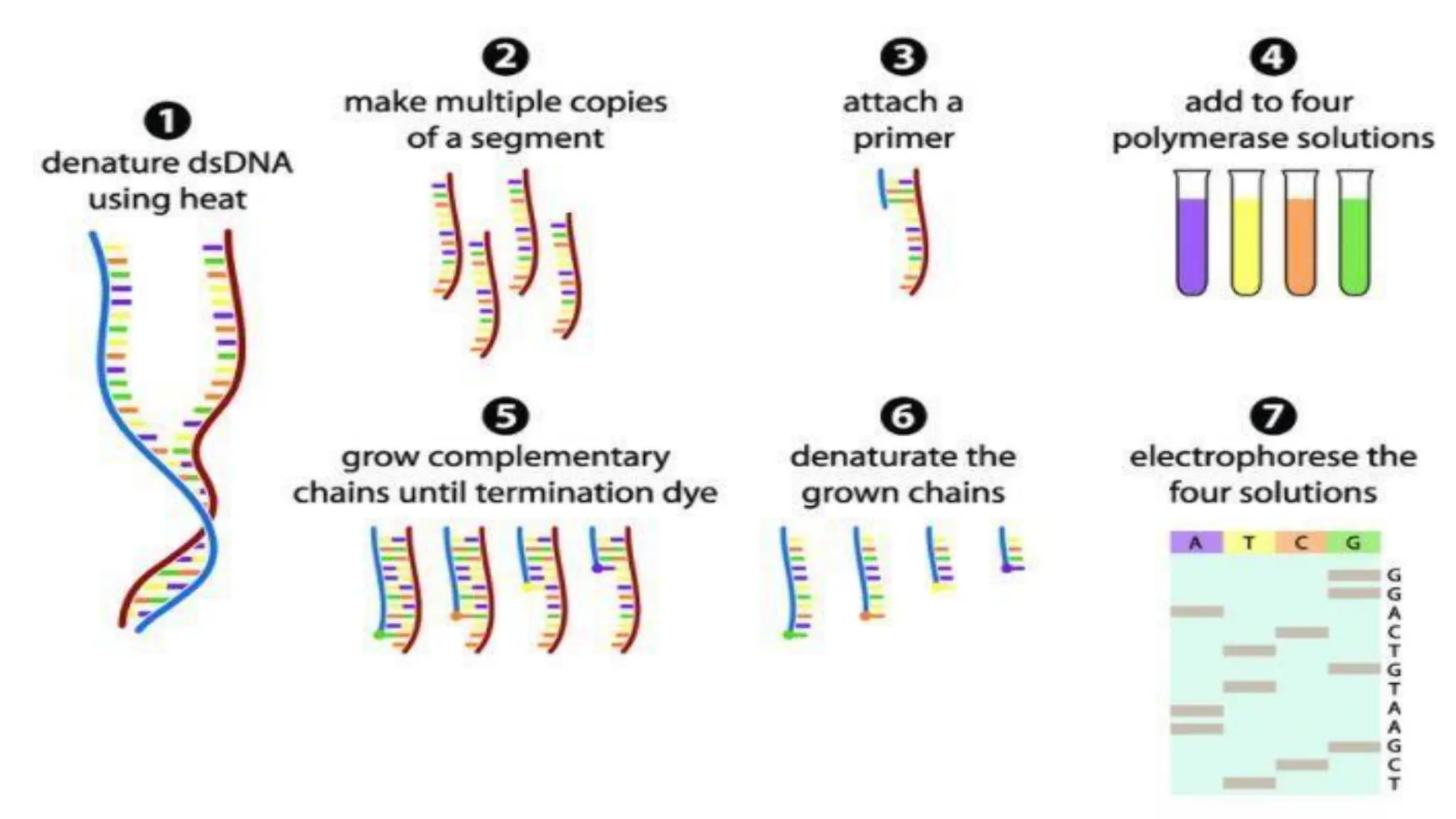
• Chain termination sequencing/dideoxy method
• PCR based method
• Modified DNA replication reaction
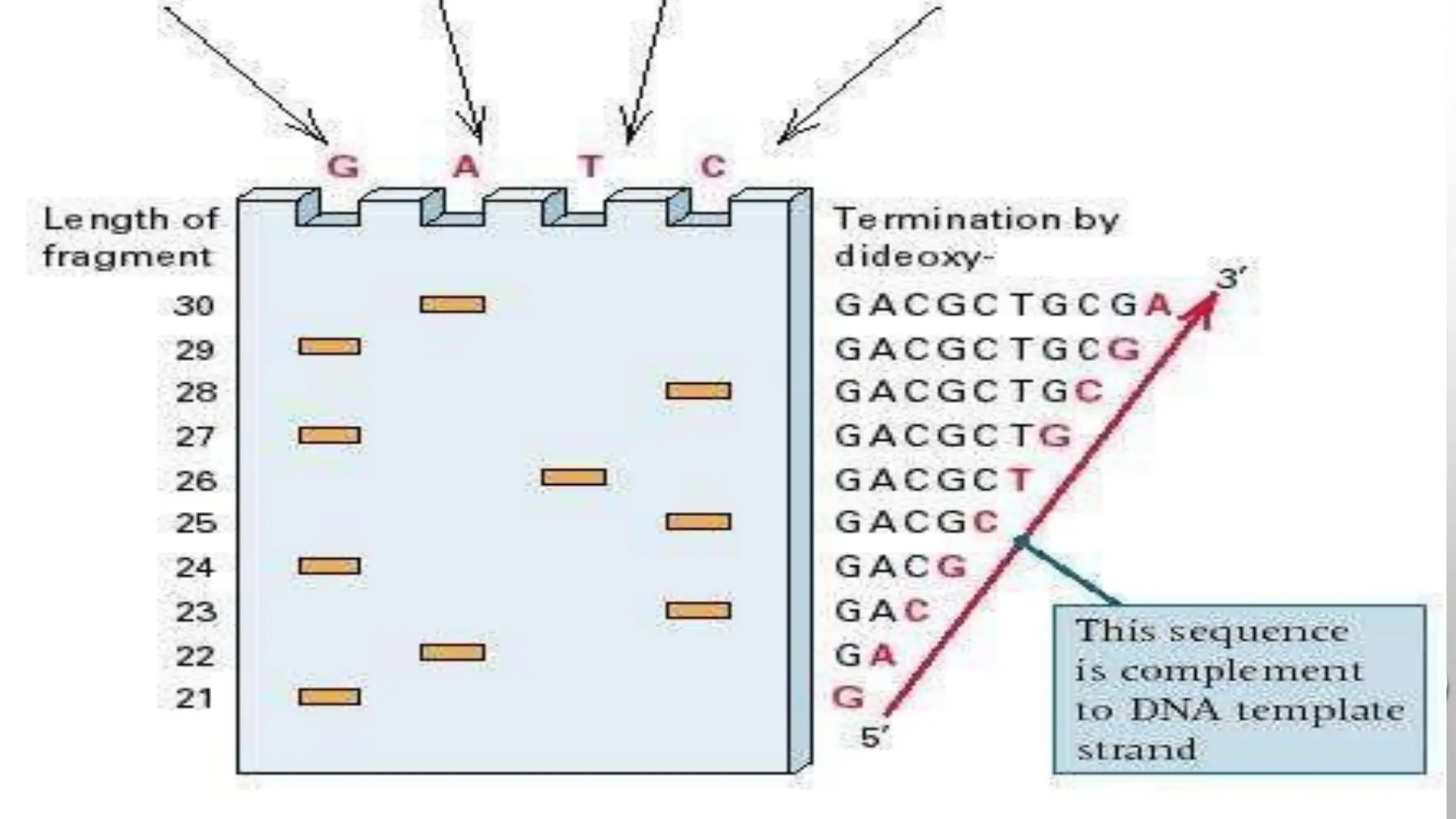
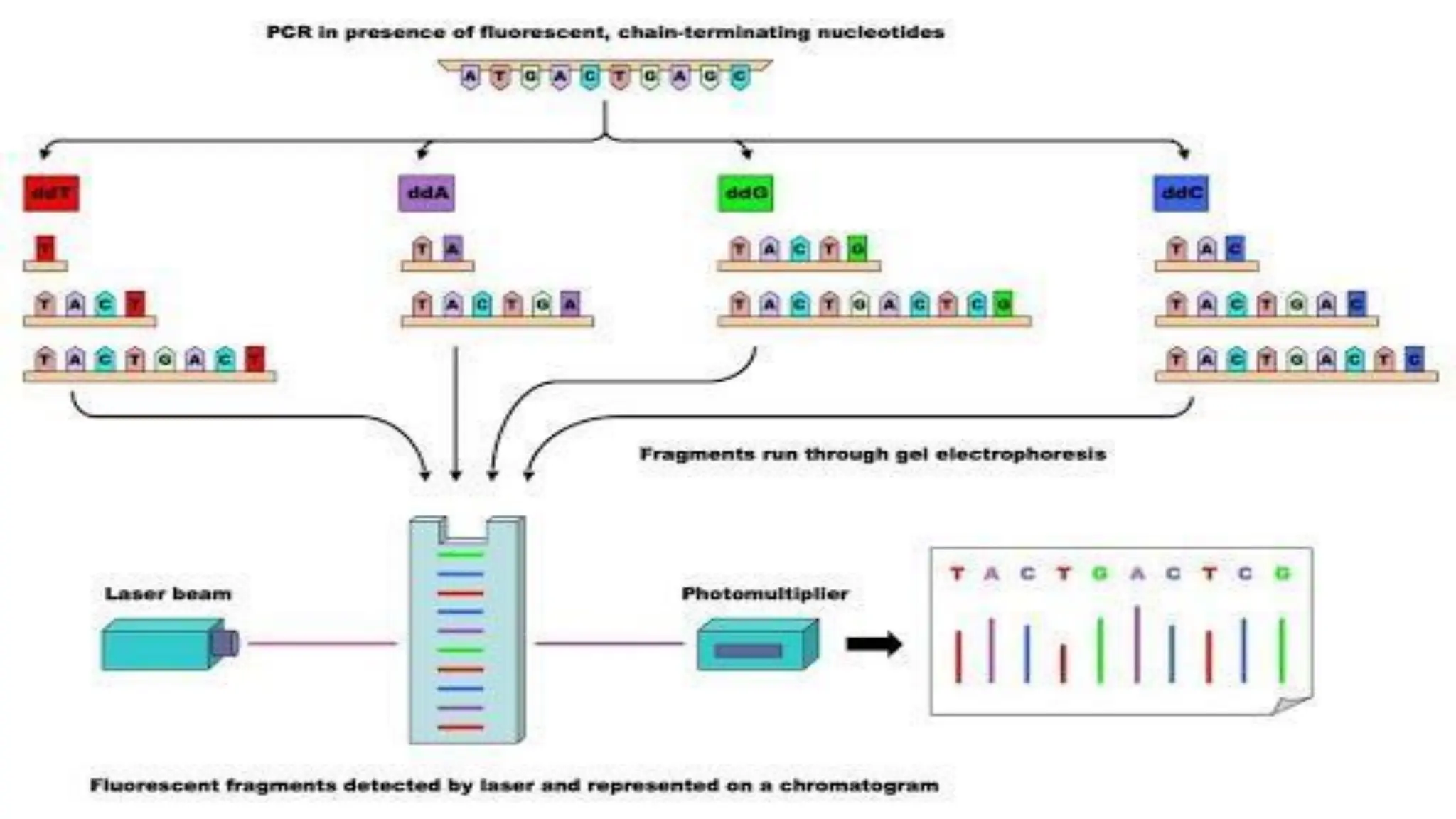
• Growing chains are terminated by dideoxynucleotides
SANGER METHOD
• Denaturing DNA – Single stranded DNA template
• DNA primer
• DNA Polymerase
• Normal deoxynucleosidetriphosphates (dNTPs) and modified
dideoxynucleosidetriphosphates (ddNTPs)
• ddNTPs –Terminate DNA strand elongation – lack 3’OH
• 3’OH – necessary for phosphodiester bond formation
• Cease extension of DNA
• Labelling - radioactively or fluorescently labeled for detection in automated
sequencing machines
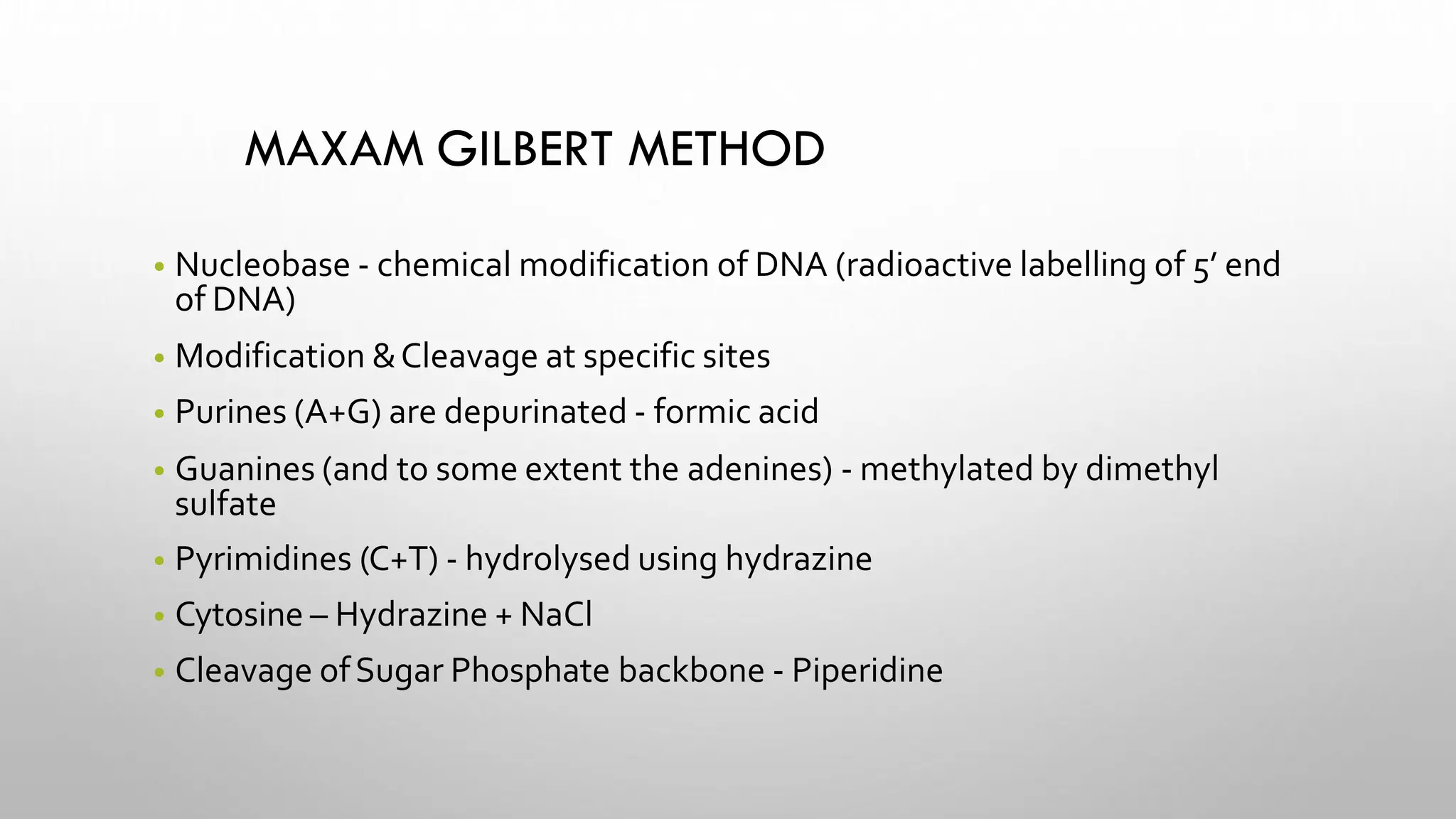
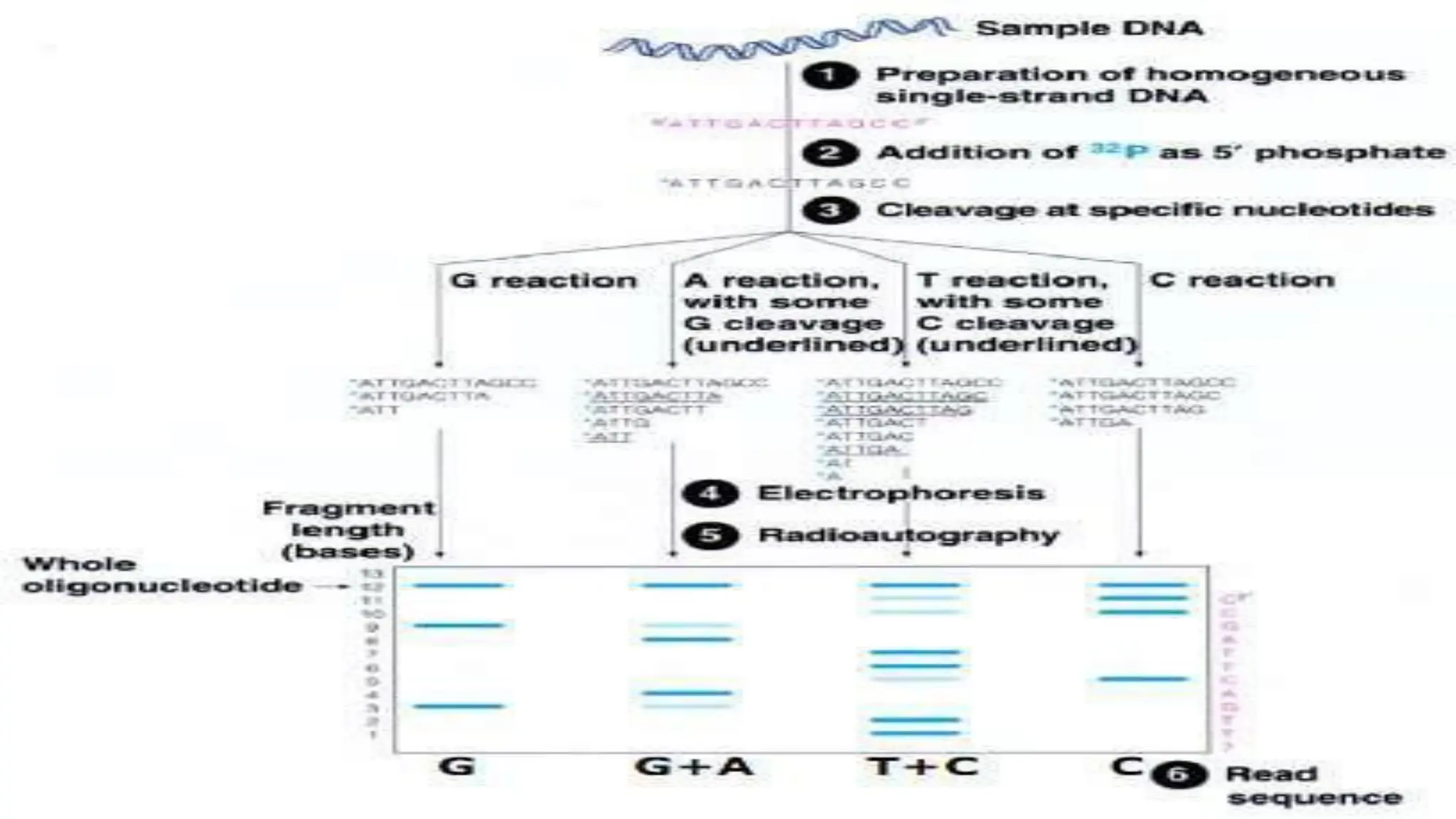
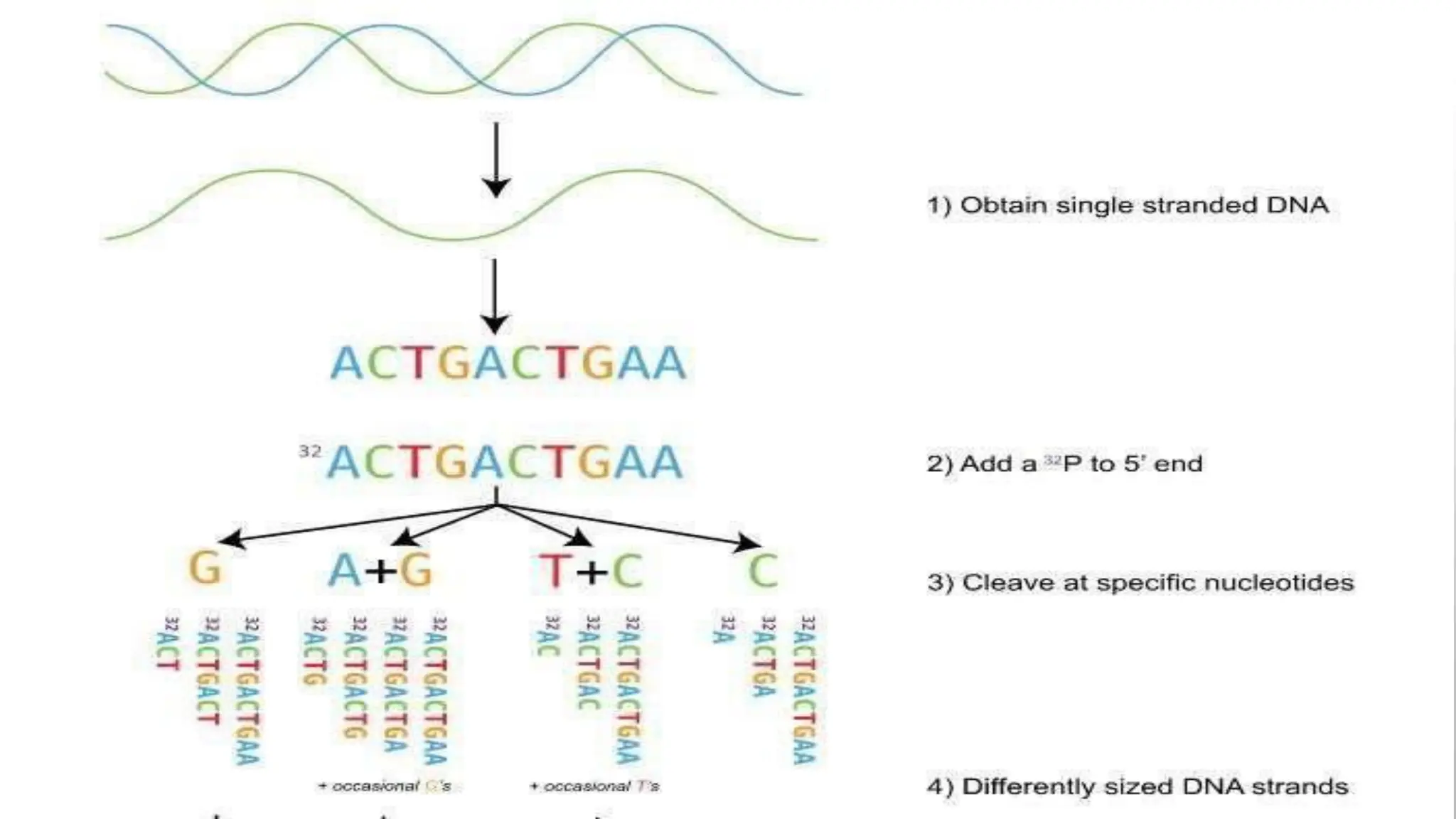
MAXAM GILBERT METHOD
• Nucleobase - chemical modification of DNA (radioactive labelling of 5’ end
of DNA)
• Modification &Cleavage at specific sites
• Purines (A+G) are depurinated - formic acid
• Guanines (and to some extent the adenines) - methylated by dimethyl
sulfate
• Pyrimidines (C+T) - hydrolysed using hydrazine
• Cytosine – Hydrazine + NaCl
• Cleavage ofSugar Phosphate backbone - Piperidine
NEXT GENERATION SEQUENCING
• Sequence DNA and RNA - quickly and cheaply than conventional
sequencing.
• 454 Pyrosequencing
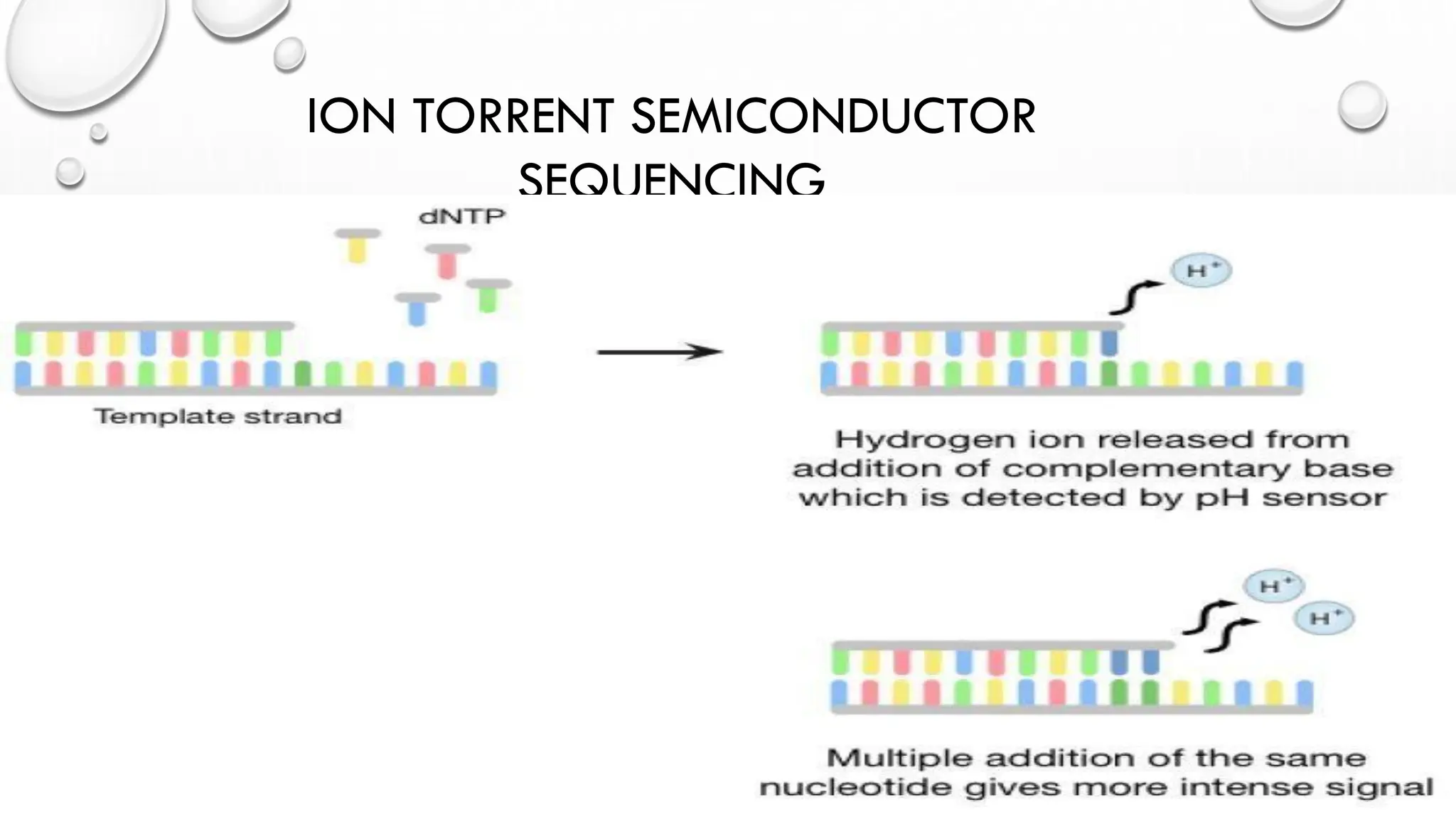
• Ion torrent semiconductor sequencing
• Reversible terminator sequencing (Illumina)
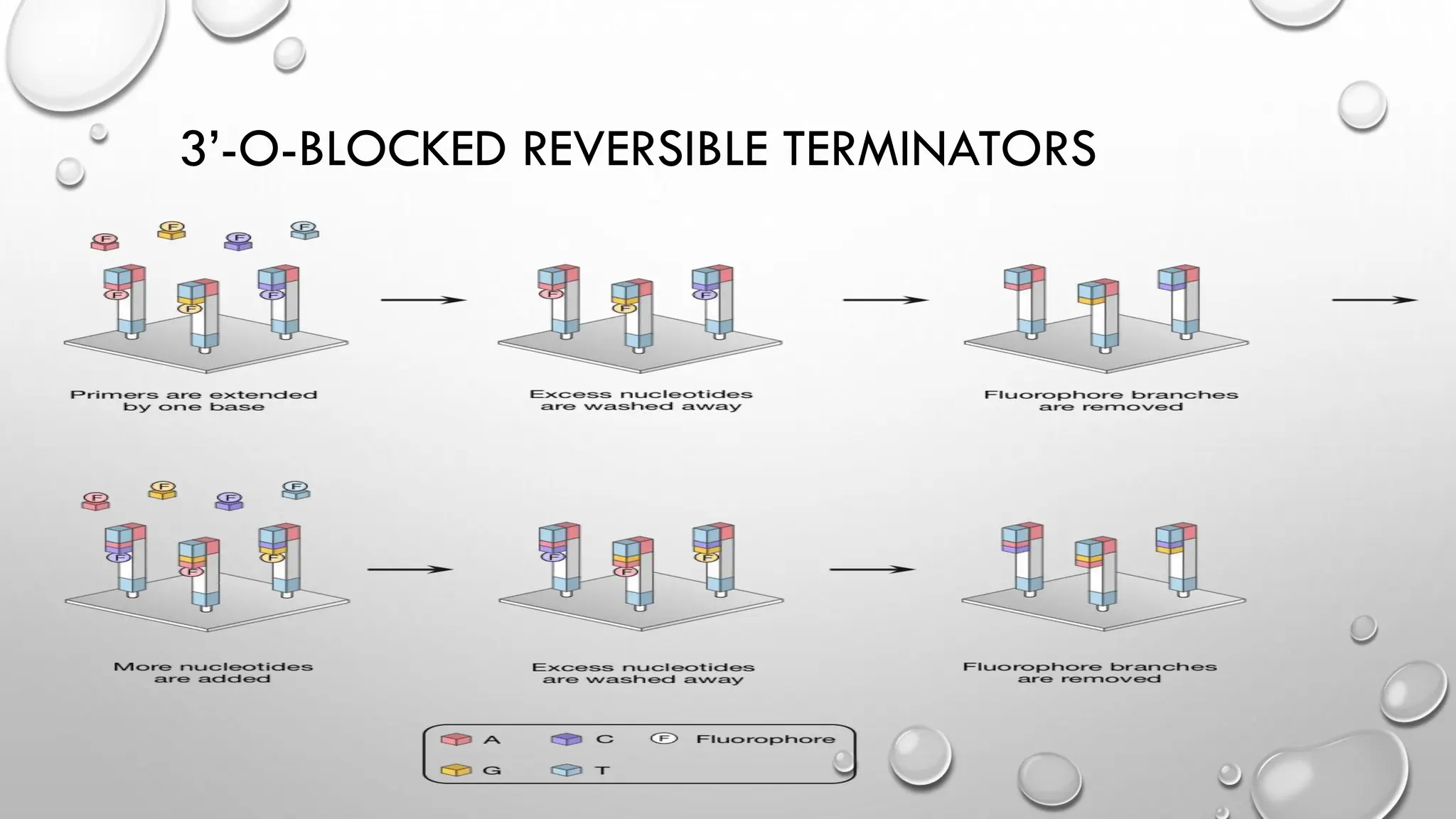
• 3′-O-blocked reversible terminators
• 3′-unblocked reversible terminators
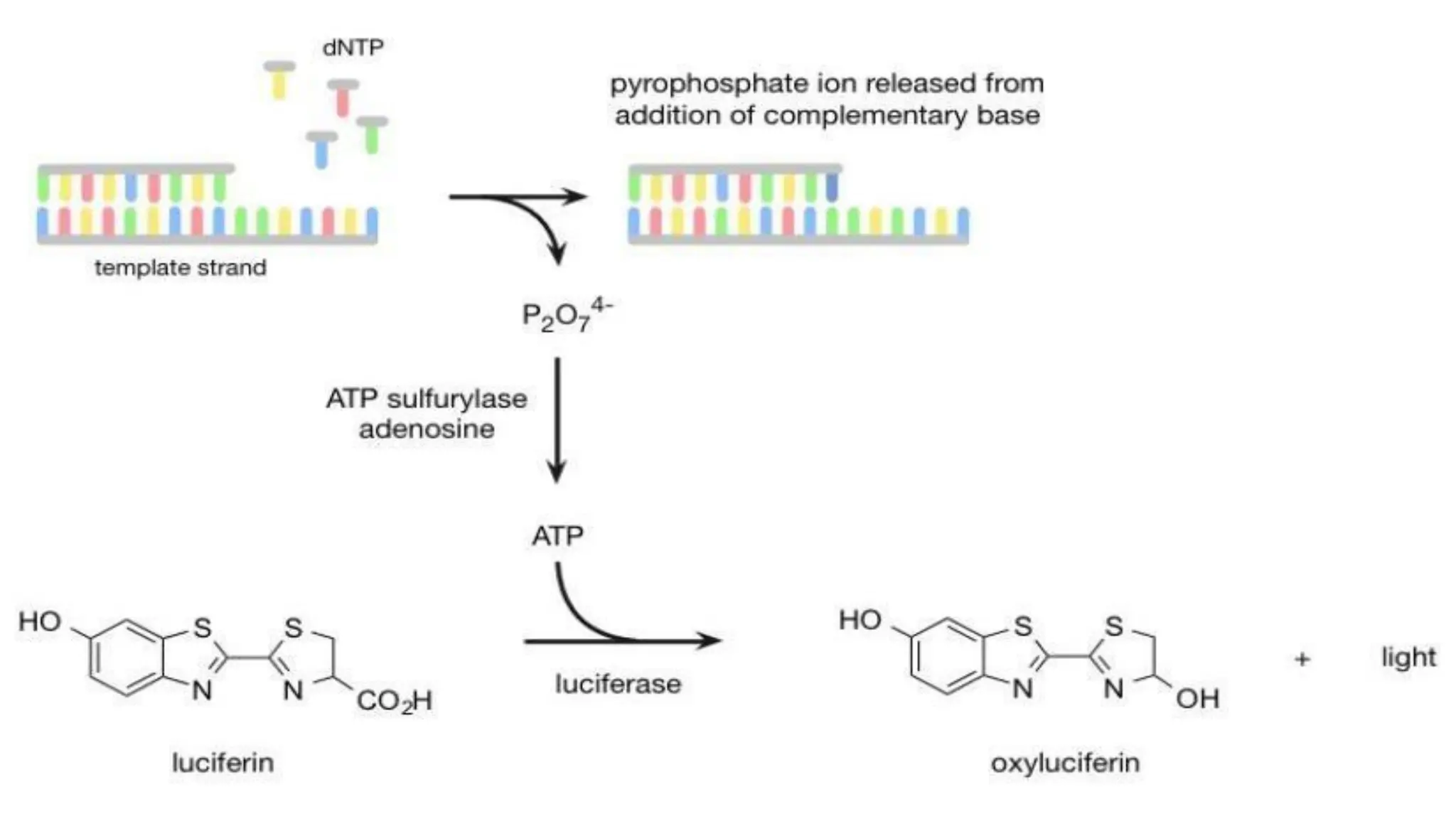
454 PYROSEQUENCING
• Sequencing by synthesis
• Complementary strand
• Four different dNTPs are then sequentially made to flow in and out
• Correct dNTP - release of pyrophosphate
• Pyrophosphate is converted intoATP
• Luciferase-catalysed conversion of luciferin to oxyluciferin
ION TORRENT SEMICONDUCTOR
SEQUENCING
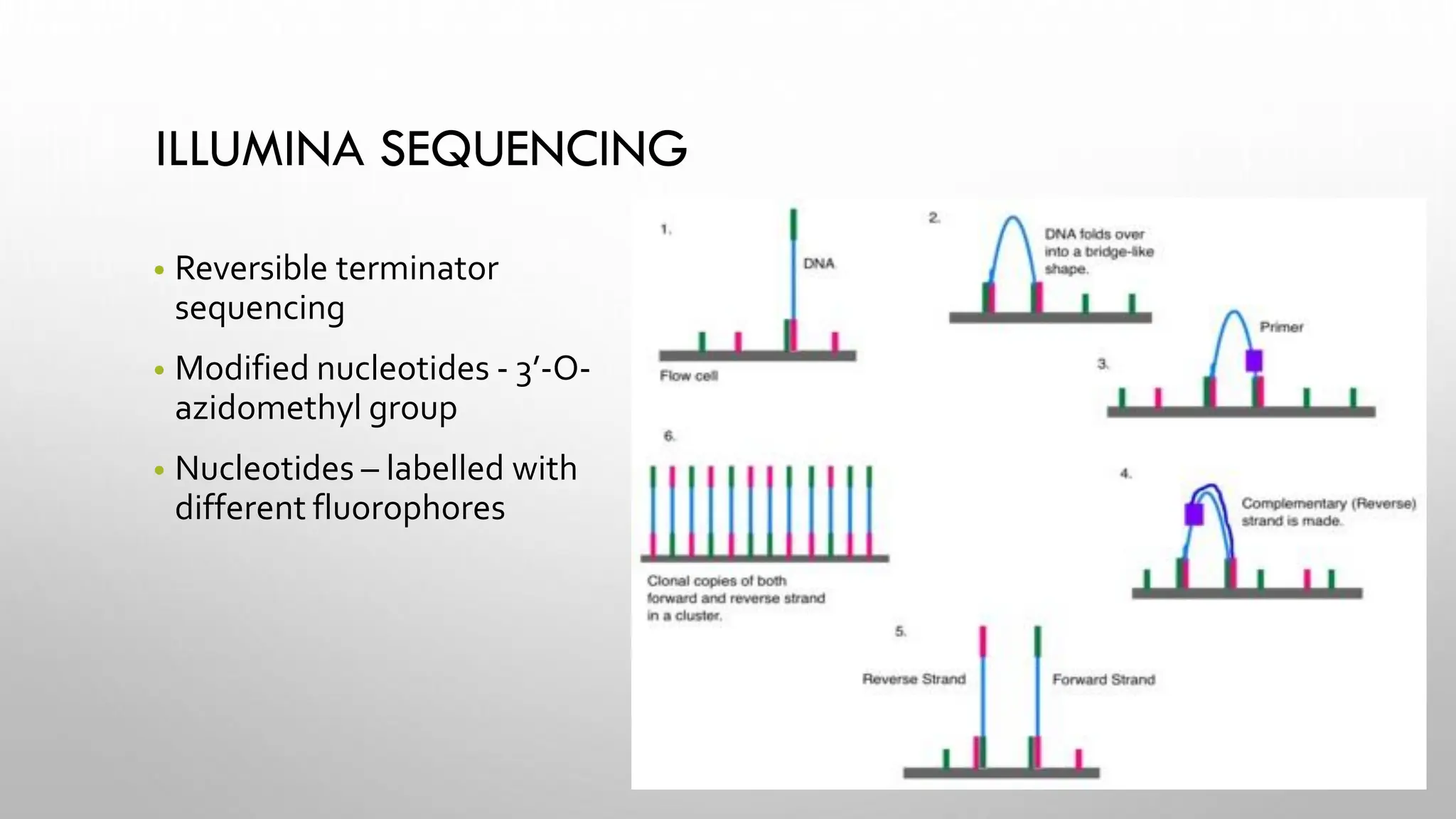
ILLUMINA SEQUENCING
• Reversible terminator
sequencing
• Modified nucleotides - 3’-O-
azidomethyl group
• Nucleotides – labelled with
different fluorophores
3’-O-BLOCKED REVERSIBLE TERMINATORS
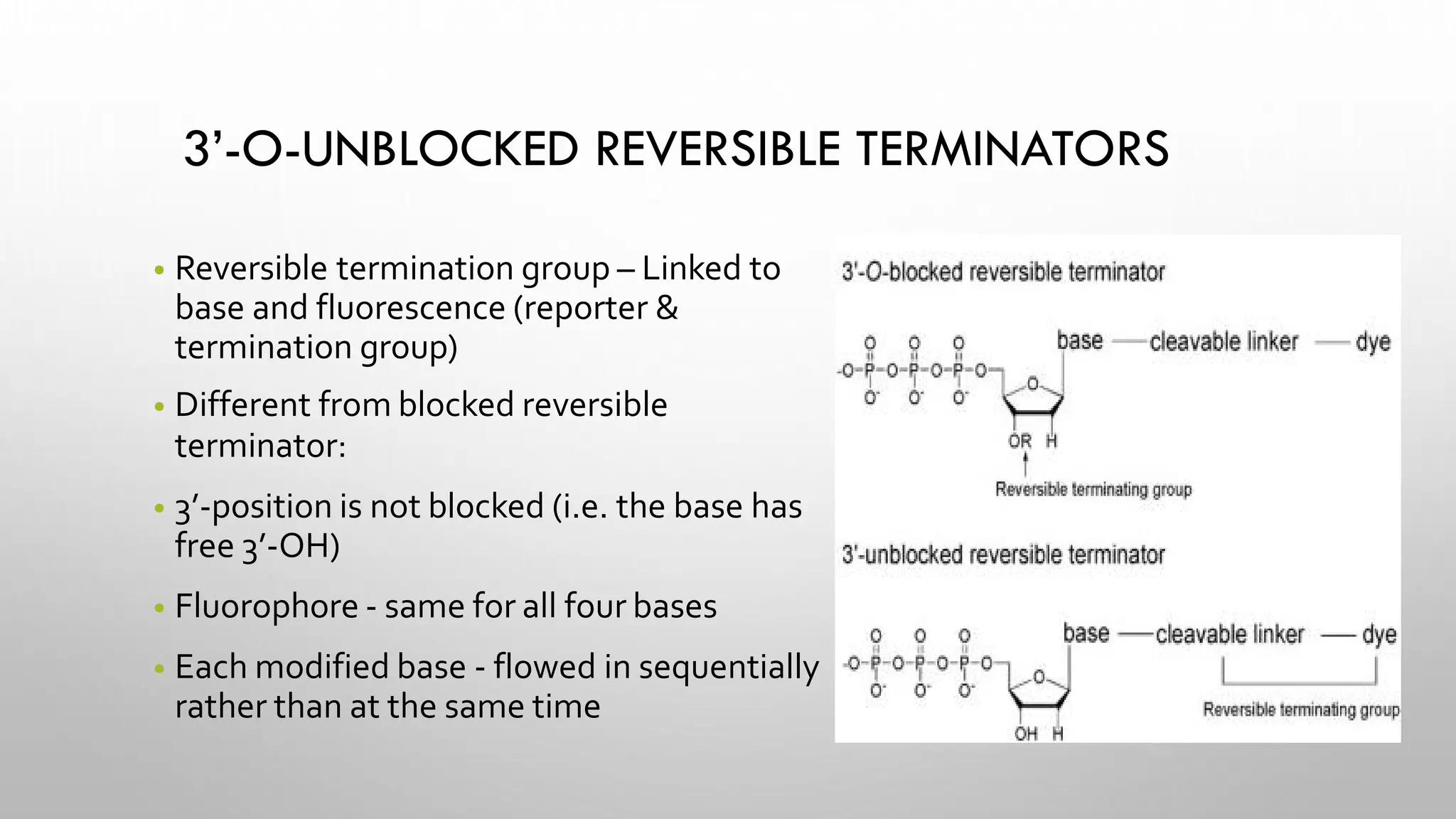
3’-O-UNBLOCKED REVERSIBLE TERMINATORS
• Reversible termination group – Linked to
base and fluorescence (reporter &
termination group)
• Different from blocked reversible
terminator:
• 3’-position is not blocked (i.e. the base has
free 3’-OH)
• Fluorophore - same for all four bases
• Each modified base - flowed in sequentially
rather than at the same time
DNA sequencing and  hybridization methods

DNA sequencing and hybridization methods

  • 1.
  • 2.
    NUCLEIC ACID BLOTTINGTECHNIQUE • Blotting - immobilization of sample nucleic acid in solid support. • Blotted nucleic acids - target in hybridization • Specific detection
  • 3.
    TYPES • Southern blotting •Northern blotting • Westernblotting • Colony blotting • Dot blotting
  • 4.
  • 5.
  • 6.
  • 7.
    DOT BLOTTING • Sample(DNA/RNA) - fragmented on to a nitrocellulose filter in the form of dots. • DNA - denatured & the filter is baked at 80ºc to (fix) • Filter - pre treated to prevent non-specific binding of the probe to the filter. • Filter - treated with appropriate radioactive single stranded DNA probe • Washed - remove free probe. • The hybridized probes are detected by autoradiography.
  • 9.
  • 11.
    DNA SEQUENCING • Determiningorder of nucleotides (A,T, G &C) • Methods: • Sanger -ChainTermination Sequencing method • Maxam andGilbert -Chemical Sequencing method • Next generation sequencing
  • 12.
    SANGER METHOD • Chaintermination sequencing/dideoxy method • PCR based method • Modified DNA replication reaction • Growing chains are terminated by dideoxynucleotides
  • 13.
    SANGER METHOD • DenaturingDNA – Single stranded DNA template • DNA primer • DNA Polymerase • Normal deoxynucleosidetriphosphates (dNTPs) and modified dideoxynucleosidetriphosphates (ddNTPs) • ddNTPs –Terminate DNA strand elongation – lack 3’OH • 3’OH – necessary for phosphodiester bond formation • Cease extension of DNA • Labelling - radioactively or fluorescently labeled for detection in automated sequencing machines
  • 17.
    MAXAM GILBERT METHOD •Nucleobase - chemical modification of DNA (radioactive labelling of 5’ end of DNA) • Modification &Cleavage at specific sites • Purines (A+G) are depurinated - formic acid • Guanines (and to some extent the adenines) - methylated by dimethyl sulfate • Pyrimidines (C+T) - hydrolysed using hydrazine • Cytosine – Hydrazine + NaCl • Cleavage ofSugar Phosphate backbone - Piperidine
  • 20.
    NEXT GENERATION SEQUENCING •Sequence DNA and RNA - quickly and cheaply than conventional sequencing. • 454 Pyrosequencing • Ion torrent semiconductor sequencing • Reversible terminator sequencing (Illumina) • 3′-O-blocked reversible terminators • 3′-unblocked reversible terminators
  • 21.
    454 PYROSEQUENCING • Sequencingby synthesis • Complementary strand • Four different dNTPs are then sequentially made to flow in and out • Correct dNTP - release of pyrophosphate • Pyrophosphate is converted intoATP • Luciferase-catalysed conversion of luciferin to oxyluciferin
  • 23.
  • 24.
    ILLUMINA SEQUENCING • Reversibleterminator sequencing • Modified nucleotides - 3’-O- azidomethyl group • Nucleotides – labelled with different fluorophores
  • 25.
  • 26.
    3’-O-UNBLOCKED REVERSIBLE TERMINATORS •Reversible termination group – Linked to base and fluorescence (reporter & termination group) • Different from blocked reversible terminator: • 3’-position is not blocked (i.e. the base has free 3’-OH) • Fluorophore - same for all four bases • Each modified base - flowed in sequentially rather than at the same time