Manikant Mani
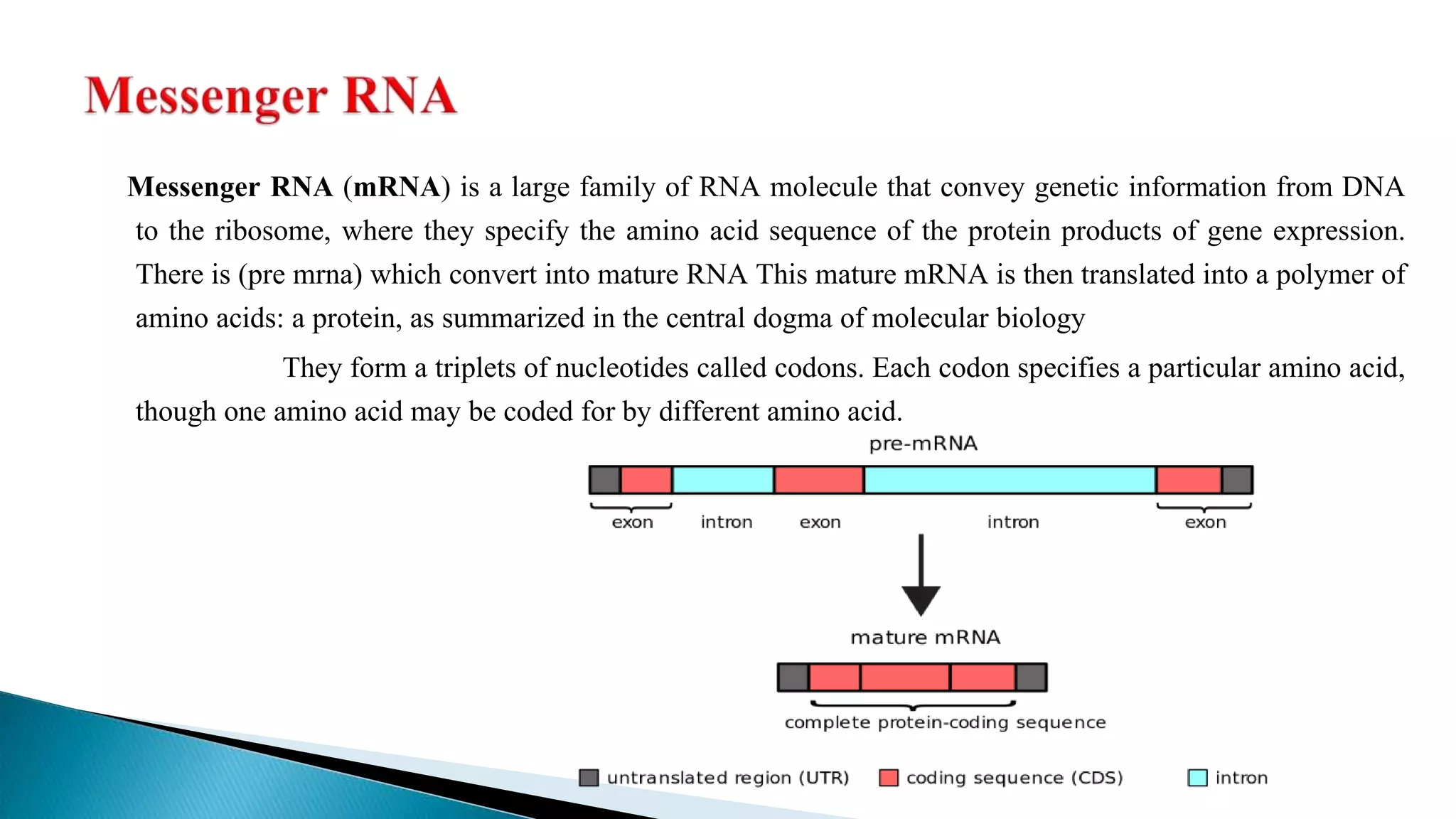
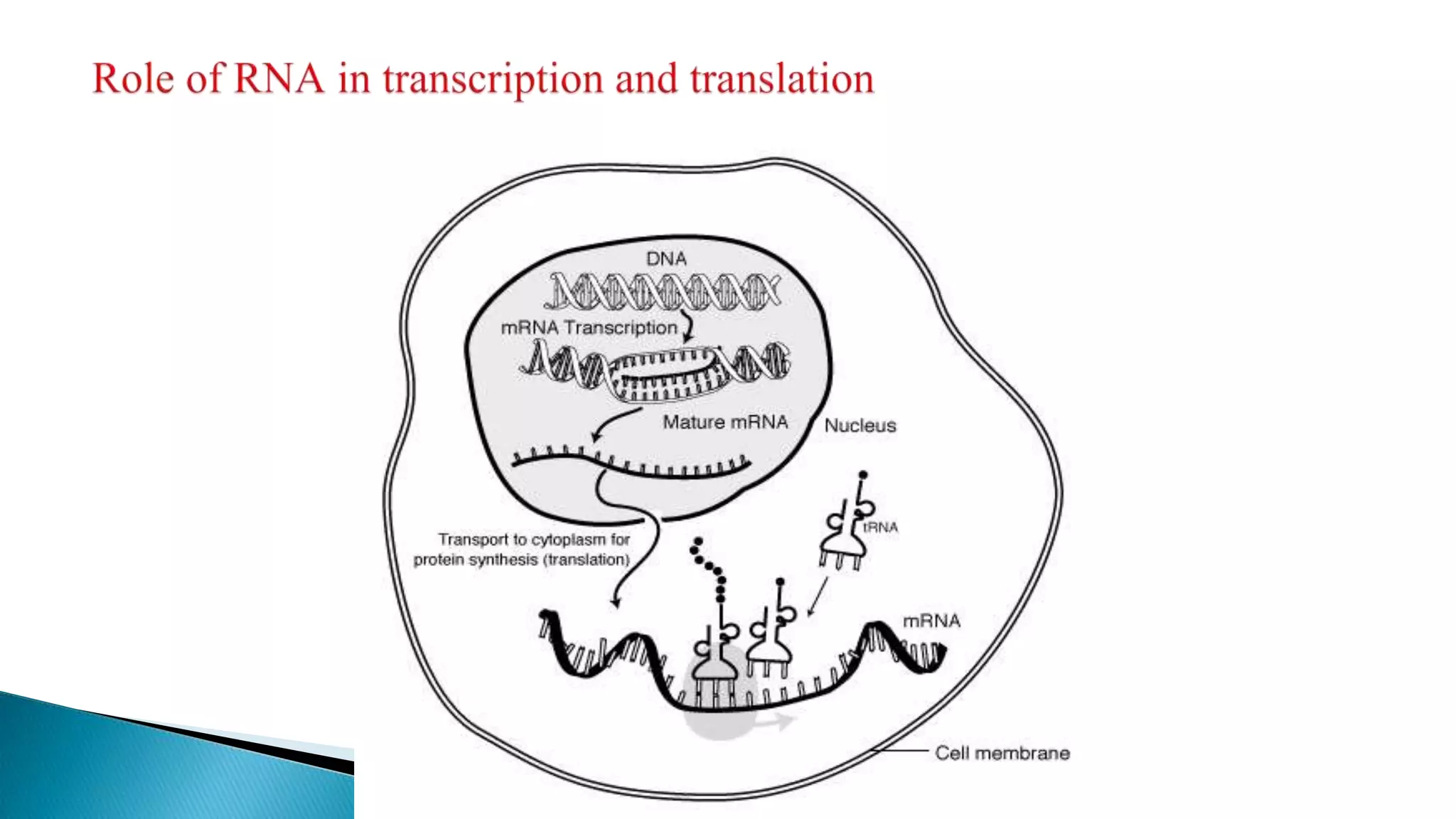
Messenger RNA (mRNA) is a large family of RNA molecule that convey genetic information from DNA
to the ribosome, where they specify the amino acid sequence of the protein products of gene expression.
There is (pre mrna) which convert into mature RNA This mature mRNA is then translated into a polymer of
amino acids: a protein, as summarized in the central dogma of molecular biology
They form a triplets of nucleotides called codons. Each codon specifies a particular amino acid,
though one amino acid may be coded for by different amino acid.
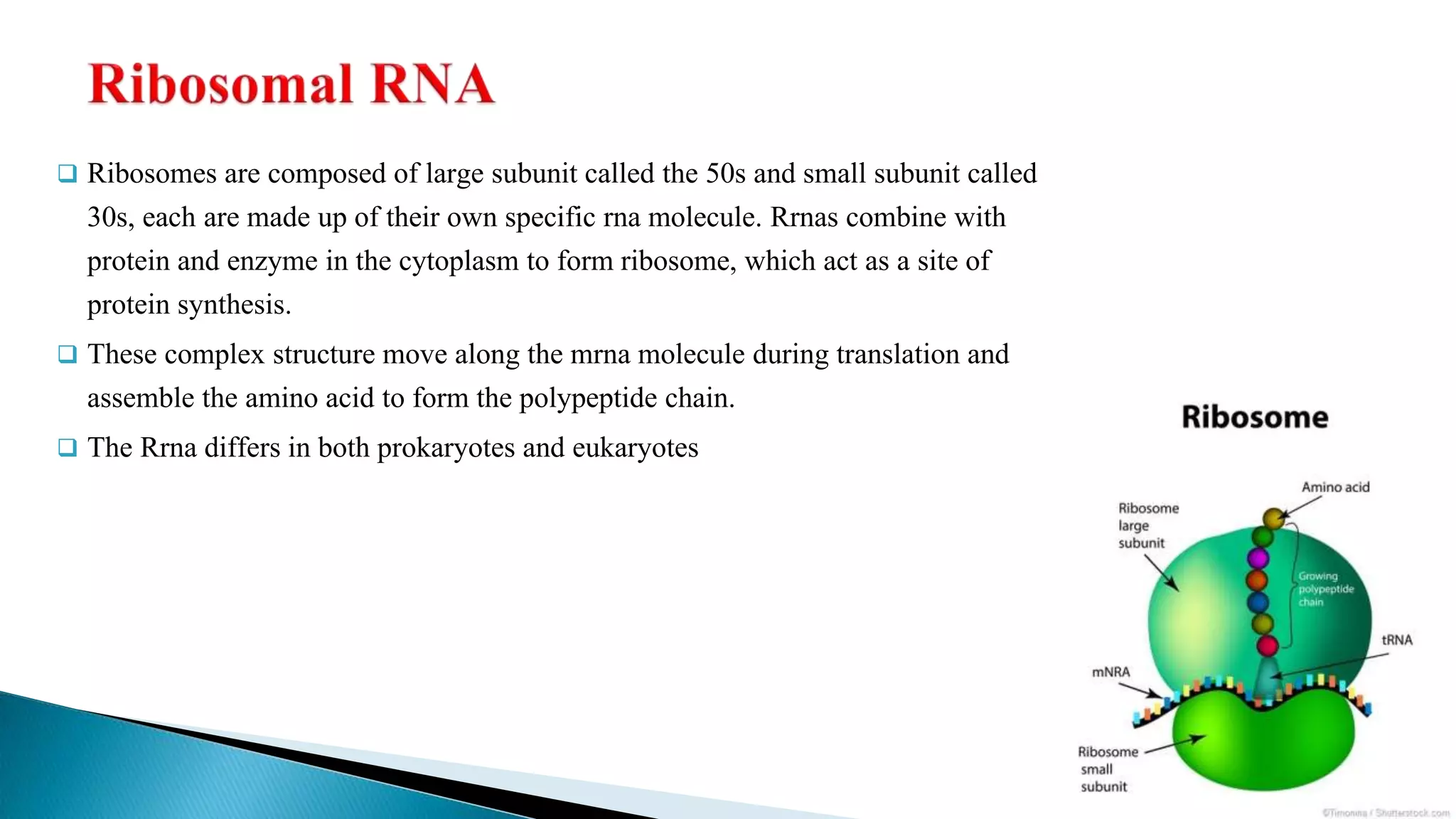
 Ribosomes are composed of large subunit called the 50s and small subunit called
30s, each are made up of their own specific rna molecule. Rrnas combine with
protein and enzyme in the cytoplasm to form ribosome, which act as a site of
protein synthesis.
 These complex structure move along the mrna molecule during translation and
assemble the amino acid to form the polypeptide chain.
 The Rrna differs in both prokaryotes and eukaryotes
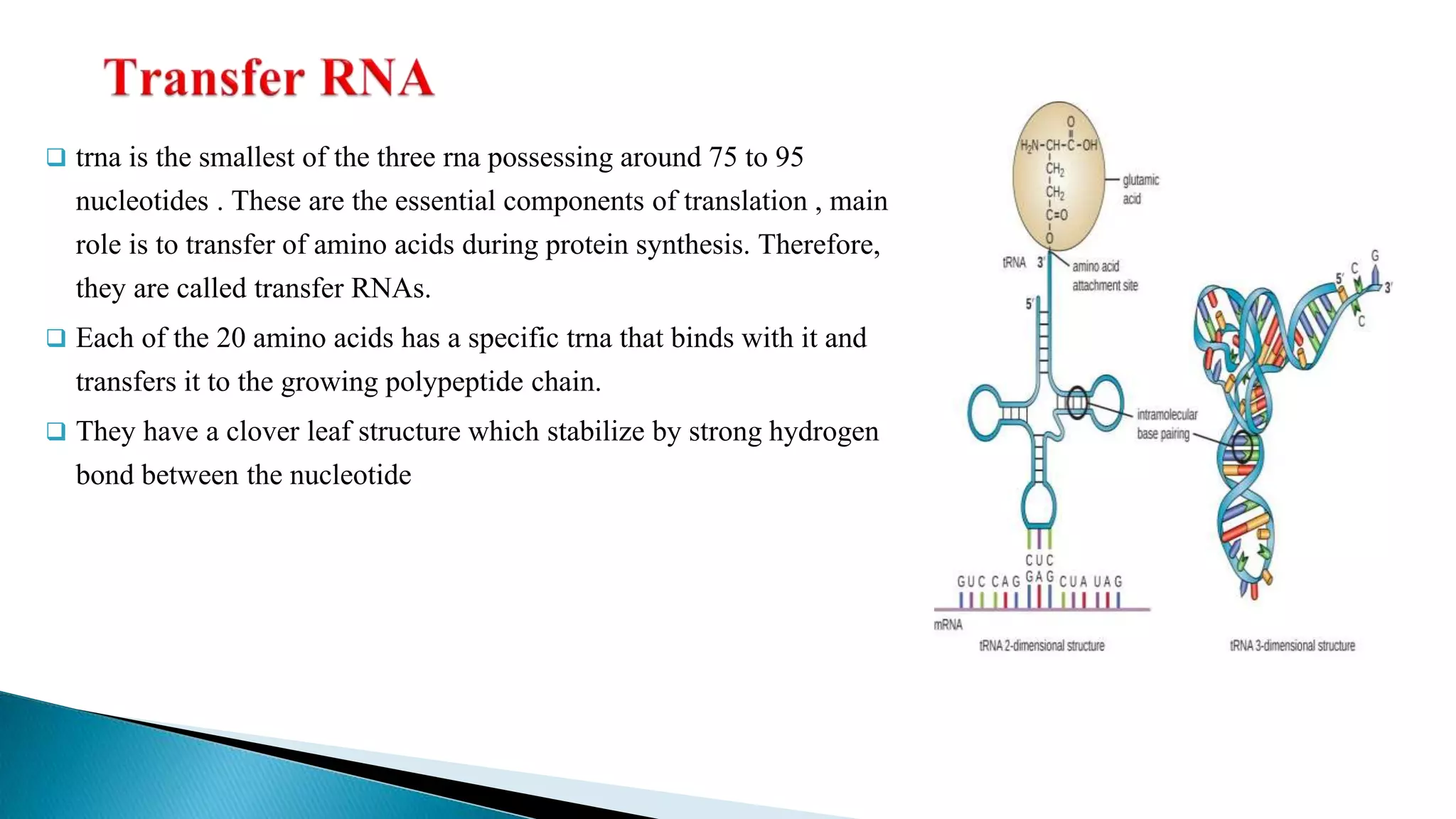
 trna is the smallest of the three rna possessing around 75 to 95
nucleotides . These are the essential components of translation , main
role is to transfer of amino acids during protein synthesis. Therefore,
they are called transfer RNAs.
 Each of the 20 amino acids has a specific trna that binds with it and
transfers it to the growing polypeptide chain.
 They have a clover leaf structure which stabilize by strong hydrogen
bond between the nucleotide
Types of RNA
Types of RNA

Types of RNA

  • 1.
  • 3.
    Messenger RNA (mRNA)is a large family of RNA molecule that convey genetic information from DNA to the ribosome, where they specify the amino acid sequence of the protein products of gene expression. There is (pre mrna) which convert into mature RNA This mature mRNA is then translated into a polymer of amino acids: a protein, as summarized in the central dogma of molecular biology They form a triplets of nucleotides called codons. Each codon specifies a particular amino acid, though one amino acid may be coded for by different amino acid.
  • 4.
     Ribosomes arecomposed of large subunit called the 50s and small subunit called 30s, each are made up of their own specific rna molecule. Rrnas combine with protein and enzyme in the cytoplasm to form ribosome, which act as a site of protein synthesis.  These complex structure move along the mrna molecule during translation and assemble the amino acid to form the polypeptide chain.  The Rrna differs in both prokaryotes and eukaryotes
  • 5.
     trna isthe smallest of the three rna possessing around 75 to 95 nucleotides . These are the essential components of translation , main role is to transfer of amino acids during protein synthesis. Therefore, they are called transfer RNAs.  Each of the 20 amino acids has a specific trna that binds with it and transfers it to the growing polypeptide chain.  They have a clover leaf structure which stabilize by strong hydrogen bond between the nucleotide