“RNA SPLICING”
Submitted by : Hira Naveed
RNA (Ribonucleic Acid):
• RNA is much more abundant than DNA
• There are several important differences between RNA and DNA.
• The pentose sugar in RNA is ribose, in DNA it’s deoxyribose.
• In RNA, uracil replaces the base thymine (U pairs with A).
• RNA is single stranded while DNA is double stranded.
SPLICING:
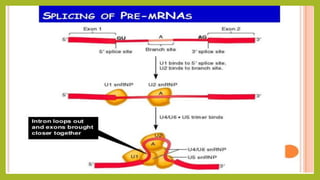
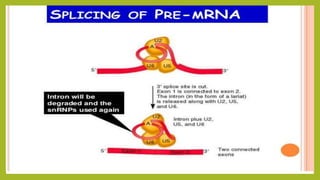
• The process of cutting the pre-mRNA to remove the introns and joining together of
the exons is called splicing.
• TAKES PLACE: “in the nucleus”.
• INTRONS: “non-coding sequences”.
• EXONS: “coding sequences”.
Types of splicing.
1.SELF SPLICING:
• Introns itself
2.SPLICOSOME MEDIATED SPLICING:
• SnRNp’s
Self splicing:
• Introns are able to excise itself precisely from the RNA precursor without the
involvement of any proteins.
• specified by the intron RNA itself.
• Doesn’t require snRNp’s.
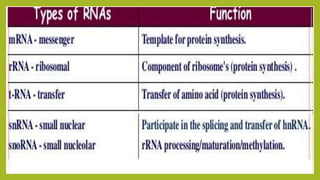
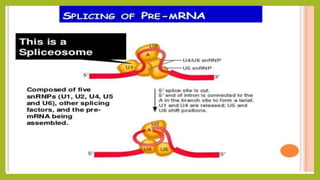
SNRNP PARTICLES: SNRNA + PROTEINS
• Eukaryotic nuclei contain many discreet small RNA species called small nuclear
RNAs (snRNAs) are rich in the base uracil, which complex with specific proteins to
form snRNPs.
• The most abundant snRNP are involved in pre-mRNA splicing are :
• U1
• U2
• U4
• U5
• U6.
Rna splicing
Rna splicing
Rna splicing
Rna splicing

Rna splicing

  • 1.
  • 2.
    RNA (Ribonucleic Acid): •RNA is much more abundant than DNA • There are several important differences between RNA and DNA. • The pentose sugar in RNA is ribose, in DNA it’s deoxyribose. • In RNA, uracil replaces the base thymine (U pairs with A). • RNA is single stranded while DNA is double stranded.
  • 4.
    SPLICING: • The processof cutting the pre-mRNA to remove the introns and joining together of the exons is called splicing. • TAKES PLACE: “in the nucleus”. • INTRONS: “non-coding sequences”. • EXONS: “coding sequences”.
  • 5.
    Types of splicing. 1.SELFSPLICING: • Introns itself 2.SPLICOSOME MEDIATED SPLICING: • SnRNp’s
  • 6.
    Self splicing: • Intronsare able to excise itself precisely from the RNA precursor without the involvement of any proteins. • specified by the intron RNA itself. • Doesn’t require snRNp’s.
  • 8.
    SNRNP PARTICLES: SNRNA+ PROTEINS • Eukaryotic nuclei contain many discreet small RNA species called small nuclear RNAs (snRNAs) are rich in the base uracil, which complex with specific proteins to form snRNPs. • The most abundant snRNP are involved in pre-mRNA splicing are : • U1 • U2 • U4 • U5 • U6.