R.T.VINODHINI
Virulence assays
UNIT 4
• Virulence – degree of disease
causing ability
• VIRULENCE( MEDICAL TERMS) –
SEVERITY OF A DISEASE
Virulence
Molecular
diagnostic
techniques
🞄Analysis of DNA, RNA and Proteins
🞄HIGHACCURACY &
REDUCED COST
🞄
Uses:
oNeoplastic disorders
oInfectious diseases
oInherited conditions
oIdentity determination
Types
🞄Amplification techniques:
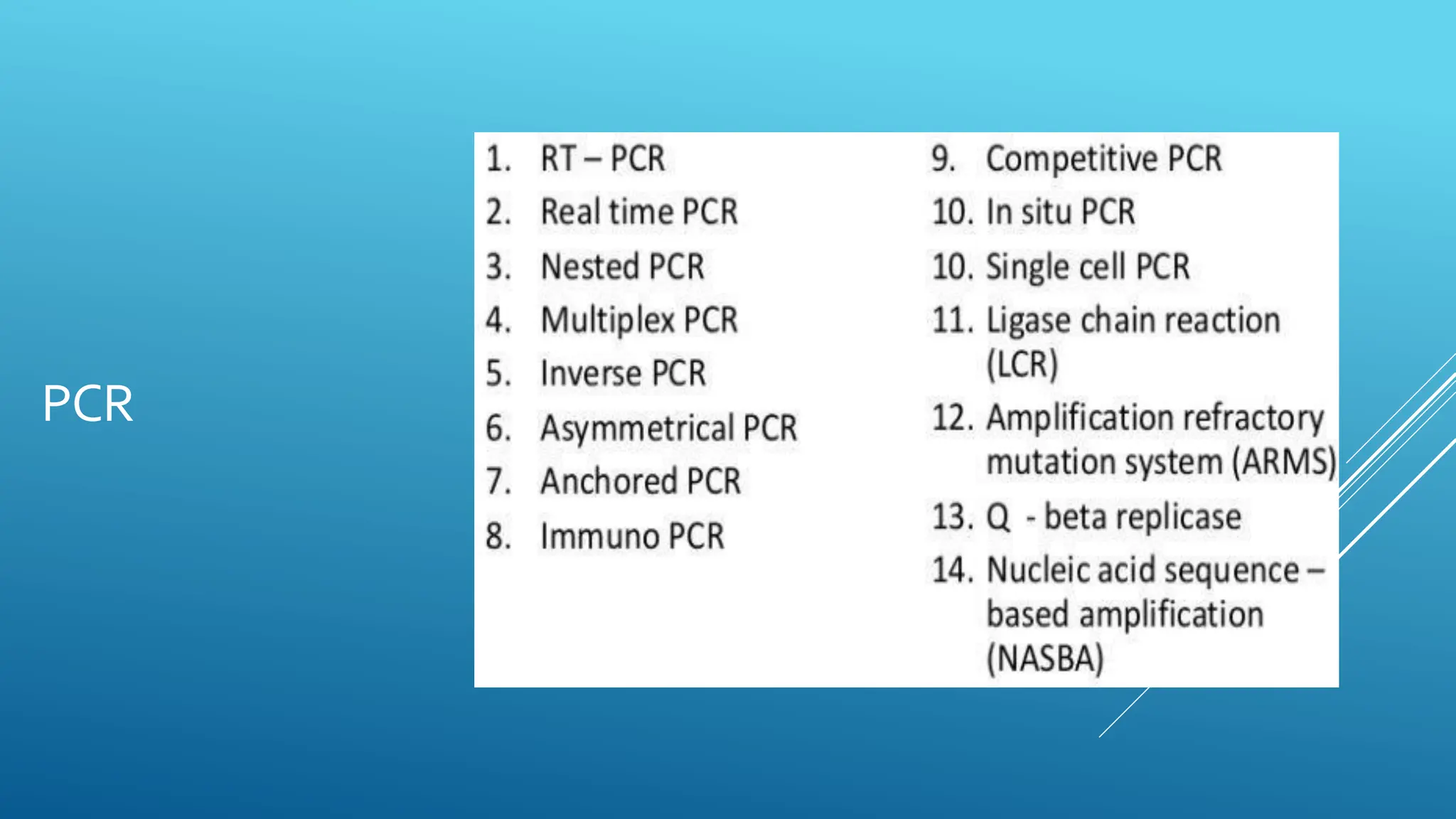
oPCR & its sub types
🞄 Blotting techniques:
oSouthern blotting
oNorthern blotting
oWestern blotting
🞄Hybridization techniques:
oIn situ hybridization
oFISH
oMicroarray
PCR
🞄
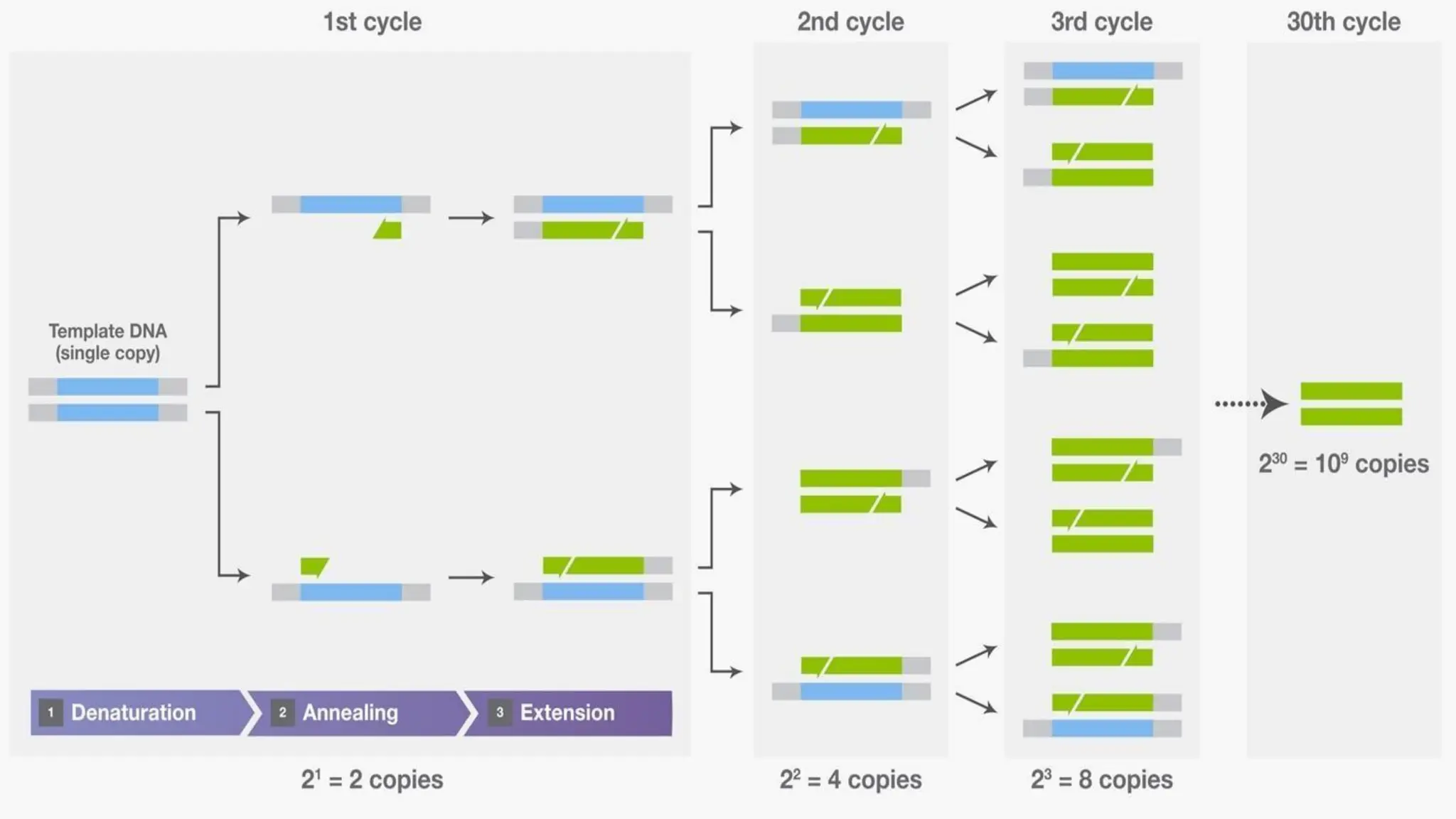
POLYMERASE CHAIN REACTION
🞄Amplification of DNA - large quantities of a specified
DNA
🞄 Developed by Kary Mullis in 1984
PCR
🞄Step 1: Denaturation of DNA at 94- 98 °C
PCR
🞄Step 2:Annealing with primers at 48-56°C
PCR
🞄Step 3: Extension of primers at 68-72°C
PCR
Reverse
Transcriptase-
PCR
🞄 Amplifies DNA from RNA
🞄REVERSE TRANSCRIPTASE ENZYME
🞄 Taq/Tth polymerase – thermus thermophilus
Real time -
PCR
🞄AMPLIFICATION DETECTED WHILE OCCURRING
🞄Data collection after each cycle – fluorescent reporter
Nested - PCR
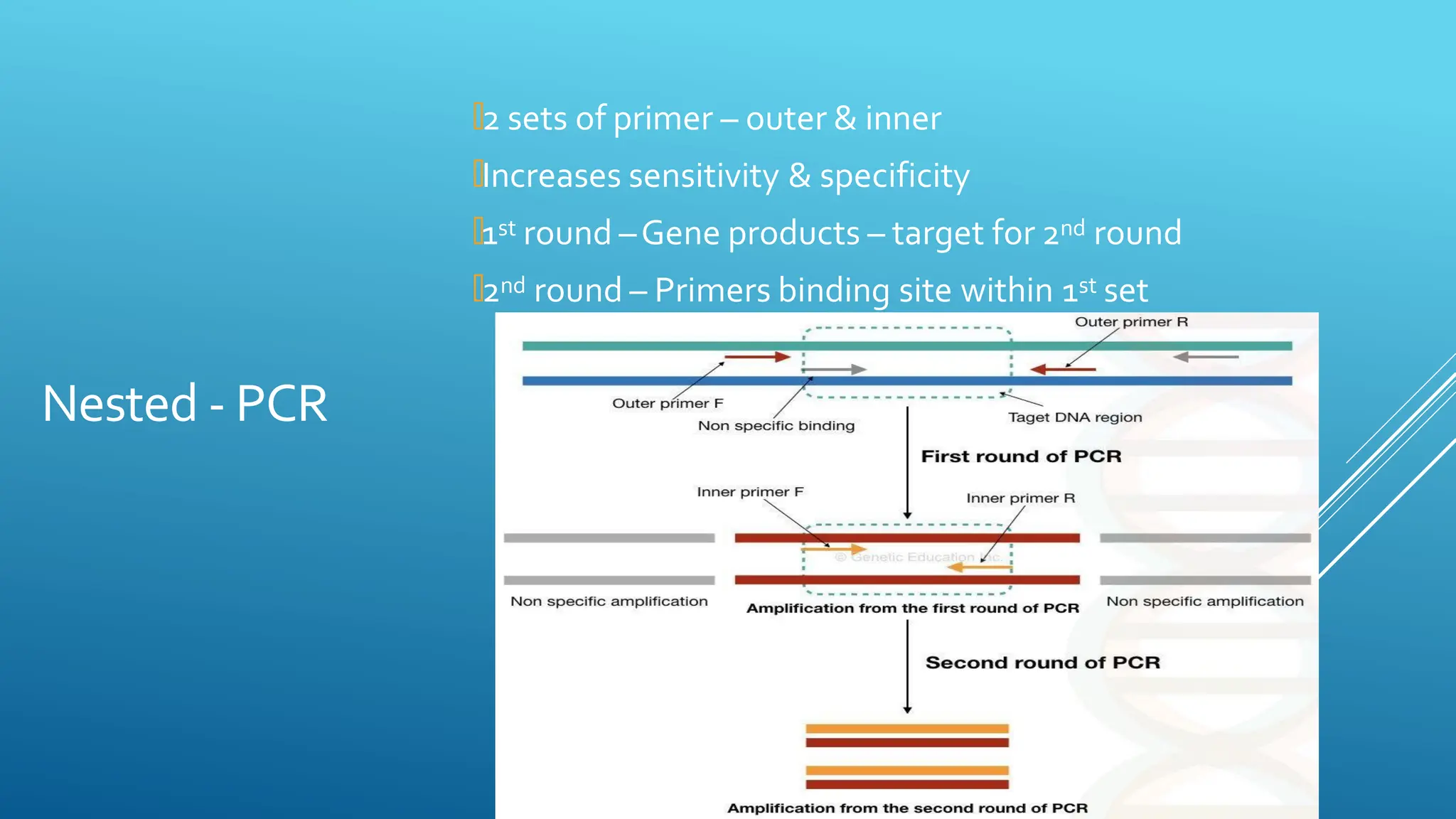
🞄2 sets of primer – outer & inner
🞄Increases sensitivity & specificity
🞄1st round –Gene products – target for 2nd round
🞄2nd round – Primers binding site within 1st set
Blotting
techniques
🞄ANALYTICALTECHNIQUE FORTHE IDENTIFICATION OF DNA,
RNA OR PROTEIN
🞄 Southern blot – DNA
🞄 Northern blot – RNA
🞄 Western blot - Proteins
Southern
blotting
🞄SIR EDWIN SOUTHERN - 1975
🞄To detect specific DNA sequence
🞄DNA digestion
🞄Gel electrophoresis
🞄Blotting
🞄Hybridization & washing
🞄Detection
Northern
blotting
🞄JAMES ALWINE & GEORGE STARK – 1979
🞄To detect specific RNA sequence
🞄RNA isolation
🞄Gel electrophoresis
🞄Blotting
🞄Hybridization & washing
🞄Detection
Western
blotting
🞄W Neal Burnette - 1981
🞄
IDENTIFICATION OF PROTEIN
 🞄Antigen – protein of interest; Antibody – probe
 🞄SDS PAGE
 🞄Blotting
 🞄Blocking
 🞄Primary & secondary hybridization
 🞄Detection
🞄Antigen – antibody interaction
Hybridization
🞄Formation of duplex between two complementary
strands
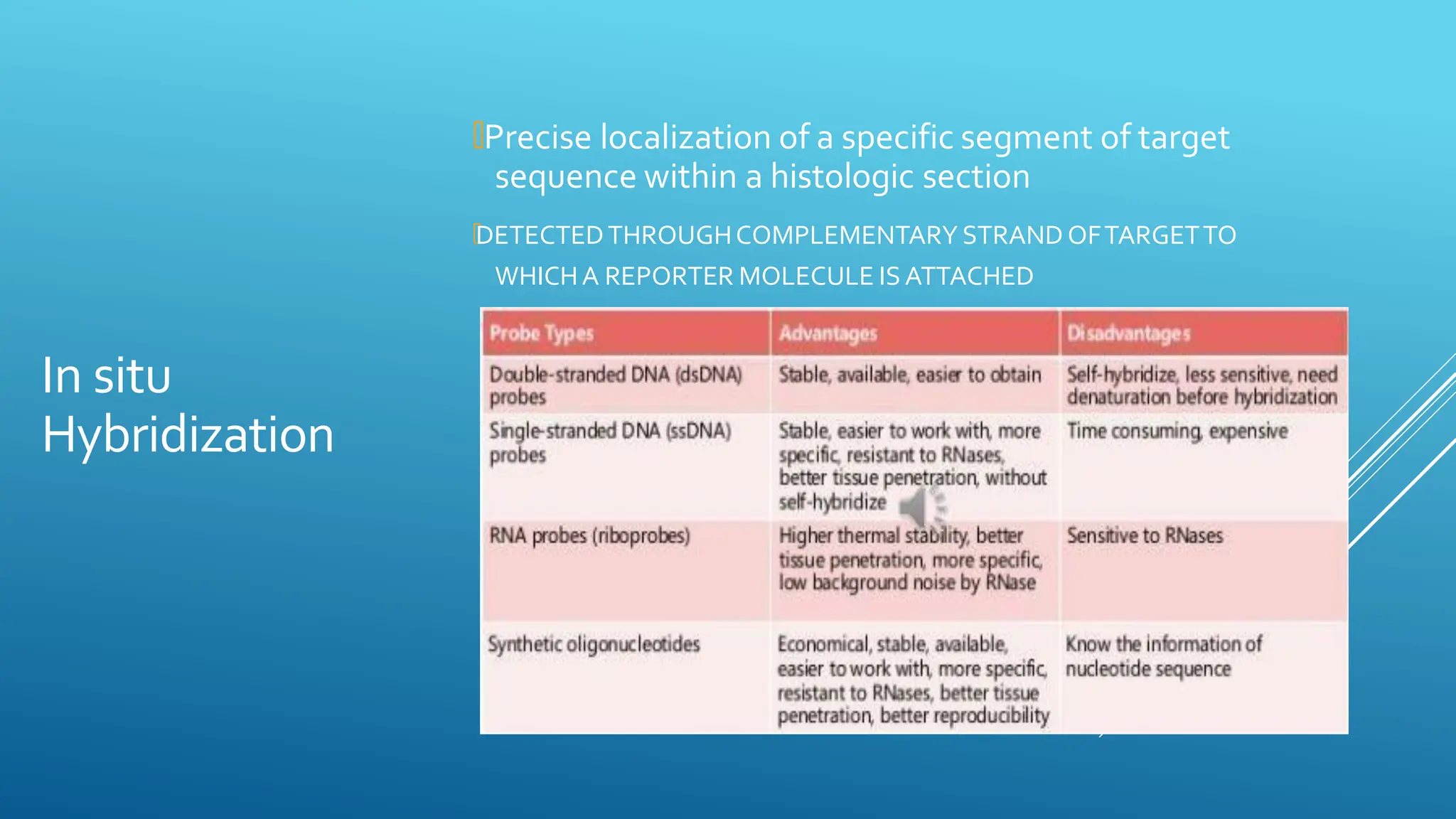
In situ
Hybridization
🞄Precise localization of a specific segment of target
sequence within a histologic section
🞄DETECTEDTHROUGHCOMPLEMENTARY STRAND OFTARGETTO
WHICHA REPORTER MOLECULE IS ATTACHED
LABELLING
TECHNIQUES
FLUORESCE
NCE IN SITU
HYBRIDIZATI
ON
🞄Fluorescent probes that bind to only those parts of a
target sequence with a high degree of sequence
complementarity
Microarray
🞄DNA chip (lab on a chip), next generation sequencing.
🞄Hybridization to detect the presence of target
DNA/RNA
🞄Contain thousands of known immobilized DNA
sequences.
🞄The fluorescently tagged sample to be sequenced is
added.
🞄Genotyping – single stranded genomic DNA is added.
🞄Gene expression – cDNA is added.
Thank you

virulence assays - molecular diagnostic techniques