NAME – SAMADRITA BANIK
ST. GEORGE COLLEGE
M.Sc Microbiology
2nd Sem
 The process of bioremediation, defined as the
use of microorganisms to detoxify or remove
pollutants owing to their diverse metabolic
capabilities is an evolving method for the
removal and degradation of many
environmental pollutants including the
products of petroleum industry
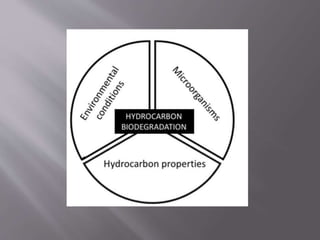
 Hydrocarbons are compounds composed
entirely of carbon and hydrogen. Aromatic
hydrocarbons, alkanes, alkenes, cycloalkanes,
alkynes, and combinations of these compounds
comprise different types of hydrocarbons.
Complex mixtures of hydrocarbons occur
naturally in crude oil and gasoline. Most can be
used as substrates in metabolism by bacteria,
archaea, fungi, and algae. While fungi and
algae degrade hydrocarbons aerobically,
bacteria and archaea are capable of both
aerobic and anaerobic degradation
Hydrocarbons are readily degraded under aerobic
conditions. Bacteria, fungi, and algae are all
capable of aerobic hydrocarbon degradation. In
general, alkenes and short-chain alkanes are the
most easily degraded, followed by branched
alkanes and then aromatics
Alkanes containing 14 carbons or fewer are prone
to volatilization, while alkanes containing more
carbons are less volatile. Regardless, alkanes and
alkenes, with the exception of cyclic alkanes , are
the most readily degraded hydrocarbons with
reported degradation of alkanes containing up to
44 carbons. Both alkanes and alkenes are degraded
with addition of molecular oxygen. Oxygen
availability and the initial step of degradation are
rate-limiting
Aromatic hydrocarbons are generally more
difficult to degrade than shorter alkanes and
alkenes due to their greater toxicity, yet they are
readily degraded aerobically by many bacteria and
fungi. Degradability decreases with increasing
number of rings and increased molecular size, due
to increased hydrophobicity and sorption capacity
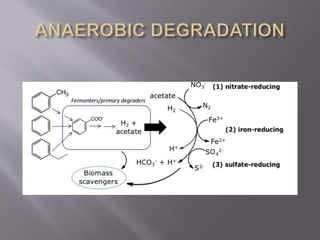
Hydrocarbon degradation under anaerobic
conditions is often slower compared to aerobic
degradation, due to less favorable reaction
energetics with alternate electron acceptors.
Despite this limitation, both facultative and
obligately anaerobic bacteria and archaea are
known to degrade hydrocarbons without oxygen.
Fumarate Addition
Bacteria use fumarate addition to activate alkanes
from 3-20 carbons as well as alkyl-substituted
aromatics like toluene, xylenes, or
methylnaphthalene. Fumarate is a common
cellular metabolite that contains two carboxylic
acid groups and a double bond.
Oxygen-Independent Hydroxylation
Oxygen-independent hydroxylation can denitrify
bacteria metabolizing ethylbenzene. In this
pathway, a hydroxyl (-OH) group is added to the
C1 carbon on the side chain by ethylbenzene
dehydrogenase to form S-1-phenylethanol,
followed by oxidation to acetophenone and
transformation to benzoyl-CoA and acetyl-CoA
Carboxylation
All mechanisms described to date only apply to
hydrocarbons with alkyl groups, and not to
unsubstituted aromatic hydrocarbons like benzene
or naphthalene. In fact, anaerobic degradation of
benzene is much slower than that of toluene, or
xylenes, and may not occur at all sites
Hydrocarbon remediation occurs more quickly
under aerobic conditions than anaerobic. The
primary concern in in situ aerobic remediation is
oxygen delivery and mixing, which may be
achieved by a number of previously-established
methods including landfarming, sparging,
groundwater recirculation, and peroxide addition.
However, aerobic remediation is not feasible in all
environments, particularly low permeability soils.
In these cases, anaerobic bioremediation may be
preferred.
As major components of oil, natural gas and
pesticides, these substances contribute to the
greenhouse effect and climate change, deplete the
ozone, reduce photosynthetic ability of plants, and
increase occurrences of cancer and respiratory
disorders in humans.

Biodegration of hydrocarbons

  • 1.
    NAME – SAMADRITABANIK ST. GEORGE COLLEGE M.Sc Microbiology 2nd Sem
  • 2.
     The processof bioremediation, defined as the use of microorganisms to detoxify or remove pollutants owing to their diverse metabolic capabilities is an evolving method for the removal and degradation of many environmental pollutants including the products of petroleum industry
  • 3.
     Hydrocarbons arecompounds composed entirely of carbon and hydrogen. Aromatic hydrocarbons, alkanes, alkenes, cycloalkanes, alkynes, and combinations of these compounds comprise different types of hydrocarbons. Complex mixtures of hydrocarbons occur naturally in crude oil and gasoline. Most can be used as substrates in metabolism by bacteria, archaea, fungi, and algae. While fungi and algae degrade hydrocarbons aerobically, bacteria and archaea are capable of both aerobic and anaerobic degradation
  • 5.
    Hydrocarbons are readilydegraded under aerobic conditions. Bacteria, fungi, and algae are all capable of aerobic hydrocarbon degradation. In general, alkenes and short-chain alkanes are the most easily degraded, followed by branched alkanes and then aromatics
  • 6.
    Alkanes containing 14carbons or fewer are prone to volatilization, while alkanes containing more carbons are less volatile. Regardless, alkanes and alkenes, with the exception of cyclic alkanes , are the most readily degraded hydrocarbons with reported degradation of alkanes containing up to 44 carbons. Both alkanes and alkenes are degraded with addition of molecular oxygen. Oxygen availability and the initial step of degradation are rate-limiting
  • 7.
    Aromatic hydrocarbons aregenerally more difficult to degrade than shorter alkanes and alkenes due to their greater toxicity, yet they are readily degraded aerobically by many bacteria and fungi. Degradability decreases with increasing number of rings and increased molecular size, due to increased hydrophobicity and sorption capacity
  • 8.
    Hydrocarbon degradation underanaerobic conditions is often slower compared to aerobic degradation, due to less favorable reaction energetics with alternate electron acceptors. Despite this limitation, both facultative and obligately anaerobic bacteria and archaea are known to degrade hydrocarbons without oxygen.
  • 10.
    Fumarate Addition Bacteria usefumarate addition to activate alkanes from 3-20 carbons as well as alkyl-substituted aromatics like toluene, xylenes, or methylnaphthalene. Fumarate is a common cellular metabolite that contains two carboxylic acid groups and a double bond.
  • 11.
    Oxygen-Independent Hydroxylation Oxygen-independent hydroxylationcan denitrify bacteria metabolizing ethylbenzene. In this pathway, a hydroxyl (-OH) group is added to the C1 carbon on the side chain by ethylbenzene dehydrogenase to form S-1-phenylethanol, followed by oxidation to acetophenone and transformation to benzoyl-CoA and acetyl-CoA
  • 12.
    Carboxylation All mechanisms describedto date only apply to hydrocarbons with alkyl groups, and not to unsubstituted aromatic hydrocarbons like benzene or naphthalene. In fact, anaerobic degradation of benzene is much slower than that of toluene, or xylenes, and may not occur at all sites
  • 13.
    Hydrocarbon remediation occursmore quickly under aerobic conditions than anaerobic. The primary concern in in situ aerobic remediation is oxygen delivery and mixing, which may be achieved by a number of previously-established methods including landfarming, sparging, groundwater recirculation, and peroxide addition. However, aerobic remediation is not feasible in all environments, particularly low permeability soils. In these cases, anaerobic bioremediation may be preferred.
  • 14.
    As major componentsof oil, natural gas and pesticides, these substances contribute to the greenhouse effect and climate change, deplete the ozone, reduce photosynthetic ability of plants, and increase occurrences of cancer and respiratory disorders in humans.