METHYLATED
DNA
CURSO BIOMOLÉCULAS II
Epigenetics
Study of heritable changes in gene expression that occur
without a change in a DNA sequence.
Stable alteration in gene expression pattern.
Dynamic process that plays a key role in normal cell growth and
differentiation.
To date, the best understood epigenetic mechanisms are:
1. DNA methylation
2. Histone modifications
DNA methylation
DNA methylation is one of the most commonly occurring
epigenetic events taking place in the mammalian genome.
This change, though heritable, is reversible, making it a
therapeutic target.
Methylation pattern is determined during embryogenesis and
passed over to differentiating cells and tissues.
DNA methylation
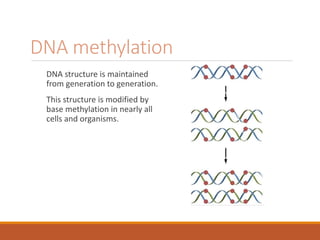
DNA structure is maintained
from generation to generation.
This structure is modified by
base methylation in nearly all
cells and organisms.
DNA methylation
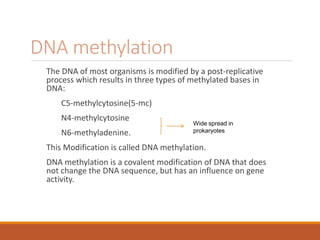
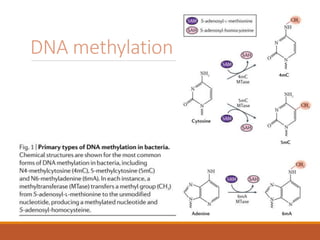
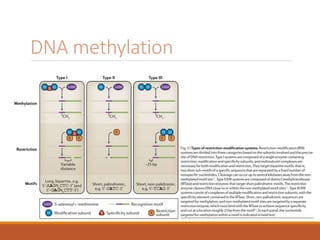
The DNA of most organisms is modified by a post-replicative
process which results in three types of methylated bases in
DNA:
C5-methylcytosine(5-mc)
N4-methylcytosine
N6-methyladenine.
This Modification is called DNA methylation.
DNA methylation is a covalent modification of DNA that does
not change the DNA sequence, but has an influence on gene
activity.
Wide spread in
prokaryotes
DNA methylation
DNA methylation
DNA Methylation
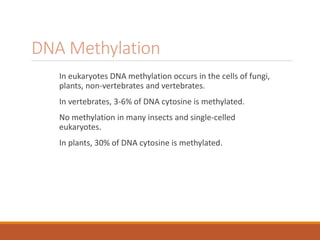
In eukaryotes DNA methylation occurs in the cells of fungi,
plants, non-vertebrates and vertebrates.
In vertebrates, 3-6% of DNA cytosine is methylated.
No methylation in many insects and single-celled
eukaryotes.
In plants, 30% of DNA cytosine is methylated.
DNA
methylation
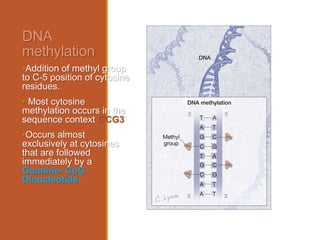
•Addition of methyl group
to C-5 position of cytosine
residues.
• Most cytosine
methylation occurs in the
sequence context 5'CG3'
•Occurs almost
exclusively at cytosines
that are followed
immediately by a
Guanine- CpG
Dinucleotide.
Mechanism
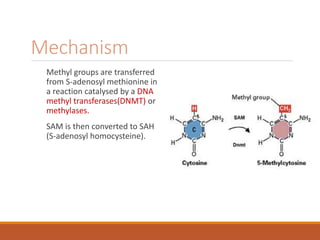
Methyl groups are transferred
from S-adenosyl methionine in
a reaction catalysed by a DNA
methyl transferases(DNMT) or
methylases.
SAM is then converted to SAH
(S-adenosyl homocysteine).
Enzymes involved in DNA
methylation
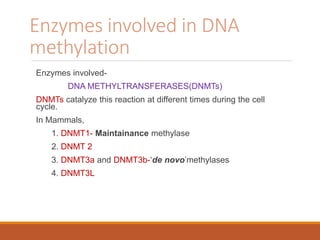
Enzymes involved-
DNA METHYLTRANSFERASES(DNMTs)
DNMTs catalyze this reaction at different times during the cell
cycle.
In Mammals,
1. DNMT1- Maintainance methylase
2. DNMT 2
3. DNMT3a and DNMT3b-‘de novo’methylases
4. DNMT3L
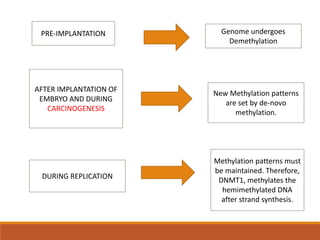
PRE-IMPLANTATION Genome undergoes
Demethylation
AFTER IMPLANTATION OF
EMBRYO AND DURING
CARCINOGENESIS
New Methylation patterns
are set by de-novo
methylation.
DURING REPLICATION
Methylation patterns must
be maintained. Therefore,
DNMT1, methylates the
hemimethylated DNA
after strand synthesis.
Mammalian Genome
The human genome is not methylated uniformly and
contains regions of unmethylated segments interspersed
by methylated regions.
In contrast to the rest of the genome, smaller regions of
DNA, called CpG islands, ranging from 0.5 to 5 kb and
occurring on average every 100 kb, have distinctive
properties. These regions are unmethylated normally.
Approximately half of all the genes in humans have CpG
islands, and these are present on both housekeeping
genes and genes with tissue-specific patterns of
expression.
CpG Dinucleotides
Occur at low abundance throughout the human genome.
Tend to concentrate in regions known as CpG islands
(found in 50% of promoter regions of genes).
Typically methylated in non-promoter regions and
unmethylated in promoter regions.
Methylation within the promoter region correlates with
transcriptional silencing.
Methylation of CpG islands is believed to dysregulate gene
transcription through the inhibition of transcription factor
binding either directly or via altered histone acetylation.
Bisulfite Sequencing
Bisulfite sequencing is used to detect methylation in DNA.
Bisulfite deaminates cytosine, making uracil.
Methylated cytosine is not changed by bisulfite treatment.
The bisulfite-treated template is then sequenced.
15
Bisulfite Sequencing
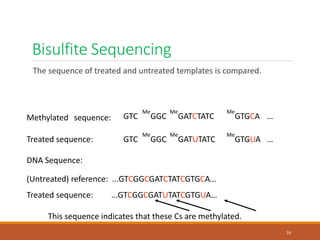
The sequence of treated and untreated templates is compared.
GTC
Methylated sequence: GTC
Me
GGC
Me
GATCTATC
Me
GTGCA …
Treated sequence:
Me
GGC
Me
GATUTATC
Me
GTGUA …
DNA Sequence:
(Untreated) reference: ...GTCGGCGATCTATCGTGCA…
Treated sequence: ...GTCGGCGATUTATCGTGUA…
This sequence indicates that these Cs are methylated.
16
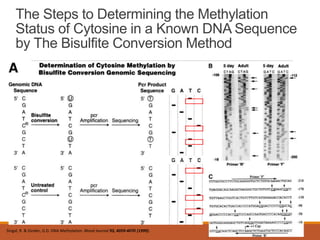
The Steps to Determining the Methylation
Status of Cytosine in a Known DNA Sequence
by The Bisulfite Conversion Method
17
Singal, R. & Ginder, G.D. DNA Methylation. Blood Journal 93, 4059-4070 (1999).
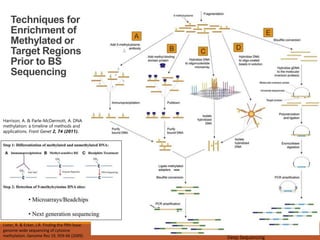
Techniques for
Enrichment of
Methylated or
Target Regions
Prior to BS
Sequencing
18
Lister, R. & Ecker, J.R. Finding the fifth base:
genome-wide sequencing of cytosine
methylation. Genome Res 19, 959-66 (2009).
Genomic DNA
Deep Sequencing
Harrison, A. & Parle-McDermott, A. DNA
methylation: a timeline of methods and
applications. Front Genet 2, 74 (2011).

DNA methylation_2023.pptx

  • 1.
  • 2.
    Epigenetics Study of heritablechanges in gene expression that occur without a change in a DNA sequence. Stable alteration in gene expression pattern. Dynamic process that plays a key role in normal cell growth and differentiation. To date, the best understood epigenetic mechanisms are: 1. DNA methylation 2. Histone modifications
  • 3.
    DNA methylation DNA methylationis one of the most commonly occurring epigenetic events taking place in the mammalian genome. This change, though heritable, is reversible, making it a therapeutic target. Methylation pattern is determined during embryogenesis and passed over to differentiating cells and tissues.
  • 4.
    DNA methylation DNA structureis maintained from generation to generation. This structure is modified by base methylation in nearly all cells and organisms.
  • 5.
    DNA methylation The DNAof most organisms is modified by a post-replicative process which results in three types of methylated bases in DNA: C5-methylcytosine(5-mc) N4-methylcytosine N6-methyladenine. This Modification is called DNA methylation. DNA methylation is a covalent modification of DNA that does not change the DNA sequence, but has an influence on gene activity. Wide spread in prokaryotes
  • 6.
  • 7.
  • 8.
    DNA Methylation In eukaryotesDNA methylation occurs in the cells of fungi, plants, non-vertebrates and vertebrates. In vertebrates, 3-6% of DNA cytosine is methylated. No methylation in many insects and single-celled eukaryotes. In plants, 30% of DNA cytosine is methylated.
  • 9.
    DNA methylation •Addition of methylgroup to C-5 position of cytosine residues. • Most cytosine methylation occurs in the sequence context 5'CG3' •Occurs almost exclusively at cytosines that are followed immediately by a Guanine- CpG Dinucleotide.
  • 10.
    Mechanism Methyl groups aretransferred from S-adenosyl methionine in a reaction catalysed by a DNA methyl transferases(DNMT) or methylases. SAM is then converted to SAH (S-adenosyl homocysteine).
  • 11.
    Enzymes involved inDNA methylation Enzymes involved- DNA METHYLTRANSFERASES(DNMTs) DNMTs catalyze this reaction at different times during the cell cycle. In Mammals, 1. DNMT1- Maintainance methylase 2. DNMT 2 3. DNMT3a and DNMT3b-‘de novo’methylases 4. DNMT3L
  • 12.
    PRE-IMPLANTATION Genome undergoes Demethylation AFTERIMPLANTATION OF EMBRYO AND DURING CARCINOGENESIS New Methylation patterns are set by de-novo methylation. DURING REPLICATION Methylation patterns must be maintained. Therefore, DNMT1, methylates the hemimethylated DNA after strand synthesis.
  • 13.
    Mammalian Genome The humangenome is not methylated uniformly and contains regions of unmethylated segments interspersed by methylated regions. In contrast to the rest of the genome, smaller regions of DNA, called CpG islands, ranging from 0.5 to 5 kb and occurring on average every 100 kb, have distinctive properties. These regions are unmethylated normally. Approximately half of all the genes in humans have CpG islands, and these are present on both housekeeping genes and genes with tissue-specific patterns of expression.
  • 14.
    CpG Dinucleotides Occur atlow abundance throughout the human genome. Tend to concentrate in regions known as CpG islands (found in 50% of promoter regions of genes). Typically methylated in non-promoter regions and unmethylated in promoter regions. Methylation within the promoter region correlates with transcriptional silencing. Methylation of CpG islands is believed to dysregulate gene transcription through the inhibition of transcription factor binding either directly or via altered histone acetylation.
  • 15.
    Bisulfite Sequencing Bisulfite sequencingis used to detect methylation in DNA. Bisulfite deaminates cytosine, making uracil. Methylated cytosine is not changed by bisulfite treatment. The bisulfite-treated template is then sequenced. 15
  • 16.
    Bisulfite Sequencing The sequenceof treated and untreated templates is compared. GTC Methylated sequence: GTC Me GGC Me GATCTATC Me GTGCA … Treated sequence: Me GGC Me GATUTATC Me GTGUA … DNA Sequence: (Untreated) reference: ...GTCGGCGATCTATCGTGCA… Treated sequence: ...GTCGGCGATUTATCGTGUA… This sequence indicates that these Cs are methylated. 16
  • 17.
    The Steps toDetermining the Methylation Status of Cytosine in a Known DNA Sequence by The Bisulfite Conversion Method 17 Singal, R. & Ginder, G.D. DNA Methylation. Blood Journal 93, 4059-4070 (1999).
  • 18.
    Techniques for Enrichment of Methylatedor Target Regions Prior to BS Sequencing 18 Lister, R. & Ecker, J.R. Finding the fifth base: genome-wide sequencing of cytosine methylation. Genome Res 19, 959-66 (2009). Genomic DNA Deep Sequencing Harrison, A. & Parle-McDermott, A. DNA methylation: a timeline of methods and applications. Front Genet 2, 74 (2011).