DIVIDEND DECISIONS
Dividend is the portion of earnings which is
Distributed among the shareholders.
Dividend policy determines the division of
Earnings between payment to shareholders
& retained earnings.
Dividend policy may be viewed as:
1. Long term financing decision
2. Wealth maximisation decision
Determinants of dividend policy.
• Transaction cost
• Personal taxation
• Dividend clientele
• Dividend payout ratio
• Divisible profits
• Liquidity
• Rate of expansion
• Rate of return
• Legal provisions
• Stability of earnings
• Contractual constraints
• Cost of financing
• Degree of control
• Capital Market access
• State of economy
• Effect of trade cycles
• Policy of competitive concerns
Dividend policies
1. Constant dividend payout ratio.
2. Constant dividend rate policy :-
(dividend equalisation fund/reserve)
a. constant dividend per share
b. constant divided plus extra dividend
c. uniform cash dividend plus bonus shares
d. Fixed percentage of market value
Types of dividends
1. Cash dividends
2. Dividend warrants
3. Bond dividends
4. Property dividends
5. Stock dividends/bonus shares
STOCK DIVIDENDS/BONUS SHARES
• Making partly paid equity shares fully paid up
• Issuing fresh equity shares to existing shares
objectives-
1. Conservation of cash
2. Lower rate of dividends for undercapitalisation
3. Financing expansion programme
4. Transferring the surplus reserves
5. Enhance prestige
6. Widening share market
7. True presentation of earning capicity.
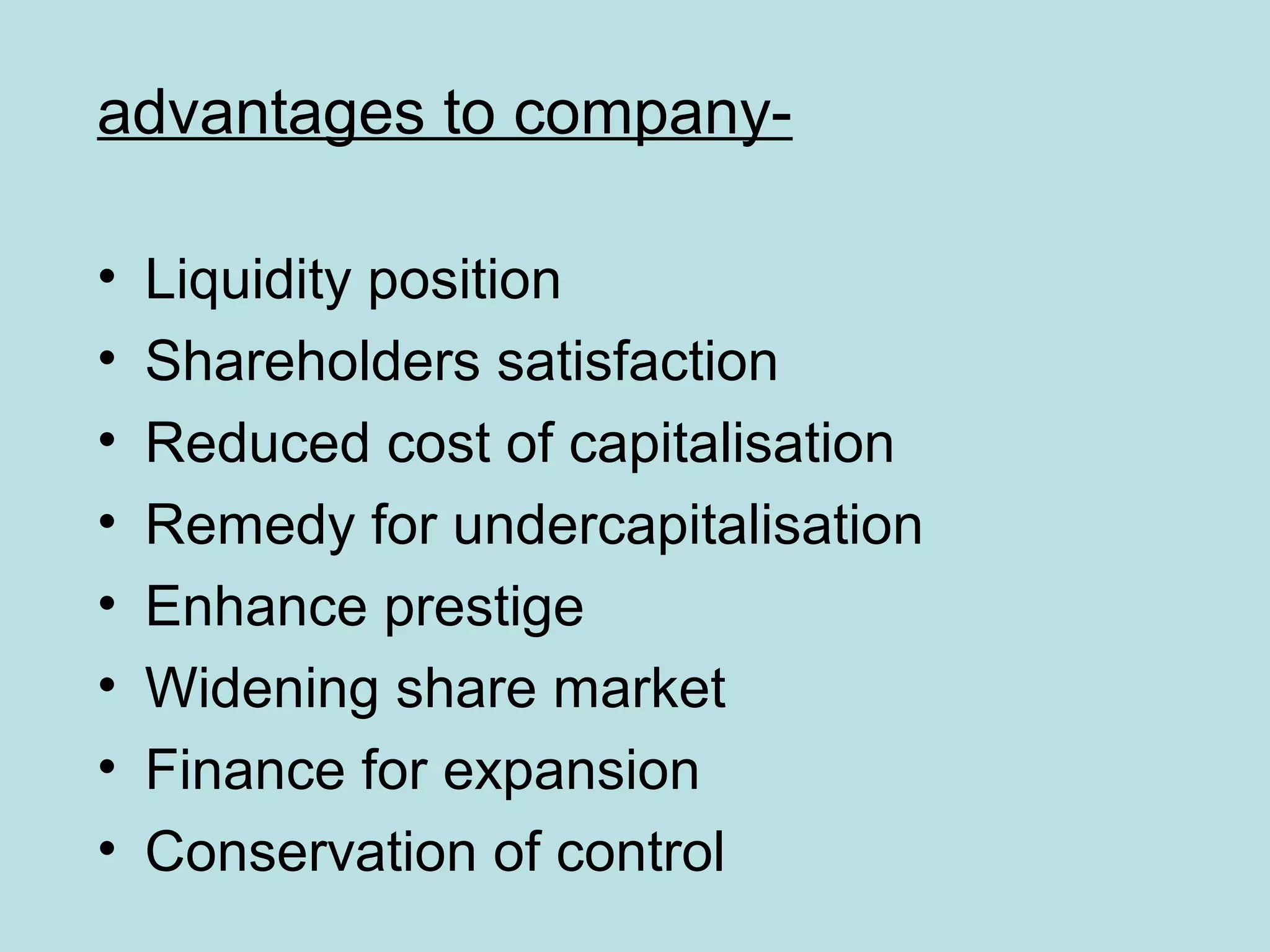
advantages to company-
• Liquidity position
• Shareholders satisfaction
• Reduced cost of capitalisation
• Remedy for undercapitalisation
• Enhance prestige
• Widening share market
• Finance for expansion
• Conservation of control
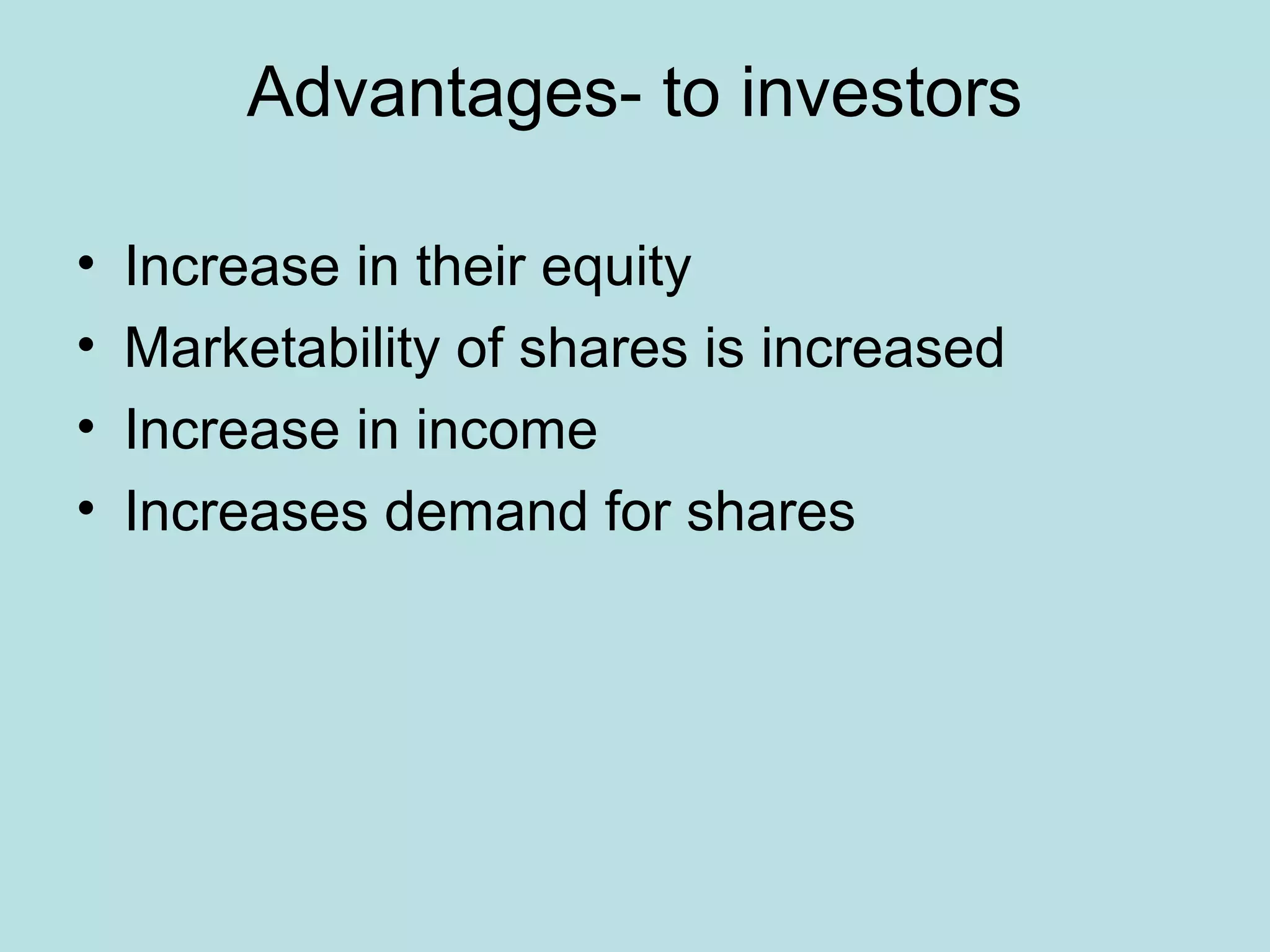
Advantages- to investors
• Increase in their equity
• Marketability of shares is increased
• Increase in income
• Increases demand for shares
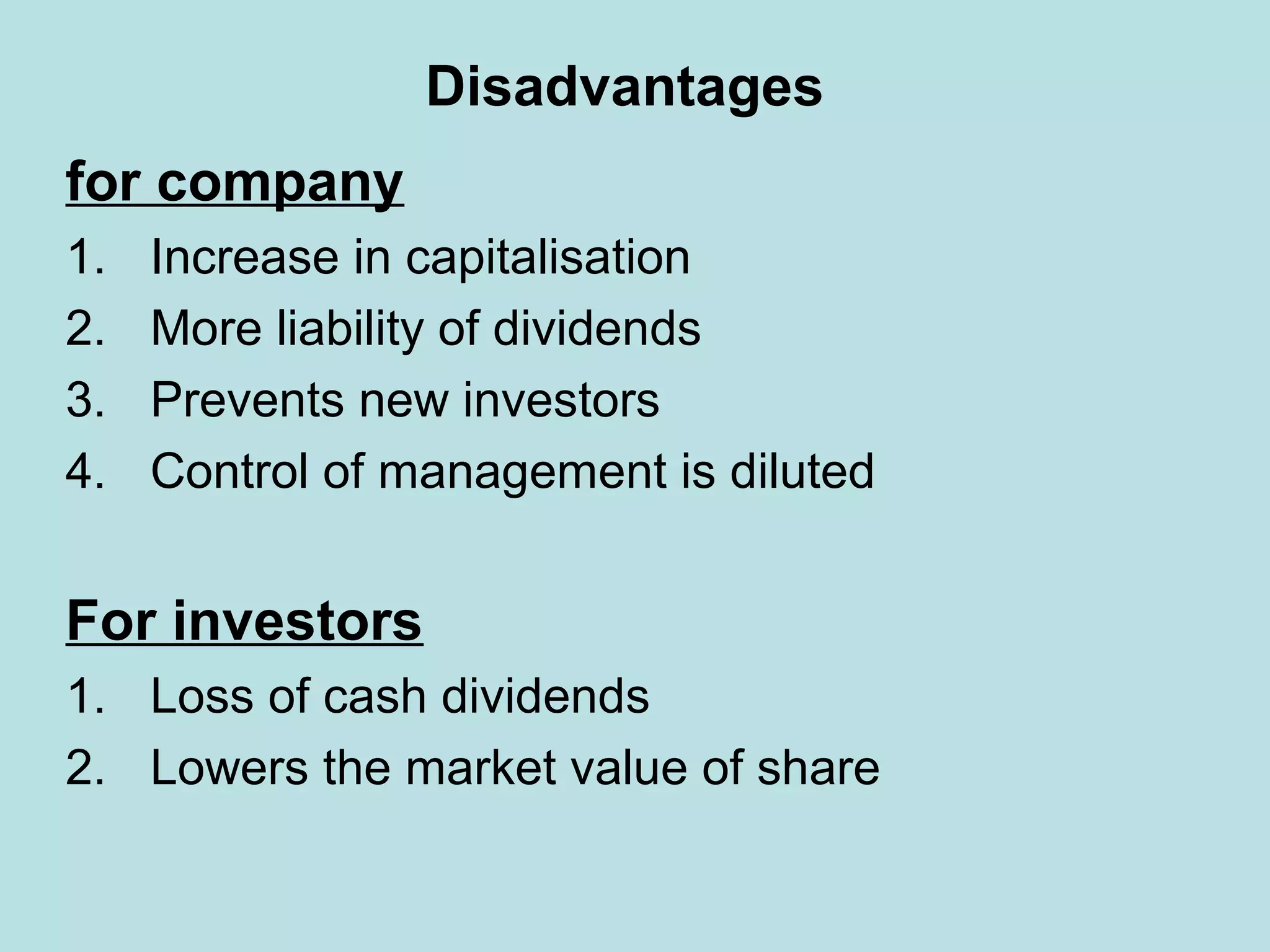
Disadvantages
for company
1. Increase in capitalisation
2. More liability of dividends
3. Prevents new investors
4. Control of management is diluted
For investors
1. Loss of cash dividends
2. Lowers the market value of share

Dividend Policy

  • 1.
  • 2.
    Dividend is theportion of earnings which is Distributed among the shareholders. Dividend policy determines the division of Earnings between payment to shareholders & retained earnings. Dividend policy may be viewed as: 1. Long term financing decision 2. Wealth maximisation decision
  • 3.
    Determinants of dividendpolicy. • Transaction cost • Personal taxation • Dividend clientele • Dividend payout ratio • Divisible profits • Liquidity • Rate of expansion • Rate of return
  • 4.
    • Legal provisions •Stability of earnings • Contractual constraints • Cost of financing • Degree of control • Capital Market access • State of economy • Effect of trade cycles • Policy of competitive concerns
  • 5.
    Dividend policies 1. Constantdividend payout ratio. 2. Constant dividend rate policy :- (dividend equalisation fund/reserve) a. constant dividend per share b. constant divided plus extra dividend c. uniform cash dividend plus bonus shares d. Fixed percentage of market value
  • 6.
    Types of dividends 1.Cash dividends 2. Dividend warrants 3. Bond dividends 4. Property dividends 5. Stock dividends/bonus shares
  • 7.
    STOCK DIVIDENDS/BONUS SHARES •Making partly paid equity shares fully paid up • Issuing fresh equity shares to existing shares objectives- 1. Conservation of cash 2. Lower rate of dividends for undercapitalisation 3. Financing expansion programme 4. Transferring the surplus reserves 5. Enhance prestige 6. Widening share market 7. True presentation of earning capicity.
  • 8.
    advantages to company- •Liquidity position • Shareholders satisfaction • Reduced cost of capitalisation • Remedy for undercapitalisation • Enhance prestige • Widening share market • Finance for expansion • Conservation of control
  • 9.
    Advantages- to investors •Increase in their equity • Marketability of shares is increased • Increase in income • Increases demand for shares
  • 10.
    Disadvantages for company 1. Increasein capitalisation 2. More liability of dividends 3. Prevents new investors 4. Control of management is diluted For investors 1. Loss of cash dividends 2. Lowers the market value of share