HUMAN DIGESTIVE
    SYSTEM
Digestive System
 The human digestive system is a
 complex series of organs and
 glands that processes food. In
 order to use the food we eat, our
 body has to break the food down
 into smaller molecules that it can
 process; it also has to excrete
 waste.
The Digestive Process
1. The start of the process - the
 mouth: The digestive process
 begins in the mouth. Food is
 partly broken down by the
 process of chewing and by the
 chemical action of salivary
 enzymes (these enzymes are
 produced by the salivary glands
 and break down starches into
2. On the way to the stomach:
 the esophagus - After being
 chewed and swallowed, the food
 enters the esophagus. The
 esophagus is a long tube that runs
 from the mouth to the stomach. It
 uses rhythmic, wave-like muscle
 movements (called peristalsis) to
 force food from the throat into the
 stomach. This muscle movement
 gives us the ability to eat or drink
 even when we're upside-down.
3. In the stomach - The stomach is
 a large, sack-like organ that
 churns the food and bathes it in a
 very strong acid (gastric acid).
 Food in the stomach that is partly
 digested and mixed with stomach
 acids is called chyme.
3. In the small intestine - After
 being in the stomach, food enters
 the duodenum, the first part of the
 small intestine. It then enters the
 jejunum and then the ileum (the
 final part of the small intestine). In
 the small intestine, bile (produced in
 the liver and stored in the gall
 bladder), pancreatic enzymes, and
 other digestive enzymes produced
 by the inner wall of the small
 intestine help in the breakdown of
4. In the large intestine - After
 passing through the small intestine,
 food passes into the large intestine. In
 the large intestine, some of the water
 and electrolytes (chemicals like
 sodium) are removed from the food.
 Many microbes (bacteria like
 Bacteroides, Lactobacillus
 acidophilus, Escherichia coli, and
 Klebsiella) in the large intestine help in
 the digestion process. The first part of
 the large intestine is called the cecum
 (the appendix is connected to the
 cecum). Food then travels upward in
 the ascending colon.
The food travels across the
 abdomen in the transverse colon,
 goes back down the other side of
 the body in the descending colon,
 and then through the sigmoid
 colon.

5. The end of the process - Solid
 waste is then stored in the rectum
 until it is excreted via the anus.
Key Players
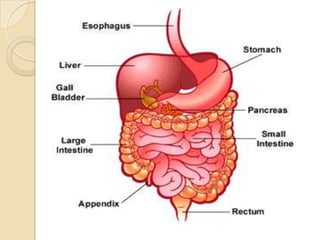
 Other organs that play a key role in
 digestion include the liver, gallbladder,
 and pancreas. The pancreas is a gland
 organ located behind the stomach that
 manufactures a cocktail of enzymes
 that are pumped into the duodenum. A
 duct also connects the duodenum to
 the gallbladder. This pear-shaped sac
 squeezes out green-brown bile, a
 waste product collected from the liver
 that contains acids for dissolving fatty
The liver itself is the body's main
chemical factory, performing hundreds
of different functions. It processes
nutrients absorbed into the blood by
the small intestine, creating energy-
giving glycogen from sugary
carbohydrates and converting dietary
proteins into new proteins needed for
our blood. These are then stored or
released as needed, as are essential
vitamins and minerals. The liver also
breaks down unwanted chemicals,
such as any alcohol consumed, which
is detoxified and passed from the body
as waste.
How is the digestive
process controlled?
Hormone Regulators

 The major hormones that control the
 functions of the digestive system are
 produced and released by cells in the
 mucosa of the stomach and small
 intestine. These hormones are
 released into the blood of the digestive
 tract, travel back to the heart and
 through the arteries, and return to the
 digestive system where they stimulate
 digestive juices and cause organ
 movement.
The main hormones that control
 digestion are gastrin, secretin, and
 cholecystokinin (CCK):

 Gastrin causes the stomach to
 produce an acid for dissolving and
 digesting some foods. Gastrin is
 also necessary for normal cell
 growth in the lining of the stomach,
 small intestine, and colon.
 Secretin  causes the pancreas to
 send out a digestive juice that is rich
 in bicarbonate. The bicarbonate
 helps neutralize the acidic stomach
 contents as they enter the small
 intestine. Secretin also stimulates
 the stomach to produce pepsin, an
 enzyme that digests protein, and
 stimulates the liver to produce bile.
 CCK causes the pancreas to produce
 the enzymes of pancreatic juice, and
 causes the gallbladder to empty. It also
 promotes normal cell growth of the
 pancreas.

    Additional hormones in the digestive
  system regulate appetite:
 Ghrelin is produced in the stomach and
  upper intestine in the digestive system
  and stimulates appetite.
   Peptide YY is produced in the
    digestive tract in response to a meal in
    the system and inhibits appetite.

    Both of these hormones work on the
    brain to help regulate the intake of
    food for energy. Researchers are
    studying other hormones that may
    play a part in inhibiting appetite,
    including glucagon-like peptide-1
    (GPL-1), oxyntomodulin (+ ), and
    pancreatic polypeptide.
Nerve Regulators

 Extrinsic, or outside, nerves come to
  the digestive organs from the brain or
  the spinal cord. They release two
  chemicals, acetylcholine and
  adrenaline.
 The intrinsic, or inside, nerves make
  up a very dense network embedded in
  the walls of the esophagus, stomach,
  small intestine, and colon. The
  intrinsic nerves are triggered to act
  when the walls of the hollow organs
NatSci 2 (5:30-7:00 MW)

Members:
Galicia, Kimberly M.
Madrona, Sheriam G.
Avila, Jasmin B.
Palce, Manilyn C.
Maxilom, Maricris J.
Opelada, Bernardino A.

Human digestive system

  • 1.
  • 3.
    Digestive System  Thehuman digestive system is a complex series of organs and glands that processes food. In order to use the food we eat, our body has to break the food down into smaller molecules that it can process; it also has to excrete waste.
  • 6.
    The Digestive Process 1.The start of the process - the mouth: The digestive process begins in the mouth. Food is partly broken down by the process of chewing and by the chemical action of salivary enzymes (these enzymes are produced by the salivary glands and break down starches into
  • 7.
    2. On theway to the stomach: the esophagus - After being chewed and swallowed, the food enters the esophagus. The esophagus is a long tube that runs from the mouth to the stomach. It uses rhythmic, wave-like muscle movements (called peristalsis) to force food from the throat into the stomach. This muscle movement gives us the ability to eat or drink even when we're upside-down.
  • 8.
    3. In thestomach - The stomach is a large, sack-like organ that churns the food and bathes it in a very strong acid (gastric acid). Food in the stomach that is partly digested and mixed with stomach acids is called chyme.
  • 9.
    3. In thesmall intestine - After being in the stomach, food enters the duodenum, the first part of the small intestine. It then enters the jejunum and then the ileum (the final part of the small intestine). In the small intestine, bile (produced in the liver and stored in the gall bladder), pancreatic enzymes, and other digestive enzymes produced by the inner wall of the small intestine help in the breakdown of
  • 10.
    4. In thelarge intestine - After passing through the small intestine, food passes into the large intestine. In the large intestine, some of the water and electrolytes (chemicals like sodium) are removed from the food. Many microbes (bacteria like Bacteroides, Lactobacillus acidophilus, Escherichia coli, and Klebsiella) in the large intestine help in the digestion process. The first part of the large intestine is called the cecum (the appendix is connected to the cecum). Food then travels upward in the ascending colon.
  • 11.
    The food travelsacross the abdomen in the transverse colon, goes back down the other side of the body in the descending colon, and then through the sigmoid colon. 5. The end of the process - Solid waste is then stored in the rectum until it is excreted via the anus.
  • 12.
    Key Players Otherorgans that play a key role in digestion include the liver, gallbladder, and pancreas. The pancreas is a gland organ located behind the stomach that manufactures a cocktail of enzymes that are pumped into the duodenum. A duct also connects the duodenum to the gallbladder. This pear-shaped sac squeezes out green-brown bile, a waste product collected from the liver that contains acids for dissolving fatty
  • 13.
    The liver itselfis the body's main chemical factory, performing hundreds of different functions. It processes nutrients absorbed into the blood by the small intestine, creating energy- giving glycogen from sugary carbohydrates and converting dietary proteins into new proteins needed for our blood. These are then stored or released as needed, as are essential vitamins and minerals. The liver also breaks down unwanted chemicals, such as any alcohol consumed, which is detoxified and passed from the body as waste.
  • 14.
    How is thedigestive process controlled?
  • 16.
    Hormone Regulators Themajor hormones that control the functions of the digestive system are produced and released by cells in the mucosa of the stomach and small intestine. These hormones are released into the blood of the digestive tract, travel back to the heart and through the arteries, and return to the digestive system where they stimulate digestive juices and cause organ movement.
  • 17.
    The main hormonesthat control digestion are gastrin, secretin, and cholecystokinin (CCK):  Gastrin causes the stomach to produce an acid for dissolving and digesting some foods. Gastrin is also necessary for normal cell growth in the lining of the stomach, small intestine, and colon.
  • 18.
     Secretin causes the pancreas to send out a digestive juice that is rich in bicarbonate. The bicarbonate helps neutralize the acidic stomach contents as they enter the small intestine. Secretin also stimulates the stomach to produce pepsin, an enzyme that digests protein, and stimulates the liver to produce bile.
  • 19.
     CCK causesthe pancreas to produce the enzymes of pancreatic juice, and causes the gallbladder to empty. It also promotes normal cell growth of the pancreas.  Additional hormones in the digestive system regulate appetite:  Ghrelin is produced in the stomach and upper intestine in the digestive system and stimulates appetite.
  • 20.
    Peptide YY is produced in the digestive tract in response to a meal in the system and inhibits appetite. Both of these hormones work on the brain to help regulate the intake of food for energy. Researchers are studying other hormones that may play a part in inhibiting appetite, including glucagon-like peptide-1 (GPL-1), oxyntomodulin (+ ), and pancreatic polypeptide.
  • 21.
    Nerve Regulators  Extrinsic,or outside, nerves come to the digestive organs from the brain or the spinal cord. They release two chemicals, acetylcholine and adrenaline.  The intrinsic, or inside, nerves make up a very dense network embedded in the walls of the esophagus, stomach, small intestine, and colon. The intrinsic nerves are triggered to act when the walls of the hollow organs
  • 22.
    NatSci 2 (5:30-7:00MW) Members: Galicia, Kimberly M. Madrona, Sheriam G. Avila, Jasmin B. Palce, Manilyn C. Maxilom, Maricris J. Opelada, Bernardino A.